The Complete Care and Cleaning Guide for Your Cabi Necklace
Learn how to properly clean, store, and maintain your Cabi necklace. Expert tips on handling gold-plated brass, crystals, and preventing tarnish.

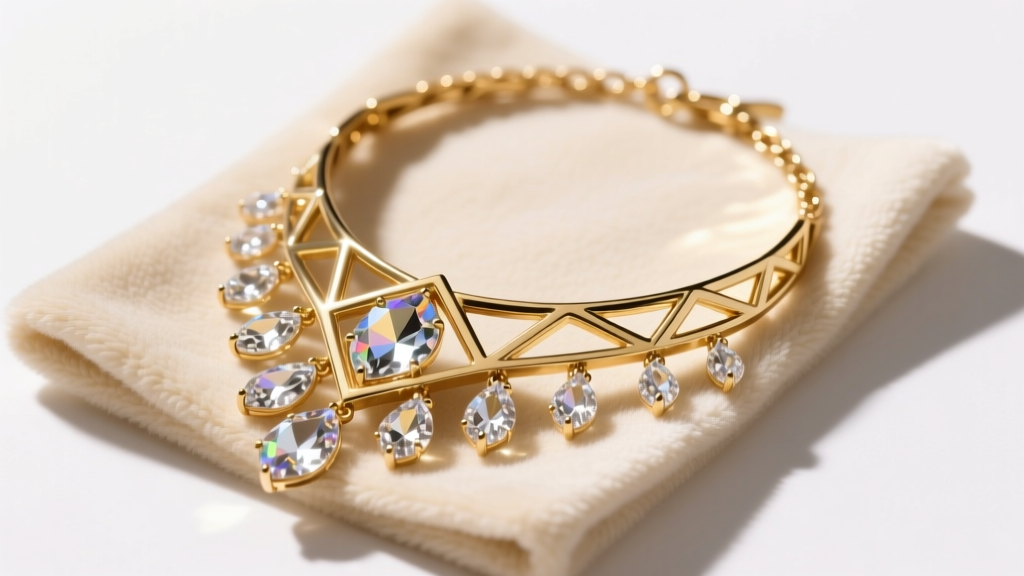
Cabi jewelry is celebrated for its seasonal, fashion-forward aesthetics, offering statement pieces that effortlessly elevate both professional and casual wardrobes. However, because most Cabi necklaces are crafted from fashion jewelry materials—such as gold-tone plated brass, silver-tone base metals, enamel, and glass or acrylic crystals—they require a highly specific maintenance protocol. Unlike solid 18k gold or platinum, fashion jewelry is susceptible to rapid oxidation, plating degradation, and adhesive failure if exposed to the wrong cleaning agents.
If you want to preserve the luster and structural integrity of your Cabi necklace, you must abandon traditional fine jewelry cleaning methods. This comprehensive guide details the exact chemistry, tools, and storage environments required to maintain your piece for years to come, drawing on industry standards from the Gemological Institute of America (GIA) and the Jewelers of America.
Understanding the Anatomy of Your Cabi Necklace
Before applying any liquid or cloth to your jewelry, it is critical to understand what you are actually cleaning. A typical gold-tone Cabi necklace is not solid gold. It is usually a brass or zinc-alloy base metal coated with a microscopically thin layer of gold flash-plating (often between 0.17 and 0.5 microns thick) or a slightly thicker gold vermeil layer.
Human sebum (skin oil) has a natural pH ranging from 4.5 to 6.0, making it mildly acidic. When this acidic oil mixes with environmental sulfur and the salts in your sweat, it creates a corrosive micro-environment that eats through thin gold plating, exposing the copper-rich brass underneath. Once the brass is exposed to oxygen and moisture, it oxidizes, creating the dreaded green or black tarnish that transfers to your skin and clothing. Furthermore, the decorative crystals on Cabi pendants are frequently secured with specialized jewelry epoxies rather than metal prongs, meaning harsh solvents will dissolve the adhesive and cause stone loss.
The Step-by-Step Cleaning Protocol
To safely remove accumulated oils, lotions, and environmental dust without stripping the plating or clouding the crystals, follow this gentle, pH-neutral washing technique.
The Safe Wash Method
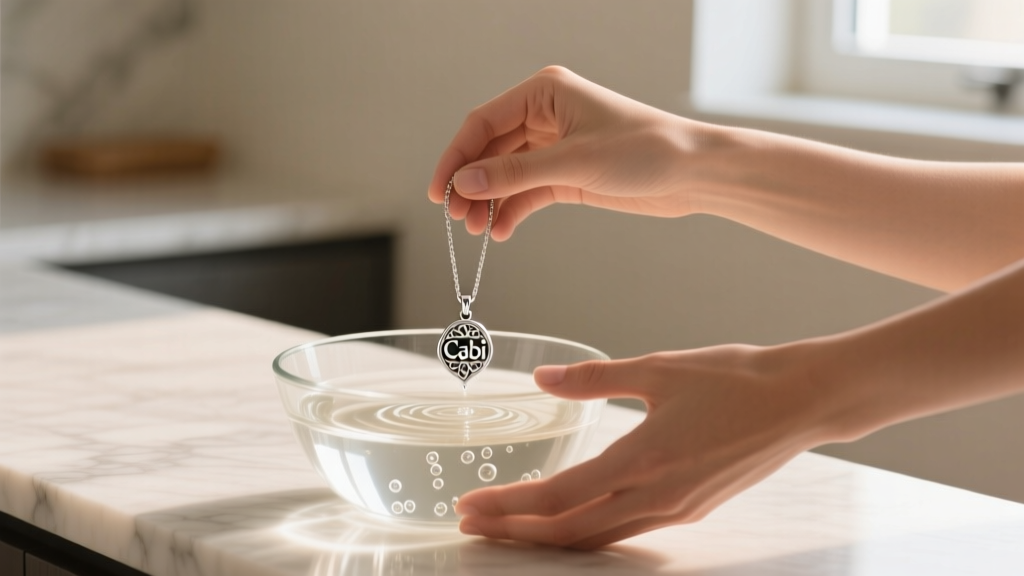
- Prepare the Solution: Fill a small glass bowl with lukewarm distilled water. Never use tap water, as the chlorine and dissolved minerals can leave permanent water spots on the porous base metal if the plating has micro-fractures. Add two drops of a pH-neutral, lotion-free dish soap (such as original blue Dawn).
- Agitate Gently: Swish the water to create suds. Submerge your Cabi necklace for no more than 3 to 5 minutes. Prolonged soaking can weaken the epoxy holding the glass or acrylic accents.
- Targeted Brushing: Using an ultra-soft baby toothbrush, gently sweep the bristles over the chain links and the back of the pendant where skin contact is highest. Do not scrub the crystals directly; instead, wipe them with a damp cotton swab.
- The Rinse and Dry: Rinse the necklace briefly under a gentle stream of distilled water. Immediately pat it completely dry with a lint-free microfiber cloth. Follow up by using a hair dryer on the 'cool' setting to blow out any trapped moisture from the crevices of the chain clasp.
Chemical Reactions: What to Avoid
The most common way collectors ruin fashion jewelry is by treating it like fine jewelry. The following table outlines common cleaning agents and why they are catastrophic for a Cabi necklace.
| Cleaning Agent / Method | Effect on Cabi Necklace Materials | Verdict |
|---|---|---|
| Ultrasonic Cleaners | High-frequency cavitation bubbles implode against the metal, shattering glass crystals and dissolving epoxy adhesives. | Never Use |
| Silver Dip / Ammonia | Strips gold flash-plating instantly and causes severe pitting on brass and zinc base metals. | Never Use |
| Baking Soda Paste | Highly abrasive. Acts like sandpaper on a microscopic level, scratching through the gold-tone finish to the base metal. | Never Use |
| Toothpaste | Contains silica abrasives designed to strip enamel from teeth; will similarly strip thin metallic plating. | Never Use |
| Jewelry Polishing Cloths | Treated with micro-abrasives and rouge. Safe for solid metals, but will rub the plating right off a fashion piece. | Avoid / Use with Extreme Caution |
| Mild Dish Soap & Distilled Water | Safely lifts oils and particulates without reacting with the metal or adhesives. | Highly Recommended |
Archival-Grade Storage for Fashion Jewelry
How you store your Cabi necklace when it is not being worn is arguably more important than how you clean it. Improper storage leads to 'bronze disease'—a destructive, powdery green corrosion that eats through brass base metals.
The Polyethylene Rule
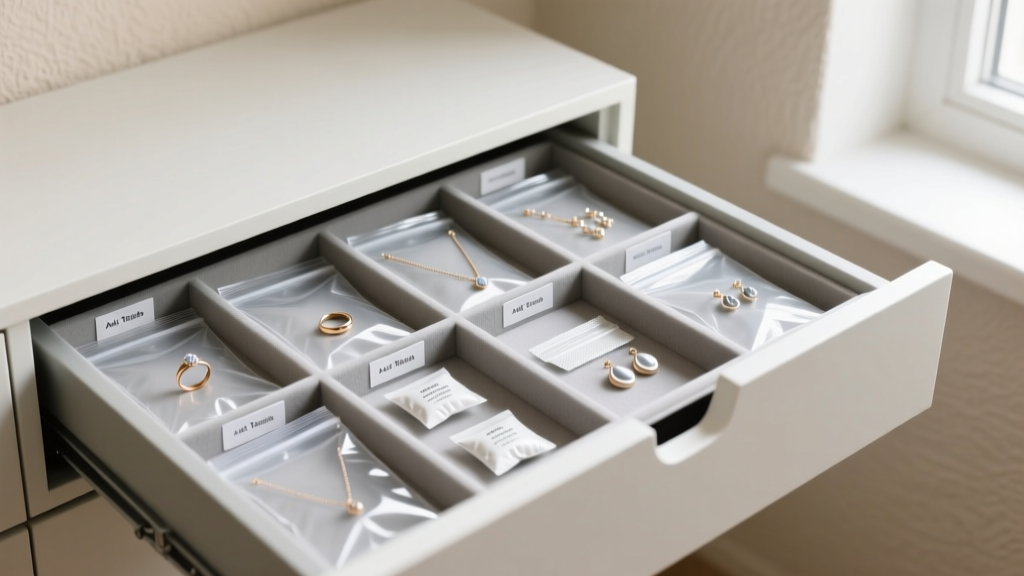
Never store your necklace in the original PVC (polyvinyl chloride) plastic bags it may have shipped in, or in standard vinyl ziplocks. PVC off-gases plasticizers and chlorine compounds over time. When these gases are trapped in a small space with a brass-based necklace, they trigger rapid chemical corrosion. Instead, transfer your necklace to polyethylene or polypropylene ziplock bags, which are chemically inert and safe for long-term archival storage.
Climate Control and Tarnish Inhibitors
Moisture is the catalyst for oxidation. Place a small, fresh silica gel packet inside the polyethylene bag with your necklace to absorb ambient humidity. Additionally, drop in a 3M Pacific Silvercloth or an anti-tarnish strip. These strips contain zinc or copper particles that act as 'sacrificial metals,' absorbing the sulfur gases in the air before they can react with your necklace's finish. Replace these strips every 6 to 9 months to maintain maximum efficacy.
Troubleshooting: Verdigris, Tarnish, and Green Skin
Even with meticulous care, vintage or heavily worn Cabi necklaces may develop issues. Here is how to address them without causing further damage.
Removing Verdigris (Green Crust)
If you notice a powdery green or blue crust forming in the crevices of the chain or around the crystal settings, this is verdigris (copper acetate). Do not scrape it with a metal needle or pin. Instead, dip a wooden toothpick in a tiny amount of mineral oil and gently work the crust loose. The wood is softer than the metal and will not scratch the plating, while the mineral oil helps break down the crystalline structure of the corrosion. Wipe away the residue with a dry cotton swab.
Preventing the 'Green Skin' Reaction
If your Cabi necklace turns your neck green, it means the gold-tone plating has worn thin, allowing the copper in the brass base to react with your skin's acidity. To create a temporary, invisible barrier, paint the inside of the pendant and the back of the chain links with a thin coat of clear, hypoallergenic nail polish. Allow it to cure for 24 hours before wearing. This barrier will need to be reapplied every few months as it naturally wears away from friction.
When to Seek Professional Replating
If the gold-tone finish on your favorite Cabi statement necklace has completely worn off, exposing a dull, brassy, or silver-colored base metal, no amount of cleaning will restore it. At this stage, the piece requires electroplating.
Many local jewelers offer 'flash plating' or 'rhodium dipping' services. For a gold-tone piece, you can request a 2-micron 18k gold electroplate, which is significantly thicker and more durable than the original factory finish. Expect to pay between $45 and $85 for this service, depending on the surface area of the pendant and chain. Ensure the jeweler is experienced with fashion jewelry base metals, as zinc alloys require a specific nickel or palladium strike layer before gold can successfully adhere to them. By investing in professional replating, you can effectively reset the lifespan of your Cabi necklace and continue to enjoy its unique, seasonal design for many more years.


