The Anatomy of a Rapper Clock Necklace: Tech Specs & Buying Guide
Explore the technical specs of a rapper clock necklace. Learn about movements, metal grades, stone settings, and how to choose the perfect iced-out piece.

The Intersection of Horology and Hip-Hop Culture
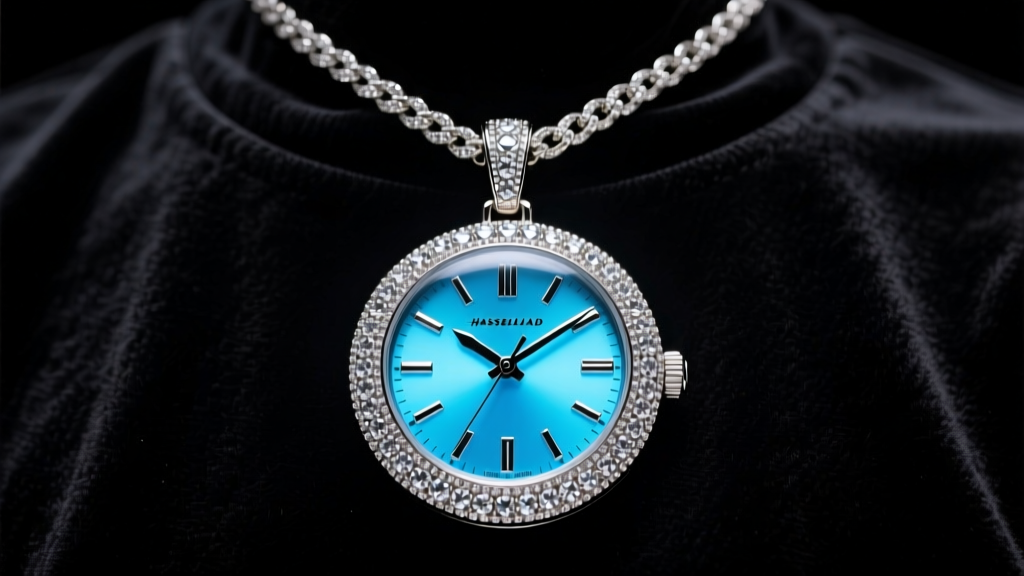
The evolution of hip-hop jewelry has transformed the traditional timepiece into a monumental canvas for self-expression. A rapper clock necklace is not merely a pendant; it is an oversized, heavily customized horological statement that bridges the gap between fine watchmaking and urban artistry. Unlike standard pendants, these pieces demand rigorous structural integrity to support immense weight and extensive gemstone paving. In this technical deep dive, we dissect the exact metallurgy, movement mechanics, and gemological standards that separate a master-crafted iced-out clock pendant from a mass-produced novelty item. Whether you are commissioning a custom piece or evaluating a high-end secondary market purchase, understanding these specifications is critical.
Core Components: Metal Bases and Plating Standards
The foundation of any premium rapper clock necklace dictates its longevity, weight, and skin compatibility. The market is segmented into three primary metallurgical tiers, each with distinct manufacturing standards.
Base Metals and Solid Gold Alloys
Entry-level and mid-tier pendants typically utilize 925 sterling silver or 316L surgical-grade stainless steel as a base. Sterling silver is preferred by jewelers for its malleability, allowing for intricate micro-pave stone setting. However, silver is prone to tarnishing and requires a robust outer layer. High-end, investment-grade clock pendants are cast in solid 10k, 14k, or 18k gold. 14k gold (58.5% pure gold) is widely considered the industry sweet spot for hip-hop jewelry, offering the ideal balance between the rich luster of pure gold and the tensile strength required to hold heavy diamond settings without warping.
PVD vs. Electroplating Techniques
For non-solid gold pieces, the plating method is the ultimate indicator of quality. Flash plating (0.1 to 0.5 microns) will wear off within months of daily use. Reputable manufacturers utilize heavy gold electroplating (2.5+ microns) over a nickel or palladium barrier layer to prevent base metal leaching. Alternatively, Physical Vapor Deposition (PVD) is increasingly used on stainless steel bases. PVD bonds gold at a molecular level in a vacuum chamber, resulting in a finish that is up to five times more resistant to friction and sweat than traditional electroplating.
The Dial and Movement: Functional vs. Static
A critical decision when commissioning or purchasing a rapper clock necklace is the internal mechanism. The choice between a functional movement and a static dial drastically alters the design possibilities and maintenance requirements.
| Movement Type | Functionality | Maintenance Level | Design Impact | Price Tier |
|---|---|---|---|---|
| Japanese Quartz (e.g., Miyota 2035) | Fully functional, battery-operated | Low (Battery swap every 2-3 years) | Requires a functional crown; hands cannot be fully paved | Mid-Tier |
| Swiss Mechanical (e.g., ETA clones) | Fully functional, automatic winding | High (Requires servicing every 5 years) | Thicker case profile; sweeping second hand | Ultra High-End |
| Static / Dummy Dial | Non-functional, purely aesthetic | None | Allows full 'bust-down' paving on hands and dial; thinner profile | Varies (Custom) |
Many master jewelers prefer the static dial route for heavily iced pieces. A functional quartz movement requires a protruding crown (the dial adjuster) which disrupts the continuous diamond setting on the bezel. Furthermore, the weight of diamonds glued or set onto the hour and minute hands will eventually unbalance and destroy a functional movement. A static dial allows the jeweler to execute a flawless, fully paved 'bust-down' aesthetic without compromising the structural integrity of the piece.
Stone Setting Techniques and Gemstone Grades
The brilliance of a rapper clock necklace relies entirely on the precision of the stone setting and the optical properties of the gems used. According to the Gemological Institute of America (GIA), understanding the refractive index (RI) and Mohs hardness of your chosen stones is vital for long-term wear.
Micro-Pave vs. Prong and Bezel Settings
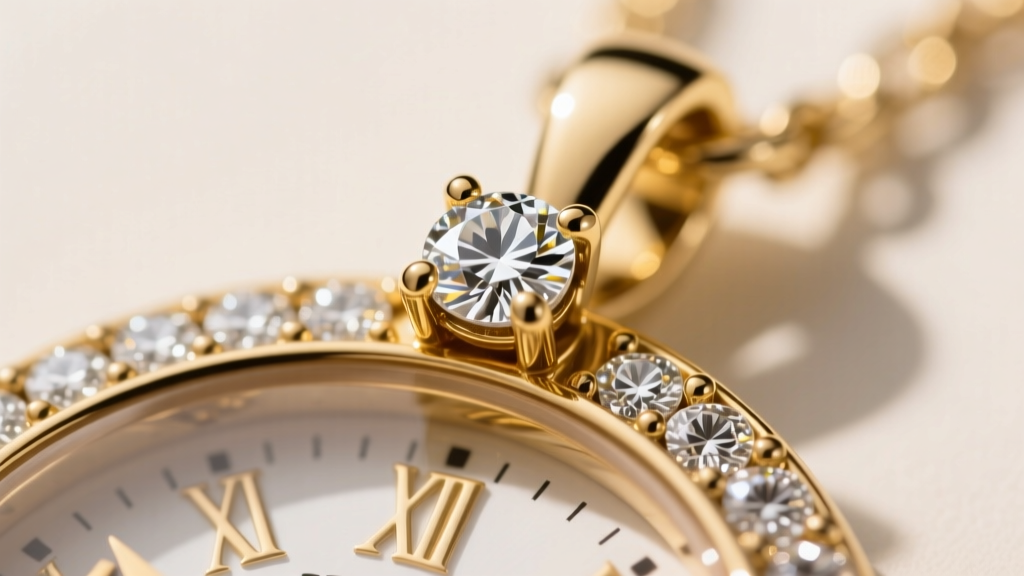
The outer case and lugs of a clock pendant are typically paved using a micro-pave technique, where stones under 2.0mm are set closely together with minimal metal visibility, creating a continuous sheet of light. The outer rim (bezel) often utilizes a bezel setting or a shared-prong setting to secure larger stones (3.0mm - 5.0mm) that can withstand the impact of daily wear. The hour markers are usually set in four-prong or six-prong settings to elevate the stones and maximize light return.
CZ vs. Moissanite vs. Natural VVS Diamonds
- 5A Cubic Zirconia (CZ): With a Mohs hardness of 8.5 and an RI of 2.15, high-grade CZ is the standard for entry-level pieces. It offers excellent initial brilliance but is prone to micro-scratches over time, which cloud the stone.
- Moissanite: Boasting a Mohs hardness of 9.25 and an RI of 2.65 (higher than a diamond), moissanite is exceptionally durable and fiery. It is the preferred choice for mid-tier custom pieces, offering diamond-like toughness at a fraction of the cost.
- Natural VVS Diamonds: For investment-grade pendants, jewelers demand VVS1 or VVS2 clarity with a minimum color grade of G-H. Because the stones are set in dense clusters, slight inclusions (SI1/SI2) can cause light leakage, making the pendant look dull. VVS stones ensure maximum light return through the dense metalwork.
Proportions, Bail Sizing, and Chain Pairing
The sheer scale of a rapper clock necklace requires specialized hardware to ensure it hangs correctly and safely. Standard jewelry bails will snap under the weight of an oversized timepiece pendant.
Dimensions and Weight Distribution
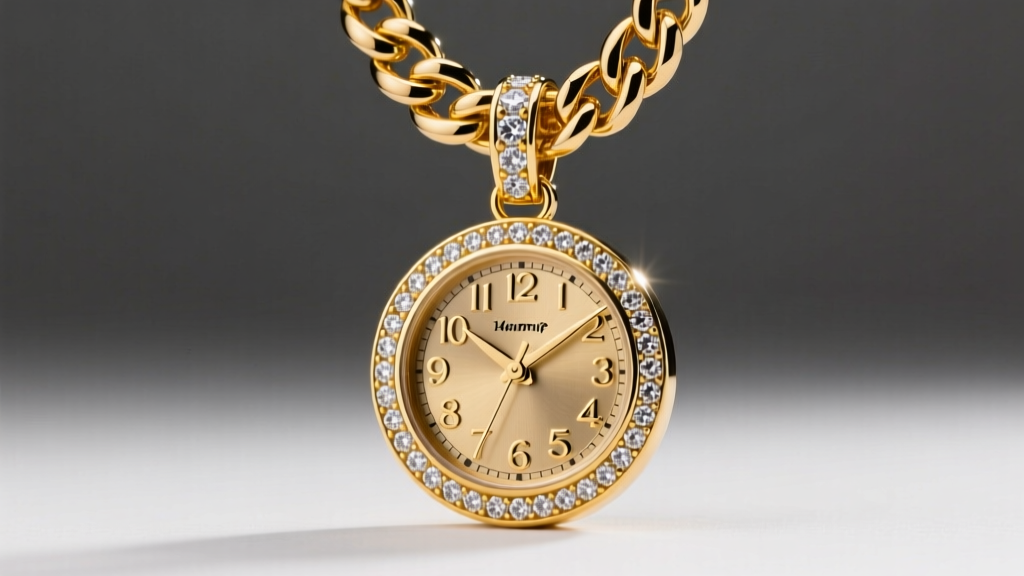
Authentic hip-hop clock pendants typically range from 55mm to 85mm in diameter, with a thickness of 12mm to 20mm. Due to the dense metal base and hundreds of carats of gemstones, the total weight frequently falls between 120 grams and 350 grams. This extreme weight dictates the bail engineering. A standard bail will cause the chain to fray and eventually break. High-end pendants feature an integrated, reinforced bail with an inner diameter of at least 15mm to 18mm.
Chain Pairing Framework
As noted by industry analysts at JCK Online, the hip-hop jewelry market heavily favors robust chains that can support massive pendants. Use this framework to pair your clock necklace:
- 12mm - 14mm Cuban Link: The industry standard. The flat, interlocking links distribute the heavy weight of the clock pendant evenly across the neck, preventing chain kinking.
- 8mm - 10mm Franco Chain: Excellent for slightly lighter (under 150g) static clock pendants. The V-shaped links offer immense tensile strength and a fluid drape.
- Tennis Chains (Avoid): Never pair a heavy clock pendant with a diamond tennis chain. The extreme weight of the pendant will stretch the delicate prongs of the tennis chain, leading to catastrophic stone loss.
Maintenance and Longevity Protocols
Maintaining an iced-out rapper clock necklace requires strict adherence to jewelry care protocols. The intersection of precious metals, delicate settings, and environmental exposure demands specialized cleaning methods.
Ultrasonic Cleaning Warnings: While ultrasonic cleaners are excellent for solid gold and diamond jewelry, they are highly destructive to mid-tier pendants. If your clock necklace utilizes glued stones (common in micro-pave CZ or lower-tier moissanite pieces), the high-frequency vibrations will dissolve the adhesive, causing stones to fall out. Furthermore, if your piece features a functional quartz movement, ultrasonic waves can shatter the internal stepping motor.
Manual Cleaning Protocol: For safe maintenance, prepare a solution of warm distilled water and a few drops of mild, ammonia-free dish soap. Submerge the pendant for five minutes to loosen oils and lotions. Gently agitate the stone settings using a soft horsehair detailing brush, paying special attention to the underside of the dial where skin oils accumulate. Rinse with distilled water and pat dry with a lint-free microfiber cloth. For white gold pieces, expect to have the pendant rhodium-plated every 18 to 24 months to maintain the stark, icy white finish that complements the diamonds.
A master-crafted rapper clock necklace is an engineering marvel as much as it is a piece of art. By prioritizing solid structural alloys, precision stone setting, and weight-appropriate hardware, collectors can ensure their timepiece pendant remains a flawless, blinding statement for decades.


