Most Expensive Diamond Necklace: 2026 Records & Material Analysis
Discover the most expensive diamond necklace in history, analyzing rare Type IIa stones, platinum settings, and record-breaking 2026 prices.

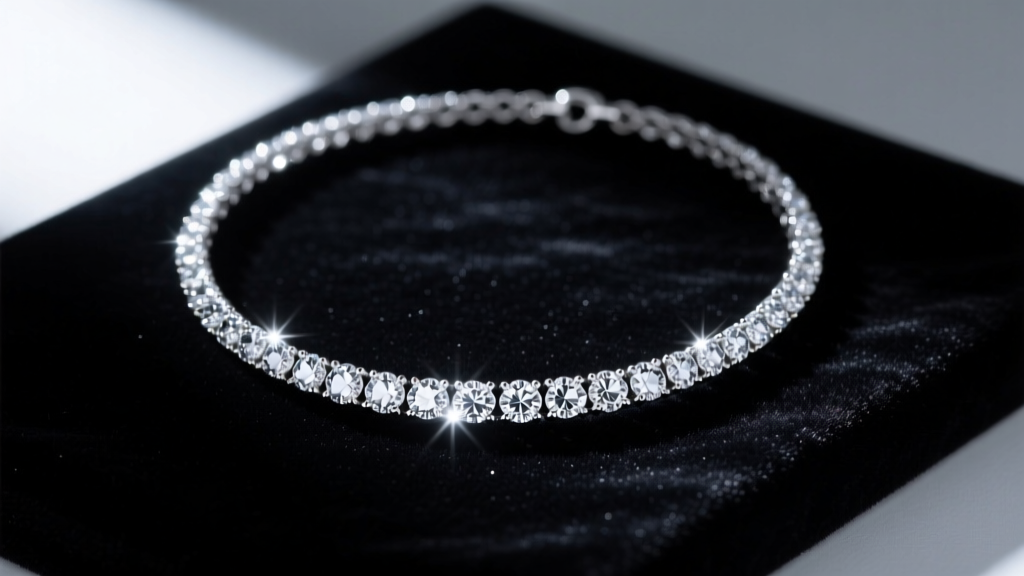
The Pinnacle of High Jewelry: Defining the Most Expensive Diamond Necklace
When collectors and historians discuss the most expensive diamond necklace, the conversation inevitably transcends mere carat weight and enters the realm of extreme material science, historical provenance, and master metallurgy. As of 2026, the high jewelry auction market has seen a distinct divergence: while commercial-grade natural diamonds face pricing pressure from advanced lab-grown alternatives, the apex tier of investment-grade, museum-quality diamond necklaces continues to shatter records. Pieces commanding $20 million to over $50 million are not just jewelry; they are geological anomalies encased in aerospace-grade metallurgy. To understand what drives a necklace into the eight-figure echelon, we must deconstruct the exact crystallographic and metallurgical properties that separate a standard luxury piece from a historic masterpiece.
The Crystallography of Value: Why Type IIa Diamonds Command Premiums
The defining characteristic of the center stones in the world's most expensive necklaces is their chemical purity. According to the Gemological Institute of America (GIA), diamonds are classified by their nitrogen content. Over 95% of all natural diamonds are Type Ia, meaning they contain nitrogen atoms clustered together within the carbon crystal lattice. These clusters absorb specific wavelengths of light, often resulting in faint yellow or brown tints.
In stark contrast, the center stones of record-breaking necklaces are almost exclusively Type IIa. Type IIa diamonds contain virtually no measurable nitrogen impurities. This absolute chemical purity allows for unparalleled light transmission, resulting in a level of transparency and brilliance that gemologists historically referred to as "Golconda"—named after the legendary Indian mining region that produced the world's purest stones before the 18th century. Today, less than 2% of all gem-quality natural diamonds earn the Type IIa designation. When a 100-carat D-Flawless Type IIa stone is set into a necklace, the rarity multiplier pushes the price per carat exponentially higher than a similarly sized Type Ia stone.
Optical Symmetry and Light Return Mapping
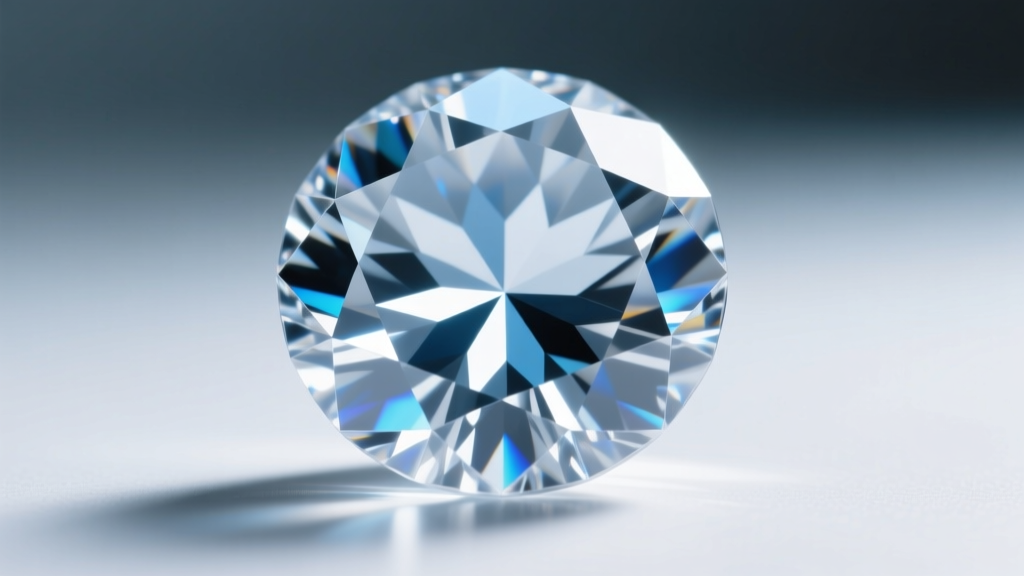
Beyond chemical purity, the cutting precision of these massive stones is scrutinized using advanced light performance metrics. In 2026, top-tier collectors rely on Angular Spectrum Evaluation Tool (ASET) and Idealscope imaging to verify optical symmetry. A 150-carat emerald-cut diamond in a premier necklace must exhibit zero "windowing" (light leakage through the pavilion) and zero "extinction" (dark, dead zones). Achieving perfect light return in a stone of this mass requires sacrificing up to 40% of the rough crystal, a financial loss that only the most elite high jewelry houses are willing to absorb to secure a record-breaking final piece.
Metallurgical Engineering: Pt950 vs. 18k White Gold in High Jewelry
A common misconception is that the chain and setting of a multi-million-dollar necklace are secondary to the stones. In reality, the metallurgical engineering required to support a 200-gram diamond pendant without risking catastrophic structural failure is immense. The industry standard for the most expensive diamond necklaces is Pt950/Ruthenium.
Pure platinum (Pt1000) is too malleable for high-tension micro-pave settings; it possesses a Vickers hardness (HV) of roughly 50. By alloying 95% platinum with 5% ruthenium, master jewelers increase the hardness to approximately 135 HV while maintaining the metal's natural, non-tarnishing white luster. Unlike 18k White Gold (75% gold alloyed with palladium or nickel and plated with rhodium), Pt950/Ru does not require re-plating. More importantly, platinum's tensile strength and "gall" properties mean that when the prongs are pushed over the girdle of a 50-carat pear-shaped diamond, the metal deforms and locks into place without becoming brittle, ensuring the stone survives the dynamic tension of being worn.
Benchmarking the Most Expensive Diamond Necklaces Ever Sold
To contextualize the material properties discussed above, we must look at the historical and recent auction data. The following table outlines benchmark pieces that define the apex of the market, highlighting the synergy between massive Type IIa stones and intricate platinum engineering.
| Necklace Name | Center Stone / Total Carat | Material Grade & Setting | Record Valuation |
|---|---|---|---|
| L'Incomparable | 407.48 ct (Internally Flawless) | 18k Rose Gold, 90 White Diamonds | $55 Million |
| A Heritage in Bloom | 11,551 Diamonds (384 ct Total) | White Gold & Titanium Articulated | $200 Million (Est.) |
| The Heart of the Ocean | 15 ct Blue Heart Diamond | Platinum & 18k White Gold | $20+ Million |
| Marie Antoinette Pendant | Natural Pearl & Diamond Drop | Historic Silver/Gold Alloy | $36.2 Million |
The SSEF "Golconda" Premium and Provenance Tracking
In the modern high jewelry market, a GIA D-Flawless certificate is merely the baseline. For a necklace to achieve the title of the most expensive diamond necklace at a premier auction house like Sotheby's or Christie's, it requires an accompanying report from the Swiss Gemmological Institute (SSEF) confirming its "Golconda" characteristics. The SSEF evaluates the stone's UV fluorescence and absorption spectroscopy to confirm the absolute absence of nitrogen and the presence of exceptional transparency.
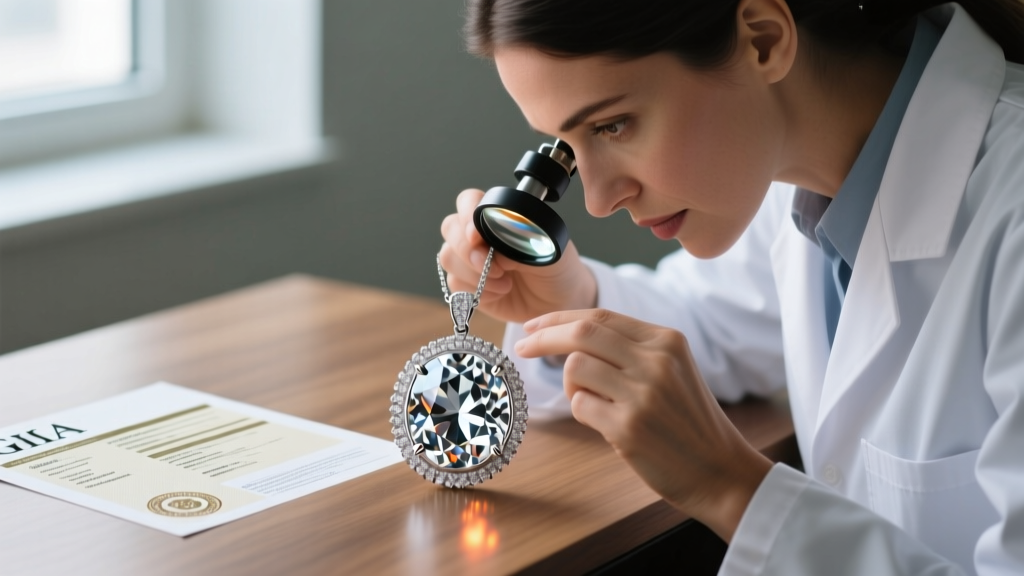
Furthermore, 2026 has seen the mandatory integration of blockchain provenance tracking for eight-figure jewels. Collectors demand immutable digital ledgers that trace the diamond from its specific mine shaft (often in Botswana or Lesotho) through the cutting houses of Antwerp, ensuring the stone is not only geologically rare but ethically unimpeachable. This dual-layer of physical and digital certification adds a 10% to 15% premium to the final hammer price.
Investment Viability in 2026: A Collector's Framework
For high-net-worth individuals looking to acquire investment-grade diamond necklaces, the market requires a highly specific, uncompromising approach. The divergence between commercial natural diamonds and apex collector stones means that general jewelry appreciation rules no longer apply. Use the following framework when evaluating potential acquisitions:
- Demand Type IIa Exclusivity: Never compromise on the chemical purity of the center stone. If the GIA or SSEF report does not explicitly state Type IIa (or Golconda), the piece lacks the rarity required to appreciate at the apex tier.
- Verify the Alloy Composition: Inspect the hallmark and metallurgical assay. High-end chains must utilize Pt950 with ruthenium or cobalt alloys. Avoid pieces that rely on rhodium-plated white gold for primary structural support of stones exceeding 20 carats.
- Scrutinize Light Performance: Request ASET and Idealscope imagery. A massive carat weight is financially detrimental if the stone suffers from pavilion light leakage. The cut quality must be paramount, even if it means accepting a slightly lower color grade (e.g., an E or F) to secure superior optical symmetry.
- Insist on Dual Certification: A single lab report is insufficient for insurance and resale purposes in the ultra-high-net-worth space. Require both a GIA grading report and an SSEF provenance/characterization report.
Ultimately, the most expensive diamond necklace is not defined by a single auction headline, but by the uncompromising intersection of geological miracles and human engineering. As the market continues to evolve through 2026, these material truths remain the only reliable indicators of enduring value.


