Thanos Squid Game Cross Necklace: 2026 Material Guide
Discover the metallurgical realities behind the Thanos Squid Game cross necklace. Compare alloys, enamel types, and chain gauges for pop-culture jewelry.

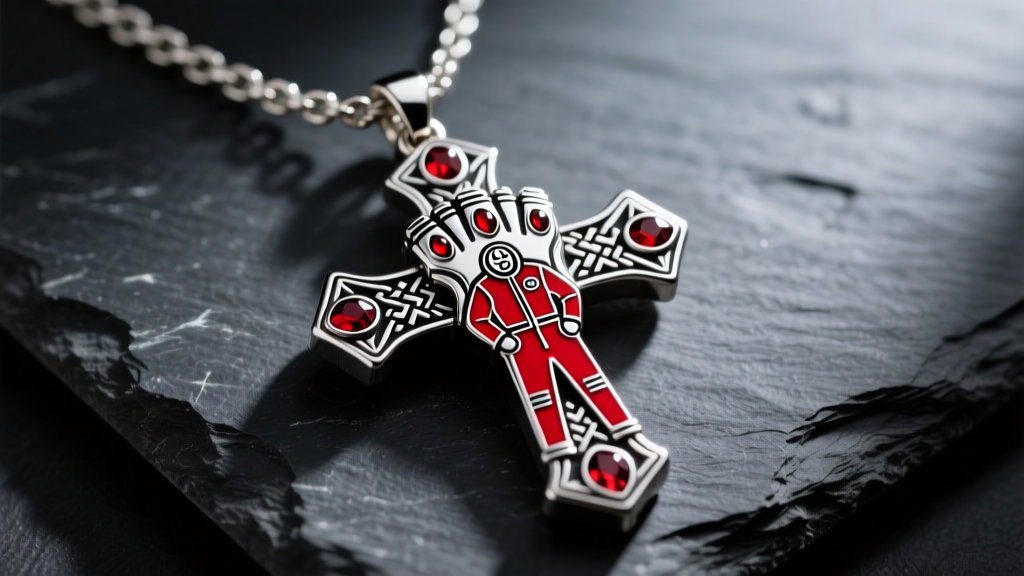
The Anatomy of a Complex Novelty Pendant
The intersection of cinematic universes and streaming phenomena has spawned a highly specific niche of novelty jewelry. The "Thanos Squid Game cross necklace" represents a fascinating subgenre of pop-culture mashup accessories, combining the brutalist geometry of the Infinity Gauntlet with the ominous guard symbols (circle, triangle, square) of the Squid Game franchise. However, as we move through 2026, the market is flooded with varying quality tiers. Buying these intricate, multi-motif statement pendants requires looking past the intellectual property mashup and examining the underlying metallurgy.
When a pendant design incorporates deep undercuts—such as the knuckles of a miniature gauntlet or the recessed geometric shapes of a dystopian guard mask—the manufacturing method dictates the material. Die-striking, which is common for flat, simple pendants, cannot achieve this 3D relief. Therefore, reputable jewelers must rely on lost-wax casting or advanced CNC milling. These processes behave vastly differently depending on the alloy chosen.
Base Metals vs. Premium Alloys: What’s Really in Your Necklace?
Not all "silver-toned" metals are created equal. The structural integrity and skin-safety of your necklace depend entirely on the base alloy.
Zinc Alloy and Brass (The Budget Tier)
Often deceptively marketed as "Tibetan Silver" or "Antique Pewter," zinc alloys are the most common materials for sub-$20 novelty pendants. While zinc is inexpensive and flows easily into complex silicone molds, it is highly porous. To achieve a silver look, these pieces are electroplated with a microscopic layer of rhodium or nickel. Once that plating wears off from friction against your chest, the underlying zinc oxidizes rapidly, turning a chalky white or green. Furthermore, unregulated zinc alloys frequently contain nickel and lead as flow-agents, posing a severe contact dermatitis risk for sensitive skin.
316L Surgical Stainless Steel (The Mid-Tier Workhorse)
For buyers seeking durability without the premium price tag, 316L stainless steel is the optimal choice. The "L" stands for low carbon, and the alloy includes 2-3% molybdenum, which drastically increases resistance to chlorides and sweat corrosion. According to the Federal Trade Commission Jewelry Guides, proper labeling of steel alloys is crucial for consumer transparency. 316L is highly hypoallergenic, making it safe for prolonged skin contact. However, steel's high melting point and hardness make traditional lost-wax casting difficult; thus, steel Thanos cross pendants are often cast in specialized investment powders or assembled via CNC machining and laser welding, which can sometimes result in slightly softer edge details compared to silver.
925 Sterling Silver (The Collector’s Grade)
Serious collectors and high-end novelty jewelers utilize 925 sterling silver (92.5% silver, 7.5% copper). Silver’s relatively low melting point and exceptional fluidity make it the undisputed king of lost-wax casting. It captures the microscopic textures of a cross pendant's intricate engravings flawlessly. The copper content does mean the piece will oxidize over time, but in the context of gritty pop-culture jewelry, jewelers often apply a deliberate chemical patina (liver of sulfur) to recess the shadows of the gauntlet and Squid Game shapes, enhancing the 3D relief. As noted by the metallurgical experts at the Ganoksin Project, proper spruing and burnout temperatures are critical to prevent porosity in detailed silver casts.
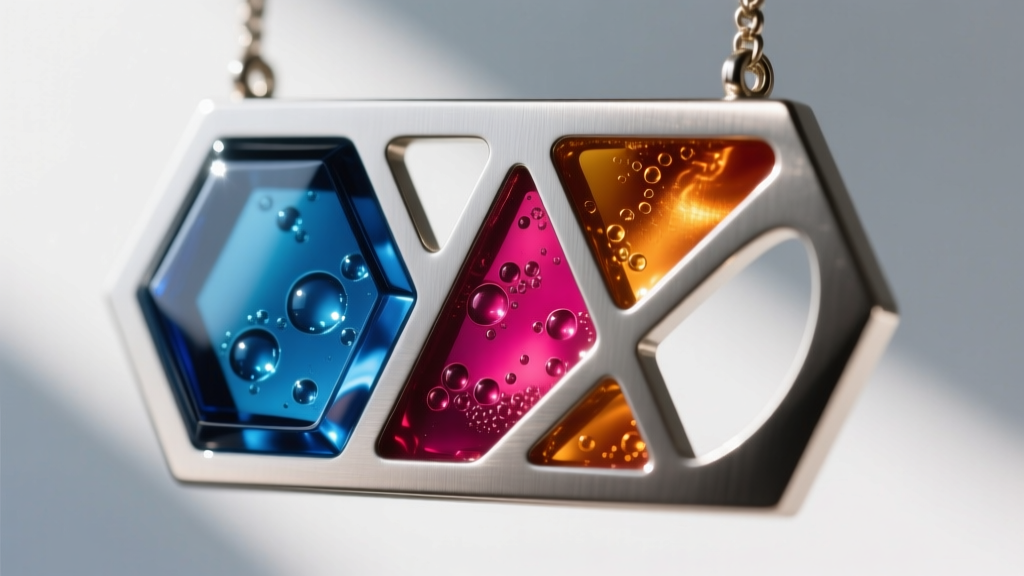
Decoding the Inlays: Resin vs. Enamel
The visual impact of a Thanos Squid Game cross necklace relies heavily on color contrast—specifically, the glowing Infinity Stones and the stark black or pink hues of the Squid Game guard masks. Jewelers achieve this through inlays, but the material science behind them varies wildly.
- Cold Enamel (Epoxy Resin): The industry standard for novelty jewelry. It is essentially a two-part hardened resin poured into recessed metal channels. It is cost-effective and available in any Pantone color. However, it has a Mohs hardness of only 2.5 to 3.0, meaning it will scratch if it comes into contact with keys or zippers, and it will yellow slightly after 3-5 years of UV exposure.
- Hot Enamel (Vitreous): Made from pulverized glass fused to the metal at 1,400°F. It is incredibly durable, scratch-resistant, and will never fade. Because it requires high heat, it can only be applied to metals with high melting points like steel, brass, or fine silver (not sterling, as the copper will oxidize and ruin the glass bond). It is rare in budget pop-culture jewelry but found in premium, limited-edition runs.
- Lab-Created Gemstones: For the "Infinity Stones," higher-end pendants will bypass enamel entirely, using bezel-set lab-created corundum or cubic zirconia. These offer genuine light refraction and a Mohs hardness of 8.0+, ensuring lifelong brilliance.
Material Comparison Matrix
| Material | Casting Method | Hypoallergenic | Tarnish Resistance | 2026 Market Price Range |
|---|---|---|---|---|
| Zinc Alloy | Die-Cast / Silicone Mold | No (Nickel Risk) | Poor (Relies on Plating) | $12 - $25 |
| 316L Steel | Investment Cast / CNC | Yes | Excellent | $35 - $65 |
| 925 Silver | Lost-Wax Casting | Mostly (Copper allergy rare) | Moderate (Patina desired) | $90 - $180 |
| Brass | Die-Cast / Sand Cast | No | Poor (Oxidizes green) | $15 - $30 |
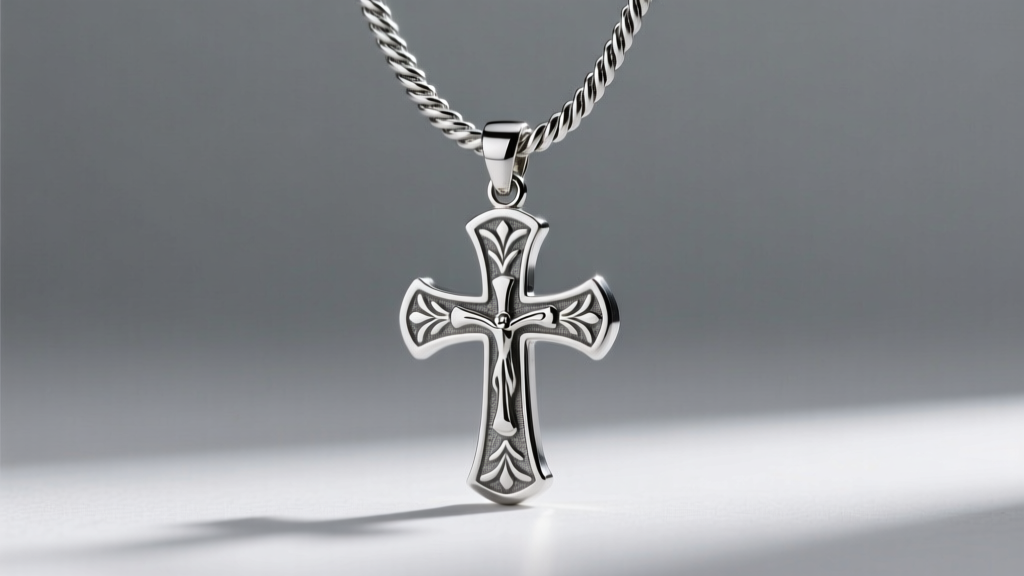
Chain Pairing: Engineering the Support System
A complex, multi-element cross pendant is inherently heavy, often weighing between 25 and 45 grams. Suspending this weight requires careful engineering of the chain and bail. The most common failure point in novelty jewelry is not the pendant itself, but the jump ring connecting it to the chain.
For a 35-gram pendant, a standard 1mm cable chain is a structural liability. You must upgrade to a chain with a minimum wire thickness of 16-gauge (1.29mm) to 14-gauge (1.63mm). Rope chains, Cuban links, or wheat chains in the 3mm to 5mm width range provide the necessary tensile strength and visual balance. Furthermore, ensure the jump ring is soldered closed or features a heavy-duty locking mechanism. An unsoldered jump ring will slowly pull apart under the pendulum-like kinetic energy generated by walking, eventually dropping your pendant.
"When sizing a chain for a heavy statement piece, always match the bail's inner diameter to the chain's width with at least 1.5mm of clearance to prevent abrasive wear on the chain links."
Care and Tarnish Prevention
To preserve the intricate details of your necklace, avoid ultrasonic cleaners if your piece features cold enamel or resin inlays, as the high-frequency vibrations can shatter the bond between the resin and the metal. Instead, use a soft-bristled brush with mild dish soap and warm water to clean the recessed areas of the cross and gauntlet motifs. Store the piece in an anti-tarnish cloth bag with a silica gel packet to control ambient humidity, ensuring the metallic elements remain pristine for years to come.


