Budget Virgin Mary and Cross Necklace Value Guide
Discover how to evaluate a virgin mary and cross necklace on a budget. Compare materials, pricing tiers, and durability to find true value in 2026.

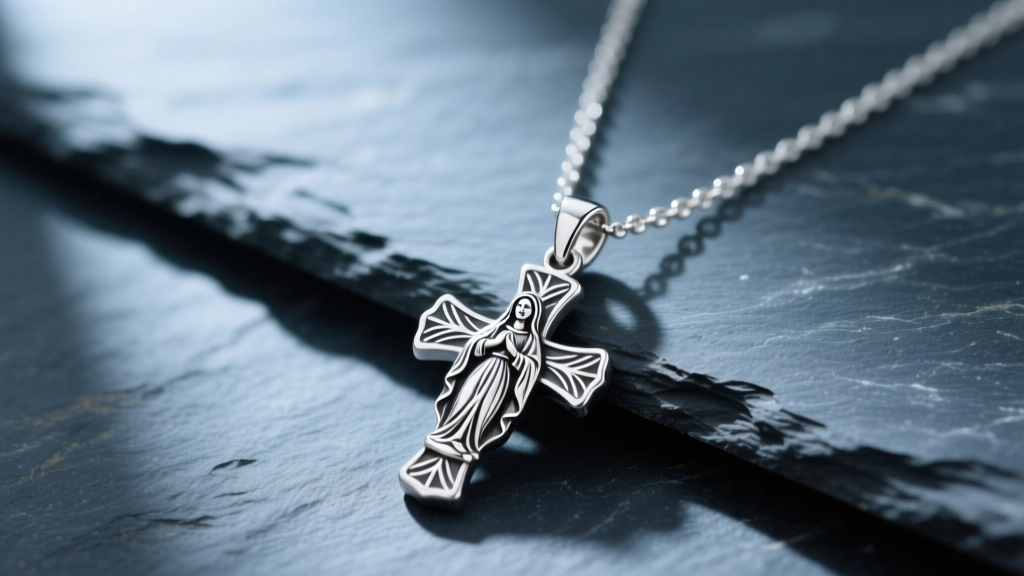
The True Cost of Religious Jewelry: Beyond the Price Tag
Religious jewelry holds profound sentimental value, often marking pivotal life milestones such as baptisms, confirmations, or personal spiritual awakenings. However, the market is heavily saturated with overpriced novelties and under-engineered fast-fashion pieces. When evaluating a virgin mary and cross necklace, budget-conscious buyers frequently face a dilemma: how to acquire a piece that carries emotional weight without sacrificing material integrity. A low upfront cost often masks a high long-term cost, as cheap alloys oxidize, snap, or cause contact dermatitis within months.
In this 2026 value assessment, we bypass the marketing fluff and examine the metallurgy, structural mechanics, and pricing tiers of religious pendants. Whether you are looking for a durable daily wearer or a generational keepsake, understanding the exact specifications of precious metals and chain gauges is the only way to ensure your investment survives the test of time.
Material Breakdown: What You Are Actually Paying For
The foundation of any pendant's value lies in its base metal. Religious pendants, particularly dual-sided designs featuring the Virgin Mary on one side and a cross or sacred heart on the other, require precise casting. Here is how the most common budget-friendly materials stack up in terms of longevity and skin safety.
316L Surgical Stainless Steel
For strict budgets under $50, 316L stainless steel is the undisputed champion. Unlike lower-grade steels, 316L contains molybdenum, which drastically increases resistance to corrosion and chlorides (like sweat and swimming pool water). It is entirely nickel-free in its stabilized form, making it hypoallergenic. The trade-off? It lacks the intrinsic melt value and prestige of precious metals, and it cannot be easily resized or repaired by a traditional jeweler if the bail breaks.
925 Sterling Silver
Sterling silver remains the sweet spot for value-driven religious jewelry. Composed of 92.5% pure silver and 7.5% copper, it offers the brilliant luster expected of fine jewelry. The copper addition provides the necessary tensile strength for intricate casting of the Virgin Mary's facial features. However, that same copper reacts with sulfur in the air, causing tarnish. According to the Gemological Institute of America (GIA), proper storage in anti-tarnish cloths and occasional polishing with a jeweler's rouge are mandatory to maintain 925 silver's appearance over decades.
Gold Vermeil vs. Flash Plating
Many budget shoppers are lured by the warm glow of gold vermeil. It is critical to distinguish between true vermeil and cheap flash plating. The Federal Trade Commission (FTC) Jewelry Guides mandate that for a piece to be legally sold as 'vermeil' in the United States, it must have a sterling silver base and be plated with at least 2.5 microns of 10k gold or higher. Flash-plated items often feature a brass base with a mere 0.1 to 0.5 microns of gold. On a high-friction area like a necklace pendant, flash plating will wear away, exposing the brassy underlayer and ruining the intricate details of the Virgin Mary portrait within weeks.
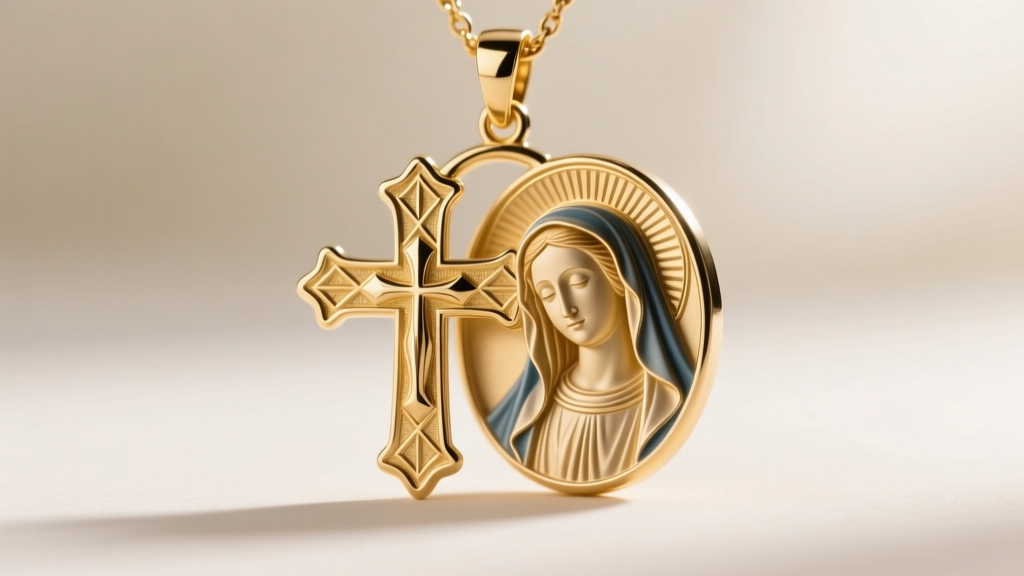
Pricing Tiers and Value Expectations
To accurately assess a virgin mary and cross necklace, you must align your budget with realistic material outcomes. The table below outlines the 2026 market expectations for standard-sized pendants (approximately 20mm x 30mm) paired with an 18-inch chain.
| Material Tier | 2026 Price Range | Tarnish Resistance | Cost-Per-Wear Value |
|---|---|---|---|
| 316L Stainless Steel | $25 - $55 | Excellent | High (Short-Term) |
| 925 Sterling Silver | $65 - $140 | Moderate (Needs Polish) | Very High (Lifetime) |
| Gold Vermeil (Over 925) | $90 - $180 | Low (Wears in 1-2 Years) | Low |
| 10K Solid Gold | $280 - $450 | Excellent | Highest (Generational) |
Chain and Clasp Mechanics: The Hidden Failure Points
A $120 solid silver pendant is entirely compromised if it is hung on a $5 hollow chain. Dual-sided religious pendants are surprisingly dense; a solid 925 silver piece of this nature typically weighs between 4.5 and 8 grams. This weight dictates strict requirements for the chain gauge and clasp mechanism.
Chain Gauge and Link Style
For pendants weighing over 4 grams, avoid delicate cable chains under 1.0mm in thickness. The constant friction of the pendant bail rubbing against a thin link will eventually saw through the metal, leading to catastrophic loss. Instead, opt for a 1.5mm to 2.0mm box chain or figaro chain. Box chains offer a flat, interlocking surface that distributes the pendant's weight evenly, while figaro chains provide a thicker, more robust link structure that resists pulling and kinking.
The Clasp Imperative
Spring ring clasps are the hallmark of cheap manufacturing. They rely on a tiny, easily fatigued internal spring that frequently snaps or fails to close completely, leaving the necklace vulnerable to slipping off. For any religious pendant of substance, a lobster clasp is non-negotiable. Lobster clasps feature a solid, spring-loaded lever that locks securely into the jump ring, providing a mechanical fail-safe that protects your investment.
'The chain should always be rated to hold at least three times the static weight of the pendant to prevent clasp fatigue and jump ring distortion over years of daily wear.' — Master Bench Jeweler Consensus
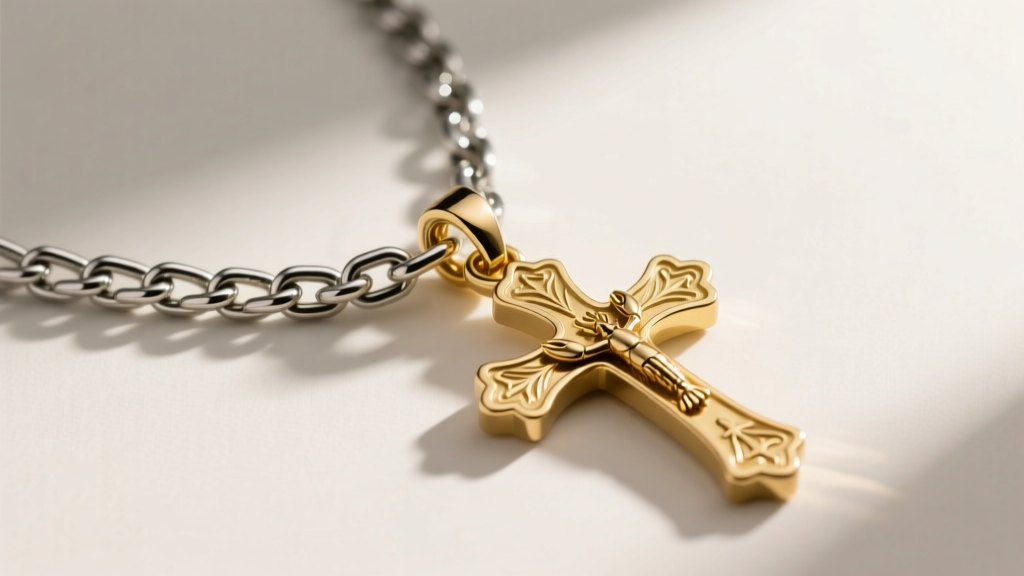
Detailing: Cast Metal vs. Enamel Inlay
The way the Virgin Mary's visage is rendered on the pendant heavily influences both the aesthetic longevity and the manufacturing cost. Budget buyers will typically encounter two methods:
- Cast Metal with Oxidized Recesses: The pendant is cast as a single piece of metal, and the background areas are chemically oxidized (darkened) to make the raised silver or gold features of the face and robes pop. This is the superior choice for budget buyers. It is permanent, waterproof, and develops a beautiful patina over time.
- Cold Enamel (Epoxy Resin): Often used to add blue or white color to the Virgin Mary's robes. In budget pieces, this is usually a painted epoxy resin. While vibrant initially, cold enamel is highly susceptible to chipping if dropped on tile, and it will yellow or cloud when exposed to UV light, lotions, and perfumes over a 3-to-5-year period.
If color is important to you, seek out vitreous enamel (fired glass), though this technique is rarely found in pieces priced under $150 due to the specialized kiln work required.
Red Flags: Avoiding 'Fast Fashion' Religious Jewelry
When browsing online marketplaces or mall kiosks, be highly skeptical of ambiguous terminology designed to mask inferior metallurgy. Avoid any virgin mary and cross necklace described with the following terms:
- 'Tibetan Silver' or 'Antique Silver Tone': These are not silver at all. They are typically zinc-copper alloys that may contain dangerous levels of lead or cadmium, posing severe health risks, especially for children receiving First Communion gifts.
- 'Gold Plated Brass': Brass is highly porous and reacts aggressively with human sweat, frequently turning the wearer's skin green and causing severe contact dermatitis.
- Hollow-Back Pendants: To save on metal costs, some manufacturers stamp thin sheets of silver into a dome shape, leaving the back completely hollow. These dent easily upon impact and trap moisture against the skin, leading to localized tarnishing and bacterial growth.
Final Verdict: Maximizing Your Budget
Acquiring a meaningful, durable virgin mary and cross necklace on a budget is entirely possible if you prioritize material science over brand markups. For strict budgets under $50, a solid 316L stainless steel piece on a 1.5mm box chain offers unmatched durability and zero maintenance. For those able to stretch to the $80–$140 range, a solid 925 sterling silver pendant with cast (not painted) detailing, secured by a robust lobster clasp, represents the ultimate intersection of spiritual significance, precious metal value, and generational longevity. By demanding transparency in metal purity and structural mechanics, you ensure that the symbol of your faith remains untarnished for years to come.


