Bug Necklace Material Guide: Enamel, Silver, and Resin Compared
Discover the best materials for a bug necklace. Compare enamel, sterling silver, and resin properties for durability, skin safety, and style.

The Entomology Aesthetic: Why Material Dictates Longevity
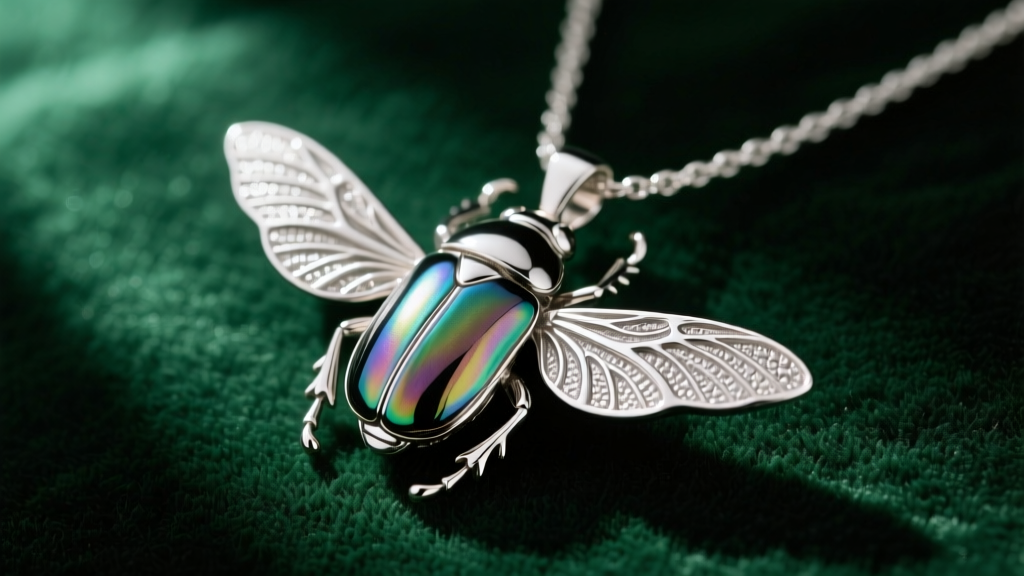
The fascination with entomology-inspired jewelry has cemented the bug necklace as a staple in both gothic and nature-chic wardrobes. However, the intricate anatomy of insect pendants—featuring delicate antennae, segmented legs, and textured wing casings—presents unique structural challenges. A material that works for a simple geometric pendant may fail catastrophically when cast into the shape of a stag beetle or praying mantis. As of 2026, the market is flooded with everything from mass-produced zinc alloys to artisan-crafted precious metals and bio-resins. Choosing the right material is not merely an aesthetic decision; it dictates the piece's tensile strength, skin safety, and resistance to environmental degradation.
When evaluating a bug necklace, you must consider the Mohs hardness of the material, its reaction to sulfur and UV light, and the structural integrity of the bail (the loop connecting the pendant to the chain). This guide breaks down the metallurgical and chemical properties of the most common materials used in insect jewelry, providing a framework for making an informed, long-lasting investment.
Sterling Silver vs. Gold Vermeil: The Precious Metal Standard
For high-fidelity insect designs, precious metals remain the gold standard due to their casting properties and inherent value. However, not all precious metal bug necklaces are created equal.
The .925 Sterling Silver Advantage
Sterling silver (92.5% pure silver, 7.5% copper or other alloys) offers excellent malleability, allowing jewelers to cast incredibly detailed wing venation and compound eye textures. However, the copper content makes it highly susceptible to oxidation. When exposed to sulfur compounds in the air or on the skin, sterling silver forms silver sulfide, resulting in a black tarnish. For a bug necklace, this tarnish can actually be used to the designer's advantage through 'oxidized' or 'blackened' silver finishes, which pool in the crevices of the insect's exoskeleton to highlight the 3D relief.
Gold Vermeil and Bail Friction
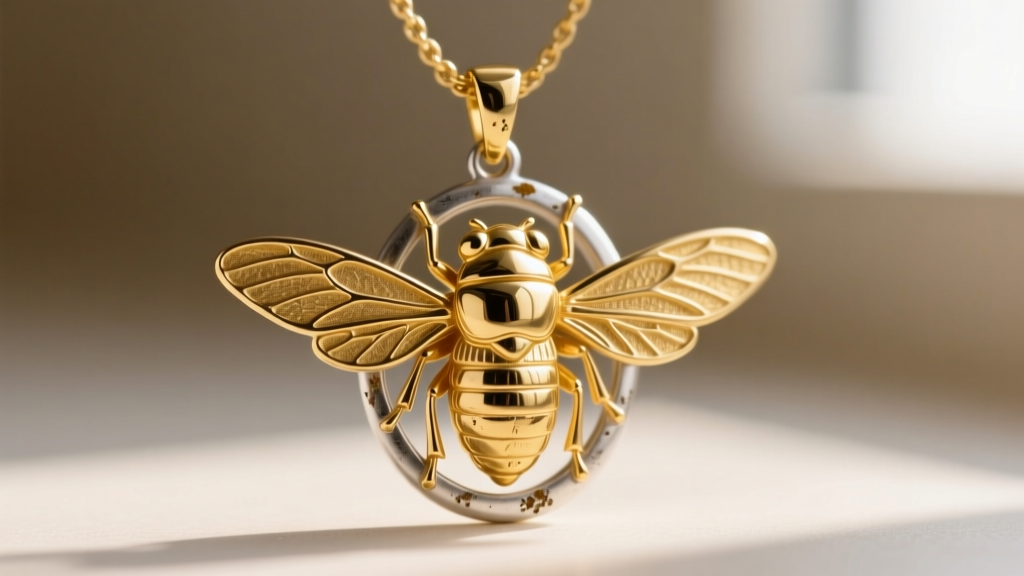
Gold vermeil consists of a thick layer of gold (legally required to be at least 2.5 microns thick in the US and UK) electroplated over a sterling silver base. While it offers the luxurious look of solid gold at a fraction of the cost, it has a specific failure mode in bug necklaces. The bail of an insect pendant often experiences high friction against the chain. Over time, this mechanical wear can strip the gold layer at the top of the bail, exposing the silver beneath. To mitigate this, look for vermeil bug necklaces that feature a reinforced, solid gold-filled bail or a protective enamel coating at the friction point.
Vitreous Enamel and Cloisonné: Iridescence and Color
Insects are renowned for their structural coloration and iridescence. To replicate the vivid blues of a morpho butterfly or the metallic greens of a jewel beetle, jewelers turn to enamel. Understanding the difference between vitreous and cold enamel is critical for assessing a piece's durability.
- Vitreous Enamel: This is essentially glass. Finely ground silica and metal oxides are fused to a metal backing at temperatures exceeding 1400°F (760°C). The result is a scratch-resistant, UV-stable finish that will never fade. According to the Gemological Institute of America (GIA), vitreous enamel is highly durable but possesses a Mohs hardness of around 5-6, meaning it can shatter if the necklace is dropped on a hard surface.
- Cold Enamel (Epoxy Resin): Often used in cheaper bug necklaces, cold enamel is a two-part epoxy resin poured into metal recesses. While it offers vibrant colors and is shatterproof, it is highly susceptible to UV degradation and will yellow over time. It also scratches easily (Mohs 2-3), which can ruin the glossy 'shell' effect of a beetle pendant.
Always inspect the product specifications for the term 'vitreous' or 'kiln-fired' when purchasing an enameled insect pendant. If the listing simply says 'colored enamel,' it is likely a cold resin that will degrade within a few years of daily wear.
Bio-Resin and Real Specimens: Ethical Encapsulation
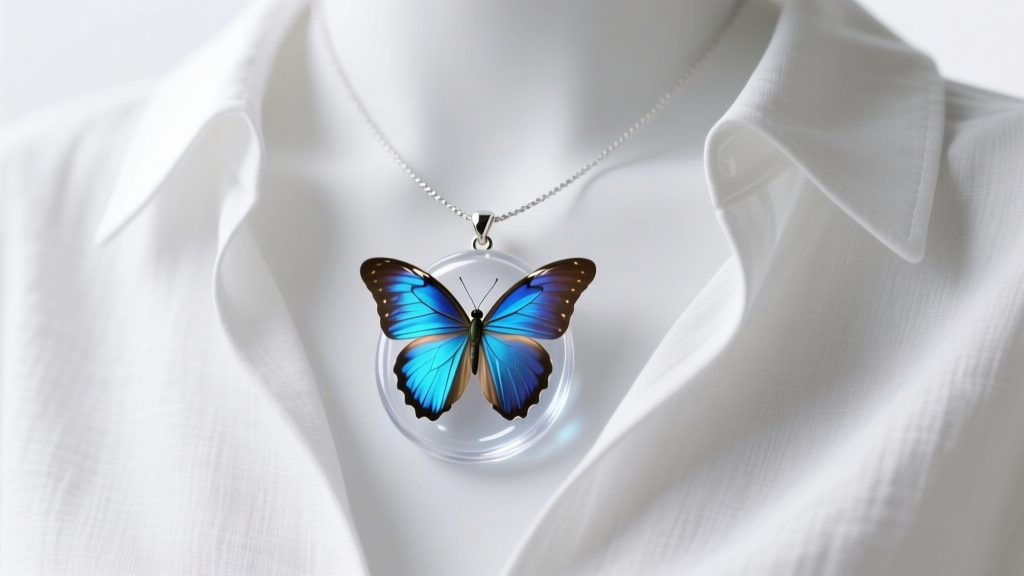
The use of real, ethically sourced insects encased in clear resin has surged in popularity. These bio-resin bug necklaces offer unparalleled realism, but the chemical properties of the encapsulating medium require careful scrutiny.
Standard epoxy resins are notorious for photo-oxidation. When exposed to ultraviolet light, the polymer chains break down, causing the resin to turn a murky, yellowish-brown. This completely obscures the entomological specimen inside. When shopping for a real-specimen bug necklace, you must verify that the artisan uses a UV-stabilized resin. These advanced formulations include HALS (Hindered Amine Light Stabilizers) and UV absorbers, which can delay yellowing by a decade or more.
Furthermore, the specimen itself must be properly desiccated before encapsulation. If a jeweler seals a bug with residual moisture inside, the trapped water will eventually cause the insect to decompose, releasing gases that create microscopic bubbles and cloudy patches within the resin pendant.
Material Comparison Matrix
Use this matrix to evaluate which bug necklace material aligns with your lifestyle, budget, and maintenance preferences.
| Material | Mohs Hardness | Tarnish / UV Risk | Avg. Price Range | Best For |
|---|---|---|---|---|
| .925 Sterling Silver | 2.5 - 3 | High (Sulfide Tarnish) | $45 - $120 | Intricate, oxidized gothic designs |
| Gold Vermeil (2.5μm+) | 2.5 - 3 | Moderate (Bail Wear) | $60 - $180 | Luxury everyday wear |
| Vitreous Enamel | 5 - 6 | None (Glass) | $80 - $250 | Vibrant, iridescent wing details |
| UV-Stabilized Resin | 2 - 3 | Low (If HALS treated) | $30 - $90 | Real specimen encapsulation |
Chain Selection: Matching the Pendant Weight
A common failure point in insect jewelry is the chain snapping under the weight of a dense metal pendant. Bug pendants are often solid or feature thick, three-dimensional thoraxes, making them surprisingly heavy. A standard 0.8mm cable chain is insufficient for a solid silver beetle weighing over 8 grams.
For metal bug pendants weighing between 5 and 15 grams, opt for a 1.2mm to 1.5mm rolo or wheat chain. Wheat chains are particularly suitable because their woven, interlocking links offer superior tensile strength and resist kinking, which is vital when the pendant shifts during movement. Additionally, ensure the clasp is a sturdy lobster claw rather than a spring ring, as the small internal springs in spring rings frequently fail when subjected to the dynamic tension of a heavy, asymmetrical pendant.
Care and Maintenance by Material
Maintaining the intricate details of a bug necklace requires material-specific cleaning protocols. Never use ultrasonic cleaners on vitreous enamel or resin pieces, as the high-frequency vibrations can cause micro-fractures in the glass or delaminate the resin from the metal backing.
- For Sterling Silver: Use a dedicated silver polishing cloth impregnated with anti-tarnish agents. Gently buff the raised areas of the insect's exoskeleton, leaving the dark oxidation in the recessed joints to maintain the 3D contrast.
- For Enamel and Resin: Clean with a mild, phosphate-free dish soap and a soft-bristled baby toothbrush. Avoid any chemicals containing ammonia or alcohol, which can degrade cold enamel and strip the protective top-coats of bio-resins.
- Storage: Store your bug necklace flat in an anti-tarnish bag. Hanging insect pendants can cause the delicate antennae or legs to catch on other jewelry, leading to irreversible bending or snapping.
By understanding the metallurgical and chemical realities behind these materials, you can select a bug necklace that is not only a striking fashion statement but a resilient piece of wearable art built to endure.


