How to Curate a Custom Charm Necklace Diamond Layout
Learn how to build and style a custom charm necklace diamond layout. Step-by-step guide on chain gauges, diamond grades, and clasp security.

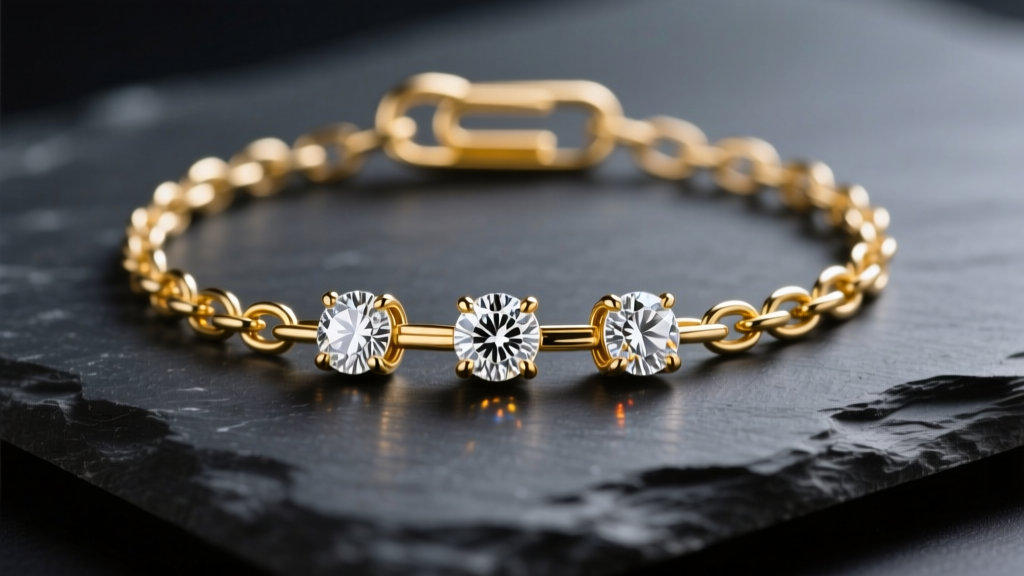
Building a custom charm necklace diamond collection is an exercise in personal storytelling and precise engineering. Unlike mass-produced pendants, a curated diamond charm necklace requires a deep understanding of metallurgy, gemology, and spatial design. In 2026, the trend has shifted heavily toward asymmetrical, highly personalized layouts that mix diamond cuts and metal textures. However, the most common mistake collectors make is prioritizing the diamonds while neglecting the structural integrity of the chain and hardware. This step-by-step guide will walk you through the exact specifications needed to build a durable, brilliant, and perfectly balanced diamond charm necklace.
Step 1: Selecting the Foundation Chain and Alloy
The chain is the load-bearing foundation of your necklace. A delicate 1.0mm cable chain might look elegant on a display bust, but it will quickly succumb to metal fatigue under the dynamic, swinging weight of multiple diamond charms.
Gauge and Tensile Strength
For a charm necklace holding between three and five diamond pendants (averaging 1.5 to 3.0 grams each), you need a chain thickness of at least 1.5mm to 2.2mm. The paperclip chain and rolo chain are currently the industry standards for charm necklaces because their interlocking, flattened links distribute weight more evenly than standard cable chains.
14k vs. 18k Gold: The Durability Debate
While 18k gold (75% pure gold) offers a richer, deeper yellow hue, it is inherently softer. For a charm necklace that will experience the pulling and tugging of heavy diamond bezels, 14k gold is the superior engineering choice. The higher alloy content (typically mixed with copper, silver, and zinc) increases the tensile strength of the metal, reducing the risk of the chain stretching or the clasp spring-ring failing over time. If you prefer platinum, ensure the chain is cast in Plat950/Ru (platinum with ruthenium), which offers the highest scratch resistance and structural rigidity for heavy charm loads.
Step 2: Sourcing Diamond Charms (Melee vs. Full Cut)
When sourcing diamonds for charms—typically ranging from 0.05 carats to 0.25 carats—you are entering the territory of "melee" diamonds. Understanding how these small stones are cut is crucial for maximizing the brilliance of your charm necklace diamond layout.
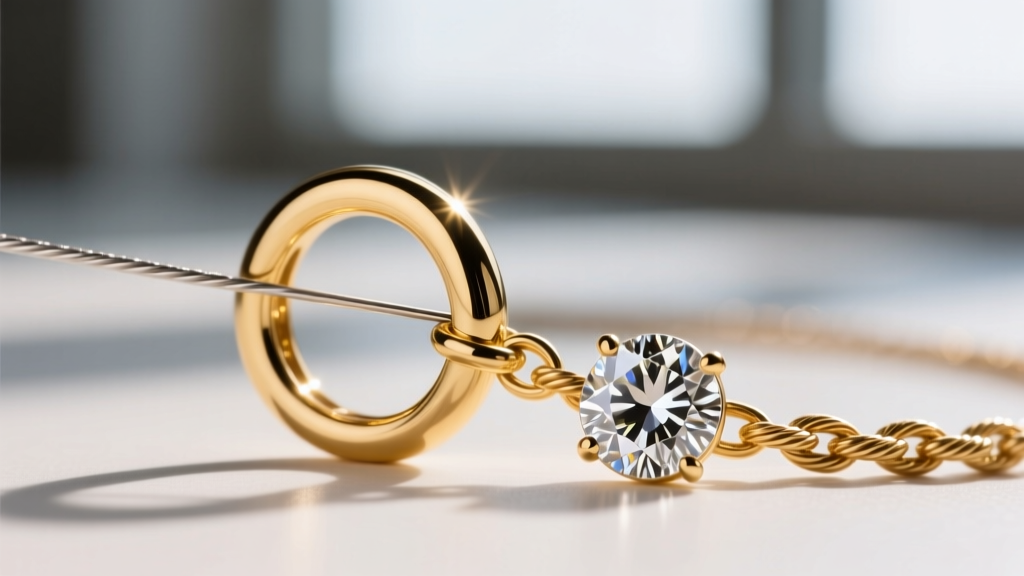
Single Cut vs. Full Cut Melee
According to the Gemological Institute of America (GIA), melee diamonds are generally cut in two ways:
- Single Cut: Features only 17 or 18 facets. These are cheaper and often used in mass-market jewelry, but they lack the fiery scintillation of larger diamonds.
- Full Cut: Features the standard 57 or 58 facets of a full-sized round brilliant. Full-cut melee diamonds cost 20% to 30% more but offer vastly superior light return. For a standalone charm where the diamond is the focal point, always insist on full-cut stones.
Color and Clarity Grades for Small Stones
Because inclusions are incredibly difficult to see in stones under 0.15ct with the naked eye, paying for VVS clarity is a waste of capital. SI1 to I1 clarity is perfectly acceptable for small diamond charms, provided the inclusions are not located directly under the table (which can make the stone look cloudy). For color, stick to G-H if setting the charms in yellow gold, as the metal's warmth will mask slight yellow tints. If using white gold or platinum, upgrade to D-F color grades to prevent the diamonds from looking dull against the bright white metal.
Step 3: Hardware and Attachment Mechanics
The most frequent point of failure in a custom charm necklace is the jump ring—the small circular wire that connects the diamond charm to the chain. If you use the flimsy split rings that come standard with most retail charms, you will eventually lose your diamonds.
Jump Ring Gauge and Sizing
You must upgrade to solid, soldered jump rings. A standard 20-gauge jump ring is too thin and will pull apart under the pendulum-like motion of a walking wearer. You need a minimum of 16-gauge or 18-gauge wire for your jump rings. Furthermore, the inner diameter of the jump ring must be large enough to slide freely over the thickest link of your chain without catching, typically a 3.5mm to 4.5mm outer diameter.
| Chain Style | Min. Thickness | Max Charm Weight | Ideal Jump Ring Gauge |
|---|---|---|---|
| Paperclip | 2.0mm | 4.5 grams | 16-Gauge (Solid) |
| Rolo | 1.8mm | 3.5 grams | 18-Gauge (Solid) |
| Cable | 1.5mm | 2.0 grams | 18-Gauge (Solid) |
| Box Chain | 1.2mm | 1.5 grams | 20-Gauge (Soldered) |
Pro Tip: Take your chain and charms to a local bench jeweler and ask them to laser-weld the jump rings shut. This creates a seamless, unbreakable loop that guarantees your diamond charms will never slip off the chain.
Step 4: Layout, Spacing, and the Rule of Odds
A poorly spaced charm necklace looks cluttered and chaotic, with all the charms inevitably sliding down to cluster at the bottom center of the collarbone. To achieve a high-end, bespoke look, you must engineer the layout.
The Rule of Odds and Asymmetry
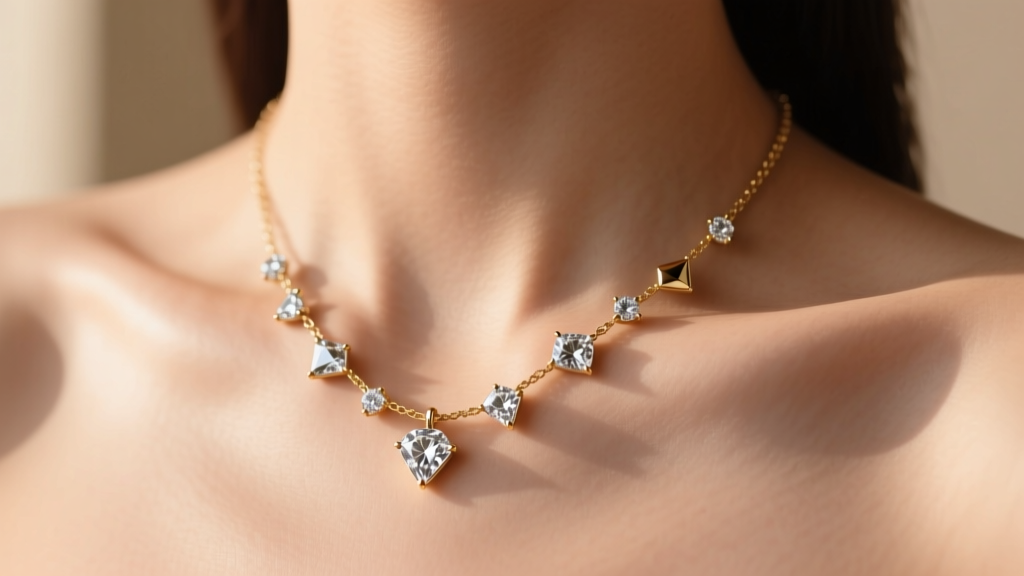
In jewelry design, the "Rule of Odds" dictates that arrangements of three or five elements are more visually pleasing than even numbers. For a 16-inch or 18-inch chain, three charms are ideal. The current 2026 styling trend favors asymmetrical clustering. Instead of spacing the charms evenly, group two smaller diamond charms (e.g., 0.10ct each) close together on the left side of the collarbone, and place one larger centerpiece charm (e.g., 0.30ct) slightly off-center on the right.
Securing the Layout with Silicone Stops
To prevent your carefully arranged charms from sliding around the chain, use hidden silicone O-rings or have a jeweler solder tiny, flat "stopper" beads onto the chain links directly behind the jump rings. Silicone O-rings are a fantastic, non-destructive DIY solution. Simply slide a 2mm clear silicone jewelry stopper onto the chain, push it snugly against the jump ring of the charm, and it will grip the metal links, locking your asymmetrical layout perfectly in place.
Step 5: Long-Term Maintenance and Security Checks
Diamond charms are subjected to constant micro-impacts against the wearer's chest, clothing, and other charms. This environment requires a strict maintenance protocol to ensure the stones remain secure.
Prong vs. Bezel Settings
If your charms are prong-set, the tiny metal prongs will inevitably wear down or catch on knit sweaters, lifting away from the diamond's girdle. The Jewelers of America recommends having prong settings checked by a professional every six months. For a charm necklace that is worn daily, bezel settings are highly recommended over prongs. A full bezel completely encircles the diamond's edge in a rim of metal, offering maximum protection against impacts and completely eliminating the risk of prongs catching on fabric.
Cleaning Protocols
Avoid using ultrasonic cleaners on your assembled charm necklace. The high-frequency vibrations can easily shake loose small melee diamonds that have slightly worn prongs or imperfect bezel seats. Instead, clean your diamond charm necklace weekly using a soft-bristled baby toothbrush, warm water, and a few drops of mild, ammonia-free dish soap. Gently brush the back of the diamond settings (the pavilion) where skin oils and lotions accumulate, which can drastically reduce the stone's light return and make the diamonds appear dull or gray.
By meticulously selecting your chain gauge, insisting on full-cut melee diamonds, reinforcing your hardware, and engineering your layout, you will create a charm necklace diamond collection that is not only visually stunning but structurally built to last a lifetime.


