The Chain Link Necklace Gold Trend: 2026 Style Guide
Explore the 2026 chain link necklace gold trend. Master link profiles, gold karats, clasp engineering, and advanced layering techniques for every neckline.


The 2026 Evolution of the Gold Chain Link
The landscape of fine jewelry has shifted dramatically as we move through 2026. While the quiet luxury movement of the early 2020s championed barely-there cable chains, the current pendulum has swung toward architectural weight and structural presence. Today, a statement chain link necklace gold piece is no longer just a streetwear staple; it is a cornerstone of high-low editorial styling. According to the latest Bain & Company Luxury Market Report, consumers are increasingly investing in 'hard' jewelry—pieces with tangible gram weight and distinct geometric profiles that serve as standalone focal points rather than mere pendant vehicles.
Micro-Links vs. Chunky Cubans: The Bifurcated Trend
The 2026 market is defined by a stark bifurcation in scale. On one end, we see the rise of the 'micro-link'—chains featuring links under 2mm in diameter that mimic the fluid drape of liquid metal. On the opposite end, the oversized Cuban and Mariner links (ranging from 8mm to 14mm in width) dominate. The key to pulling off the heavier profiles this year is juxtaposition: pairing a 45-gram, 10mm yellow gold Cuban link with delicate, unstructured silk or sharp, oversized tailoring. The contrast between the heavy metallurgy and soft fabrics creates a dynamic visual tension that defines contemporary luxury.
Decoding Gold Purity for Everyday Link Chains
When investing in a heavy chain, understanding the metallurgy is critical. The Gemological Institute of America (GIA) notes that pure 24k gold is far too malleable for interlocking links, as the friction and weight will cause the chain to stretch and deform rapidly. Therefore, alloying is essential for structural integrity.
| Gold Karat | Gold Content | Durability & Tensile Strength | Best Use Case | 2026 Price Premium |
|---|---|---|---|---|
| 10k Gold | 41.7% | Maximum durability, highly scratch-resistant, but prone to tarnishing over time. | Heavy, oversized daily-wear chains; budget-conscious buyers. | Lowest artisan premium. |
| 14k Gold | 58.5% | The industry sweet spot. Excellent balance of rich color and tensile strength. | Standard for Cuban and Curb links; ideal for 20g-50g chains. | Moderate; standard market rate. |
| 18k Gold | 75.0% | Rich, buttery yellow hue but softer. Heavy 18k chains can stretch at the jump rings. | Lightweight paperclip chains, luxury designer pieces, special occasions. | Highest; significant spot-price multiplier. |
For a chain link necklace gold design that exceeds 30 grams, 14k gold is unequivocally the superior choice. The copper and silver alloys in 14k provide the necessary rigidity to prevent the links from pulling apart under their own momentum.
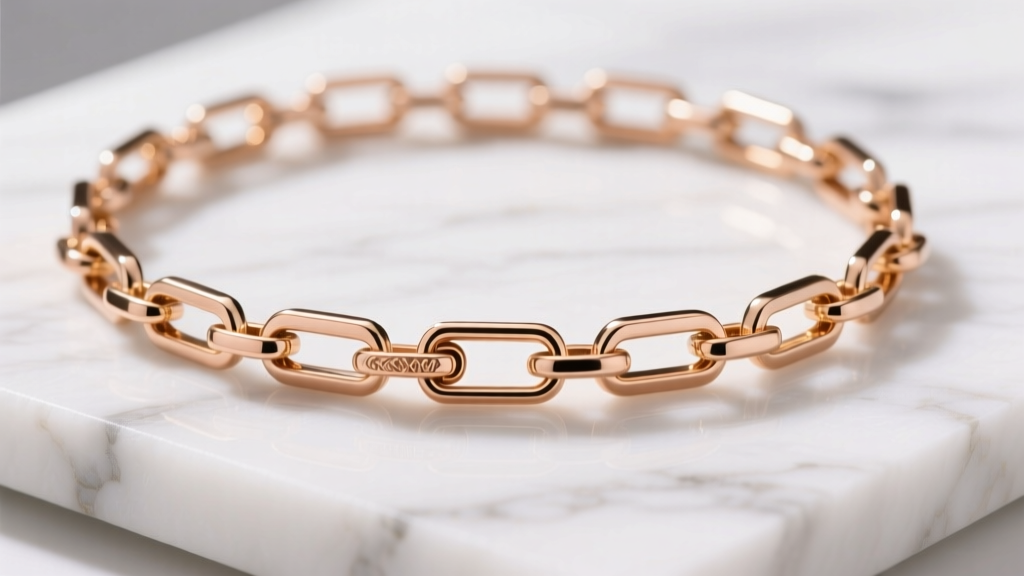
Link Profiles: Beyond the Standard Curb
While the classic Curb and Cuban links remain foundational, 2026 has introduced a demand for more complex, light-catching geometries. Understanding these profiles allows you to curate a collection with distinct visual textures.
The Paperclip Chain
Characterized by elongated, rectangular links, the paperclip chain offers maximum visual impact with minimal gram weight. Because the links are hollow or semi-solid in many commercial iterations, they provide a bold, modern silhouette without the prohibitive cost of a solid Cuban. However, buyers must be wary of electroformed hollow links, which can dent irreparably if crushed. Always opt for semi-solid or solid stamped paperclip links for longevity.
The Mariner (Anchor) Link
Featuring an oval link with a central reinforcing bar, the Mariner chain is inherently robust. The central bar distributes tension evenly across the link, making it one of the strongest chain architectures available. In 2026, we are seeing a surge in 'puffed' Mariner links, where the gold is domed to catch light from multiple angles, offering a vintage maritime aesthetic updated with high-polish finishing.
The Figaro Chain
Originating in Italy, the Figaro features a pattern of three short links followed by one elongated link. This rhythmic variation breaks up the visual monotony of standard chains and lays exceptionally flat against the collarbone, making it an ideal candidate for layering beneath unbuttoned linen shirts.
The Engineering of Heavy Chains: Clasp & Soldering
The most overlooked aspect of a premium chain link necklace gold piece is its hardware. A chain is only as strong as its weakest connection point. For chains weighing under 15 grams, a standard spring-ring clasp is sufficient. However, as we move into the 20-40 gram range, a heavy-duty lobster clasp with a soldered jump ring is mandatory. If the jump ring is not laser-soldered shut, the sheer weight of a gold chain will pull the gap open over time, leading to catastrophic loss.
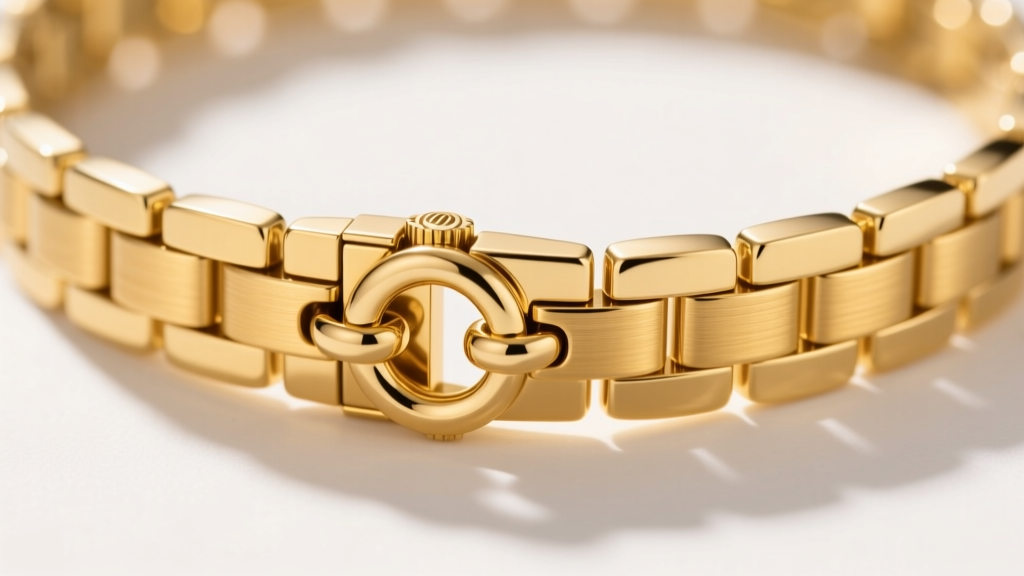
For statement chains exceeding 50 grams, the box clasp (also known as a tongue-and-groove clasp) is the only acceptable standard. This mechanism features a folding lever that snaps securely into a boxed housing, often accompanied by a figure-eight safety wire that catches on a side peg. This dual-security system ensures that even if the primary lever is accidentally depressed, the chain remains secured to the neck.
Styling Frameworks: Layering Math for 2026
Layering multiple gold chains requires a strict mathematical approach to prevent tangling and visual clutter. The golden rule of layering is maintaining a minimum 4-inch length differential between each chain. Here is the definitive 2026 layering framework:
- The Anchor (16 inches): A micro-cable or delicate rolo chain sitting tightly at the base of the throat. This provides a foundational glint without adding visual weight.
- The Core (20 inches): A mid-weight paperclip or Figaro chain resting on the upper chest. This serves as the primary textural element and bridges the gap between the neck and the torso.
- The Statement (24+ inches): A heavy, 8mm+ Cuban or Mariner link chain that plunges to the sternum. This draws the eye downward and elongates the neckline.
Investment & Pricing Metrics
When purchasing solid gold chains, transparency in pricing is your best defense against inflated retail markups. In 2026, the standard pricing model for a high-quality chain link necklace gold piece is calculated by the gram weight of the gold multiplied by the daily spot price, plus an 'artisan premium' for the labor-intensive soldering and polishing processes.
"A reputable jeweler will always disclose the exact gram weight of a solid chain. If a retailer prices a heavy chain solely by the piece without providing the gram weight, it is a strong indicator of hollow construction or excessive retail markup."
Typically, expect to pay a 30% to 60% premium over the melt value of the gold for machine-assembled chains, and up to a 150% premium for hand-soldered, diamond-cut artisan links. By understanding the interplay of karat purity, link geometry, and hardware engineering, you can confidently navigate the 2026 market and invest in gold chains that are as structurally enduring as they are stylistically relevant.


