How to Style and Layer Your Perfect Catholic Charm Necklace
Learn how to build, layer, and style a Catholic charm necklace. Discover chain gauges, medal sizes, and expert layering techniques for daily wear.

The Renaissance of Sacred Jewelry
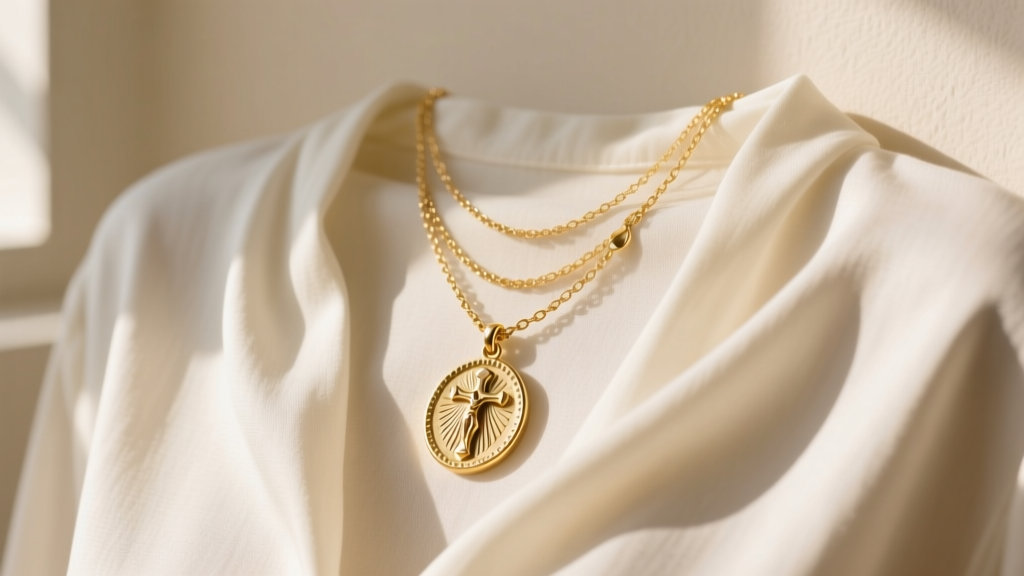
In recent years, the catholic charm necklace has evolved from a strictly traditional accessory into a cornerstone of personalized, meaningful everyday style. Moving away from mass-produced fast fashion, modern jewelry enthusiasts are curating heirloom-quality pieces that reflect their faith, heritage, and personal aesthetic. However, building a necklace that balances spiritual significance with structural integrity and visual harmony requires an understanding of metallurgy, chain mechanics, and proportion.
This step-by-step guide will walk you through the exact process of designing, assembling, and layering a Catholic charm necklace that will last a lifetime. From selecting the correct chain gauge to support heavy solid gold medals, to mastering the two-inch layering rule, we are diving deep into the specifics of sacred jewelry craftsmanship.
Step 1: Selecting the Foundation Chain
The most common failure point in any charm necklace is the chain. A delicate chain cannot support the pendulum-like weight of a solid metal medal, leading to stretched links and eventual snapping. When building your base, you must match the chain's tensile strength to the weight of your chosen charms.
Chain Gauges and Link Styles
- 0.9mm - 1.2mm (Cable or Rolo): Ideal for lightweight charms (under 3 grams), such as a 10mm crucifix or a delicate Guardian Angel medal. Rolo chains, with their interlocking rounded links, offer superior strength compared to standard cable chains, which have weaker solder points.
- 1.5mm - 2.0mm (Box or Rope): The sweet spot for medium-weight medals (3 to 8 grams), including standard 15mm Miraculous Medals or Saint Christopher pendants. Box chains provide a modern, reflective surface, but rope chains offer better flexibility and resistance to kinking.
- 2.5mm - 4.0mm (Figaro or Curb): Mandatory for heavy, oversized pieces (8+ grams), such as a large 25mm St. Benedict medal or a solid 18k gold scapular. These thicker, traditional link styles provide the necessary structural support and offer a bold, unisex aesthetic.
Material Science: Gold vs. Silver
For daily wear, 14k or 18k solid gold is the premier choice. It resists tarnish and withstands exposure to water and skin oils. Sterling silver (925) is a beautiful, budget-friendly alternative, but it contains 7.5% copper, which reacts with hydrogen sulfide in the air and the natural acidity of your skin, leading to tarnish. Avoid gold-plated brass or thin vermeil for sacred jewelry meant to be worn in the shower or during sleep, as the friction will wear away the gold layer within months, exposing the base metal.
Step 2: Curating Your Sacred Charms
The heart of your catholic charm necklace lies in the medals and crucifixes you select. Each piece carries profound theological weight and history. According to the Eternal Word Television Network (EWTN), the Miraculous Medal was revealed to St. Catherine Labouré in 1830 and remains one of the most widely worn sacramentals in the world, associated with countless graces and conversions.
Proportion and Sizing Guide
When selecting charms, size dictates the visual hierarchy of your necklace. Here is a breakdown of standard medal sizes and their best use cases:
- 10mm - 12mm (Tiny): Best for layering as a secondary or tertiary charm. Perfect for subtle crucifixes, tiny Holy Spirit doves, or minimalist saint initials.
- 14mm - 16mm (Standard): The most versatile size. A 15mm Miraculous Medal or Our Lady of Guadalupe pendant at this size is easily readable without overpowering the neckline. Ideal for a standalone 18-inch chain.
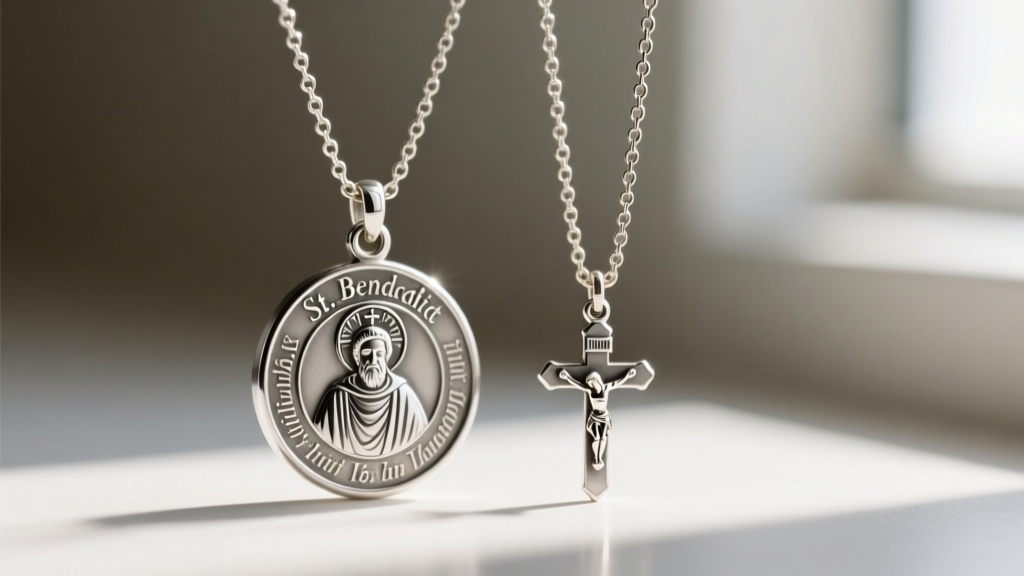
- 20mm - 25mm (Statement): Reserved for heavy, highly detailed pieces like the St. Benedict medal (which features intricate Latin text around the perimeter that requires a larger surface area to be legible). These should be worn on thicker chains, typically at 20 to 24 inches.
Step 3: The Masterclass in Layering
Layering a catholic charm necklace requires a strict adherence to spatial proportions to prevent the chains from tangling and the charms from scratching one another. The golden rule of jewelry layering is the two-inch minimum gap. If your first chain is 16 inches, your second must be at least 18 inches, and your third at least 20 inches.
Layering Blueprint: The Trinity Stack
| Layer Position | Chain Length | Recommended Gauge | Ideal Charm Pairing |
|---|---|---|---|
| Layer 1 (Collarbone) | 16 Inches | 1.0mm Rolo | 10mm Delicate Crucifix or Tiny Sacred Heart |
| Layer 2 (Chest) | 18 Inches | 1.5mm Box | 15mm Miraculous Medal or St. Jude |
| Layer 3 (Sternum) | 20 to 22 Inches | 2.5mm Figaro | 22mm St. Benedict Medal or Rosary Centerpiece |
By staggering the lengths and varying the chain textures (e.g., a delicate rolo paired with a chunky figaro), you create visual depth while ensuring the heavy lower medals do not pull on the delicate upper chains.
Step 4: Securing the Hardware (Crucial Step)
The number one reason people lose their precious religious medals is the failure of the jump ring—the tiny circular wire that connects the charm to the chain. Standard, unsoldered jump rings have a microscopic slit where the wire was cut. Over time, the pendulum motion of walking and moving causes the heavy medal to pull this slit open, and the charm slips off.
The Soldered Jump Ring Solution
Always inspect the hardware attaching your catholic charm necklace pendants. For any medal weighing more than 2 grams, insist on a soldered jump ring (where the slit has been fused shut with a laser or torch) or a continuous seamless ring. If you are assembling the necklace yourself, use heavy-duty split rings (miniature keyrings) rather than standard open jump rings for the heavier St. Benedict or scapular medals. Additionally, ensure your chain terminates in a sturdy lobster clasp rather than a flimsy spring-ring clasp, which can easily snag and break under tension.
Step 5: Maintenance and Metallurgical Care
Sacred jewelry is often worn 24/7, exposing it to harsh environmental factors. According to the Gemological Institute of America (GIA), exposure to household chlorine bleach or heavily chlorinated pool water can cause stress corrosion cracking in the alloy metals (like copper and zinc) mixed into 14k and 18k gold. This leads to microscopic fractures in the chain links, eventually causing the necklace to snap without warning.

Step-by-Step Cleaning Routine
- Weekly Rinse: Wash your necklace in warm water with a drop of mild, phosphate-free dish soap to remove lotion, sebum, and dead skin cells that accumulate behind the medals.
- Drying: Pat dry with a lint-free microfiber cloth. Never air-dry sterling silver, as water spots will accelerate localized tarnishing.
- Monthly Polish (Silver Only): Use a treated silver polishing cloth to gently buff the high points of your sterling silver medals. Avoid liquid silver dips, as they are highly abrasive and will strip the antique oxidation (the dark enamel or patina) from the intricate Latin lettering on a St. Benedict medal, leaving it looking flat and washed out.
Final Thoughts on Wearing Your Faith
Building the perfect catholic charm necklace is an exercise in both devotion and design. By respecting the physical properties of precious metals, understanding the historical significance of your chosen sacramentals, and applying structural jewelry-making principles, you create more than just an accessory. You forge a wearable testament to your faith that is engineered to endure the rigors of daily life and eventually be passed down as a cherished family heirloom.


