Life Alert Necklace Care: Cleaning & Maintenance Tips
Learn how to properly clean, maintain, and inspect your Life Alert necklace. Expert tips on metal care, waterproofing, and preventing chain failure.

The Critical Importance of Medical Alert Jewelry Maintenance
When we discuss a life alert necklace, we are generally referring to one of two vital devices: a traditional engraved metal medical ID tag or an electronic emergency help button pendant worn on a chain. Because these pieces rest against the skin 24/7, they are constantly exposed to sweat, sebum, dead skin cells, and environmental pollutants. Neglecting the care of your medical alert necklace doesn't just result in a dull appearance; it can lead to severe skin irritation, degraded waterproof seals on electronic models, and catastrophic chain failure when you need it most. This comprehensive guide provides metallurgical insights, mechanical troubleshooting, and exact cleaning protocols to ensure your life alert necklace remains functional, hygienic, and legible.
The Metallurgy of Your Pendant: 316L vs. 304 Stainless Steel
Before applying any cleaning solution, you must identify the metal grade of your pendant and chain. High-quality medical alert jewelry is typically forged from 316L surgical stainless steel. The 'L' stands for low carbon, but the real secret to its durability is the addition of 2-3% molybdenum. This specific alloy addition drastically increases resistance to pitting corrosion from the chloride salts naturally present in human sweat.
Cheaper alternatives often use 304 stainless steel, which lacks molybdenum. Over time, 304 steel develops micro-pitting—tiny, invisible pores that harbor bacteria and cause the metal to turn dull and gray. If your pendant is sterling silver (925), it is highly susceptible to tarnishing when exposed to sulfur compounds in the air and certain lotions. Understanding your specific alloy dictates the chemical agents you can safely use without stripping protective coatings or accelerating oxidation.
Cleaning Protocols for Traditional Engraved Metal Pendants
For non-electronic, solid metal pendants (stainless steel, sterling silver, or titanium), the goal is to remove organic buildup without scratching the surface or filling the engraved lettering with abrasive residue.
The Warm Soak and Soft Brush Method
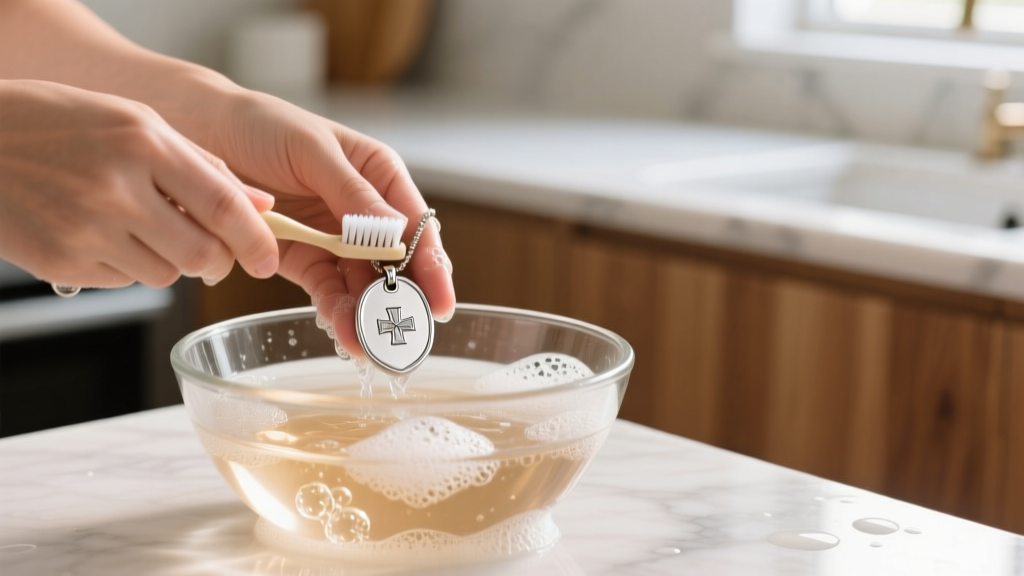
- Step 1: Mix three drops of pH-neutral dish soap (like Dawn) into a bowl of warm distilled water. Avoid tap water, as dissolved minerals can leave hard water spots on polished steel.
- Step 2: Submerge the pendant and chain for exactly 10 minutes. This loosens sebum trapped in the chain links.
- Step 3: Use a soft-bristled baby toothbrush to gently agitate the engraved areas. Never use hard nylon brushes, which will leave micro-scratches on high-polish finishes.
- Step 4: Rinse thoroughly with distilled water and pat dry with a lint-free microfiber cloth. Ensure no moisture remains in the clasp mechanism.
Sanitizing Electronic Help Button Housings
Electronic life alert necklaces present a unique maintenance challenge. The pendant houses a printed circuit board (PCB), a battery, and a radio transmitter, all sealed within a polycarbonate or ABS plastic shell. These devices usually carry an IP68 water resistance rating, meaning they can withstand submersion up to 1.5 meters for 30 minutes. However, this rating relies on internal silicone O-rings.
Never submerge an electronic pendant in hot water or use harsh solvents like bleach (sodium hypochlorite) or acetone. Heat causes the polycarbonate shell and the silicone O-ring to expand at different rates, breaking the waterproof seal. Acetone will instantly cloud and weaken the plastic housing. Instead, sanitize electronic pendants daily using a microfiber cloth lightly dampened with 70% isopropyl alcohol. This concentration is optimal for killing bacteria and evaporates quickly without seeping into the microphone or speaker grilles.
The Danger of Ultrasonic Cleaners
Jewelry professionals often recommend ultrasonic cleaners for deep-cleaning chains. While highly effective for solid gold or platinum, you should never place a life alert necklace in an ultrasonic bath. The high-frequency acoustic cavitation bubbles can shatter the ceramic components inside electronic transmitters. Furthermore, if your metal pendant features baked enamel (often used for medical symbols like the caduceus or red cross), the ultrasonic vibrations will cause the enamel to fracture and flake out of the recessed channels, rendering the medical symbol illegible.
Material-Specific Maintenance Matrix
| Material / Component | Safe Routine Cleaner | Deep Cleaning Agent | Strictly Avoid |
|---|---|---|---|
| 316L Stainless Steel | pH-neutral soap & water | Baking soda paste (for scratches) | Bleach, Chlorine pool water |
| Sterling Silver (925) | Silver polishing cloth | Aluminum foil & baking soda bath | Rubber bands, Sulfur-based soaps |
| ABS / Polycarbonate Shell | 70% Isopropyl alcohol | Mild dish soap wipe-down | Acetone, Hot water, Bleach |
| Silicone O-Rings / Cords | Damp microfiber cloth | N/A | Essential oils, Alcohol soak |
Inspecting for Structural Failure Modes
A life alert necklace is only useful if it stays around your neck. Chain failure is a common issue that can be prevented with monthly mechanical inspections.
The Jump Ring Vulnerability
The jump ring is the small circular link that connects the pendant to the chain. On mass-produced medical alert jewelry, jump rings are often simply bent into a circle rather than soldered shut. Over time, the friction of the pendant sliding back and forth can cause the jump ring to twist open, resulting in a lost pendant. Use two pairs of flat-nose pliers to ensure the jump ring gap is completely flush. If the metal shows signs of thinning at the gap, replace it immediately with a soldered jump ring or a heavy-duty split ring.
Clasp Mechanics and Tension Loss
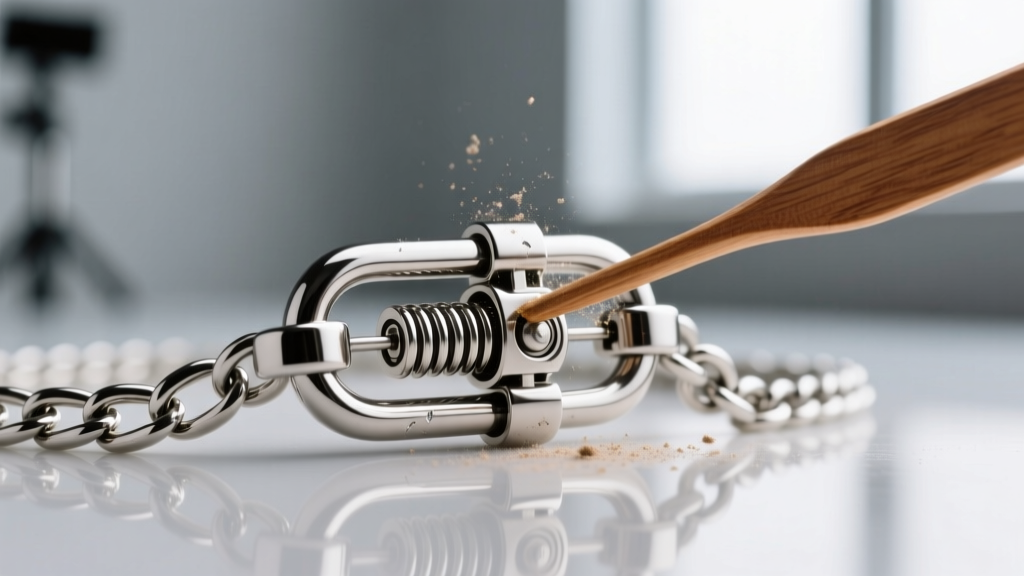
Spring ring clasps rely on a tiny internal coil spring. Sweat and dead skin cells accumulate in the trigger track, causing the spring to fail open or become stuck. Lobster clasps are generally more secure for medical alert necklaces, but their hinge mechanisms require occasional maintenance. If a lobster clasp becomes stiff, do not use liquid oil (like WD-40), which will attract dust and create an abrasive paste. Instead, rub the tip of a graphite pencil into the hinge to provide dry lubrication.
Preventing Contact Dermatitis and Skin Irritation
According to the American Academy of Dermatology, nickel is the most common cause of allergic contact dermatitis. While 316L stainless steel is considered hypoallergenic, it still contains trace amounts of nickel (typically 10-14%). In most people, the nickel is tightly bound within the alloy and does not leach. However, if the metal is exposed to acidic sweat or harsh cleaning chemicals, micro-corrosion can release nickel ions onto the skin.
Furthermore, a condition known as irritant contact dermatitis frequently occurs beneath medical alert pendants. This is not an allergy, but rather a physical irritation caused by a mixture of trapped moisture, friction, and bacterial overgrowth. To prevent this, practice the 'shower slide' technique: when bathing, slide the pendant to the side or lift it away from the skin to ensure the area underneath is thoroughly washed and dried. As noted in research published by the National Institutes of Health, keeping the skin barrier intact and dry is the primary defense against jewelry-induced dermatitis.
Establishing a Replacement Schedule
Even with meticulous care, the components of a life alert necklace experience material fatigue. Establish a proactive replacement schedule to ensure your device is always ready for an emergency:
- Every 6 Months: Inspect the chain links for stretching. Hold the chain up to the light; if you can see daylight through the gaps of the interlocking links, the metal has fatigued and the chain must be replaced.
- Every 12 Months: Replace standard spring-ring clasps. The internal springs lose their tension memory over time, increasing the risk of accidental unclasping.
- Every 18-24 Months: If you wear an electronic waterproof pendant, have the manufacturer or a certified jeweler replace the internal silicone O-rings. Silicone loses its elastic memory over time, especially when exposed to body heat and UV light, which will compromise the IP68 waterproof rating.
By treating your life alert necklace not just as a piece of jewelry, but as a critical piece of life-saving medical equipment, you ensure that it remains comfortable to wear and fully functional the moment you need to call for help.


