Burmese Ruby Necklace: Material Properties & Buying Guide
Discover the unique material properties of a Burmese ruby necklace. Compare origins, fluorescence, and pricing to make an informed investment.

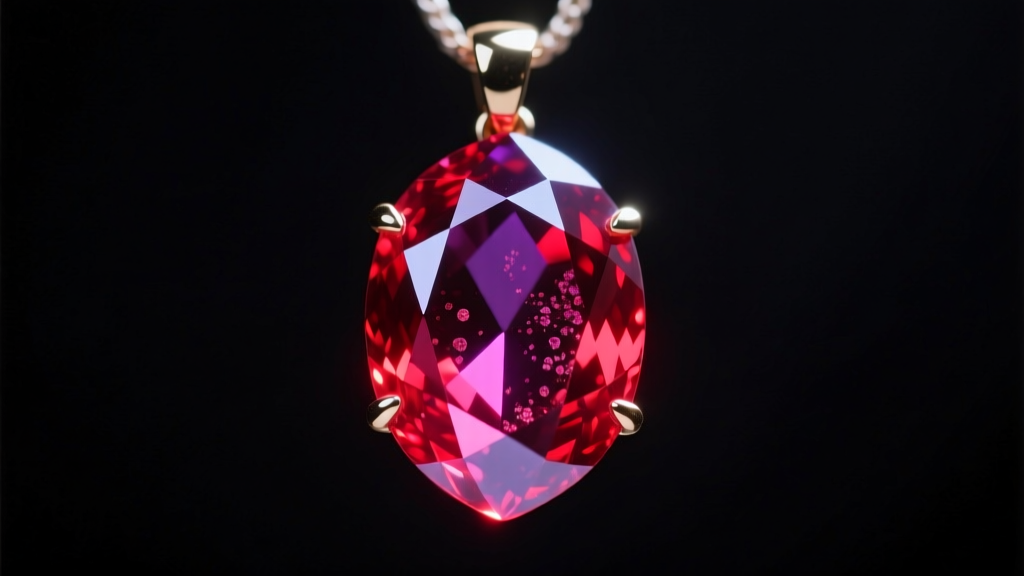
The Mineralogy of Corundum: Why Origin Dictates Value
When evaluating a Burmese ruby necklace, you are not merely looking at a piece of jewelry; you are examining a geological miracle. Rubies are the red variety of corundum (aluminum oxide, Al2O3), ranking at a 9 on the Mohs scale of hardness, making them exceptionally durable for everyday wear. However, what elevates a Burmese specimen above rubies from Mozambique, Thailand, or Madagascar is not just its hardness, but its precise trace-element chemistry. The allure of the Burmese ruby lies in its unique formation environment, which yields a specific balance of chromium and iron that cannot be easily replicated elsewhere.
In the current 2026 gemological market, provenance is a primary driver of value. A necklace featuring unheated Burmese rubies commands a massive premium due to the depletion of the historic Mogok Stone Tract. Understanding the material science behind these gems is critical for collectors and investors looking to authenticate and appraise their pieces accurately.
The Fluorescence Factor: Iron Quenching Explained
The most defining material property of a top-tier Burmese ruby is its reaction to ultraviolet (UV) light. This phenomenon is rooted in the stone's trace element composition. According to GIA's Ruby Quality Factors, the red color in rubies is caused by chromium replacing aluminum in the crystal lattice. However, the presence of iron can interfere with this process.
Burmese rubies, particularly those from the metamorphic marbles of the Mogok region, formed in iron-poor environments. This lack of iron allows the chromium to induce a strong, natural red fluorescence when exposed to UV light (including the UV rays present in natural sunlight). This internal glow makes the stone appear to radiate color from within, giving it a vibrant, almost neon saturation that gemologists refer to as 'living color.' In contrast, rubies from basalt-related deposits (like Thailand or Cambodia) contain higher iron levels, which 'quenches' or suppresses this fluorescence, resulting in a darker, more garnet-like appearance.
Material Comparison: Burmese vs. Global Alternatives
To understand the true material superiority of a Burmese ruby necklace, we must compare its physical and optical properties against other major global sources and synthetic alternatives. The table below breaks down the critical gemological differences that impact both aesthetics and market valuation.
| Property | Burmese (Mogok) | Mozambican | Thai/Cambodian | Lab-Grown (Flux) |
|---|---|---|---|---|
| Geological Origin | Metamorphic Marble | Amphibole/Metasomatic | Basalt-related | Controlled Laboratory |
| Iron Content | Very Low | Moderate | High | Trace/None |
| UV Fluorescence | Strong Red | Weak to Moderate | Inert (None) | Strong Red |
| Typical Inclusions | Rutile Silk, Calcite | Rutile, Zircon Halos | Black Spinels, Iron Staining | Flux Fingerprints, Platinum Platelets |
| Avg Price/Carat (3ct Unheated) | $50,000 - $1,000,000+ | $5,000 - $20,000 | $1,000 - $5,000 | $300 - $800 |
As highlighted in the GIA Ruby Buying Guide, while Mozambican rubies offer excellent clarity and size, they generally lack the intense fluorescent glow of their Burmese counterparts. Lab-grown rubies can mimic the chemical composition and fluorescence of Mogok rubies, but they lack the natural rutile silk inclusions that serve as a fingerprint of natural, earth-mined origins.
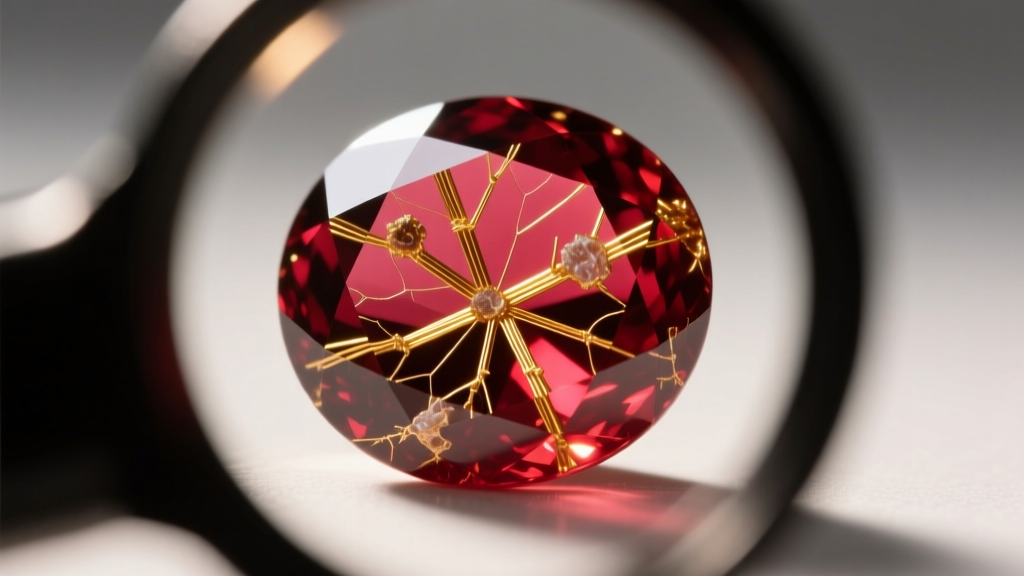
Decoding Inclusions: The 'Silk' Effect
In many gemstones, inclusions are viewed as flaws. In a Burmese ruby necklace, specific inclusions are celebrated as proof of origin and enhancers of beauty. The most prized inclusion is 'rutile silk'—microscopic needles of titanium dioxide that intersect at 60 and 120-degree angles. When light hits these needles, it scatters, softening the stone's color and giving it a velvety, glowing appearance that prevents the 'extinction' (dark, dead zones) often seen in overly dark, heavily included rubies from other regions.
If the rutile needles are dense and perfectly aligned, they can reflect light in a six-rayed star pattern, creating a Star Ruby. However, for faceted gems used in pendants, a moderate amount of silk is highly desirable. It is crucial to note that high-heat treatment (above 1600°C) will dissolve this rutile silk. Therefore, the presence of intact silk under 10x magnification is a primary indicator that the Burmese ruby is unheated, exponentially increasing the necklace's investment value.
Sourcing Geology: Mogok vs. Mong Hsu
Not all Burmese rubies are created equal. The term 'Burmese' encompasses two vastly different geological mining regions, and knowing the difference is vital for material assessment:
- Mogok Stone Tract: The legendary source of the finest 'Pigeon's Blood' rubies. Formed in marble, these stones are renowned for their high chromium, low iron, and strong fluorescence. Unheated Mogok rubies over 2 carats are among the rarest gemological materials on earth.
- Mong Hsu: Discovered in the 1990s, this region produces rubies that typically feature dark blue or purple cores. To make them commercially viable, Mong Hsu rubies are almost universally subjected to high-heat treatment with flux to heal fractures and eliminate the dark cores. While still technically 'Burmese,' they lack the premium material properties and investment grade of Mogok stones.
When purchasing a high-end necklace, always demand a report from a top-tier laboratory like GIA, Gübelin, or SSEF that explicitly states the origin as 'Burma (Myanmar)' and confirms the absence of thermal treatment.
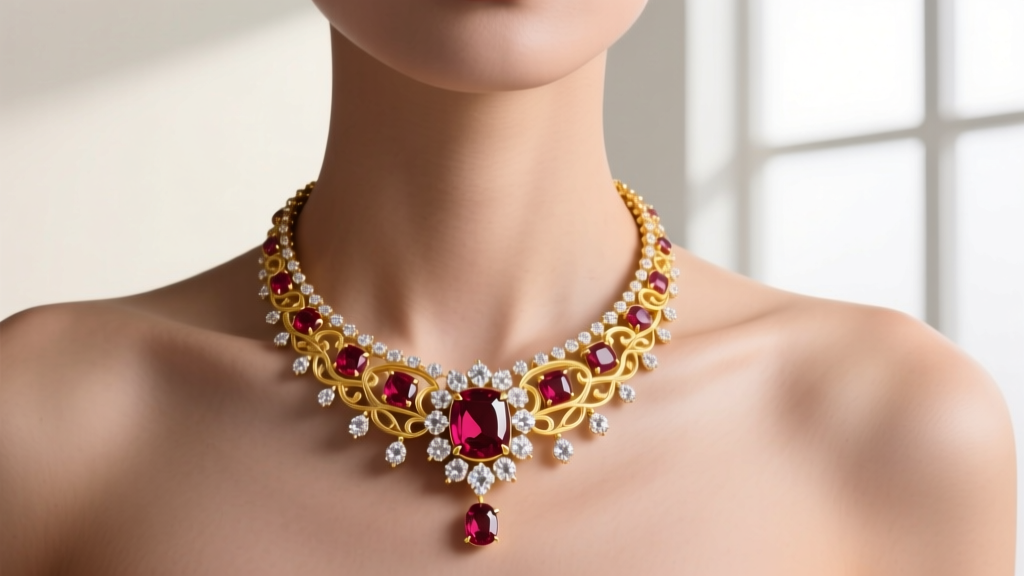
Metallurgical Pairings: Setting the Stone
The material properties of the Burmese ruby also dictate how it should be set in a necklace. Because of the stone's natural warmth and fluorescent glow, the choice of precious metal is not merely aesthetic; it is optical.
18k Yellow Gold vs. Platinum
Setting a Burmese ruby in 18k yellow gold enhances its warm, secondary orange-red hues, creating a cohesive, vintage-inspired look that maximizes the 'Pigeon's Blood' effect. The gold reflects warm light back into the pavilion of the stone. Conversely, setting the ruby in platinum or 18k white gold creates a stark, high-contrast backdrop. The cool, white metal isolates the red spectrum, making the fluorescent glow appear more intense and modern. However, white gold requires periodic rhodium plating, which involves chemical baths that could potentially interact with fracture-filled stones (though unheated Mogok rubies are completely impervious to such treatments).
Prong vs. Bezel Settings
Corundum's 9 Mohs hardness makes it highly resistant to scratching, but it possesses distinct cleavage planes and can chip if struck at the right angle. A four-prong or six-prong setting is ideal for a ruby pendant, as it allows maximum ambient and UV light to enter the stone from all angles, activating its fluorescence. Bezel settings, while offering superior physical protection, block light from the crown edges, potentially dampening the stone's legendary glow.
Final Thoughts on Material Investment
A Burmese ruby necklace is a masterclass in natural material science. The precise absence of iron, the presence of chromium, and the delicate lattice of rutile silk combine to create an optical phenomenon that synthetic and alternative-origin stones struggle to match. As global mines yield fewer unheated, high-clarity specimens, understanding these deep material properties ensures that collectors can accurately identify, appreciate, and invest in one of nature's most spectacular creations.


