Butler and Wilson Cross Necklace: Repair & Care Guide
Learn how to clean, repair, and restore your Butler and Wilson cross necklace. Expert troubleshooting for missing crystals, tarnish, and clasp fixes.

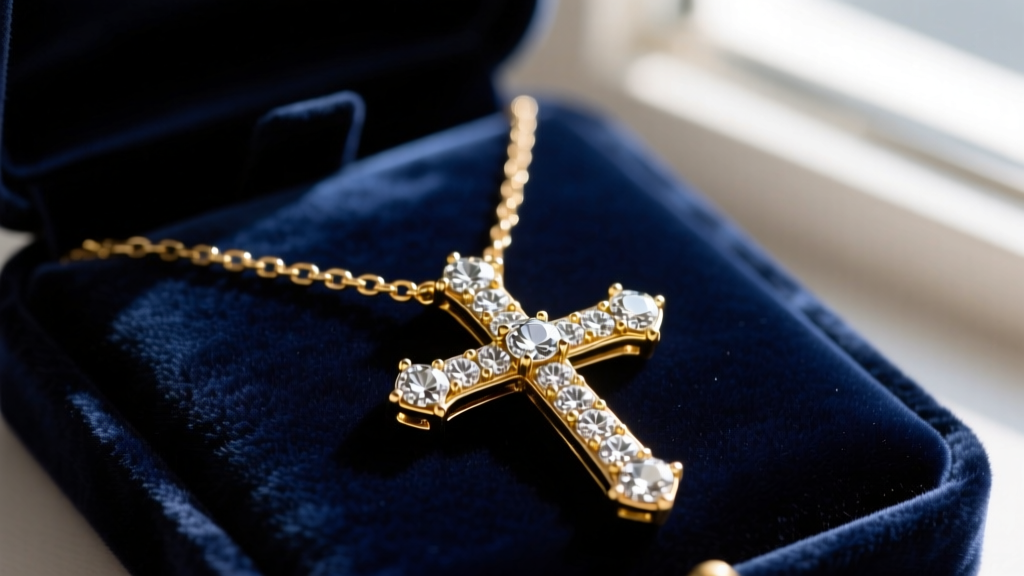
The Anatomy of a Butler and Wilson Cross Necklace
Butler and Wilson has been a staple of British costume jewelry since the late 1960s, renowned for intricate, vintage-inspired designs that often feature heavy pavé crystal work and ornate metal casting. When troubleshooting a Butler and Wilson cross necklace, it is critical to understand that these are not solid precious metal pieces. They are typically crafted from base metal alloys—such as brass, pewter, or Zamak (a zinc-aluminum alloy)—and finished with a micron-thin layer of gold or silver-tone flash plating. The crystals are usually machine-cut glass or acrylic with a delicate metallic foil backing to create brilliance. Because of this specific material composition, standard fine jewelry cleaning methods will permanently destroy a Butler and Wilson piece. According to the Victoria and Albert Museum (V&A), costume jewelry requires highly specialized, non-aqueous conservation techniques to preserve both the plating and the adhesive bonds holding the stones in place.
Identifying the Era and Base Metallurgy
Before attempting any repairs, identify the manufacturing era of your cross necklace, as this dictates the base metal and plating thickness. Pieces from the 1970s and 1980s generally feature a solid brass base with relatively thick gold electroplating (up to 2.5 microns) and high-quality glass rhinestones. Conversely, pieces from the late 1990s and 2000s often utilize lighter Zamak or pewter alloys with much thinner flash plating (0.5 microns or less) and occasionally acrylic stones. If your cross pendant feels unusually heavy and the gold tone has a deep, warm hue, it is likely an older brass piece. If it is lightweight and the silver or gold tone appears slightly flat, it is a modern alloy. Knowing this distinction prevents you from applying excessive pressure during polishing, which can strip thinner modern plating down to the dull grey base metal.
Troubleshooting Rhinestone and Crystal Failures
The most common issue with vintage Butler and Wilson cross necklaces is the degradation of the pavé crystals. This manifests in two primary failure modes: cloudiness (blackening) and stone loss.
Cloudy or Blackened Rhinestones (Foil Backing Failure)
If the crystals in your cross pendant look grey, black, or cloudy, the issue is not dirt on the surface of the stone. It is moisture damage to the foil backing. When water, sweat, or liquid jewelry cleaner breaches the adhesive seal around the stone, it oxidizes the microscopic metallic foil painted on the back of the glass. Once this foil turns black, no amount of surface scrubbing will fix it. The only solution is professional re-foiling, which involves carefully lifting the stone, cleaning the setting, applying a new layer of metallic foil, and re-seating the crystal. This specialized repair typically costs between $45 and $85 per stone at a master costume jewelry conservator.
Sizing and Sourcing Replacement Crystals
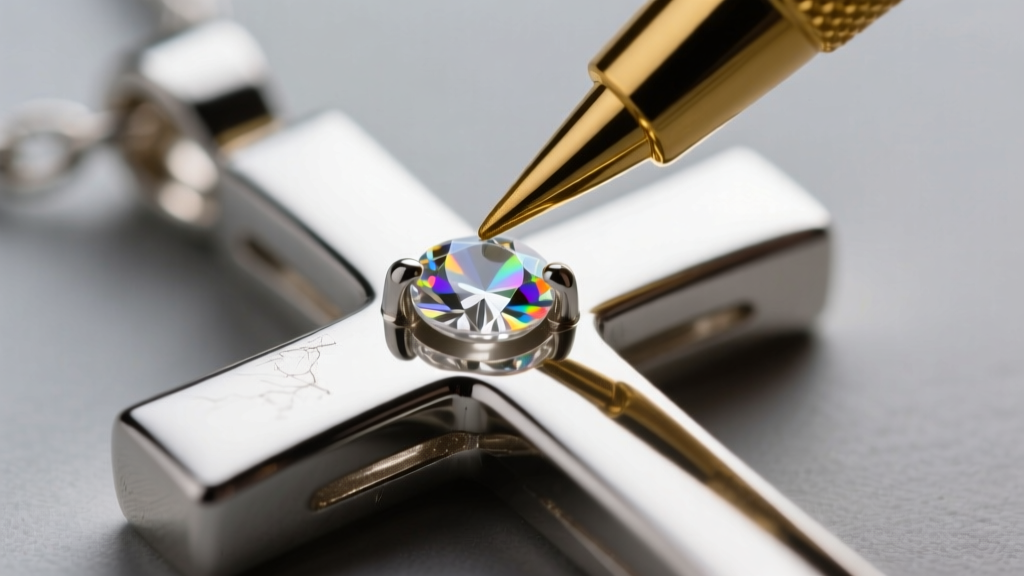
If stones have fallen out entirely, you can replace them at home. Butler and Wilson typically uses standard round flatback sizes for their pavé crosses, most commonly SS10 (2.8mm), SS12 (3.2mm), or SS16 (4.0mm). Use a digital caliper to measure the empty bezel or prong setting to determine the exact size. Source high-quality Preciosa or Swarovski flatback crystals, which cost between $0.15 and $0.40 each. Never use superglue (cyanoacrylate) to set the stones. Superglue outgasses as it cures, leaving a permanent, cloudy white residue on the surface of the crystal. Instead, use a jewelry-specific adhesive like GS Hypo Cement, which features a precision needle applicator and dries clear without fogging the glass. Apply a microscopic dot to the base of the setting, use a wax-tipped stylus to pick up the crystal, and press it firmly into place for 60 seconds.
Metal Tarnish and Plating Degradation
Base metals naturally oxidize when exposed to the sulfur and acids in human skin and the atmosphere. However, because Butler and Wilson necklaces are plated, you cannot use abrasive polishing compounds or chemical dips. Abrasives will scratch the plating, and chemical dips will strip it entirely, exposing the raw brass or Zamak underneath. The Gemological Institute of America (GIA) emphasizes that porous base metals require gentle, mechanical cleaning rather than chemical baths. Below is a troubleshooting matrix for common cleaning agents.
| Cleaning Agent | Effect on B&W Base Metals | Effect on Foil-Backed Crystals |
|---|---|---|
| Ultrasonic Cleaner | Strips flash plating instantly via cavitation | Shatters foil backing and loosens adhesive |
| Silver Dip Liquid | Causes severe pitting on brass and Zamak | Chemically burns the metallic foil backing |
| 99% Isopropyl Alcohol | Safe for bare metal, evaporates rapidly | Melts acrylic stones, safe for glass only |
| Dry Microfiber Cloth | Safe, gently removes surface oils and dust | Safe, polishes without moisture risk |
| Mild Soap and Water | Risky, can cause flash rust on iron alloys | High risk of seeping under stones and ruining foil |
For routine maintenance, stick strictly to a dry, untreated microfiber cloth. If the piece is heavily soiled with skin oils, lightly dampen a cotton swab with 99% isopropyl alcohol (only if you have confirmed the stones are glass, not acrylic) and carefully swab the metal crevices, avoiding the crystal settings entirely.
Chain Tangling and Clasp Mechanism Failures
Butler and Wilson cross necklaces are typically suspended on delicate 18-gauge or 20-gauge rope or curb chains. These fine links are highly susceptible to kinking and tangling. To untangle a severe knot, lay the chain flat on a glass surface, apply a single drop of baby oil or mineral oil to the knot, and use two fine sewing needles to gently tease the links apart. Wipe the chain clean with a dry cloth afterward.
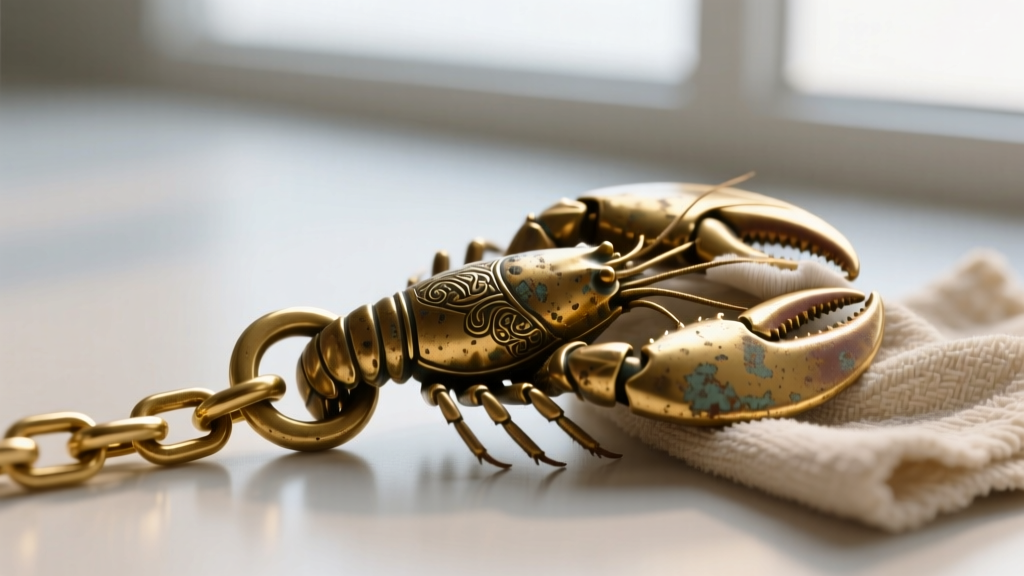
Clasp failure is another frequent issue. The small lobster clasps used on these necklaces contain a tiny internal steel spring. If the clasp lever becomes stiff or fails to snap shut, it is usually due to a buildup of skin oils and dust inside the mechanism, or corrosion of the internal spring. Apply a microscopic amount of synthetic watch oil to the hinge pin of the clasp using a needle oiler. Work the lever back and forth to distribute the lubricant. If the spring is entirely rusted and the lever is dead, the clasp must be snipped off and replaced. When sourcing a replacement, opt for a brass-based lobster clasp with a gold-tone PVD coating to match the vintage aesthetic without risking nickel allergies.
Step-by-Step Restoration Framework
When acquiring a second-hand or vintage Butler and Wilson cross necklace in poor condition, follow this systematic restoration framework to avoid causing irreversible damage:
- Assess and Document: Examine the piece under a 10x jeweler's loupe. Check every single pavé stone for loose prongs or missing foil. Note the condition of the plating on the high-relief areas of the cross, as these wear first.
- Dry Clean Only: Use a soft-bristled makeup brush to dislodge dry dust and debris from the intricate crevices of the cross pendant. Follow up with a dry microfiber cloth to buff the metal.
- Stone Replacement and Securing: If any stones are loose but still present, carefully apply a micro-drop of GS Hypo Cement under the edge of the stone using the needle tip. If stones are missing, measure the setting, order the correct SS-size Preciosa flatbacks, and set them with a wax stylus.
- Chain and Clasp Overhaul: Inspect every link of the chain for weakness. Lubricate the lobster clasp hinge with synthetic watch oil. If the original jump ring connecting the pendant to the chain is stretched open, gently squeeze it closed with nylon-jaw pliers to prevent the heavy cross from slipping off.
When to Seek Professional Conservation
While home troubleshooting can resolve missing stones, surface dust, and stiff clasps, severe structural issues require professional intervention. If the base metal of the cross pendant has cracked, or if the solder joints connecting the bail (the loop that holds the chain) to the cross have failed, do not attempt to solder it yourself. Standard jewelers' torches will instantly melt the low-temperature Zamak alloy and burn off the gold plating. A professional costume jewelry repair specialist will use low-heat laser welding or specialized cold-soldering epoxies to rebuild the structural integrity of the piece. By understanding the specific material limitations of Butler and Wilson jewelry, you can effectively troubleshoot common issues and ensure your cross necklace remains a brilliant, wearable piece of fashion history for decades to come.


