How to Clean, Restore, and Style Red Coral Necklaces
Learn how to safely clean, authenticate, and style red coral necklaces. Expert steps to protect this porous organic gem from damage and fading.

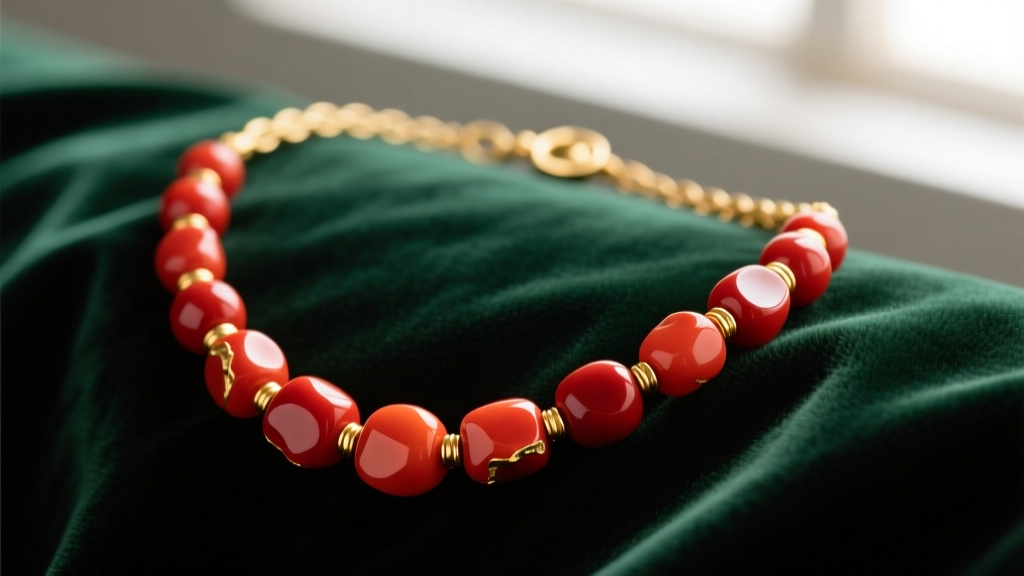
Red coral necklaces have captivated jewelry collectors, royalty, and artisans for millennia. Unlike crystalline gemstones mined from the earth, red coral (Corallium rubrum) is an organic gemstone born in the depths of the Mediterranean Sea and the Pacific Ocean. Its rich, saturated hues—ranging from pale salmon to deep ox-blood red—make it a striking centerpiece for any jewelry collection. However, because it is composed primarily of calcium carbonate, red coral is remarkably porous and sensitive to environmental factors.
As we navigate the jewelry market in 2026, the shift toward sustainable and antique sourcing means that many collectors are inheriting or purchasing vintage red coral necklaces. These heirloom pieces require specialized care to maintain their luster and structural integrity. In this comprehensive guide, we will walk you through the exact protocols for cleaning, authenticating, storing, and styling your red coral necklaces to ensure they survive for generations.
The Science of Organic Gems: Why Red Coral Requires Special Care
Before applying any cloth or solution to your necklace, it is vital to understand the material science behind red coral. On the Mohs scale of mineral hardness, red coral ranks between 3.5 and 4.0. To put this in perspective, it is significantly softer than quartz (7.0) and even softer than a copper penny. This means it can be easily scratched by harder gemstones, metal clasps, or even abrasive dust particles.
Furthermore, red coral is highly reactive to acids. The natural pH of human skin, coupled with cosmetics, perfumes, and hairsprays, can slowly erode the polished surface of the coral beads over time, leaving them dull, chalky, and pitted. According to the Gemological Institute of America (GIA), organic gems like coral, pearl, and amber lack the crystalline lattice structure that protects traditional stones, making them vulnerable to rapid dehydration and chemical degradation.
Step-by-Step Guide to Cleaning Red Coral Necklaces
Forget everything you know about cleaning diamond or sapphire jewelry. Commercial jewelry dips, ultrasonic cleaners, and steamers will instantly destroy the polish and potentially fracture your red coral beads. Follow this gentle, conservator-approved cleaning method instead.
What You Will Need
- A clean, lint-free microfiber cloth
- Distilled water (never tap water, as the minerals and chlorine can leave deposits)
- A soft-bristled makeup brush (like a clean eyeshadow brush)
- Pure, food-grade mineral oil (optional, for annual conditioning)
The Cleaning Process
- Dry Dusting: Lay the necklace flat on a clean, soft towel. Use the dry, soft-bristled makeup brush to gently sweep away surface dust and skin cells from the crevices around the drill holes and clasps. Dust contains silica, which is harder than coral and can cause micro-scratches if rubbed.
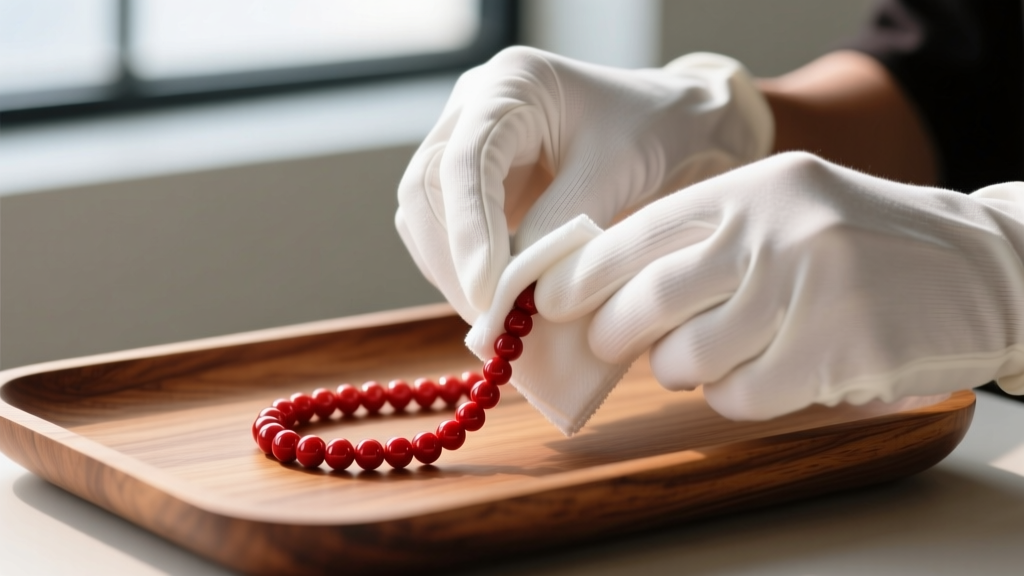
- Damp Wiping: Lightly dampen a corner of your microfiber cloth with distilled water. It should be barely moist, not dripping. Gently wipe each coral bead individually, rotating the bead to clean the entire surface. Avoid getting the silk or cotton threading wet, as moisture trapped inside the drill holes can rot the thread and weaken the necklace.
- Drying: Immediately buff the beads dry with the unmolested, dry side of the microfiber cloth. Allow the necklace to air dry completely flat for at least two hours before storing.
- Conditioning (Once Annually): Organic gems can dehydrate and develop microscopic surface crazing (cracking). Once a year, apply a single drop of pure mineral oil to a soft cloth and buff the coral beads lightly. This restores their natural luster and creates a temporary barrier against moisture loss.
Expert Warning: Never use vinegar, lemon juice, baking soda, or ammonia-based cleaners on red coral. The calcium carbonate will react immediately with acids, causing irreversible fizzing, etching, and permanent surface destruction.
How to Authenticate Genuine Red Coral vs. Dyed Imitations
Because genuine Mediterranean red coral commands a premium price, the market is flooded with imitations. Common substitutes include dyed howlite, dyed magnesite, glass, and even reconstituted coral powder. If you are acquiring a red coral necklace, use these non-destructive testing methods to verify its authenticity.
The Magnification Test
Using a 10x jeweler's loupe, examine the surface and the drill holes of the beads. Genuine red coral is a marine skeleton and will display natural growth patterns. Look for longitudinal striations (parallel lines resembling wood grain) and concentric growth rings. Dyed howlite will look spongy or mottled, while glass will be perfectly uniform and may contain tiny, perfectly round gas bubbles.
The Acetone Swab Test
Many lower-end imitations are created by dyeing pale, inexpensive coral or howlite a deep red. Dip a cotton swab in pure acetone (nail polish remover) and rub it vigorously against an inconspicuous area of the bead, such as near the clasp or inside the drill hole. If the swab turns red or pink, the stone is dyed. Genuine, untreated red coral will not transfer color to the acetone.
Comparison Chart: Genuine vs. Imitation Coral
| Feature | Genuine Red Coral (Corallium Rubrum) | Dyed Howlite / Glass Imitation |
|---|---|---|
| Mohs Hardness | 3.5 - 4.0 | 3.5 (Howlite) / 5.5 (Glass) |
| Magnification | Longitudinal striations, growth rings | Uniform color, spongy texture, or bubbles |
| Acetone Test | No color transfer | Red dye transfers to swab |
| Specific Gravity | 2.60 - 2.70 | 2.50 (Howlite) / 3.0+ (Glass) |
| Price Range (2026) | $250 - $3,000+ per strand | $15 - $60 per strand |
Proper Storage and Maintenance Protocols
How you store your red coral necklaces is just as critical as how you clean them. Improper storage is the leading cause of fading and structural damage in organic jewelry.
- Avoid UV Exposure: Prolonged exposure to direct sunlight will bleach and fade the vibrant red pigments of the coral. Always store your necklaces in a closed jewelry box or a dark drawer.
- Isolate from Harder Gems: Because of its low Mohs hardness, red coral must never be tossed into a jewelry box alongside diamonds, sapphires, or even metal chains. The friction will cause severe scratching. Store the necklace in its own soft cotton pouch or a dedicated, fabric-lined compartment.
- Manage Humidity: Extreme dryness causes coral to crack, while extreme humidity can encourage mold growth on the internal threading. A standard indoor humidity level of 40-50% is ideal. If you live in a very arid climate, keeping a small humidifier in your dressing room can protect your organic gems.
- The 'Last On, First Off' Rule: Always put your red coral necklace on after applying makeup, perfume, and hairspray. Conversely, it should be the first thing you take off when you return home, wiping it gently with a dry cloth before putting it away.

Styling Red Coral Necklaces for Modern Wardrobes
Red coral is a remarkably versatile styling tool. Its warm, opaque red tone provides a striking contrast against both precious metals and various fabric textiles. In 2026, the trend has shifted away from overly formal, matched-parure coral sets toward eclectic, layered, and bohemian styling.
Metal Pairings
Yellow gold is the traditional and most flattering partner for red coral. The warm undertones of 14k or 18k yellow gold amplify the fiery, ox-blood hues of the beads. However, for a more contemporary, edgy aesthetic, pairing deep red coral with oxidized sterling silver creates a moody, vintage-inspired contrast that works beautifully in autumn and winter wardrobes.
Neckline and Color Blocking
Red coral pops most dramatically against neutral and deep jewel-toned backgrounds. Pair a graduated red coral bead necklace with a cream silk blouse, a navy blue cashmere turtleneck, or an emerald green wrap dress. Avoid wearing red coral with busy, multi-colored floral prints, as the intricate patterns of the fabric will compete with the organic texture of the coral, causing the jewelry to visually recede.
Ethical Sourcing and CITES Regulations
As a conscious collector, it is imperative to understand the environmental and legal landscape surrounding red coral. Overharvesting and ocean acidification have severely depleted natural Corallium rubrum populations. Consequently, the trade of many coral species is strictly monitored or banned under CITES (the Convention on International Trade in Endangered Species).
When shopping for red coral necklaces today, the most sustainable and ethical choice is to purchase antique or vintage pieces. Not only does this bypass the demand for newly harvested marine life, but vintage coral also often features superior craftsmanship, such as hand-carved cameos and intricate gold filigree work that is rarely seen in modern mass production. If you do purchase new coral, ensure the retailer provides verifiable documentation proving the material was legally and sustainably harvested prior to modern CITES restrictions, or sourced from highly regulated, sustainable fisheries.
By understanding the delicate nature of this organic gem and adhering to strict cleaning, storage, and ethical purchasing protocols, you can ensure your red coral necklaces remain vibrant, beautiful, and historically significant for decades to come.


