Choosing a Butterfly Diamond Necklace: Materials Guide
Compare metals and diamond grades for your butterfly diamond necklace. Discover the best settings, karats, and stone types for lasting brilliance.

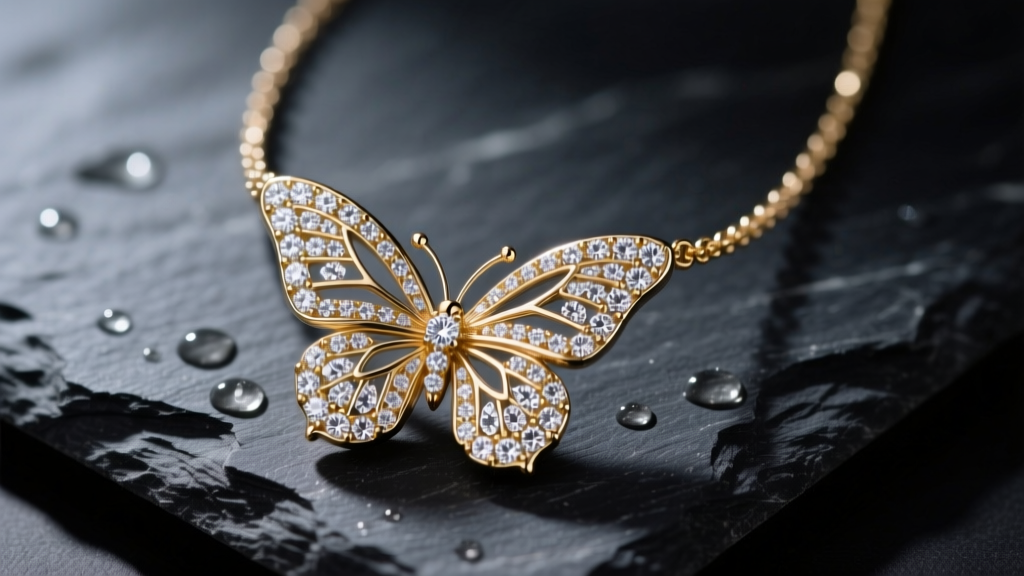
The Anatomy of a Butterfly Diamond Necklace
A butterfly diamond necklace is more than just a whimsical motif; it is a complex feat of micro-jewelry engineering. Unlike simple solitaire pendants, butterfly designs require a delicate balance between structural integrity and aesthetic lightness. The wings must appear ethereal and translucent, yet they are subjected to daily kinetic stress, friction from clothing, and environmental wear. When selecting a piece, understanding the material properties of the metal alloys and the specific diamond cuts used is critical to ensuring the pendant survives decades of use without losing its stones or bending out of shape.
In this comprehensive guide, we break down the metallurgical and gemological properties that dictate the longevity, brilliance, and value of butterfly diamond necklaces. Whether you are investing in an heirloom piece or shopping for everyday luxury, the material choices you make will define the pendant's performance.
Precious Metal Showdown: Platinum vs. Gold Alloys
The framework of a butterfly pendant dictates its durability. Because butterfly wings often feature intricate openwork or micro-pavé settings, the metal must possess adequate tensile strength to hold microscopic prongs in place. Let us examine the most common precious metals used in fine jewelry and how they perform in intricate designs.
14K vs. 18K Gold: The Durability Spectrum
Gold purity is measured in karats, but higher purity does not always mean better performance for intricate pendants. 18K gold (75% pure gold) offers a rich, saturated color—particularly in yellow and rose gold variants—but it is relatively soft. On the Vickers hardness scale, 18K yellow gold sits around 110 HV. In a butterfly design with extended, delicate wingtips, 18K gold is more susceptible to bending if caught on a heavy knit sweater.
Conversely, 14K gold (58.5% pure gold) is alloyed with higher percentages of copper, silver, or zinc, pushing its hardness to approximately 135 HV. For a butterfly diamond necklace worn daily, 14K white or yellow gold provides superior prong security and resistance to deformation. However, if you choose 14K or 18K white gold, remember that it requires rhodium plating every 12 to 18 months to maintain its bright, silvery-white finish, as the underlying alloy has a faint yellowish-gray tint.
Platinum: The Hypoallergenic Heavyweight
Platinum (usually 95% pure, alloyed with ruthenium or iridium) is the premier choice for high-end butterfly pendants. While its Vickers hardness (around 115 HV) is similar to 18K gold, platinum's unique property is its malleability and density. Instead of wearing away when scratched, platinum displaces, developing a soft patina over time. More importantly, platinum prongs are incredibly secure; they bend rather than snap under sudden impact, making them the safest housing for the diamonds in a butterfly's wings. Furthermore, platinum is naturally white and hypoallergenic, requiring no rhodium plating.
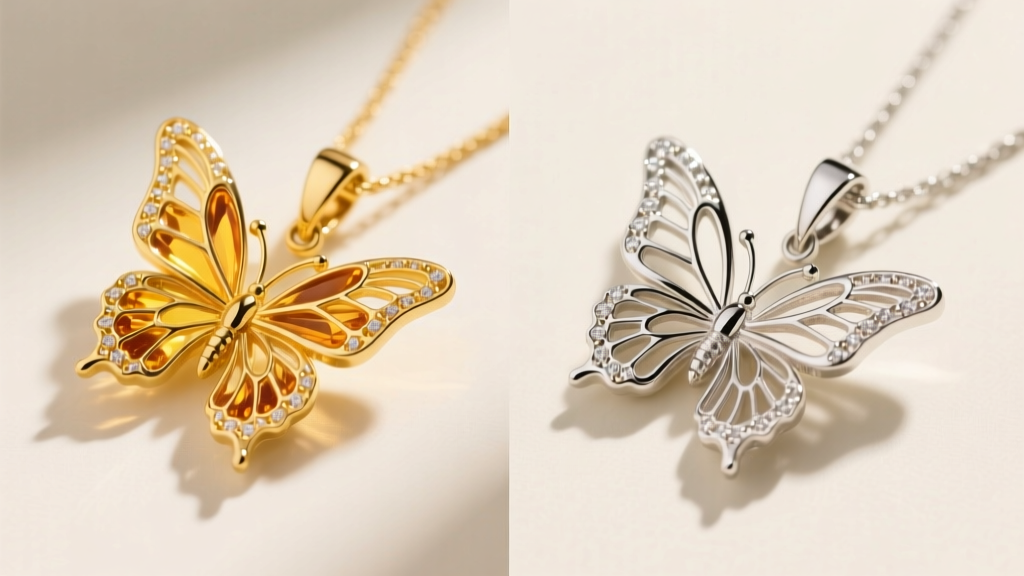
Material Comparison Matrix
| Metal Alloy | Vickers Hardness (HV) | Prong Security | Maintenance Needs | Ideal Butterfly Style |
|---|---|---|---|---|
| 14K Yellow Gold | ~135 | High | Low (Polishing) | Everyday wear, vintage-inspired |
| 18K Yellow Gold | ~110 | Medium | Low (Polishing) | Heirloom pieces, rich color |
| 18K White Gold | ~120 | Medium-High | High (Rhodium plating) | Bright, modern micro-pavé |
| 950 Platinum | ~115 | Very High | Medium (Patina management) | High-carat, intricate openwork |
Diamond Selection: Natural, Lab-Grown, and Cut Dynamics
The visual impact of a butterfly diamond necklace relies heavily on the interplay of light across its wings. Jewelers typically utilize a combination of marquise, pear, and round brilliant cuts to mimic the organic, sweeping curves of a butterfly's anatomy.
The 4Cs for Micro-Pavé and Marquise Cuts
When evaluating the diamonds in a butterfly pendant, the cut and clarity requirements vary depending on the stone's role in the design. The central body of the butterfly often features larger round brilliant or baguette cuts, where clarity is paramount. According to the Gemological Institute of America (GIA), a clarity grade of VS2 to SI1 is generally sufficient for stones under 0.50 carats, as inclusions are difficult to see without 10x magnification. However, for the larger marquise stones that form the outer edges of the wings, you must avoid inclusions near the pointed tips, as these create structural weak points that can lead to chipping during the setting process.
Furthermore, marquise and pear cuts are prone to the "bow-tie effect"—a dark shadow across the center of the stone caused by light blockage. When selecting a butterfly pendant, inspect the larger wing stones under various lighting conditions to ensure the bow-tie is minimal and does not dull the stone's overall brilliance.
Lab-Grown vs. Mined Diamonds in 2026
The market has seen a massive shift toward lab-grown diamonds, which are chemically, physically, and optically identical to mined diamonds. As noted by GIA research on lab-grown diamonds, these stones are graded using the exact same 4Cs framework. For a butterfly diamond necklace, which may require dozens of precisely matched micro-pavé stones, lab-grown diamonds offer a significant advantage: uniform color and clarity matching at a fraction of the cost of mined stones. This allows buyers to upgrade the metal to platinum or increase the total carat weight without exceeding their budget.
Setting Styles: Protecting Delicate Wings
The method used to secure the diamonds is just as important as the metal and stones themselves. Butterfly designs present unique challenges due to their asymmetrical shapes and fragile extremities.
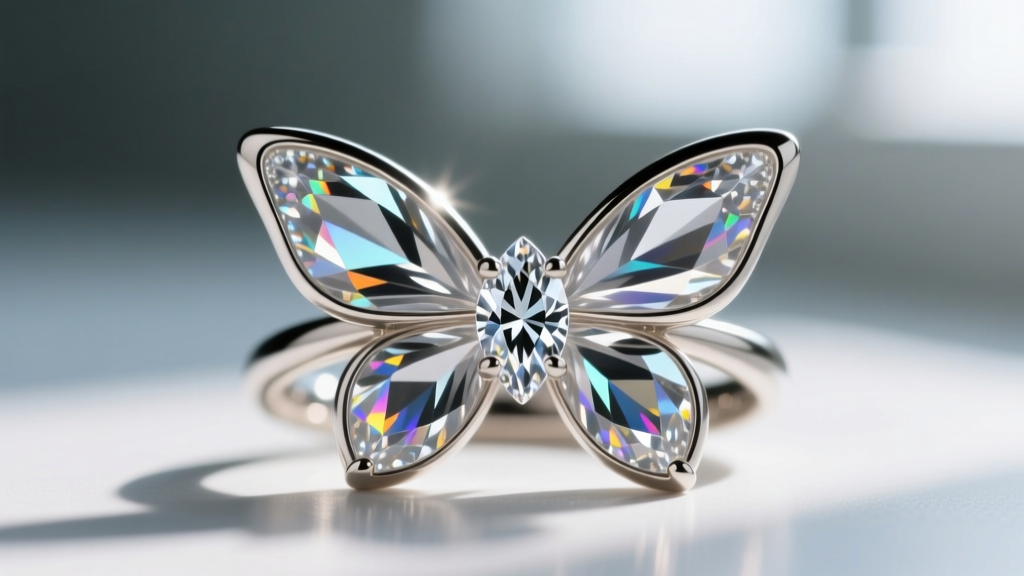
Prong vs. Bezel vs. Channel Settings
- V-Prong Settings: Essential for the pointed tips of marquise and pear diamonds on the wing edges. A standard prong will leave the sharp tip exposed and vulnerable to chipping; a V-prong wraps the metal securely around the point.
- Micro-Pavé: Used extensively in the inner wings to create a field of brilliance. Tiny beads of metal hold 1mm to 2mm round diamonds. While beautiful, micro-pavé requires careful maintenance, as the microscopic prongs can wear down or catch on fabrics.
- Bezel and Half-Bezel: Offers the highest security. A thin rim of metal surrounds the diamond. In modern butterfly designs, half-bezels are often used on the outer curves of the wings to protect the girdle while allowing maximum light entry from the sides.
"When designing intricate nature-inspired motifs like butterflies, the under-gallery—the hidden metal structure beneath the stones—must be honeycombed or open-backed. This not only reduces the overall weight of the pendant but allows light to enter the pavilion of the diamonds, which is critical for maintaining brilliance in micro-pavé sections."
— Master Jeweler Bench Note
Chain Selection: Matching the Pendant's Weight and Scale
A common failure point in fine jewelry is pairing a delicate pendant with an inappropriate chain. A butterfly diamond necklace typically weighs between 2.5 and 6 grams, depending on the metal and diamond carat weight. The chain must support this weight without overpowering the visual delicacy of the wings.
Gauge Sizes and Clasp Mechanics
For lightweight butterfly pendants (under 4 grams), a 0.9mm to 1.1mm box chain or cable chain in 14K gold or platinum is ideal. Box chains are highly recommended because their geometric links distribute weight evenly and resist kinking. If the pendant is heavily paved and exceeds 5 grams, upgrade to a 1.2mm to 1.5mm wheat chain, which offers superior tensile strength.
Do not overlook the clasp. A standard spring-ring clasp is often too flimsy and difficult to operate for heavier pendants. Insist on a solid lobster clasp (minimum 5mm in length) or a secure magnetic locking clasp, ensuring the jump ring connecting the clasp to the chain is soldered closed to prevent accidental separation.
Care and Maintenance for Intricate Designs
The intricate crevices of a butterfly's wings are magnets for lotions, perfumes, and dead skin cells, which can quickly dull the diamonds and degrade the metal. Implement a strict maintenance routine to preserve the necklace's optical performance.
- Ultrasonic Caution: Avoid ultrasonic cleaners if your butterfly necklace features micro-pavé settings or fracture-filled diamonds. The high-frequency vibrations can loosen the tiny beads holding the micro-stones. Instead, use a soft-bristled baby toothbrush and a solution of warm water with a single drop of mild, ammonia-free dish soap.
- Steam Cleaning: A quick blast of steam is excellent for removing trapped oils from beneath the diamond galleries, restoring the "white light" return that makes the butterfly appear to flutter with brilliance.
- Annual Prong Check: Because butterfly wings are prone to snagging on lace and silk, have a professional jeweler inspect the V-prongs and micro-pavé beads under a microscope every 12 months to check for metal fatigue or lifting.
By carefully selecting the right metal alloy, prioritizing precise diamond cuts, and ensuring secure setting mechanics, your butterfly diamond necklace will remain a resilient and radiant symbol of transformation for a lifetime.


