How to Buy a Heart Shaped Necklace Diamond: A Step-by-Step Guide
Learn how to evaluate a heart shaped necklace diamond with our step-by-step guide. Master ratios, 4Cs, and settings for the perfect pendant.

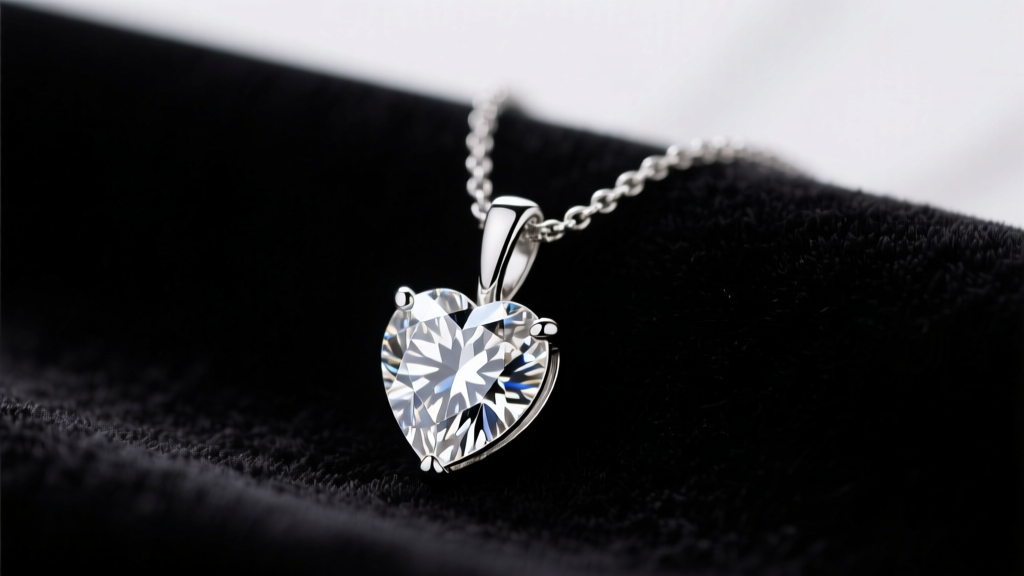
Selecting the perfect heart shaped necklace diamond requires a much more critical eye than choosing a standard round brilliant. Because the human brain is hardwired to recognize facial and geometric symmetry, even microscopic imbalances in a heart cut’s lobes or cleft are immediately noticeable. Whether you are designing a custom engagement pendant or purchasing a luxury anniversary gift, this step-by-step guide will help you navigate the technical nuances of heart-shaped diamonds to ensure your necklace is both structurally sound and visually breathtaking.
Step 1: Master the Length-to-Width Ratio
The most defining characteristic of any fancy-shape diamond is its length-to-width (L/W) ratio. This metric dictates the overall silhouette of the stone. To calculate it, simply divide the diamond’s length (from the cleft to the point) by its width (across the lobes). According to the Gemological Institute of America (GIA), personal preference plays a massive role here, but strict boundaries exist to prevent the stone from looking distorted.
| Length-to-Width Ratio | Visual Effect | Best Necklace Application |
|---|---|---|
| 0.85 - 0.89 | Noticeably wide, "fat" profile | Chunky, vintage-inspired pendants |
| 0.90 - 1.10 | Classic, balanced heart shape | Traditional solitaire necklaces |
| 1.11 - 1.20 | Elongated, slender silhouette | Modern, minimalist layering pieces |
For a classic heart shaped necklace diamond that photographs beautifully and hangs perfectly against the collarbone, aim strictly for the 0.95 to 1.05 range. Stones outside this window often suffer from poor light return in the "wings" (the sides curving down to the point).
Step 2: Navigate the 4Cs for Heart Cuts
Heart-shaped diamonds are modified brilliant cuts, meaning they share the same facet structure as round diamonds. However, their complex geometry requires a tailored approach to the 4Cs.
The Symmetry Imperative
Symmetry is the single most important cut grade for a heart diamond. The cleft (the V-shape at the top) must be sharp and perfectly centered. The two lobes (the rounded top corners) must be identical in height and curvature. If the grading report lists symmetry as anything less than "Very Good" or "Excellent," walk away. A lopsided heart will look visibly flawed once set in a pendant.
Color and Clarity Sweet Spots
Because the brilliant faceting pattern is excellent at hiding internal inclusions, you can safely drop your clarity grade to VS2 or even a carefully vetted SI1. However, you must avoid black carbon spots located directly in the "belly" (the widest center part of the stone), as these are visible through the table facet. For color, an H-grade diamond offers the best value for white gold or platinum settings, appearing completely face-up white while costing up to 20% less than a D-grade stone. If you are setting the diamond in 18k yellow gold, you can comfortably drop to a J or K color, as the warm metal will mask the faint yellow tint.
Step 3: Select a Setting That Protects the Point
The bottom point of a heart diamond is its greatest structural vulnerability. A single sharp impact against a tabletop or zipper can cause the tip to chip or cleave entirely. Your setting must mitigate this risk without obscuring the stone's shape.
- The 5-Prong Setting: This is the industry standard for heart pendants. One prong secures the cleft, two prongs hold the lobes, one supports the belly, and a specialized V-prong cups the bottom point. This offers maximum security while allowing light to enter from all angles.
- Full Bezel Setting: A thin rim of metal completely encircles the diamond. While it offers unparalleled protection for the point and lobes, it reduces the stone's visible surface area by roughly 10% and limits light entry, slightly reducing sparkle.
- Halo Setting: A ring of micro-pave diamonds surrounds the center stone. This is an excellent choice if you want to maximize the visual footprint of a smaller carat weight (e.g., making a 0.50ct center stone look like a 1.00ct), but ensure the halo's prongs do not overlap the center stone's cleft.
Expert Tip: Never purchase a heart shaped necklace diamond set in a standard 4-prong setting. Without a dedicated prong or V-tip protecting the bottom point, the diamond is essentially a ticking time bomb for chipping.
Step 4: Match the Chain to the Carat Weight
A common mistake buyers make is pairing a heavy, high-carat pendant with a delicate, unsupported chain. A 1.50-carat heart diamond set in platinum can easily weigh over 4 grams. If suspended on a 0.6mm cable chain, the constant friction and weight will eventually cause the chain links to stretch, weaken, and snap.
Industry experts at Blue Nile recommend matching the chain's tensile strength to the pendant's overall mass. For heart diamonds between 0.50ct and 1.00ct, a 0.9mm to 1.1mm box chain or wheat chain provides the perfect balance of durability and elegance. For stones exceeding 1.25ct, upgrade to a 1.5mm rope chain or a reinforced Figaro chain. Always ensure the clasp is a sturdy lobster claw rather than a fragile spring ring, which can easily fail under the pendulum motion of a heavy necklace.
Step 5: Inspect the Cleft and Bow-Tie Effect
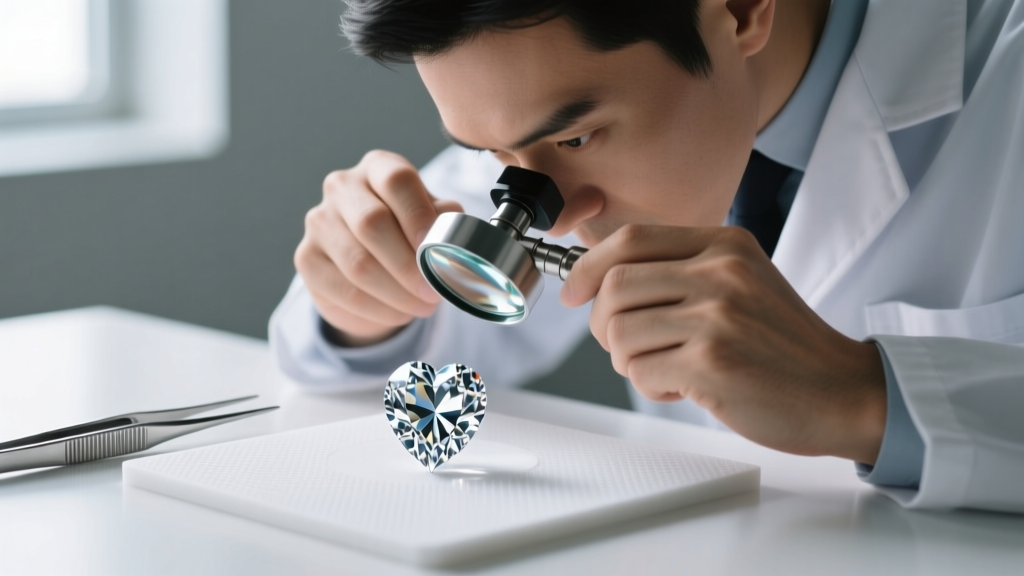
Before finalizing your purchase, you must evaluate the stone for the "bow-tie effect." While more commonly associated with oval and marquise cuts, poorly proportioned heart diamonds can exhibit a dark, bow-tie-shaped shadow stretching across the center of the stone when viewed face-up. This occurs when the pavilion facets are cut too shallow or too deep, causing light to leak out the bottom rather than reflecting back to the eye.
If you are buying online, never rely solely on the 360-degree video provided by the retailer. Request a high-resolution, face-up photograph taken in natural, diffused daylight. Additionally, inspect the cleft depth. If the cleft is cut too deeply, the stone will look like a pear with a dent; if it is too shallow, the heart will look like a rounded triangle, losing its romantic silhouette entirely.
Final Thoughts on Pricing and Provenance
As of current market valuations, a natural 1.00-carat heart shaped necklace diamond with G color and VS2 clarity will typically range between $5,500 and $7,500. Conversely, an identical lab-grown heart diamond will cost between $800 and $1,200, offering identical chemical and optical properties at a fraction of the price. Whichever route you choose, prioritize cut quality and symmetry above all else. A perfectly symmetrical heart with a protected point will remain a timeless, structurally sound heirloom for generations.


