Fixing the Average Length Necklace Fit for Your Neckline
Troubleshoot your average length necklace fit. Learn mechanical fixes, gauge matching, and neckline matrices to solve pendant flips and choking.

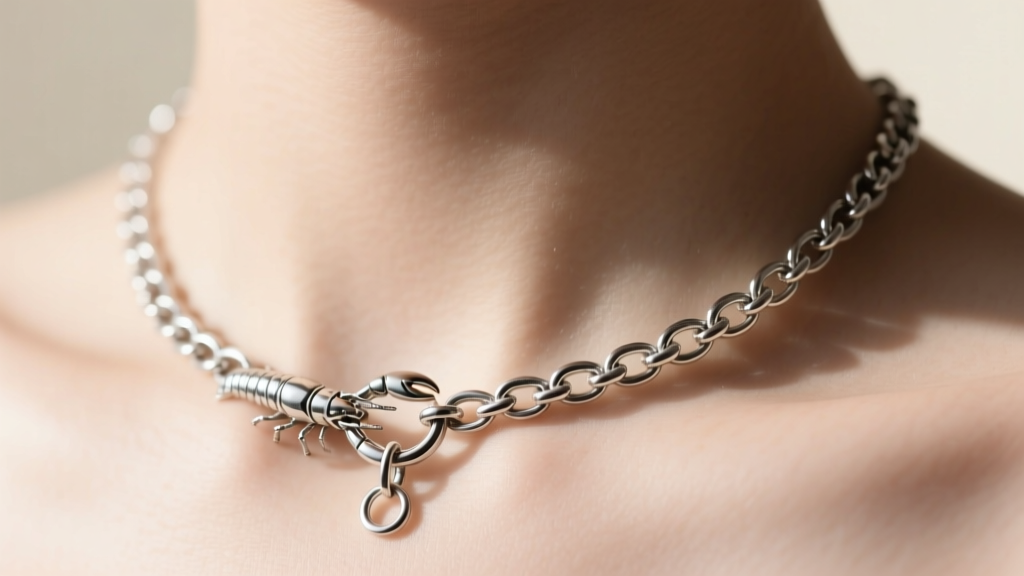
The Myth of the "Average Length Necklace"
In the jewelry industry, the term "average length necklace" almost universally refers to an 18-inch (45cm) chain for women and a 20-to-22-inch chain for men. However, this standard is a triumph of manufacturing convenience, not human physiology. Mass-produced jewelry defaults to these lengths to minimize SKU variations and streamline global supply chains. The result? Millions of consumers are left troubleshooting fit issues, pendant flips, and neckline conflicts because the "average" simply does not account for individual neck circumference, torso length, or wardrobe choices.
If your go-to necklace feels like a choker, constantly slides off-center, or disappears beneath your collar, the problem is not your body—it is a failure of standardized sizing. This guide provides actionable, mechanical, and stylistic troubleshooting frameworks to fix your average length necklace and optimize your jewelry wardrobe.
Troubleshooting Common Fit & Function Failures
Problem 1: The Pendant Flip (Centering Issues)
Nothing is more frustrating than a pendant that refuses to stay centered. This mechanical failure occurs when there is a disproportionate weight-to-chain ratio or a mismatch between the chain's width and the pendant's bail. If you pair a heavy 15-gram gemstone pendant with a delicate 1mm cable chain, the chain will bunch up inside the bail, causing the pendant to flip upside down or slide to the collarbone.
The Fix: Ditch the standard cable chain that came with your average length necklace. Upgrade to a 1.5mm to 2.0mm box, wheat, or rope chain. These structures have higher tensile strength and a wider surface area that grips the bail, keeping the pendant anchored at the sternum. According to manufacturing specs from Stuller, box chains distribute weight more evenly across the links, preventing the localized stress that leads to both flipping and chain snapping.
Problem 2: The Choking Sensation (Neck Circumference Mismatch)
The average adult female neck circumference is between 13 and 14 inches. An 18-inch chain provides a comfortable 4-to-5-inch drop. However, if your neck measures 15 inches or more, or if you have a broader trapezius muscle structure, an 18-inch chain will sit tightly against the base of your throat, mimicking a choker and causing physical discomfort.
The Fix: Abandon the 18-inch standard. Use a soft measuring tape to measure your neck at the exact point where a collar would sit. Add 2 inches for a close-fitting princess length, 4 inches for a standard matinee drop, or 6 inches for a relaxed, lower-chest drape. For broader necks, a 20-inch or 22-inch chain is the true functional "average."
Problem 3: The Swallowed Pendant (Neckline Conflict)
Wearing an 18-inch average length necklace with a high crew neck, boat neck, or thick winter turtleneck results in the pendant getting swallowed by fabric folds. The chain sits exactly at the seam of the garment, creating visual clutter and hiding the jewelry entirely.
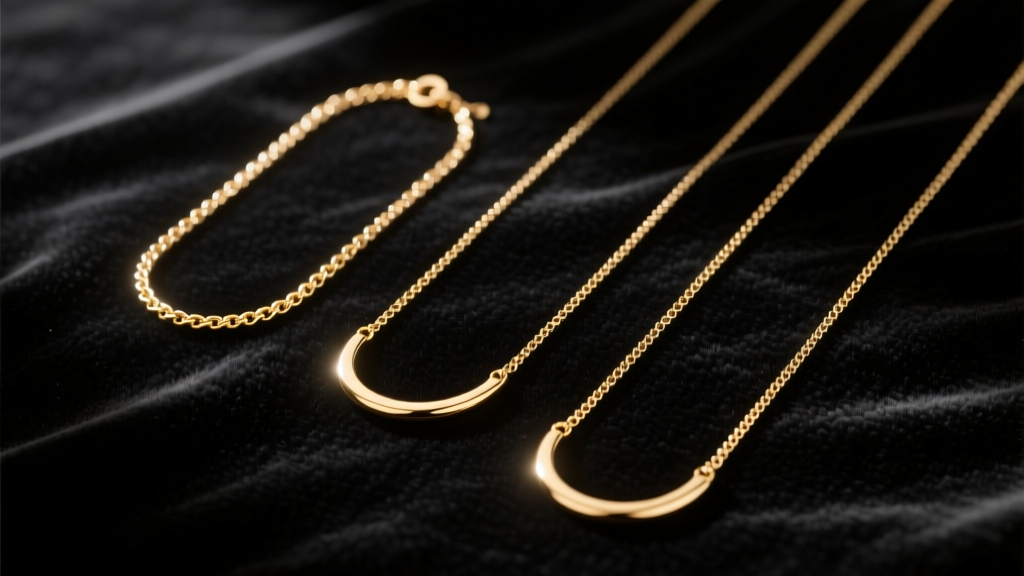
The Neckline-to-Length Troubleshooting Matrix
To solve the swallowed pendant issue, you must map your chain length to your garment's neckline. Use this diagnostic matrix to determine when to deviate from the average length necklace standard.
| Garment Neckline | Ideal Chain Length | Why the 18" Average Fails Here | Recommended Chain Style |
|---|---|---|---|
| Crew Neck / T-Shirt | 20" - 22" | 18" sits directly on the ribbed collar seam. | 2.0mm Rope or Curb |
| V-Neck | 18" - 20" | The average length works, but needs a Y-drop to fill the negative space. | 1.5mm Box with Y-drop |
| Boat Neck / Bateau | 16" (Choker) or 24" | 18" cuts horizontally across the vertical lines of the boat neck. | Velvet ribbon or 24" Opera |
| Turtleneck | 24" - 30" | 18" is completely hidden beneath the folded fabric. | Heavy 3.0mm Cuban Link |
| Scoop Neck | 16" - 18" | The average length works perfectly, framing the collarbone. | 1.0mm Delicate Cable |
Mechanical Fixes for Existing Chains
If you already own an 18-inch average length necklace that doesn't fit correctly, you do not necessarily need to replace it. You can mechanically alter the hardware to solve your specific fit issues.
Adding Extender Chains (The Right Way)
Many jewelers sell generic 2-inch extender chains, but simply clipping one on can ruin the drape of your necklace if the gauges do not match. If your primary chain is a 1.2mm cable, attaching a bulky 3.0mm extender will cause the chain to pull unevenly and tangle.
The Fix: Source an extender chain that matches the exact millimeter width and link style of your base chain. Furthermore, the jump rings used to connect the extender must be structurally sound. According to jewelry fabrication guidelines from Rio Grande, you should use a minimum of 20-gauge (0.81mm) thickness for jump rings on standard fashion jewelry, and 18-gauge (1.02mm) for heavier pendants. Always use two pairs of flat-nose pliers to twist the jump ring open laterally, rather than pulling it apart horizontally, which weakens the metal's temper and causes the ring to pull open under the weight of the pendant.
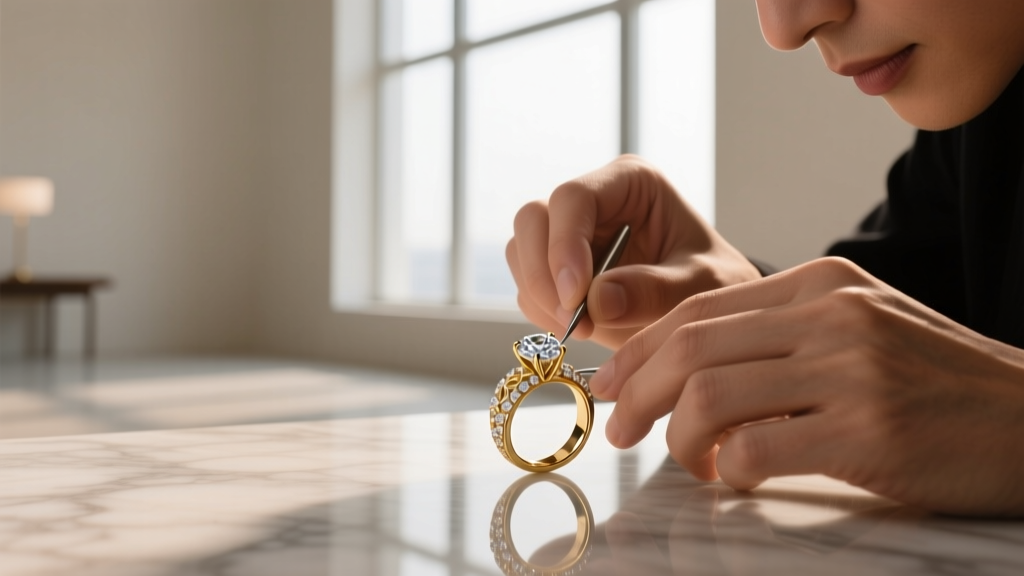
Upgrading the Clasp Hardware
The standard 4mm spring ring clasp found on most mass-produced average length necklaces is a frequent point of failure. The internal spring mechanism degrades over time, and the small surface area provides poor grip, making it difficult to fasten behind the neck.
The Fix: Have a jeweler swap the spring ring for a 5mm or 7mm lobster clasp. Lobster clasps feature a solid internal spring and a larger lever, providing superior tensile strength and ease of use. For those with limited dexterity or long nails, upgrading to a neodymium magnetic clasp is a highly functional alternative, provided the magnets are encased in a non-corrosive metal like surgical stainless steel or 14k gold-filled housings.
The Mathematics of Layering (Avoiding Friction Wear)
Layering is a dominant trend, but layering multiple "average length" necklaces leads to catastrophic friction wear. If you layer two 18-inch chains, the metal links will constantly grind against one another, acting like a microscopic file. Over a few months, this friction will shave away the gold plating or wear through solid links, causing the chains to snap.
To prevent friction wear, maintain a strict minimum 2-inch differential between layered chains. A proper three-chain stack requires a 16-inch choker, an 18-inch princess, and a 20-inch or 22-inch matinee. This spacing ensures the chains rest on different planes of the chest, eliminating metal-on-metal grinding.
For deeper insights into jewelry care and preserving metal integrity during daily wear, the Gemological Institute of America (GIA) recommends regular ultrasonic cleaning and inspection of link joints, especially for layered pieces that experience higher kinetic friction.
When to Abandon the Average Entirely
Ultimately, the concept of an "average length necklace" is a retail illusion. True style and comfort require bespoke adjustments. If you find yourself constantly tugging at your 18-inch chain, or if your favorite pendant refuses to lay flat, it is time to invest in custom-cut chains. Many specialized online retailers now offer chains cut to the exact half-inch, allowing you to order a 19.5-inch chain that perfectly bridges the gap between a choking 18-inch and a plunging 20-inch. By understanding the mechanics of chain gauge, bail sizing, and neckline geometry, you can permanently solve your fit issues and elevate your everyday jewelry styling.


