A Summary of the Diamond Necklace by Guy de Maupassant & Care Tips
Read our summary of the diamond necklace by Guy de Maupassant and learn essential care, cleaning, and authentication tips for real vs. paste diamonds.


The intersection of classic literature and modern gemology offers surprising lessons for contemporary jewelry collectors. When evaluating the cultural impact of historic jewelry, few stories resonate as deeply as the tragic tale of Mathilde Loisel. Beyond its literary merit, the narrative serves as a stark warning about the perils of misidentifying gemstones, the catastrophic financial consequences of losing uninsured heirlooms, and the critical importance of proper necklace maintenance. By exploring the themes of this classic work, we can uncover vital, actionable frameworks for authenticating, securing, and cleaning high-value diamond necklaces today.
The Cautionary Tale: A Summary of the Diamond Necklace by Guy de Maupassant
For those unfamiliar with the plot, a brief summary of the diamond necklace by Guy de Maupassant reveals a devastating chain of events triggered by a single borrowed accessory. Mathilde Loisel, a woman dissatisfied with her middle-class life, borrows what she believes to be an exquisite diamond necklace from her wealthy friend, Madame Forestier, to wear to a high-society ball. After the event, Mathilde discovers the necklace is missing. Rather than confessing the loss, she and her husband secretly purchase a nearly identical replacement for 36,000 francs—plunging themselves into a decade of grueling poverty to pay off the debt.
The story's infamous twist occurs years later when Mathilde finally confesses the truth to Madame Forestier, only to learn that the original borrowed piece was a paste imitation, worth at most 500 francs. This narrative highlights a fundamental vulnerability in jewelry ownership: the inability to distinguish between genuine precious stones and high-quality simulants, coupled with a lack of transparent communication and insurance. Today, with the rise of advanced lab-grown diamonds and sophisticated cubic zirconia, the lessons from this 1884 masterpiece are more relevant than ever for modern necklace care and authentication.
Real vs. Paste: Gemological Authentication Frameworks
Mathilde's fatal flaw was assuming that a piece borrowed from a wealthy woman was inherently genuine. In the modern market, distinguishing between a natural diamond, a lab-grown diamond, moissanite, and cubic zirconia (CZ) requires specific gemological tools. According to the Gemological Institute of America (GIA), visual inspection alone is insufficient for definitive identification.
The 10x Triplet Loupe Inspection
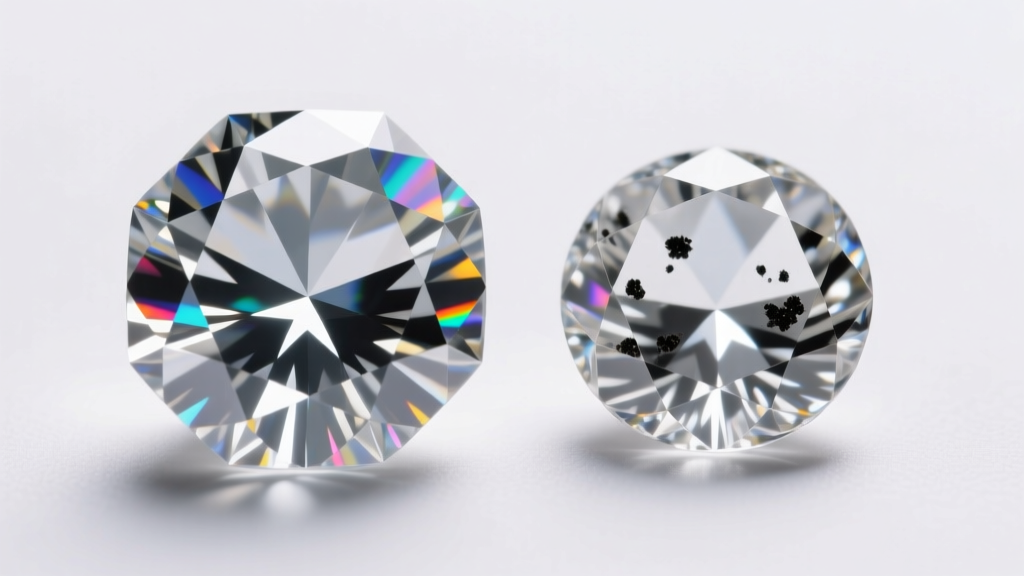
Every necklace owner should invest in a high-quality 10x triplet loupe. Natural diamonds almost always contain microscopic inclusions—such as pinpoint carbon spots or feather fractures. In contrast, CZ and glass paste are entirely flawless. If you examine a pendant and see perfectly clean internal structures, you are likely looking at a simulant or a high-grade synthetic. Furthermore, examine the girdle (the outer edge) of the stone; natural and lab-grown diamonds often have laser inscriptions of their grading report numbers, whereas paste will have smooth, polished, or occasionally chipped edges due to glass's lower Mohs hardness (5.5 compared to diamond's 10).
Thermal and Electrical Conductivity Testing
For definitive at-home verification, jewelers rely on dual-testing devices like the Presidium Gem Tester II. Diamonds are exceptional thermal conductors, dispersing heat rapidly. Moissanite, however, shares this thermal property but also conducts electricity. A dual diamond/moissanite tester applies an electrical current to separate the two. Paste and CZ will fail the thermal test entirely, registering as non-diamonds immediately.
Material Properties: Diamond vs. Common Simulants
Understanding the physical properties of your necklace's centerpiece dictates how you must care for it. A paste necklace requires vastly different cleaning protocols than a natural diamond pendant set in 18-karat gold.
| Property | Natural / Lab Diamond | Moissanite | Cubic Zirconia (CZ) | Paste / Glass |
|---|---|---|---|---|
| Mohs Hardness | 10 | 9.25 | 8.0 - 8.5 | 5.5 - 6.5 |
| Refractive Index | 2.42 | 2.65 - 2.69 | 2.15 - 2.18 | 1.50 - 1.70 |
| Cleaning Safety | Ultrasonic / Steam Safe | Ultrasonic Safe | Mild Soap Only | Wipe with Damp Cloth |
| Prong Wear Rate | High (can wear down gold) | Moderate | Low | Low |
Preventing the 'Loisel' Disaster: Security and Maintenance
The entire tragedy could have been mitigated with proper necklace security and a basic understanding of clasp mechanics. High-value diamond pendants should never be suspended from fragile chains with inferior clasps.

Clasp and Chain Integrity
Spring-ring clasps, commonly found on mass-market jewelry, are notorious for failing due to weak internal springs. For any diamond pendant valued over $1,000, upgrade to a solid lobster clasp or a box clasp with a figure-eight safety catch. Additionally, ensure the jump ring connecting the clasp to the chain is soldered shut. An unsoldered jump ring can easily be pulled apart if the necklace snags on clothing, resulting in a silent loss.
Prong Maintenance Schedules
Diamonds are hard, but the precious metals holding them are not. Platinum (PT950) and 18-karat gold will slowly wear down from friction against the diamond's girdle. A loose prong is the leading cause of lost center stones. You must perform a 'shake test' monthly—hold the necklace near your ear and gently shake it. If you hear a faint rattle, the stone is loose and requires immediate professional retipping. The Federal Trade Commission (FTC) advises consumers to seek professional appraisal and prong checks at least once every 12 months to maintain insurance validity.
Cleaning Protocols for High-Value Diamond Pendants
While diamonds are resilient, improper cleaning can destroy both the stone's treatments and the metal's finish. Accumulated body oils, lotions, and environmental dust can reduce a diamond's brilliance by up to 40%, making it look dull and lifeless.
When to Use Ultrasonic Cleaners
Ultrasonic cleaners use high-frequency sound waves (typically 40 kHz) to create microscopic cavitation bubbles that blast dirt from under the pavilion of the diamond. While excellent for untreated diamonds set in solid platinum or gold, ultrasonics are strictly forbidden for fracture-filled diamonds. Treatments like the Yehuda process use a glass-like substance to mask internal fractures; the heat and vibrations of an ultrasonic cleaner will melt or cloud this filler, permanently ruining the stone's clarity.
The Safest At-Home Cleaning Method
For routine maintenance of all diamond types, the safest method involves a few drops of mild, ammonia-free dish soap in a bowl of lukewarm water. Soak the necklace for 15 minutes to loosen sebum and cosmetics. Gently brush the back of the stone (the pavilion) with a soft-bristled baby toothbrush. Rinse thoroughly under warm running water, ensuring the drain is securely plugged, and pat dry with a lint-free microfiber cloth. Avoid using paper towels, as their wood-pulp fibers can micro-scratch the polished gold or platinum settings over time.
Conclusion: The True Value of Appraisals and Insurance
The ultimate lesson from Maupassant's literary classic is the necessity of documentation. Had Mathilde and her husband obtained a professional appraisal or simply asked the owner for the receipt, they would have discovered the paste necklace's true value of 500 francs, saving themselves a decade of ruin. In the modern era, always insure your fine jewelry under a dedicated rider on your homeowner's or renter's policy, backed by a recent appraisal that details the exact carat weight, color, clarity, and cut grade. Proper care, routine security checks, and gemological awareness are the only ways to ensure your diamond necklace remains a source of joy, rather than a catalyst for disaster.


