How to Style a Dante Necklace: A Step-by-Step Guide
Learn how to style and layer a Dante necklace with our step-by-step guide. Discover ideal lengths, material pairings, and neckline matching tips.

The Anatomy of the Dante Necklace
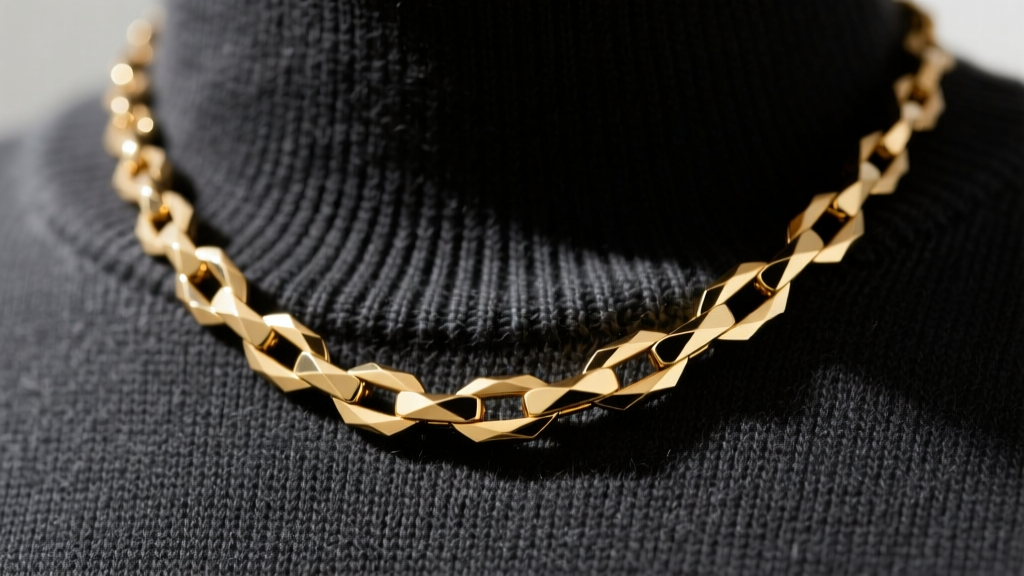
The Dante necklace has evolved from a niche streetwear staple into a cornerstone of modern fine jewelry layering. As we navigate the style landscape of 2026, the Dante chain remains highly sought after for its unique architectural geometry. Unlike the rounded, domed links of a traditional Miami Cuban, the Dante chain is characterized by its flattened, interlocking loops that feature a pronounced dual-bevel edge. This specific bevel cut catches light at multiple angles, creating a sharper, more faceted brilliance that bridges the gap between rugged streetwear and refined luxury.
Before diving into styling, it is crucial to understand the material science behind your piece. High-quality Dante necklaces are typically crafted from a 925 sterling silver base and finished with either rhodium plating or 18k gold PVD (Physical Vapor Deposition). According to the Gemological Institute of America (GIA), PVD coatings are vastly superior to traditional electroplating, offering a harder, more tarnish-resistant surface that can withstand daily friction. However, this durability also dictates how you should care for and layer the piece, which we will cover in the steps below.
Step 1: Selecting the Right Width and Length
The most common mistake when buying a Dante necklace is choosing a width that clashes with your natural proportions. The beveled edges of the Dante link make it appear visually wider and heavier than a standard cable or curb chain of the same millimeter width. Use the following framework to select your base dimensions:
| Chain Width | Avg. Weight (per inch) | Best Use Case | Ideal Length |
|---|---|---|---|
| 3mm - 4mm | 1.5 - 2.5 grams | Subtle layering, pendant pairing | 18' - 20' |
| 5mm - 6mm | 3.5 - 5.0 grams | Versatile standalone, light stacking | 20' - 22' |
| 8mm - 10mm | 8.0 - 12.0 grams | Statement streetwear, outerwear | 22' - 24' |
| 12mm+ | 15.0+ grams | Heavy statement, solo wear only | 24' - 26' |
A Note on Clasp Mechanics
Because the Dante link is dense, anything above a 6mm width requires a robust clasp. Avoid standard spring-ring clasps, which will snap under the dynamic weight of a heavy Dante chain. Opt for a reinforced lobster clasp with a dual-spring mechanism, or ideally, a box clasp with a figure-eight safety catch. This ensures the structural integrity of the necklace during active wear.
Step 2: The 3-Point Layering Framework
Layering a Dante necklace requires an understanding of visual weight and textural contrast. Because the Dante chain is highly reflective and geometric, pairing it with other flat, wide chains (like another Cuban or Figaro) creates visual clutter and causes the metal links to grind against one another, accelerating wear.
Building the Stack
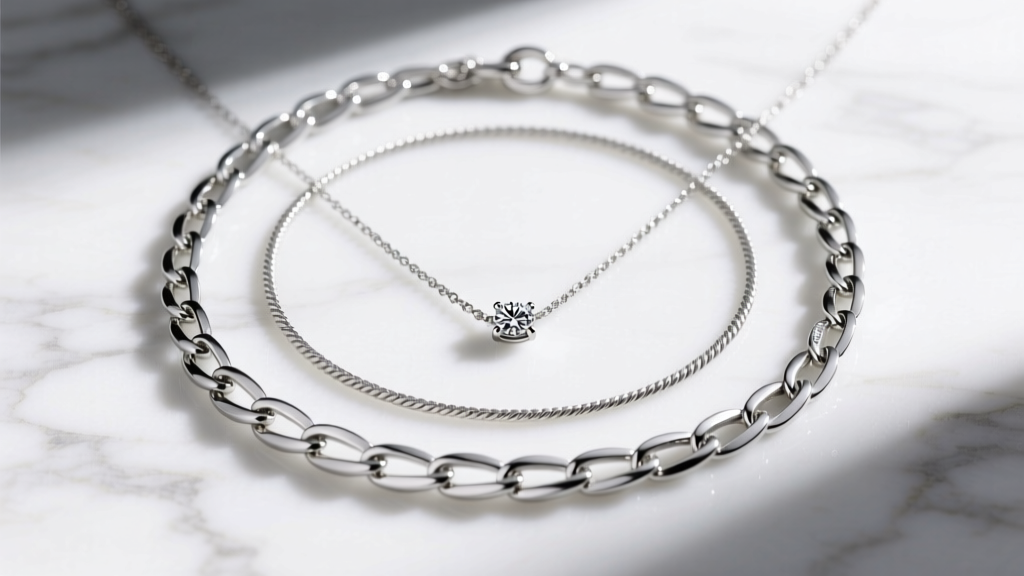
To achieve a balanced, professional stack, utilize the 'Rule of Thirds' for necklace layering. This involves varying both the length and the texture of each chain in 2-inch increments.
- The Base Layer (16' - 18'): Start with a high-texture, thin chain. A 2mm twisted rope chain or a 2.5mm box chain works perfectly. The twisting of the rope contrasts beautifully with the flat, beveled geometry of the Dante.
- The Anchor Layer (20' - 22'): This is where your 5mm Dante necklace sits. It acts as the visual anchor of the stack. The 2-inch drop from the base layer ensures the chains do not tangle and allows the light to hit the Dante's bevels unobstructed.
- The Focal Point (24' - 26'): Finish with a longer, medium-weight chain (like a 3mm Figaro or a delicate paperclip chain) featuring a singular, meaningful pendant. A simple bezel-set gemstone or a minimalist geometric drop draws the eye downward, elongating the torso.
Step 3: Matching Necklines and Occasions
The architectural nature of the Dante necklace means it interacts very specifically with different garment collars and necklines. Here is how to style your Dante chain based on your wardrobe:
The Crewneck and the Hoodie
When wearing a tight crewneck t-shirt or a heavy cotton hoodie, the fabric sits high on the collarbone. A 20-inch, 5mm Dante necklace will rest perfectly just below the fabric line, creating a sharp boundary between the metal and the textile. For hoodies, avoid chains wider than 6mm, as the bulk of the hoodie drawstrings will compete with the chain for visual dominance.
The V-Neck and Unbuttoned Collar
V-necks and unbuttoned linen shirts create a natural frame for the chest. Here, you can opt for a longer, heavier Dante chain (22 to 24 inches, 8mm width). The chain should follow the line of the garment, ending just above the sternum. This creates a continuous vertical line that is highly flattering and draws attention to the face.
Formal and Business Casual
In a 2026 corporate or business-casual environment, subtlety is key. Tuck a 3mm or 4mm gold PVD Dante necklace inside a crisp button-down shirt, leaving only the top two buttons undone. The chain should catch the light subtly when you move, offering a flash of luxury without overwhelming your professional attire.
Step 4: Maintenance and Cleaning Protocol
Proper maintenance is critical, especially if your Dante necklace features an 18k gold PVD coating over a brass or sterling silver base. The beveled edges of the links are prone to trapping sebum, dead skin cells, and environmental dust, which can quickly dull the chain's signature brilliance.
What to Avoid
Never place a PVD-coated Dante chain in an ultrasonic jewelry cleaner. Rio Grande, a leading authority on jewelry manufacturing and care, warns that the high-frequency cavitation bubbles generated by ultrasonic cleaners can cause micro-fractures in the titanium nitride base layer of PVD coatings, leading to peeling and flaking. Furthermore, avoid exposing your chain to chlorinated pool water or sulfur-heavy hot springs, which will rapidly degrade the topcoat.
The Weekly Cleaning Routine
- The Soak: Fill a small glass bowl with warm water and three drops of phosphate-free, mild dish soap (avoid harsh detergents with added moisturizers or citrus extracts).
- The Agitation: Submerge the Dante necklace and let it soak for exactly 5 minutes. This breaks down the oils trapped in the tight interlocking links.
- The Brush: Using an extra-soft baby toothbrush, gently brush along the beveled edges of the links. Do not scrub aggressively; let the bristles do the work.
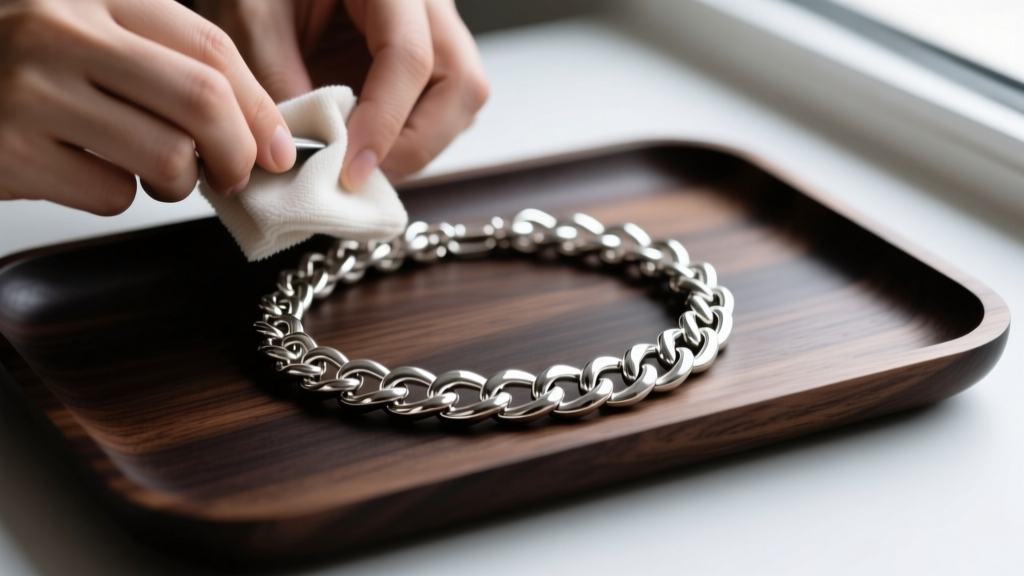
- The Dry: Rinse under lukewarm distilled water (tap water can leave hard water spots on the flat surfaces). Pat dry with a lint-free microfiber cloth, ensuring no moisture remains in the clasp mechanism.
Final Thoughts on the Dante Chain
Mastering the Dante necklace is about respecting its unique geometry and weight. By selecting the correct millimeter width for your frame, utilizing textural contrast in your layering stacks, and adhering to a strict, non-abrasive cleaning protocol, your Dante chain will remain a cornerstone of your jewelry collection for years to come. Whether you are dressing for a high-stakes meeting or a weekend out, the Dante offers a perfect synthesis of edge and elegance.


