Gold Heart and Cross Necklace Buying Guide: What to Look For
Discover how to choose the perfect gold heart and cross necklace. Learn about karat weights, chain styles, and quality markers in our expert buying guide.

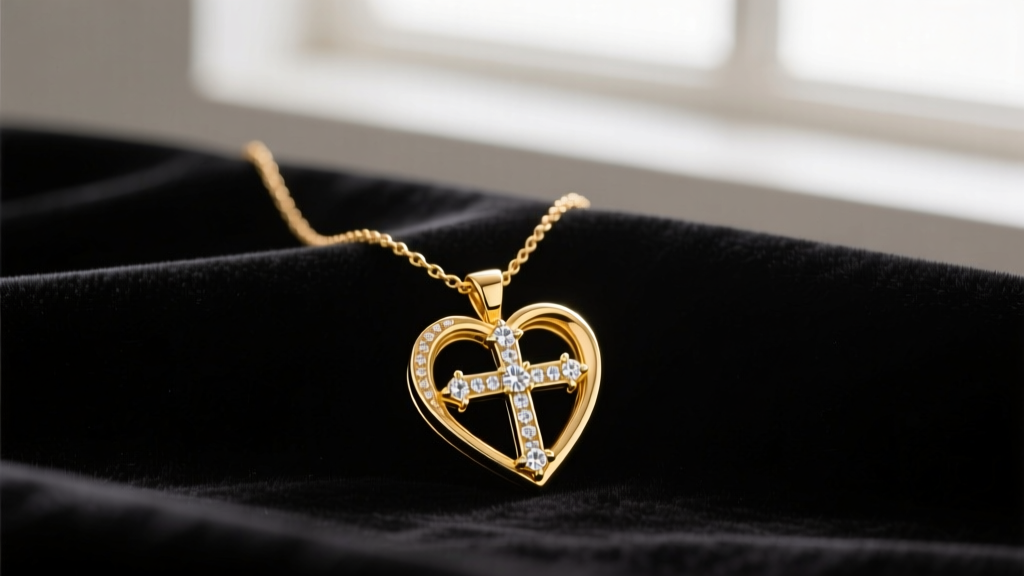
When shopping for a gold heart and cross necklace, buyers are often caught between emotional significance and aesthetic appeal. This dual-symbol pendant represents both faith and love, making it a deeply personal choice for baptisms, confirmations, anniversaries, and everyday wear. However, the sentimental value of these pieces should never overshadow the importance of structural integrity and metal quality. A poorly constructed pendant will bend, tarnish, or snap at the bail within months. In this comprehensive buying guide, we break down the exact specifications, metallurgical realities, and hardware details you need to evaluate before making a purchase in 2026.
Decoding Gold Purity: 10K vs. 14K vs. 18K for Pendants
The karat weight of your necklace dictates not only its color and price but also its long-term durability. According to the Federal Trade Commission jewelry guidelines, gold purity must be accurately stamped and accompanied by a manufacturer's hallmark. Pure 24K gold is entirely too soft for jewelry; it will warp under the pressure of a heavy chain. Therefore, alloying metals like copper, silver, and zinc are added to create structural integrity.
| Karat | Gold Content | Durability | Best Use Case |
|---|---|---|---|
| 10K | 41.7% | Very High | Budget-friendly, high-friction daily wear |
| 14K | 58.5% | High | Industry standard for everyday pendants |
| 18K | 75.0% | Moderate | Special occasion, rich color, softer bail |
For a gold heart and cross necklace intended for daily wear, 14K gold is the optimal choice. It offers a rich, warm yellow hue while retaining enough tensile strength to prevent the bail (the loop connecting the pendant to the chain) from slowly pulling open over time. If you opt for 18K gold, ensure the pendant is lightweight, as the softer metal will scratch and dent more easily against zippers or hard surfaces.
Chain Selection: Matching the Link to the Pendant Weight
A critical mistake buyers make is pairing a heavy, solid-cast cross and heart pendant with a delicate, hollow chain. As a general rule in jewelry mechanics, the pendant should never exceed 30% of the chain's tensile weight limit. If the pendant is too heavy, it will act as a pendulum, putting immense stress on the weakest link of the chain and the clasp mechanism.
Recommended Chain Styles for Dual Pendants
- Box Chains: Featuring square, interlocking links, box chains are incredibly strong and resist kinking. They provide a modern, geometric contrast to the curved lines of a heart and cross.
- Rope Chains: The twisted links of a rope chain reflect light brilliantly and are highly resistant to snapping. They are excellent for heavier, solid gold pendants.
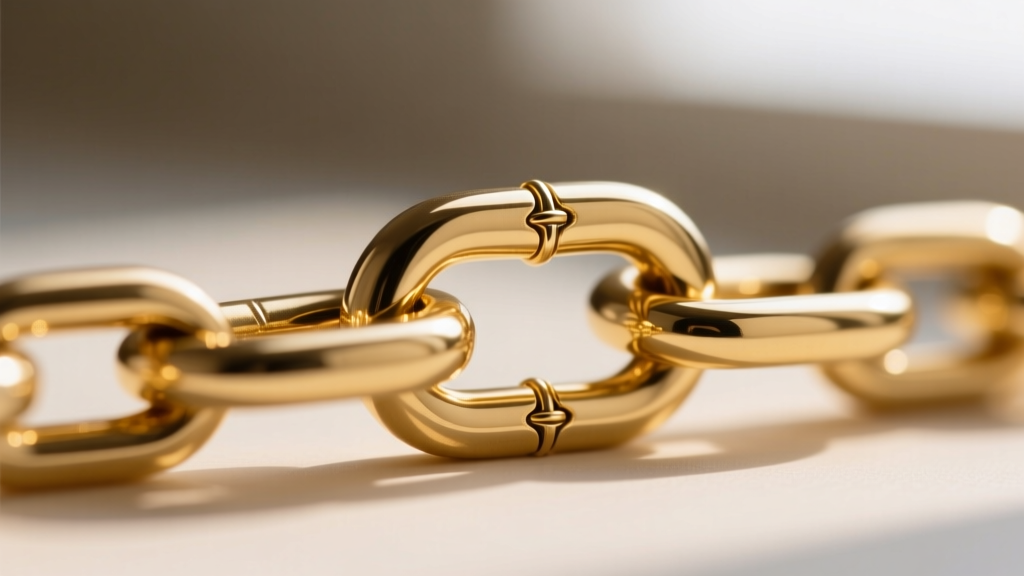
- Cable Chains: The classic oval link. While beautiful, standard cable chains can kink and are prone to stretching if the pendant is too heavy. Only choose a cable chain if it is solid (not hollow) and features soldered links.
Expert Tip: Avoid 'hollow' or 'semi-solid' chains at all costs. They are manufactured by wrapping a thin sheet of gold around a base metal core or resin, which is later dissolved. These chains dent irreparably if snagged and are nearly impossible for a jeweler to solder back together if they break.
Critical Hardware: Clasps, Soldered Rings, and Failure Points
The most frequent point of failure in any pendant necklace is the connection point between the chain and the bail. When inspecting a gold heart and cross necklace, you must look closely at the jump rings.
The Soldered Jump Ring Rule
A jump ring is the small circular wire that connects the pendant's bail to the chain. In mass-produced, low-quality jewelry, this ring is simply bent into a circle, leaving a microscopic seam. Over time, the weight of the pendant and the friction of movement will cause this seam to pull apart, resulting in a lost pendant. Always verify that the jump ring is soldered shut. Soldering uses a high-heat torch or precision laser to melt a filler metal across the seam, creating a continuous, unbreakable loop.
Spring Ring vs. Lobster Clasp
For the clasp at the back of the neck, the lobster clasp is vastly superior to the traditional spring ring. Spring rings feature a tiny internal spring that frequently fails, and the small lever is difficult to operate. A well-cast lobster clasp provides a secure, mechanical lock that is much less likely to accidentally unhook when catching on hair or clothing.
Pricing Tiers: What You Should Actually Pay in 2026
Understanding the spot price of gold is essential to avoid massive retail markups. The price of a solid gold necklace is calculated by its gram weight multiplied by the current market rate for that specific karat, plus a manufacturing premium. In 2026, with gold markets remaining robust, here is what you should expect to pay for quality pieces:
- Lightweight / Fashion Tier (1.5g - 3g): $180 - $350. These are usually 10K or lightweight 14K pieces. They are delicate and best for children or layering.
- Mid-Weight / Everyday Tier (4g - 8g): $450 - $900. This is the sweet spot for a durable 14K solid gold heart and cross pendant on a sturdy 18-inch box chain.
- Heavy / Investment Tier (10g+): $1,200+. These are substantial, often 18K pieces, sometimes featuring pavé diamond accents on the cross or heart.
If a retailer is selling a 'solid 14K gold' necklace that weighs 5 grams for $120, it is either heavily plated over a base metal, hollow, or the gold purity is severely misrepresented.
How to Verify Authenticity and Hallmarks
Reputable jewelers will always stamp their pieces. The Gemological Institute of America (GIA) notes that legitimate gold jewelry will bear a karat stamp (e.g., 14K, 585, 18K, 750) and ideally a maker's mark or trademark.
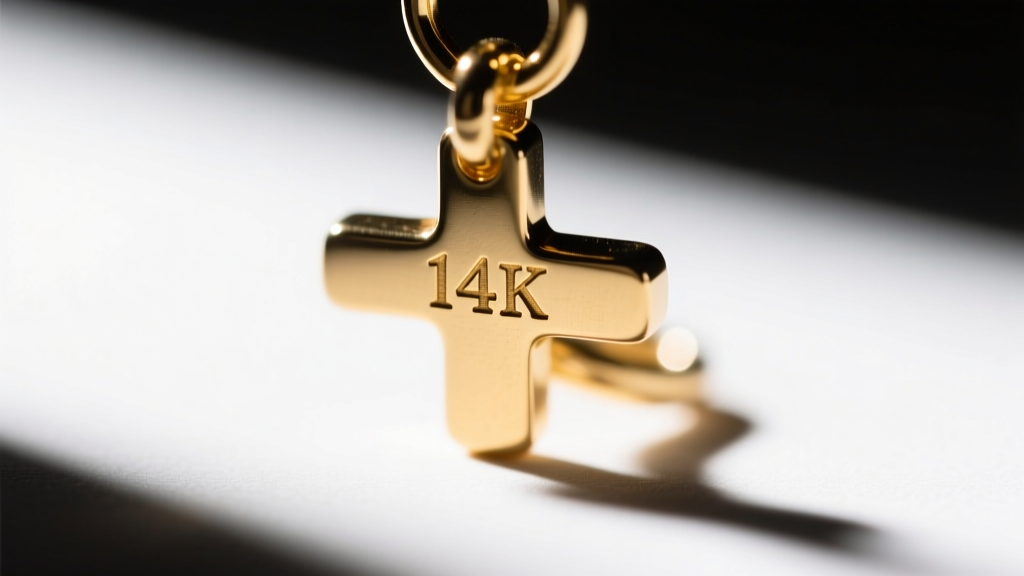
Use a jeweler's loupe or your smartphone's macro camera lens to inspect the back of the pendant bail and the clasp tag. The stamp should be crisp, deeply engraved, and perfectly aligned. Blurry, shallow, or crooked stamps are massive red flags indicating counterfeit casting or post-production laser etching on plated metals. Furthermore, if the piece features small diamonds, look for a separate stamp indicating the total carat weight (e.g., '0.15 CTW').
Final Pre-Purchase Checklist
Before finalizing your order, run the necklace through this quick structural audit:
- Verify the Stamp: Confirm the 14K or 18K hallmark and maker's mark are present and crisp.
- Check the Jump Ring: Ensure the ring connecting the pendant to the chain is fully soldered shut with no visible gaps.
- Test the Bail: The bail should be thick enough to accommodate the chain without rubbing excessively, which can wear down the chain links over time.
- Inspect the Clasp: Ensure the lobster clasp snaps back firmly and the internal mechanism is not loose or sticky.
- Request the Gram Weight: Ask the seller for the exact gram weight of the gold to calculate the melt value and ensure the retail premium is reasonable.
By prioritizing metallurgical quality and structural hardware over flashy marketing, you ensure that your gold heart and cross necklace remains a durable, beautiful heirloom capable of being passed down through generations.