How to Buy and Style a Flawless 3ct Diamond Necklace
Master the art of selecting a 3ct diamond necklace. Learn expert tips on 4Cs, secure chain gauges, setting styles, and pricing for your perfect pendant.

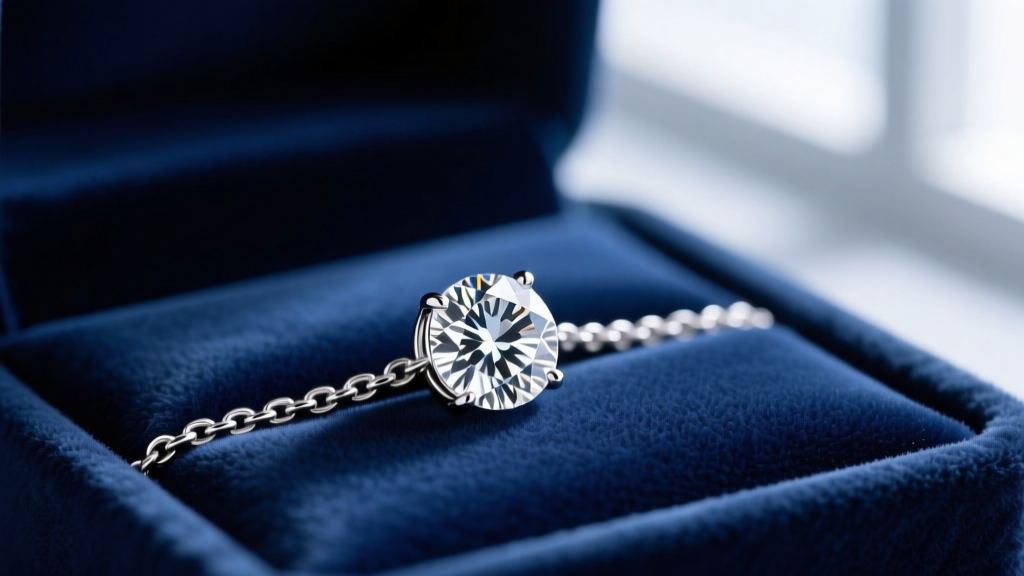
The Anatomy of a Perfect 3-Carat Pendant
Finding the perfect 3ct diamond necklace is a milestone investment that bridges the gap between fine jewelry and high jewelry. At three carats, a round brilliant diamond measures approximately 9.1mm in diameter. This substantial face-up area means the stone acts as a massive optical window, capturing light from across a room but also exposing any internal flaws or color tints that might go unnoticed in smaller stones. Choosing a piece of this magnitude requires moving beyond basic aesthetic preferences and understanding the structural physics, gemological grading nuances, and metallurgical requirements necessary to support a heavy, valuable center stone.
This step-by-step guide will walk you through the exact specifications required to select, secure, and style a flawless 3-carat diamond pendant in today's market.
Step 1: Calibrating the 4Cs for a 3-Carat Stone
When scaling up to a 3-carat diamond, the standard grading rules shift. Inclusions that are invisible to the naked eye in a 1-carat stone can become apparent in a 3-carat stone simply because the facet windows are larger. Similarly, color tints concentrate in larger volumes of diamond rough. According to the Gemological Institute of America (GIA), understanding how size impacts light return and color perception is critical for high-carat buyers.
| Grading Factor | Sweet Spot for 3ct | Why It Matters at This Size |
|---|---|---|
| Cut | Excellent / Ideal | Non-negotiable. Poor cut results in a 'dead' center, which is highly visible at 9.1mm. |
| Color | G or H | Lower colors (I-J) show noticeable yellow/brown tints in the large table facet. |
| Clarity | VS1 or VS2 | SI1 inclusions may be visible without magnification due to the larger facet windows. |
| Carat | 2.90 - 3.05 | Avoid 'magic sizes' markups if possible, but 3.00ct commands a premium for exact weight. |
Always demand a grading report from a top-tier laboratory like GIA or AGS. For a 3ct diamond necklace, the certificate is your ultimate insurance policy regarding the stone's true identity and quality.
Step 2: Selecting a Secure Setting
A 3-carat diamond weighs roughly 0.60 grams. While that sounds light, when suspended on a chain, it acts as a pendulum. Every time you move, the stone swings, generating kinetic force that pulls against the prongs. A standard 4-prong setting is often insufficient for long-term security at this weight.
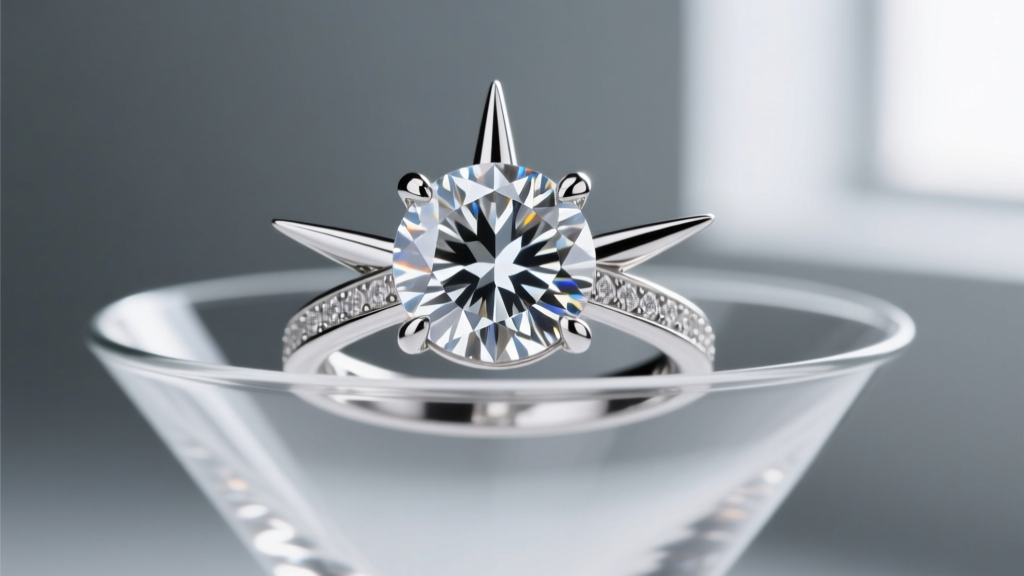
The 6-Prong Martini Setting
For solitaire pendants, the 6-prong martini setting is the industry gold standard for stones over 2 carats. The six prongs distribute the tension evenly across the diamond's girdle, and the martini basket design lowers the center of gravity, allowing the diamond to sit flatter against the collarbone rather than flipping upside down.
The Bezel Alternative
If you lead an active lifestyle, a full platinum bezel setting is the safest route. A bezel encircles the entire girdle in a rim of metal, eliminating the risk of snagging on clothing and protecting the diamond's vulnerable edges from chipping if the pendant swings and strikes a hard surface.
Step 3: Matching the Chain Gauge to the Carat Weight
One of the most frequent mistakes buyers make is pairing a massive 3ct diamond pendant with a delicate, lightweight chain. This not only looks visually unbalanced but creates a severe structural hazard. A chain that is too thin will stretch, kink, or snap under the pendulum weight of a 3-carat stone.
- Optimal Gauge Thickness: Look for chains between 1.2mm and 1.8mm. Anything below 1.0mm is a liability.
- Best Chain Styles: Box chains and wheat chains offer the best tensile strength and resist kinking. Avoid delicate cable or figaro chains, which have weak solder points.
- Clasp Hardware: Ensure the chain features a heavy-duty lobster clasp (minimum 12mm in length) or a secure fold-over clasp. Spring ring clasps are entirely inadequate for this weight.
- Metallurgy: Platinum or 14k/18k solid gold is mandatory. Gold-filled or vermeil chains will degrade and cannot support the insurance value of the pendant.
Step 4: Navigating 2026 Pricing Realities
The diamond market has bifurcated significantly with the maturation of lab-grown diamond technology. When budgeting for your 3ct diamond necklace, you must decide between natural earth-mined stones and chemically identical lab-created stones. Here is what you can expect to pay in the current market for a well-cut, G-color, VS1-clarity 3-carat round brilliant pendant (excluding the chain and setting hardware):
- Natural Diamond (GIA Certified): $38,000 – $65,000+
- Lab-Grown Diamond (IGI/GIA Certified): $2,200 – $4,500
Lab-grown diamonds offer exceptional value, allowing buyers to maximize cut and color quality without compromising on size. However, natural diamonds retain a different resale profile and carry the geological rarity factor that many traditional collectors demand. The GIA's diamond care and identification resources emphasize that both require the same physical maintenance, though their market trajectories differ.
Step 5: Styling and Neckline Pairings
A 3ct diamond pendant is a commanding focal point. It does not need, nor does it tolerate, heavy competition from other necklaces. Attempting to layer a 9.1mm diamond solitaire with delicate gold chains usually results in tangled hardware and scratched metal.
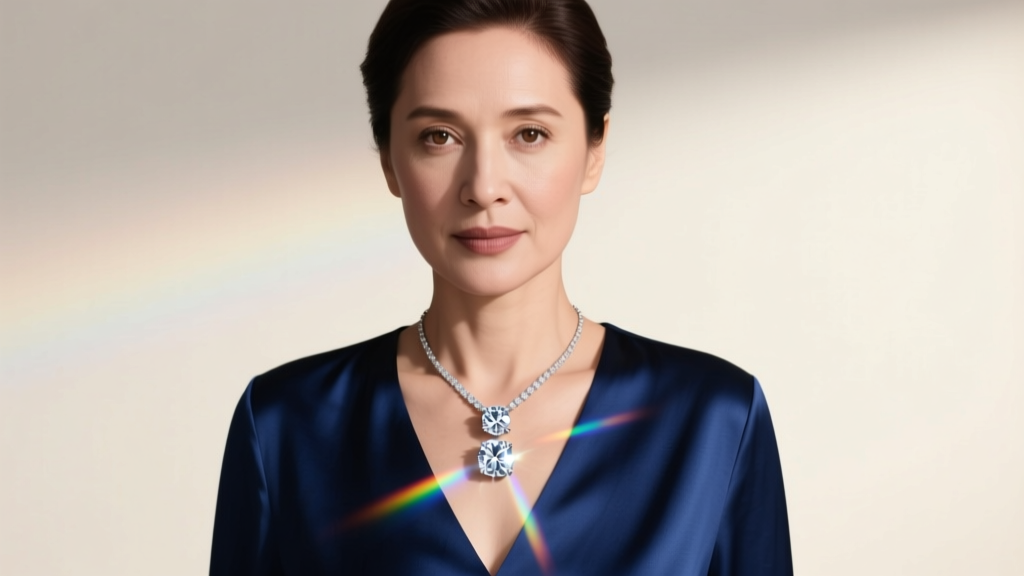
The Best Necklines for a 3-Carat Solitaire
To maximize the optical performance of the diamond, pair the necklace with necklines that provide a solid, unpatterned backdrop. Deep V-necks, scoop necks, and off-the-shoulder silhouettes frame the collarbone perfectly, allowing the 16-inch or 18-inch chain to rest exactly in the visual center of the chest. Avoid high collars, turtlenecks, or busy floral patterns, which will visually clash with the diamond's scintillation and cause the pendant to get lost in the fabric folds.
Step 6: Maintenance and Insurance Protocols
Owning a high-carat diamond necklace requires a strict maintenance routine to ensure the stone remains secure and brilliant.
- Bi-Annual Prong Checks: Take the pendant to a certified jeweler every six months. They will use a loupe to check for prong lift and metal fatigue in the basket.
- At-Home Cleaning: Soak the pendant in a bowl of warm water with a few drops of mild, ammonia-free dish soap for 20 minutes. Gently brush the underside of the diamond (the pavilion) with a soft baby toothbrush to remove lotion and sebum buildup, which severely dulls light return.
- Specialized Insurance: Standard homeowner's policies often have low caps on jewelry. Secure a rider or a specialized policy through a company like Jewelers Mutual to cover the full appraised replacement value of your 3ct diamond necklace against loss, theft, or mysterious disappearance.
By meticulously selecting the right cut, securing it in a robust setting, and pairing it with a structurally sound chain, your 3-carat pendant will remain a breathtaking, secure heirloom for decades to come.


