The Beginner's Guide to Choosing a Gold Onyx Necklace
Discover how to choose, style, and care for your first gold onyx necklace. Learn about gold karats, real vs. dyed onyx, and chain pairings.

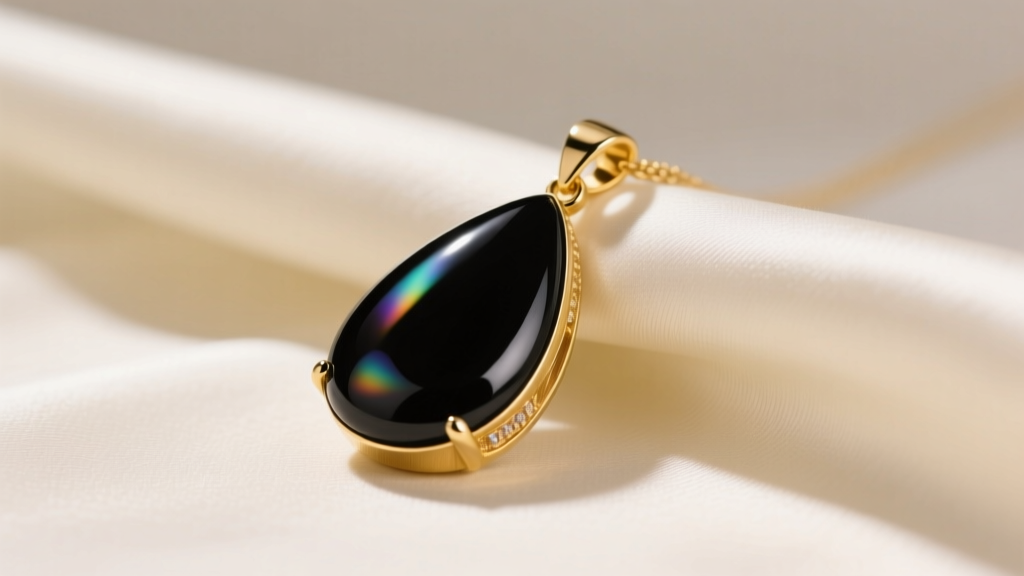
The Anatomy of a Gold Onyx Necklace
A gold onyx necklace is more than just a piece of jewelry; it is a study in contrast. The deep, light-absorbing black of the onyx paired with the warm, reflective luster of gold creates a timeless aesthetic that transitions seamlessly from daytime office wear to evening elegance. For beginners stepping into the world of fine jewelry, this combination offers an excellent entry point. Onyx, a variety of chalcedony, ranks at 6.5 to 7 on the Mohs hardness scale, making it durable enough for daily wear, while gold provides a hypoallergenic, tarnish-resistant setting.
However, navigating the jewelry market can be overwhelming. Terms like "14k solid gold," "gold vermeil," "natural onyx," and "dyed agate" are frequently thrown around, often leaving first-time buyers confused about what they are actually purchasing. This guide breaks down the metallurgy, gemology, and structural mechanics of buying your first gold onyx pendant, ensuring you invest in a piece that is both beautiful and built to last.
Decoding the Gold: Karats, Colors, and Durability
The "gold" in your necklace is rarely pure. Pure 24-karat gold is too soft to securely hold a heavy gemstone pendant; it would bend and warp under the weight. Therefore, gold is alloyed with other metals to increase its tensile strength. Understanding these alloys is critical when selecting your setting.
| Gold Karat | Pure Gold % | Alloy Metals | Durability & Best Use |
|---|---|---|---|
| 10k Gold | 41.7% | Copper, Zinc, Nickel | Highest durability, but pale color. Prone to tarnish. Best for tight budgets. |
| 14k Gold | 58.3% | Copper, Silver, Zinc | The industry standard for daily wear. Excellent balance of rich color and structural integrity. |
| 18k Gold | 75.0% | Copper, Silver | Deep, luxurious yellow hue. Softer than 14k, requiring slightly more care. Ideal for luxury pendants. |
| 24k Gold | 99.9% | None | Too soft for gemstone settings. Avoid for pendants that will experience movement. |
For a beginner, 14k solid gold is the ultimate sweet spot. It provides the structural rigidity needed to support a dense onyx stone while maintaining a beautiful, warm color that resists tarnishing. If you prefer a richer, more buttery yellow tone and are willing to be slightly more careful with your jewelry, 18k gold is a stunning upgrade.
Real vs. Treated Onyx: What Beginners Must Know
Here is a gemological secret that catches many beginners off guard: almost all the "black onyx" on the commercial market is not naturally black. According to the Gemological Institute of America (GIA), natural black onyx is exceedingly rare. What you are likely purchasing is gray or white chalcedony (or agate) that has been permanently treated to achieve its uniform black color.
The Sugar and Acid Treatment Explained
The process of creating black onyx has been used since the Roman Empire. Porous gray chalcedony is soaked in a hot sugar solution for several weeks. The stone is then boiled in sulfuric acid, which carbonizes the sugar trapped inside the stone's microscopic pores, turning it a deep, permanent black. This treatment is stable, universally accepted in the gem trade, and does not diminish the stone's value or durability. However, as an informed buyer, you should know that you are buying a treated gemstone, not a naturally occurring black one.
Be wary of sellers claiming their affordable black onyx is "100% natural and untreated." True natural black onyx usually features distinct white or gray banding. If a stone is pitch-black, completely opaque, and uniformly colored, it has been treated. You can verify the mineral composition and historical treatment data of chalcedony variants via mineralogical databases like Mindat.org.
Matching the Chain: Weight, Bails, and Link Styles
Onyx is a dense material with a specific gravity of roughly 2.6. A modest 20mm cabochon onyx pendant can easily weigh between 5 and 8 grams. If you pair this heavy stone with a delicate, hollow chain, the chain will inevitably snap or stretch. When building your gold onyx necklace, the chain and the bail (the loop connecting the pendant to the chain) must be engineered for weight distribution.
- The Bail: Ensure the pendant's bail has an inner diameter of at least 3mm to 4mm. This allows you to thread a substantial chain through it without forcing the metal.
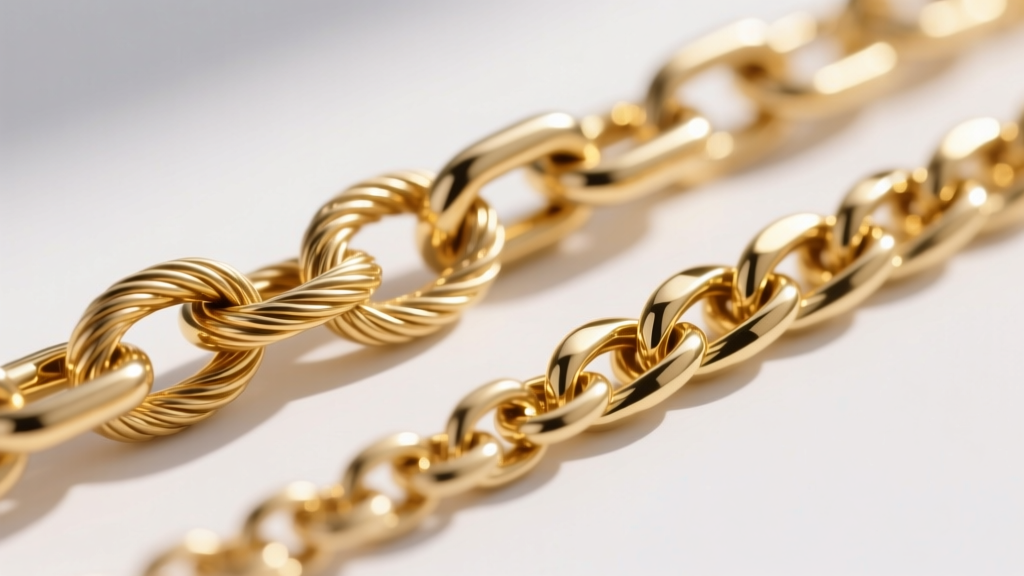
- Box Chains (1.2mm - 1.5mm): Box chains feature square, interlocking links that distribute weight evenly. They are incredibly resistant to kinking and snapping, making them the top choice for heavy onyx pendants.
- Wheat Chains (1.5mm - 2.0mm): Woven in a braided pattern, wheat chains offer a luxurious, textured look with immense tensile strength. They drape beautifully and will not pull chest hair.
- Cable Chains (1.0mm+): While classic, standard cable chains can stretch over time if the links are not soldered. If you prefer the cable look, ensure the links are soldered shut.
Pro Tip: Always check the clasp. A heavy onyx pendant requires a sturdy lobster clasp. Avoid spring-ring clasps, as their internal springs frequently fail under the pendulum-like stress of a heavy stone.
Styling Your Pendant by Neckline and Occasion
The stark contrast of a gold onyx necklace makes it a versatile styling tool, but the chain length dictates how it interacts with your wardrobe. Here is a practical framework for pairing your necklace with different necklines:
- V-Neck and Wrap Dresses (18 to 20 inches): A princess-length chain (18") or a slightly longer matinee length (20") allows the onyx pendant to rest perfectly in the negative space of a V-neck, elongating the torso without competing with the garment's lines.
- Crew Necks and Button-Downs (20 to 22 inches): To prevent the pendant from tangling with your collar, opt for a chain that falls just below the collarbone. A 20-inch or 22-inch chain allows the onyx to rest on the fabric, creating a bold, deliberate focal point.
- Turtlenecks and Sweaters (24 to 28 inches): For high necklines, you need a dramatic drop. A 24-inch to 28-inch chain transforms the pendant into a statement lariat or opera-length piece, breaking up the visual bulk of heavy winter knits.
Care and Maintenance: Protecting Your Investment
While gold is relatively low-maintenance, onyx requires specific care to preserve its glassy, vitreous luster. The most common mistake beginners make is tossing their jewelry into an ultrasonic cleaner.
Never use ultrasonic or steam cleaners on onyx. The high-frequency vibrations and sudden temperature shifts can cause microscopic fractures within the chalcedony to expand, potentially cleaving the stone in half. Furthermore, if the stone has any surface-reaching fissures, the harsh chemicals in cleaning solutions can strip the carbonized dye, leaving you with a patchy, gray stone.
Instead, adopt this simple, safe cleaning routine:
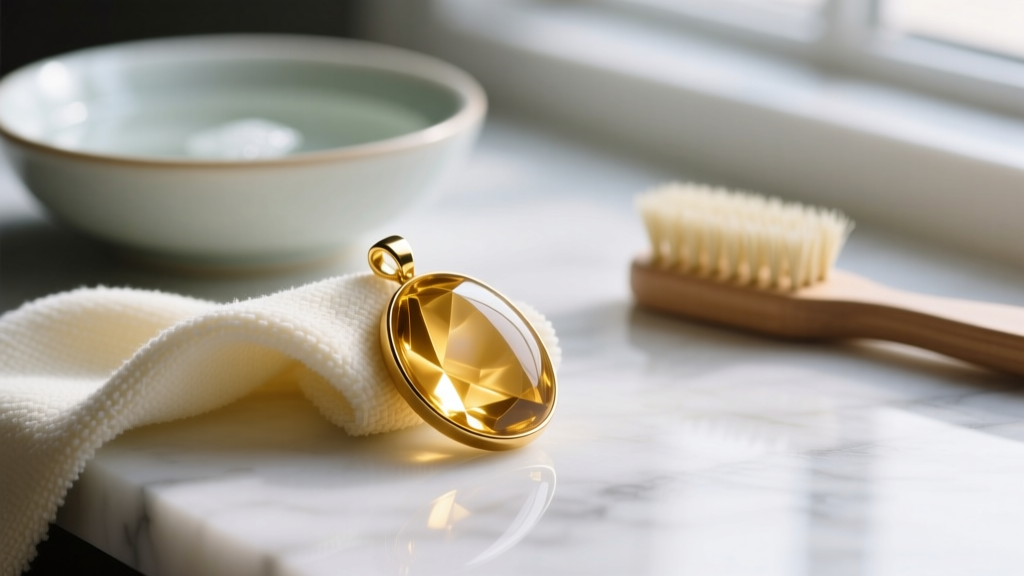
- Mix a few drops of mild, phosphate-free dish soap (like Dawn) into a bowl of lukewarm water.
- Submerge your gold onyx necklace for 3 to 5 minutes to loosen skin oils and lotions.
- Gently scrub the gold setting and the back of the stone using a baby-soft toothbrush. Avoid scrubbing the face of the onyx too aggressively to prevent micro-scratches.
- Rinse thoroughly under lukewarm running water.
- Pat dry with a lint-free microfiber cloth. Ensure the stone is completely dry before storing it in a fabric-lined jewelry box to prevent moisture from degrading the metal alloys over time.
The Takeaway: A gold onyx necklace is an investment in contrast and classic design. By prioritizing 14k or 18k solid gold, understanding the accepted gemological treatments of black chalcedony, and pairing your heavy pendant with a structurally sound box or wheat chain, you will secure a piece of jewelry that remains a staple in your collection for decades.


