A Beginner's Guide to Choosing a Gold Necklace With Letter Pendants
Discover how to choose, style, and care for a gold necklace with letter pendants. Learn about karats, chain types, and font meanings in this guide.

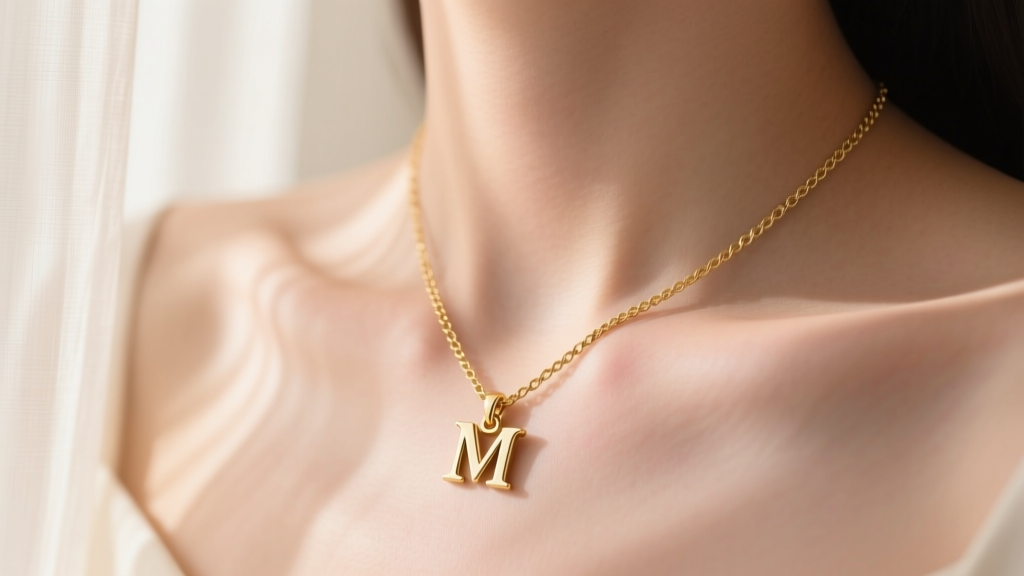
The Timeless Appeal of Initial Jewelry
A gold necklace with letter pendants is arguably the most versatile piece of jewelry you can own. Whether you are honoring a loved one, celebrating a milestone, or simply wearing your own initial, initial necklaces bridge the gap between deeply personal sentiment and everyday wearability. However, for beginners navigating the jewelry market, the sheer volume of options—ranging from $40 fast-fashion pieces to $2,000 luxury designer items—can be overwhelming. This guide breaks down the exact specifications, material grades, and structural details you need to make an informed purchase that will last a lifetime.
Decoding Gold Purity: 10K vs. 14K vs. 18K
When shopping for solid gold jewelry, the karat (K) system dictates the purity of the metal. Pure gold is 24K, but it is far too soft for daily wear, especially for delicate items like letter pendants that are prone to bending. According to the Gemological Institute of America (GIA), alloying gold with metals like copper, zinc, and silver increases durability and alters the color.
| Karat | Gold Content | Durability | Color Profile | Avg. Price Range (14"-16") |
|---|---|---|---|---|
| 10K Gold | 41.7% | Highest | Pale, slightly brassy | $90 - $150 |
| 14K Gold | 58.5% | High (Ideal for daily) | Warm, classic yellow | $180 - $350 |
| 18K Gold | 75.0% | Moderate (Scratches easier) | Rich, deep golden hue | $400 - $800+ |
The Expert Verdict: 14K gold is the undisputed sweet spot for a daily-wear initial necklace. It offers the perfect balance of rich color and structural integrity. Beware of 'gold vermeil' or 'gold-plated' alternatives in the $50-$120 range; while budget-friendly, the thin layer of gold will eventually wear off the sterling silver base, leaving you with a tarnished pendant.
The Anatomy of a High-Quality Letter Pendant
Not all initial necklaces are constructed equally. When evaluating a gold necklace with letter charms, inspect the hardware closely. The most critical, yet overlooked, component is the jump ring—the tiny circular loop that connects the pendant's bail to the chain.
- Soldered vs. Unsoldered: Always look for a soldered jump ring (meaning the gap is fused shut with heat and additional metal). If the jump ring is merely bent shut, the constant friction of the chain will eventually pry it open, and you will lose your pendant.
- The Bail: The bail is the loop at the top of the letter itself. Ensure it is wide enough to slide freely over the chain's clasp, but not so wide that the pendant slides too far off-center.
- The Clasp: A lobster clasp is vastly superior to a spring ring clasp. Spring rings are notoriously difficult to operate with one hand and have a higher mechanical failure rate over time.
Chain Styles and the 'Flip Factor'
The chain you choose dictates both the aesthetic and the functionality of your necklace. A common complaint among beginners is the 'flip factor'—when a lightweight letter pendant constantly turns upside down against the chest.
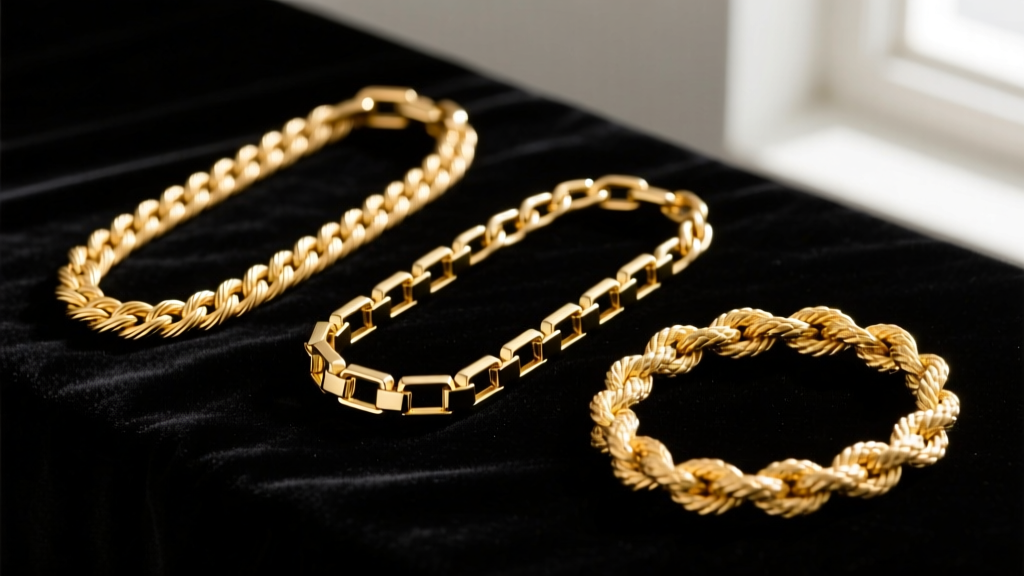
Top Chain Recommendations for Initials
- Cable Chain (0.9mm - 1.2mm): The classic choice. It is lightweight, timeless, and allows the letter pendant to take center stage. However, chains thinner than 0.9mm are prone to snapping if caught on clothing.
- Box Chain (1.0mm - 1.5mm): Composed of square links, box chains are incredibly durable and reflect light beautifully. Their slightly heavier weight helps anchor lightweight pendants, reducing the flip factor.
- Rolo Chain (1.2mm - 1.5mm): Featuring uniform round links, rolo chains offer a vintage, textured look. They are highly resistant to tangling and provide excellent structural support for heavier, solid gold letters.
Proportion Rule: Match the chain thickness to the pendant height. A delicate 10mm letter requires a 0.9mm to 1.0mm chain. A bold 20mm block letter needs a 1.5mm to 2.0mm chain to prevent the hardware from looking visually unbalanced.
Font Psychology: Choosing Your Letter Style
The typography of your initial pendant subtly communicates your personal style. Jewelry designers typically categorize letter pendants into three distinct font families, each serving a different aesthetic purpose.
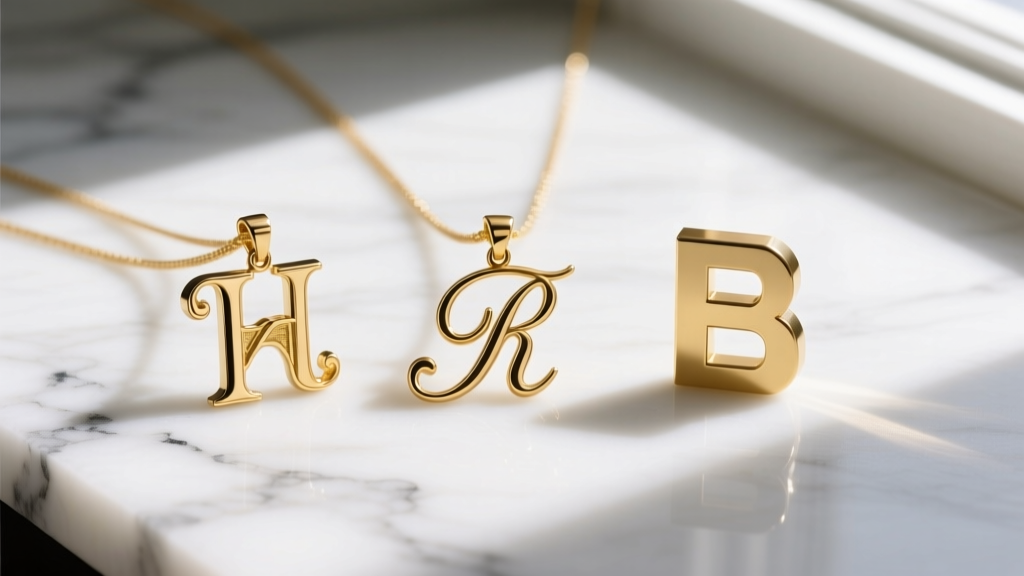
- Serif (The Classic): Featuring small decorative strokes at the ends of the letters (similar to Times New Roman). Serif pendants project elegance, tradition, and sophistication. They are the most popular choice for heirloom-quality pieces.
- Script (The Romantic): Mimicking cursive handwriting, script fonts are fluid and highly personalized. They work exceptionally well for longer monograms or intertwining double-initial pendants, though the thin loops can be fragile if cast in lower karat gold.
- Block / Sans-Serif (The Modern): Clean, geometric, and devoid of decorative flourishes. Block letters offer a contemporary, minimalist edge and are highly favored in streetwear and modern layering setups.
Mastering the Layering Technique
A gold necklace with letter pendants is the ultimate anchor for a layered necklace stack. To achieve a professional, intentional look rather than a tangled mess, follow the 'Rule of Two Inches'.
The 'Rule of Two Inches': When stacking necklaces, ensure there is at least a 2-inch difference in length between each chain to prevent the pendants from overlapping and scratching one another.
A Beginner-Friendly 3-Piece Stack:
- Layer 1 (14 inches): A simple 1.5mm gold herringbone or snake chain sitting close to the collarbone. No pendant.
- Layer 2 (16 inches): Your 14K gold necklace with letter pendant (ideally 12mm-15mm in height) on a delicate cable chain.
- Layer 3 (18 inches): A textured chain (like a paperclip or rolo) featuring a small, complementary charm, such as a 5mm solid gold bead or a tiny diamond solitaire.
Care, Maintenance, and Longevity
While solid 14K gold is highly resistant to tarnish, the accumulation of body oils, lotions, and environmental pollutants can dull its brilliance. The Federal Trade Commission (FTC) and jewelry industry standards recommend gentle, non-abrasive cleaning methods to preserve the integrity of your gold and any attached gemstones.
For routine maintenance, mix a few drops of mild, phosphate-free dish soap into a bowl of lukewarm water. Let your initial necklace soak for 15 minutes, then gently agitate it with a soft-bristled baby toothbrush, paying special attention to the back of the letter pendant and the jump ring where debris collects. Rinse thoroughly and pat dry with a microfiber cloth. Never use harsh chemicals, bleach, or chlorine, as these can permanently discolor the alloy metals mixed into your 14K or 18K gold.
By understanding the nuances of gold purity, chain mechanics, and proportional styling, you can confidently select a gold initial necklace that is not just a fleeting accessory, but a enduring staple in your jewelry wardrobe.


