Expert Guide to the Perfect Dog Tag and Necklace Setup
Explore the metallurgy, gauge specs, and chain mechanics of the perfect dog tag and necklace. An expert technical guide for custom builds.

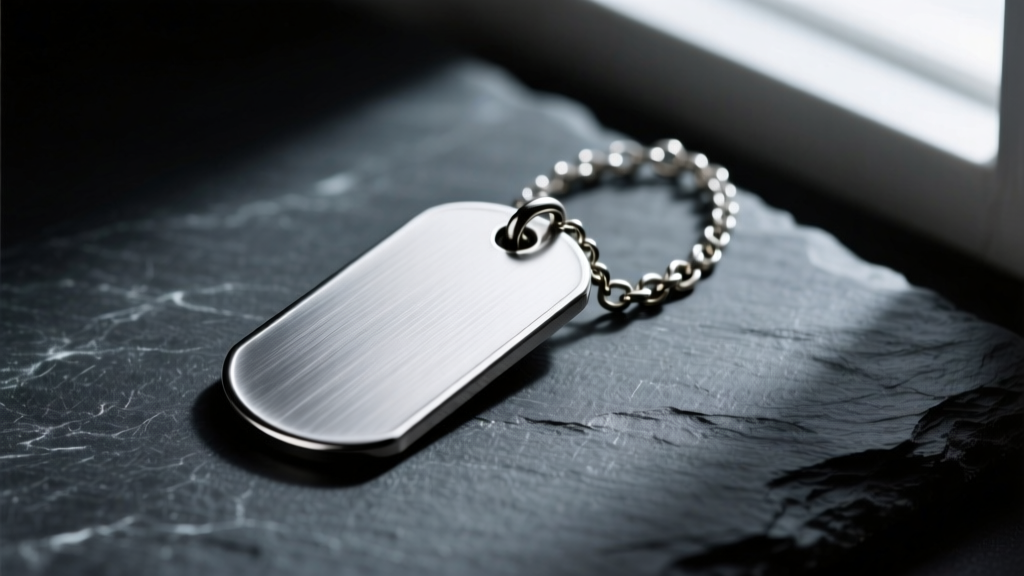
The evolution of the dog tag and necklace from a purely utilitarian military identification tool to a staple of high-end streetwear and luxury fashion has created a market flooded with varying quality levels. For the discerning collector or custom jeweler, understanding the technical specifications—ranging from metallurgical compositions to chain tensile strengths—is critical. This deep dive explores the engineering and material science required to build or select a premium dog tag and necklace setup that will withstand decades of wear without compromising on aesthetic integrity.
The Metallurgy of Identification: 316L vs. Grade 5 Titanium vs. 925 Silver
The longevity and skin-compatibility of a dog tag are dictated entirely by its base alloy. While cheap fashion brands rely on zinc alloys with thin electroplating, expert jewelers and military contractors utilize three primary metals, each with distinct Vickers hardness (HV) ratings and corrosion profiles.
316L Marine-Grade Stainless Steel
Often referred to as surgical steel, 316L is the gold standard for durable, everyday dog tags. The 'L' denotes low carbon, which prevents carbide precipitation during welding or laser engraving. More importantly, 316L contains 2-3% molybdenum, an alloying element that drastically increases its resistance to chloride pitting and crevice corrosion. According to the British Stainless Steel Association, this molybdenum inclusion makes 316L vastly superior to 304 stainless steel when exposed to human sweat (which contains sodium chloride) and coastal environments. With a Vickers hardness of roughly 150-190 HV, it resists scratching while remaining malleable enough for deep rotary engraving.
Grade 5 Titanium (Ti-6Al-4V)
For those requiring extreme strength-to-weight ratios, Grade 5 Titanium is the apex material. Composed of 6% aluminum and 4% vanadium, this aerospace-grade alloy boasts a Vickers hardness of approximately 350 HV, making it nearly twice as hard as 316L. Titanium is entirely hypoallergenic and biocompatible. Furthermore, titanium can be anodized using electrolytic processes to produce vibrant, permanent colors (like deep blues and purples) without the use of surface paints or dyes that can chip over time.
Sterling Silver (925)
While prized in luxury jewelry, 925 sterling silver (92.5% silver, 7.5% copper) is technically the least durable option for a rugged dog tag. With a Vickers hardness of just 60-70 HV, silver is highly susceptible to deep gouging and deformation upon impact. The copper content also makes it prone to oxidation and tarnishing when exposed to sulfur compounds in the environment. For a comprehensive breakdown of precious metal standards and hallmarking requirements, refer to the guidelines provided by the London Assay Office.
Dimensional Standards and Gauge Thickness
A common failure point in commercial dog tags is inadequate thickness, leading to warping during the engraving process or bending under physical stress. The industry measures thickness in gauges, but translating this to millimeters is crucial for quality control.
| Specification Tier | Dimensions (Inches) | Thickness (Gauge / mm) | Best Use Case |
|---|---|---|---|
| Standard Mil-Spec | 2.0' x 1.125' | 16 Gauge (1.29mm) | Authentic military replicas, heavy daily wear |
| Fashion Standard | 2.0' x 1.1' | 18 Gauge (1.02mm) | Lightweight streetwear, layered necklaces |
| Luxury Heavyweight | 2.2' x 1.3' | 14 Gauge (1.63mm) | High-end pendants, deep 3D laser engraving |
| Ultra-Thin | 1.8' x 1.0' | 20 Gauge (0.81mm) | Delicate layering, high risk of warping |
For a premium dog tag and necklace setup, 16-gauge or 14-gauge is highly recommended. Thinner 18 or 20-gauge tags will often warp when subjected to the thermal stress of fiber laser engraving or the lateral pressure of rotary diamond drag tools.
Chain Mechanics: Ball Chains vs. Welded Cable Links
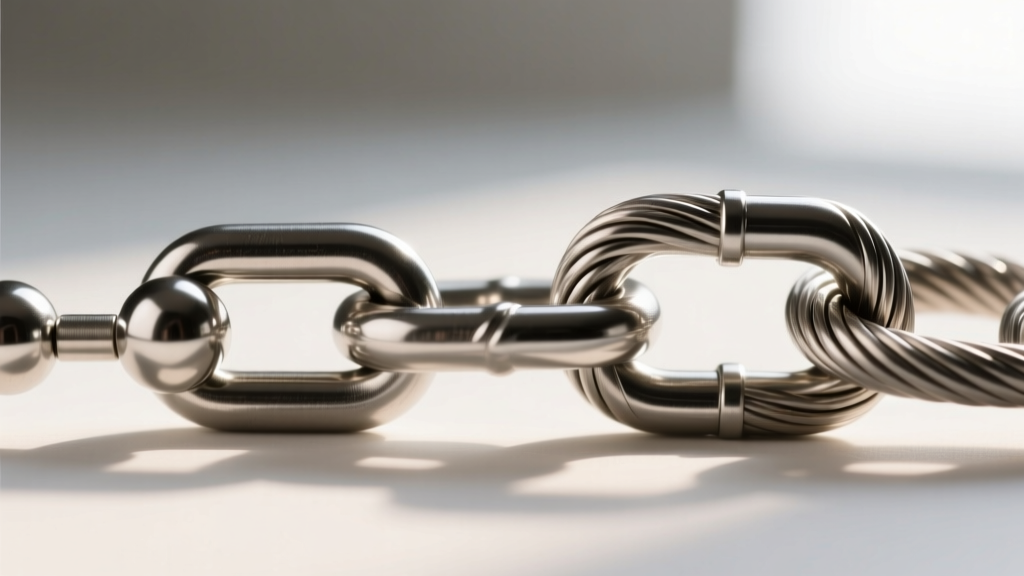
The chain is the structural weak point of any necklace. The classic ball chain (or bead chain) is iconic to the dog tag aesthetic, but its mechanical limitations must be understood.
Tensile Strength and Connector Failures
Standard 2.4mm or 3.0mm stainless steel ball chains are constructed by swaging metal spheres onto a continuous wire core. The weakest point is invariably the connector clasp that joins the two ends. Under tensile testing, a standard 3mm ball chain connector will typically fail (pull apart) at just 5 to 9 pounds of force. While this is a deliberate safety feature in military applications to prevent strangulation, it is a liability in high-end fashion where a heavy 14-gauge solid silver tag could easily snap the connector if caught on clothing.
Upgrading to Cable Chains
For a more secure dog tag and necklace configuration, jewelers often substitute the ball chain with a heavy-duty cable chain, such as a Rolo or Figaro link. When selecting a cable chain, ensure the links are laser-welded or soldered at the seam. An unsoldered jump ring or link can be pried open with less than 15 pounds of lateral force. A 3.5mm laser-welded 316L Rolo chain can withstand upward of 40 pounds of tensile force, providing a permanent, secure anchor for heavyweight tags.
Edge Silencers: Material Science and Shore Hardness
The rubber edge protector, or 'silencer,' prevents the metallic clinking of dual tags and protects the engraved text from abrasive wear. However, not all silencers are created equal. The material science of these edge protectors revolves around the Shore A durometer scale, which measures the hardness and flexibility of polymers.
- PVC (Polyvinyl Chloride): Often found in cheap surplus stores. PVC silencers typically have a higher Shore A hardness (60A-70A) and contain plasticizers that leach out over time. This causes the PVC to become brittle, crack, and shatter when exposed to UV light or temperatures below freezing.
- Medical-Grade Silicone: The premium choice. High-quality silicone silencers are formulated to a 40A-50A Shore hardness, providing optimal grip on the metal edge without stretching out permanently. Silicone is highly UV-stable and maintains its elasticity in extreme temperature fluctuations (-40°C to 200°C), ensuring it will never crack or degrade from body heat and sun exposure.
Precision Engraving: Fiber Laser vs. Rotary Diamond Drag
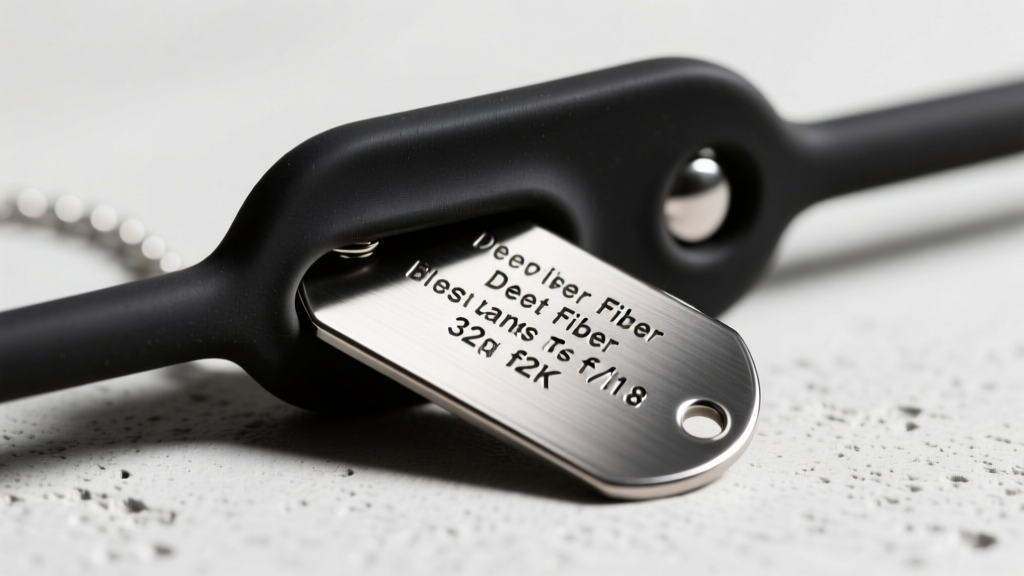
The method used to inscribe a dog tag permanently alters the surface chemistry and corrosion resistance of the metal. According to technical guidelines from Epilog Laser, the wavelength and thermal output of the engraving tool dictate the final result.
1064nm Fiber Laser Annealing
For 316L stainless steel, a 1064nm fiber laser is the superior tool. By carefully controlling the speed, frequency, and focal distance, the laser can 'anneal' the surface. Annealing heats the metal just enough to draw carbon to the surface, creating a stark, permanent black mark without actually removing any material. Because the surface layer is not breached, the protective chromium-oxide passivation layer of the stainless steel remains intact, guaranteeing that the engraved area will not rust.
Rotary Diamond Drag and Deep Ablation
If deep, tactile engraving is required (often preferred on titanium or silver), a rotary diamond drag tool or a high-wattage fiber laser set to 'ablate' (vaporize) the metal is used. This removes material to a depth of 0.005' to 0.015'. Critical Warning: Deep ablation on stainless steel destroys the passivation layer. To prevent localized rusting in the engraved grooves, the tag must undergo a secondary citric acid passivation bath to rebuild the protective oxide layer before it is worn against the skin.
Conclusion: Assembling Your Custom Setup
Building the ultimate dog tag and necklace requires looking past the superficial design and scrutinizing the engineering. Opt for a 16-gauge 316L stainless steel or Grade 5 Titanium tag to ensure structural rigidity. Pair it with a 50A Shore hardness medical-grade silicone silencer for lasting acoustic dampening, and suspend it from a laser-welded cable chain if tensile security is your priority. Finally, ensure your engraving method respects the metallurgical properties of your chosen alloy. By adhering to these technical parameters, you secure a piece of jewelry that is not only visually striking but mechanically bulletproof.


