The Technical Guide to Specifying a Safe Kids Name Necklace
Discover the technical specs for a safe kids name necklace. We analyze hypoallergenic metals, breakaway clasps, and chain gauges for children.

The Hidden Engineering Flaws in Children's Personalized Jewelry
When parents search for a kids name necklace, the focus is usually on font selection and metal color. However, from a jewelry engineering perspective, children's jewelry requires an entirely different set of mechanical and metallurgical tolerances than adult accessories. The Consumer Product Safety Commission (CPSC) strictly regulates heavy metals in children's accessories, but structural safety—such as tensile strength, clasp release mechanisms, and edge finishing—is largely left to the discretion of the manufacturer. This deep dive examines the exact specifications you need to demand when commissioning or purchasing a personalized necklace for a child.
Metallurgy 101: Selecting Hypoallergenic and Non-Toxic Alloys
The primary concern with any jewelry worn against a child's developing skin is contact dermatitis and heavy metal exposure. Nickel is the most common allergen, but cadmium and lead are frequent contaminants in cheap, mass-cast alloys. According to the American Academy of Dermatology, nickel allergies often develop in childhood and persist for life. Therefore, the base metal of a kids name necklace must be intrinsically hypoallergenic, not merely plated.
Grade 23 Titanium (Ti6Al4V) vs. 316L Surgical Steel
While 316L surgical stainless steel is widely marketed as "hypoallergenic," it still contains trace amounts of nickel (typically 10-14%). For a child with known sensitivities, Grade 23 Titanium (Ti6Al4V) is the superior choice. Titanium naturally forms a passive oxide layer that prevents corrosion and eliminates the risk of nickel leaching. Furthermore, titanium's high strength-to-weight ratio means a 0.8mm thick titanium nameplate will possess the same structural rigidity as a 1.2mm steel plate, reducing the overall weight burden on a child's cervical spine.
The Problem with Sterling Silver and Plated Brass
Sterling silver (925) is an alloy of 92.5% silver and 7.5% copper. The copper content makes it highly susceptible to oxidation when exposed to the acidic pH of a child's sweat, leading to rapid tarnishing and potential skin discoloration. Plated brass or copper bases are even worse; once the microscopic rhodium or gold plating wears through (which happens rapidly with the abrasive friction of playground activities), the underlying base metals are exposed, posing both allergy and toxicity risks.
| Metal Alloy | Nickel Content | Vickers Hardness (HV) | Best Use Case | Avg. Price Range |
|---|---|---|---|---|
| Grade 23 Titanium | 0% | 330 HV | Active toddlers, sensitive skin | $65 - $110 |
| 316L Surgical Steel | 10-14% | 220 HV | Older kids, budget-conscious | $25 - $45 |
| Solid 14k Gold | 0-5% (Alloy dependent) | 130 HV | Heirloom pieces, low-impact wear | $180 - $350 |
| Gold-Plated Brass | High (in base) | 110 HV | Not recommended for children | $15 - $30 |
Chain Gauge, Link Mechanics, and Tensile Strength
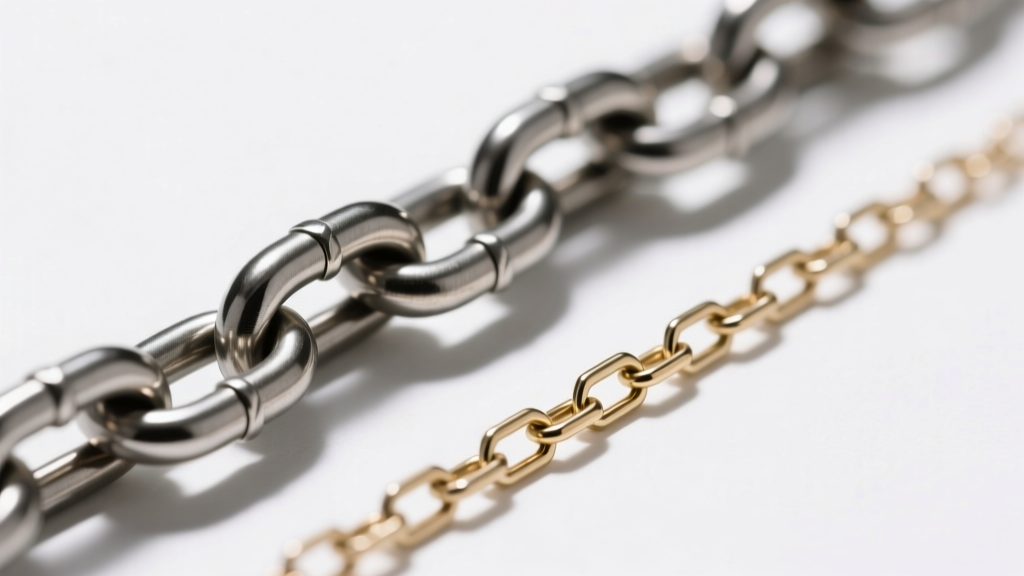
The chain is the most common point of failure on a kids name necklace. A chain that is too thin will snap under the dynamic load of a child playing, creating a choking hazard from the broken links. Conversely, a chain that is too thick and rigid can act as a ligature if caught on playground equipment.
Why 1.2mm Rolo Chains Outperform Box Chains
Box chains are popular for adult name necklaces due to their sleek, geometric appearance. However, the sharp, 90-degree interior angles of box chain links are notorious for catching and pulling fine hair, and they can pinch delicate skin. For children, a 1.0mm to 1.2mm rolo or cable chain is mechanically superior. The rounded, uniform links distribute tension evenly and eliminate pinch points. Furthermore, laser-welded links on a 1.2mm 316L steel chain boast a tensile strength of approximately 15-20 lbs, which is the exact threshold required to support the pendant without snapping during normal play, while still yielding before causing neck injury under extreme force.
The Breakaway Clasp Requirement
Standard lobster clasps are a safety liability for children under the age of eight. If the chain catches on a branch or furniture, a lobster clasp will hold firm, transferring the kinetic energy directly to the child's neck. A properly engineered kids name necklace must feature a breakaway mechanism. Magnetic safety clasps or tension-release barrel clasps are designed to separate when subjected to 3 to 5 lbs of lateral pull force. This ensures the necklace drops away safely rather than constricting the airway. The CPSC guidelines on children's products emphasize minimizing strangulation hazards, making breakaway clasps a non-negotiable feature for toddler and preschooler jewelry.
According to pediatric safety experts, jewelry for young children should always be supervised, and any neckwear must feature a fail-safe release mechanism to prevent accidental strangulation.
Pendant Ergonomics: Thickness, Fonts, and Edge Finishing
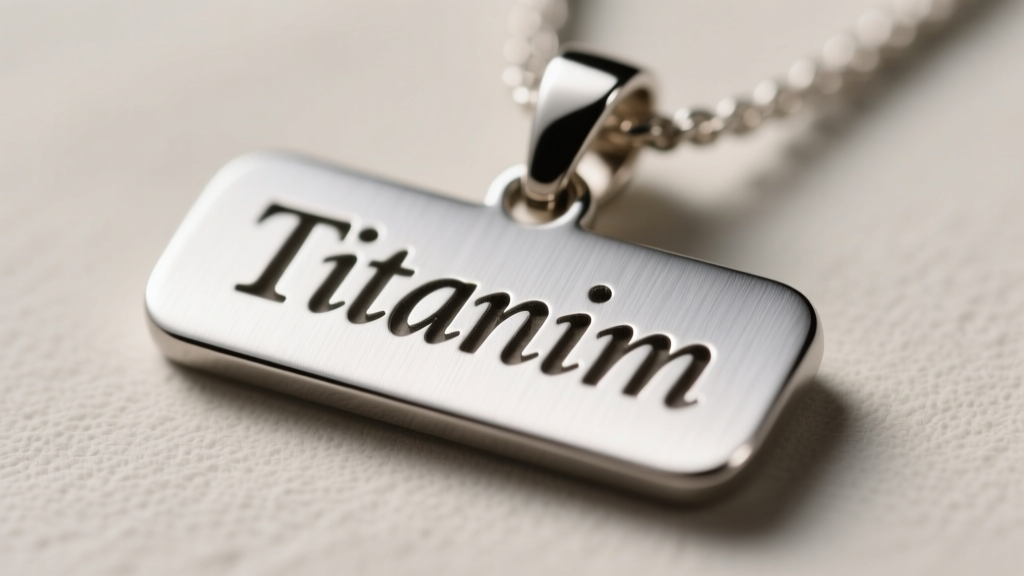
The nameplate itself requires precise manufacturing tolerances. Most commercial name necklaces are stamped or laser-cut from flat sheet metal. If the manufacturing process stops at the initial cut, the pendant will feature microscopic burrs and sharp 90-degree edges that can easily scratch a child's face or chest.
Post-Cut Tumbling and Edge Rounding
An expertly crafted kids name necklace undergoes a secondary finishing process called vibratory tumbling. The laser-cut pendants are placed in a vat with ceramic or walnut-shell media and a mild polishing compound. This process rounds off the sharp exterior corners and smooths the edges, creating a convex, skin-friendly profile. When inspecting a pendant, run your fingernail along the perimeter; it should feel completely smooth, with no catching or sharp transitions.
Font Selection and Structural Integrity
From a structural standpoint, the font chosen for the nameplate dictates its durability. Script fonts with elaborate, sweeping tails or extremely thin serif fonts create weak points in the metal. If a child bends the pendant, these thin appendages will snap off. Opt for block letters, sans-serif fonts, or thick, interconnected script fonts where every letter shares a continuous horizontal baseline. The ideal metal thickness for the nameplate is 0.8mm to 1.0mm; anything thinner (like the standard 0.4mm used in cheap mall-kiosk jewelry) will warp and bend within weeks of active wear.
Sizing Frameworks and Extender Mechanics
Proper sizing is critical for both comfort and safety. A necklace that sits too high can feel restrictive, while one that hangs too low is prone to catching on objects. Always utilize a chain with a 2-inch extender to accommodate growth spurts and varying clothing thicknesses.
- Ages 2-4 (Toddlers): 12-inch base chain + 2-inch extender. The pendant should rest just above the sternum.
- Ages 5-8 (Young Kids): 14-inch base chain + 2-inch extender. Allows for a comfortable drape over t-shirts and light sweaters.
- Ages 9-12 (Pre-teens): 16-inch base chain + 2-inch extender. Matches standard adult petite sizing and accommodates broader necklines.
Ensure the extender chain uses the same gauge and link style as the main chain, and that the terminal jump ring is large enough to easily catch the lobster or magnetic clasp without requiring fine motor skills that a young child may not possess.
Final Verdict: Specifying Your Custom Order
Ordering a kids name necklace should be treated as specifying a piece of safety equipment as much as a sentimental keepsake. By demanding Grade 23 titanium or solid 14k nickel-free gold, insisting on a 1.2mm rolo chain with a magnetic breakaway clasp, and verifying that the nameplate has been vibratory tumbled to remove sharp edges, you ensure the piece is both beautiful and mechanically safe. Do not compromise on these technical specifications; the structural integrity of children's jewelry is paramount to their physical well-being.


