A Step-by-Step Guide to Styling Bony Levy Necklaces
Learn how to layer, style, and care for Bony Levy necklaces. Our step-by-step guide covers mixed-media pairing and material care.

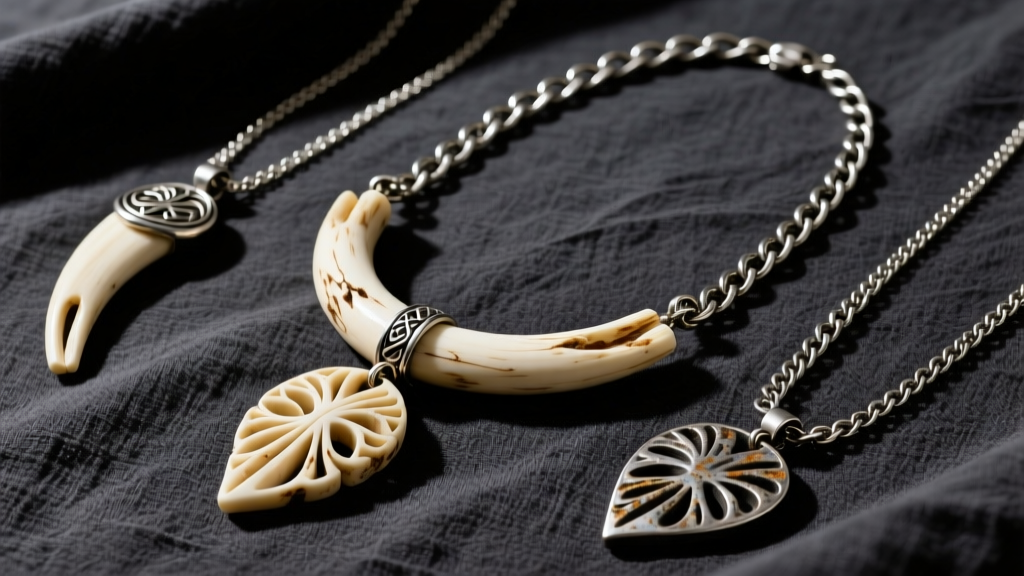
Mastering the art of mixed-media jewelry requires an understanding of texture, weight, and material contrast. When working with bony levy necklaces, you are engaging with a highly specific artisan aesthetic that blends organic elements—like carved bone, horn, and braided leather—with the industrial edge of oxidized sterling silver. Unlike traditional fine jewelry that relies solely on precious metals and gemstones, these pieces demand a strategic approach to layering and maintenance. This comprehensive, step-by-step guide will teach you how to curate, layer, and preserve your collection to ensure each piece makes a deliberate style statement.
Understanding the Material Anatomy
Before attempting to layer or clean your jewelry, you must understand the physical properties of the materials involved. Bony Levy necklaces typically feature a triad of distinct materials, each reacting differently to environmental factors:
- Oxidized 925 Sterling Silver: The silver is intentionally treated with sulfur to create a darkened, antiqued patina. This highlights the intricate wire-wrapping and bezel settings but can be easily stripped by harsh chemical polishes.
- Carved Organic Inlays (Bone/Horn): High-density keratin structures that are lightweight but porous. They are susceptible to cracking if exposed to extreme temperature fluctuations or ultrasonic cleaners.
- Braided Leather Cords (2mm - 3mm gauge): Used for adjustable slips or secondary layering chains. Leather is highly sensitive to moisture, body oils, and UV degradation, requiring periodic conditioning.
Step 1: Establishing Your Focal Anchor (16 to 18 Inches)
Every successful layered look begins with a definitive anchor piece. For bony levy necklaces, the focal pendant usually features the largest carved organic element, often set in an ornate, heavily oxidized silver bezel.
Selecting the Right Drop Length
The placement of your anchor pendant dictates the visual weight of your entire torso. Follow these sizing rules based on your neckline:
- 16-Inch Choker/Collarbone Drop: Best for open V-necks and scoop necks. The pendant will sit directly in the clavicle hollow, drawing the eye upward.
- 18-Inch Princess Length: The most versatile option. It rests just below the collarbone, making it ideal for crew necks, turtlenecks, and casual button-downs.
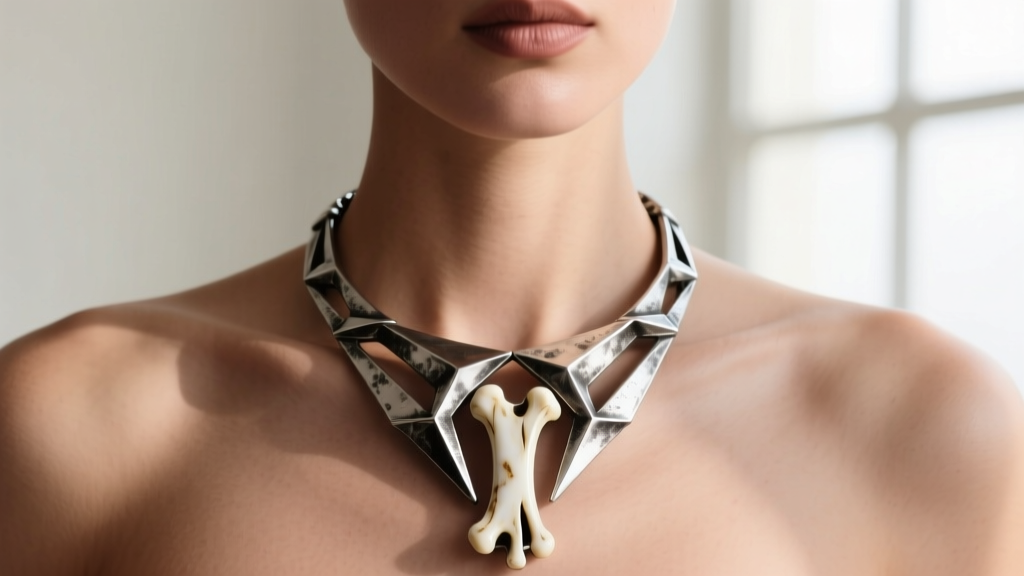
Step 2: Building the Mixed-Media Layering Cascade
Layering bony levy necklaces is not about stacking identical chains; it is about contrasting textures. The golden rule of mixed-media layering is the Two-Inch Separation Rule—each subsequent layer must be at least two inches longer than the previous one to prevent the heavy pendants from tangling and scratching the organic inlays.
The Layering Matrix
Use the table below to construct a balanced, tangle-free stack that maximizes textural contrast.
| Layer Position | Length | Material Focus | Visual Function |
|---|---|---|---|
| Base (Anchor) | 16" or 18" | Oxidized Silver + Large Bone Pendant | Establishes the focal point and primary color contrast. |
| Mid-Layer | 20" or 22" | 2mm Braided Leather Cord + Small Silver Bead | Adds matte texture and breaks up the metallic shine. |
| Outer-Layer | 24" or 26" | Thin Silver Chain (Rope or Box Link) | Elongates the torso and frames the inner layers. |
Pro Tip: Never layer a heavy, sharp-edged silver chain directly over a polished bone pendant. The friction will eventually score and dull the organic surface. Always use a smooth leather cord or a polished box chain as a buffer layer.
Step 3: Neckline Pairing Strategies
The organic, slightly rugged aesthetic of these necklaces pairs best with specific fabric weights and cuts. Here is how to match your layers to your wardrobe:
Heavyweight Knits and Turtlenecks
When wearing thick wool or cashmere turtlenecks, skip the 16-inch choker. The friction from the wool will degrade the leather cords and obscure smaller pendants. Instead, opt for a single, heavy 24-inch matinee-length bony levy necklace with a large, high-contrast bone inlay that sits visibly against the dark fabric.
Linen and Lightweight Button-Downs
Unbuttoned linen shirts provide the perfect canvas for a full three-layer stack. The relaxed, breathable nature of linen complements the earthy, organic origins of the carved pendants. Leave the top three buttons undone to allow the 18-inch anchor pendant to rest directly on the skin, while the 22-inch leather cord drapes over the fabric edge.
Step 4: Advanced Material Care and Maintenance
Maintaining mixed-media jewelry requires abandoning traditional jewelry cleaning habits. According to the Gemological Institute of America (GIA), organic gem materials like bone, horn, and wood are highly porous and can be irreversibly damaged by standard liquid jewelry dips or ultrasonic vibrations.
Cleaning the Oxidized Silver
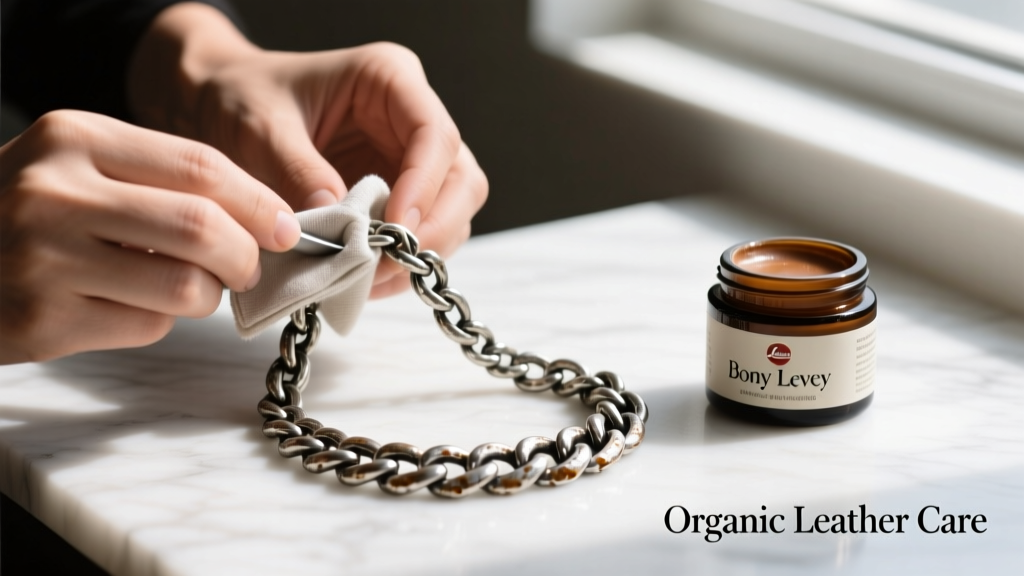
Do not use liquid silver dips. These chemicals will strip the intentional black oxidation from the crevices of the silver settings, leaving the piece looking flat and artificially shiny. Instead, use a dry, untreated microfiber cloth to gently buff only the raised, high-polish areas of the silver. For deeper tarnish on the raised edges, use a specialized silver polishing cloth that contains mild anti-tarnish agents, carefully avoiding the darkened recesses.
Conditioning the Leather Elements
Leather cords lose their natural oils over time, leading to stiffness and eventual snapping. The Leather Working Group recommends using minimal, natural conditioning agents. Once every three months, apply a microscopic drop of organic jojoba oil or a dedicated leather balm to a cotton swab, and rub it gently into the 2mm or 3mm leather braids. Wipe away any excess immediately to prevent the oil from migrating onto the porous bone pendants, which could cause permanent dark staining.
Protecting the Bone Inlays
Carved bone and horn are sensitive to prolonged water exposure and extreme dryness. Never wear these necklaces in the shower, swimming pool, or ocean. Chlorine and saltwater will degrade the keratin structure, causing micro-fractures. If the pendant becomes dusty, wipe it with a barely damp cloth and dry it immediately. According to Jewellers of America, storing organic jewelry in a climate-controlled environment with moderate humidity (around 40-50%) prevents the material from drying out and cracking during winter months.
Troubleshooting Common Wear Issues
Even with meticulous care, mixed-media pieces can develop functional issues over time. Here is how to address the most common problems:
- Stiff or Brittle Leather Slips: If the adjustable leather slip-knot becomes too tight to pull, do not force it, as the cord may snap. Apply a tiny amount of natural beeswax to the knot to lubricate the fibers and restore glide.
- Loose Bone Inlays: Temperature changes can cause the silver bezel to contract while the organic inlay expands, leading to a rattling sound. If you notice movement in the stone, stop wearing the piece immediately and take it to a jeweler who specializes in organic materials to have the bezel gently tightened without applying excessive pressure to the bone.
- Tarnish Transfer: Oxidized silver can sometimes leave dark smudges on light-colored clothing or skin, especially in high humidity. To seal the oxidation and prevent transfer, lightly coat the back of the pendant and the inner links of the chain with a specialized jewelry sealant or a very thin layer of clear, matte nail polish, ensuring none gets on the bone inlay.
By respecting the unique material properties and following these precise layering techniques, your collection will maintain its structural integrity and striking visual contrast for years to come. The key to mastering the bony levy aesthetic lies in balancing the raw, earthy origins of the materials with intentional, calculated styling.


