The Drippy Necklace Trend 2026: Liquid Metal Styling
Discover the 2026 drippy necklace trend. Explore liquid metal jewelry styling, material grades, and how to wear molten silver and gold pendants.

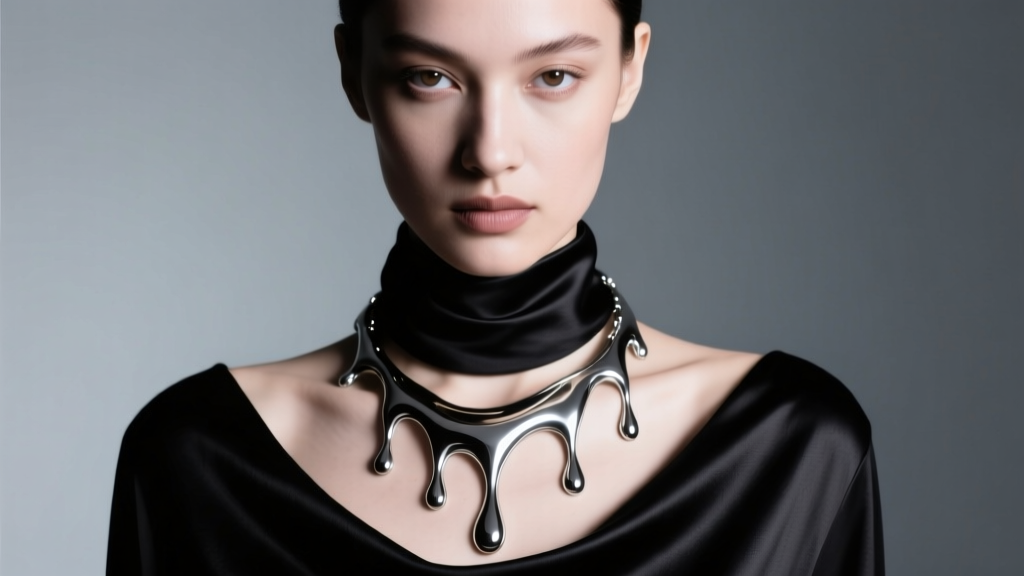
The Anatomy of a Drippy Necklace: Beyond the Melt
The drippy necklace has transcended its early 2000s subculture roots to become a cornerstone of 2026's 'organic futurism' aesthetic. No longer just a novelty chrome accessory, today's liquid metal jewelry represents a sophisticated intersection of avant-garde sculpture and wearable art. Characterized by asymmetric, gravity-pulled silhouettes that mimic melting precious metals, the modern drippy pendant is a masterclass in controlled chaos. According to trend analysts at Vogue, the shift from rigid geometric minimalism to fluid, molten forms reflects a broader cultural desire for jewelry that feels alive, dynamic, and uniquely unstructured.
The Metallurgy of Liquid Form
Creating a high-quality drippy necklace is not as simple as melting metal and letting it fall. Artisans utilize the ancient lost-wax casting method, modernized for precise liquid effects. A jeweler carves a wax model, using heat pens to melt and pull the wax into organic, stalactite-like drips. This wax is encased in a plaster-like investment material and burned out in a kiln at 1350°F, leaving a hollow cavity. Molten metal is then forced into this cavity via centrifugal casting. The resulting piece captures every microscopic ripple of the original wax melt, requiring hours of hand-polishing to achieve a mirror finish without eroding the delicate 'drip' tips.
2026 Material Matrix: What Are You Actually Wearing?
When shopping for a drippy necklace, the material dictates not only the price but the drape, weight, and longevity of the piece. The visual weight of a liquid metal design is heavy, but the actual gram weight varies wildly based on the core material. Below is a breakdown of the most common material grades used in the 2026 market.
| Material Grade | Casting Process | Avg. Weight (Pendant) | Price Range | Durability & Notes |
|---|---|---|---|---|
| Recycled 925 Sterling Silver | Centrifugal Cast | 25g - 45g | $140 - $380 | High. Will oxidize in crevices (often intentional for depth). |
| 18k Gold Vermeil over Brass | Centrifugal Cast | 30g - 55g | $95 - $220 | Medium. 2.5-micron gold layer; avoid friction on high-contact drip tips. |
| Solid 14k Yellow Gold | Vacuum Assisted Cast | 35g - 70g | $1,200 - $3,500+ | Exceptional. Heirloom quality, requires no plating maintenance. |
| 3D-Printed Resin w/ PVD Coat | SLA Printing & PVD | 8g - 15g | $45 - $110 | Low/Medium. PVD coating (0.2 microns) may wear off after 1-2 years. |
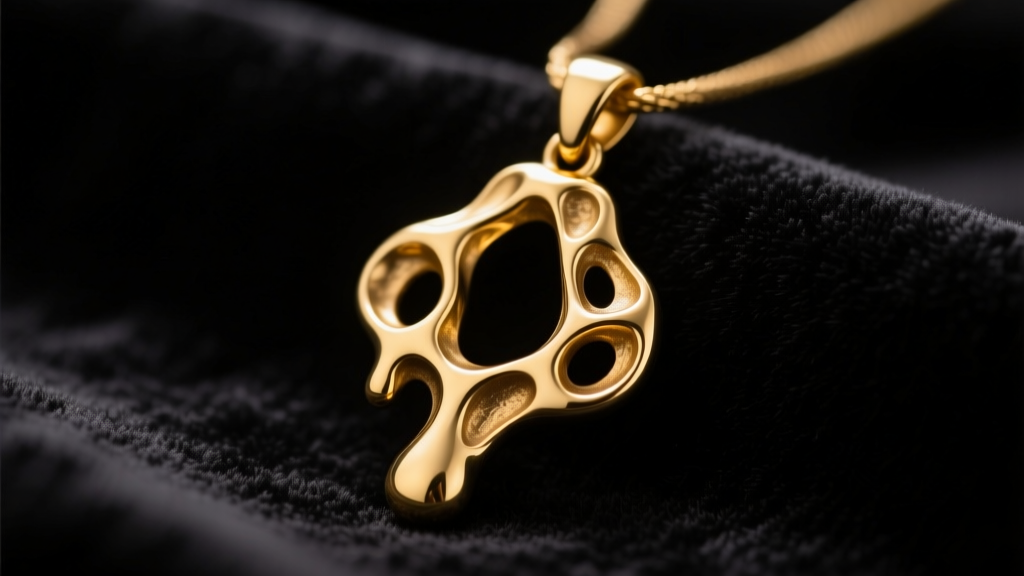
Trend Forecast: The Shift to Refined Asymmetry
In previous years, the drippy necklace was defined by chunky, uniform, Y2K-inspired chrome chokers. The 2026 iteration is vastly different. Designers are favoring extreme asymmetry, where the 'melt' is concentrated on one side of the collarbone, tapering off into a razor-thin wire on the other. This creates a striking visual imbalance that draws the eye and elongates the neck. Furthermore, the integration of tension-set gemstones—particularly irregular baroque pearls and uncut sapphires—caught within the 'drips' is a major trend, bridging the gap between industrial hardware and fine jewelry.
'The modern drippy necklace is less about shock value and more about capturing a fleeting moment in time. It is the visual representation of metal in its most vulnerable, transitional state, frozen permanently into an elegant sculpture.' — Contemporary Jewelry Design Quarterly, 2026
Styling the Melt: Necklines and Tensile Loads
Styling a liquid metal pendant requires an understanding of both visual contrast and physical engineering. Because the silhouette is inherently chaotic, the clothing it rests upon must provide a structured canvas.
The Chain Gauge Imperative
A common failure point in heavy, irregular pendants is the chain. A solid silver drippy pendant can easily weigh 45 grams. Standard 1.2mm cable chains, which have a dynamic break strength of under 3kg, will stretch, warp, or snap under the pendulum effect of a heavy pendant during normal movement. Always pair heavy drippy pendants with a minimum 3.0mm curb chain or a 2.5mm Figaro chain. Ensure the jump ring connecting the pendant to the chain is soldered closed, and opt for a heavy-duty lobster clasp rather than a fragile spring-ring clasp.
Neckline Pairing Framework
- The Cowl Neck: The draped fabric of a silk or satin cowl neck perfectly mimics the fluid lines of the necklace. Keep the pendant length at 16 inches so it rests just above the fabric's lowest drape.
- The Asymmetric One-Shoulder: Position the heaviest 'drip' cluster on the exposed shoulder side to balance the visual weight of the garment's strap.
- The Ribbed Turtleneck: A harsh, striking contrast. The rigid, vertical lines of a tight black turtleneck make the chaotic, molten gold or silver of the pendant pop dramatically. Use a 20-inch chain to let the pendant rest on the sternum.
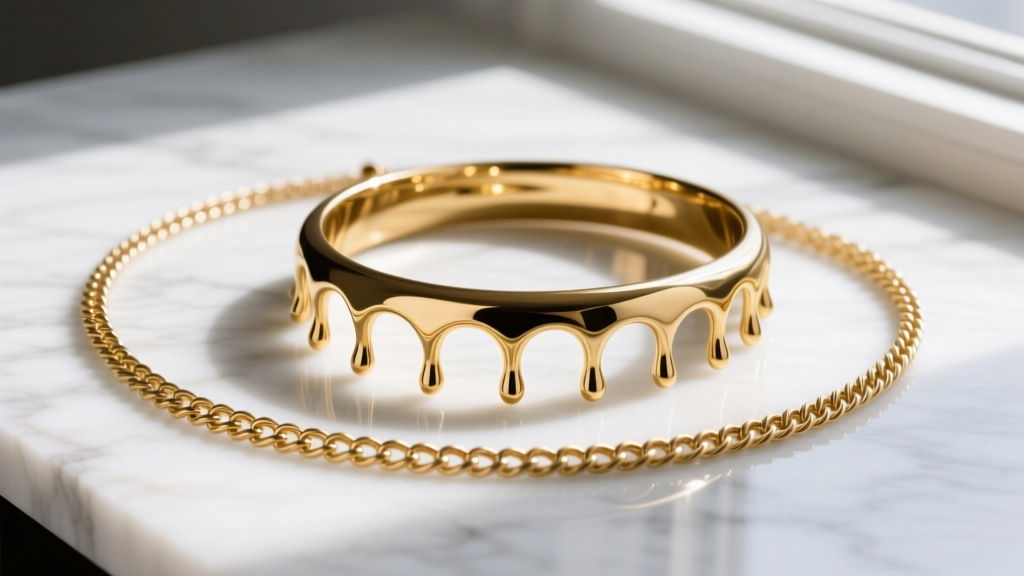
The Layering Protocol: Anchoring the Chaos
Layering a drippy necklace is notoriously difficult because the pendant's irregular shape can easily tangle with secondary chains. The secret to 2026 layering is 'anchoring'—using highly structured, geometric chains to frame the organic melt. According to the Gemological Institute of America (GIA), mixing metal textures is highly encouraged, provided the structural integrity of the chains remains distinct.
| Layer Position | Chain Type & Gauge | Length | Purpose in the Stack |
|---|---|---|---|
| Base (Top) | 1.5mm Snake Chain | 14 inches | Provides a sleek, continuous metallic line close to the collarbone. |
| Mid (Anchor) | 3.5mm Curb Chain | 16 inches | Adds geometric structure and industrial contrast to the organic drips. |
| Focal (Bottom) | 2.5mm Rope Chain | 18.5 inches | Supports the heavy drippy pendant while allowing it to swing freely. |
Crevices and Care: Maintaining Irregular Topographies
The very nature of a drippy necklace—full of deep crevices, sharp stalactites, and porous textures—makes it a magnet for sebum, lotions, and environmental dust. Improper cleaning can ruin the piece's intentional patina or damage its structural integrity.
What to Avoid
While ultrasonic cleaners (operating at 40kHz) are excellent for standard jewelry, they are highly risky for drippy designs. If your piece features oxidized blackening in the crevices (used to enhance the 3D depth of the melt), the ultrasonic vibrations will strip this patina away, leaving the piece looking flat and overly bright. Furthermore, if the drips incorporate tension-set stones, the high-frequency vibrations can loosen the metal's grip, causing the stones to fall out.
The Manual Cleaning Protocol
- Prepare a lukewarm bath of distilled water and a few drops of phosphate-free dish soap.
- Submerge the necklace for exactly 3 minutes to loosen oils.
- Use a 0.05mm nylon bristle brush (a baby toothbrush works perfectly) to gently agitate the crevices. Never use wire brushes, which will leave micro-scratches on the high-polish drip tips.
- Rinse with distilled water and dry immediately with a microfiber cloth, ensuring no lint is caught on the sharp metal points.
Final Thoughts on the Liquid Movement
The drippy necklace in 2026 is a testament to the jewelry industry's ability to elevate rebellion into high art. By understanding the metallurgy, respecting the tensile requirements of heavy pendants, and mastering the art of structured layering, you can transform this avant-garde piece from a fleeting trend into a permanent, iconic fixture of your personal style archive.


