The Ultimate Beginner Guide to Buying a Floating Opal Necklace
Discover everything about the floating opal necklace. Learn how to spot real opals, understand liquid vs. wire settings, and style this ethereal gem.

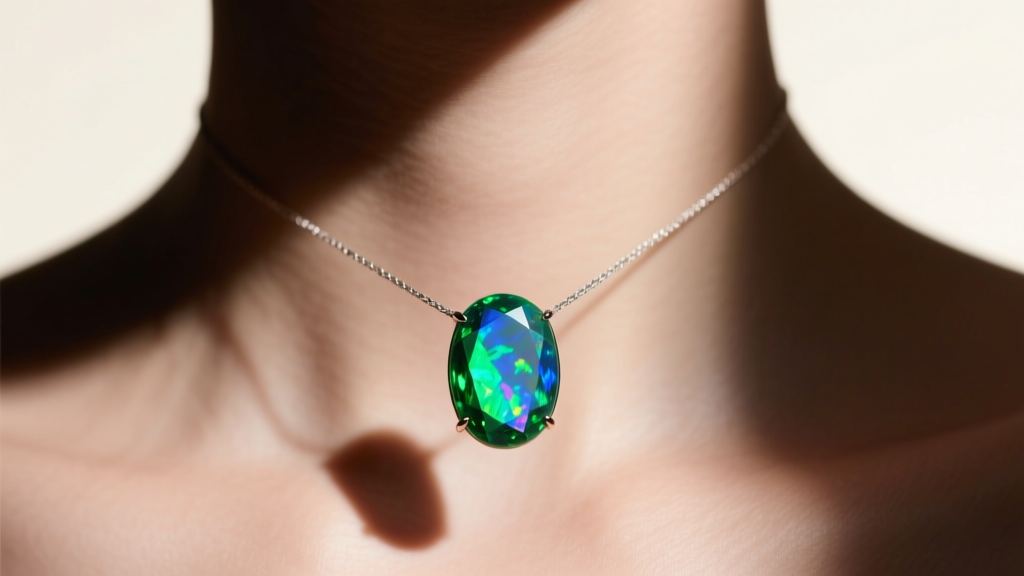
There is a distinct, almost magical quality to a floating opal necklace. Whether you are drawn to the vintage charm of opal chips suspended in liquid or the modern minimalism of a single gem hovering on an invisible wire, this unique jewelry style offers an ethereal aesthetic that few other pieces can match. However, navigating the market as a beginner can be tricky. The term 'floating' is used to describe two entirely different jewelry constructions, and the opals themselves range from priceless natural solids to cheap glass imitations.
In this comprehensive guide, we will break down exactly what a floating opal necklace is, how to evaluate the materials, the specific chain gauges required for the best illusion, and how to care for your piece to prevent common failure modes.
What Exactly Is a Floating Opal Necklace?
When shopping for a floating opal necklace, you will encounter two distinct categories. Understanding the difference is crucial for setting your budget and managing your expectations regarding durability and care.
1. The Vintage Liquid Capsule
Originating in the 1920s and peaking in popularity during the 1970s, this style features a teardrop-shaped glass capsule filled with a liquid solution (usually glycerin or distilled water). Small chips of opal are sealed inside, allowing them to tumble and 'float' freely with your movement. These are highly collectible vintage items and are rarely manufactured with high-quality materials today.
2. The Modern Invisible Wire Illusion
The contemporary interpretation of the floating opal necklace relies on tension settings or micro-bezels attached to ultra-fine, transparent nylon-coated wires or micro-cable chains. The goal is to make the chain disappear against the skin, creating the optical illusion that a single, solid opal is levitating directly on your collarbone.
The Anatomy of the Illusion: Liquid vs. Wire
To help you decide which style fits your lifestyle, here is a direct comparison of the two primary floating opal constructions.
| Feature | Liquid Capsule (Vintage Style) | Invisible Wire (Modern Style) |
|---|---|---|
| Illusion Mechanism | Opal chips suspended in liquid | Solid opal on transparent micro-wire |
| Opal Quality | Low-grade chips, often synthetic | Can be solid natural, lab, or sim |
| Primary Failure Mode | Glass cracking, seal leaking | Wire snapping, crimp beads slipping |
| Average Price Range | $40 - $150 (Vintage/Antique) | $60 - $800+ (Depends on opal) |
| Best For | Collectors, retro-fashion lovers | Everyday wear, modern minimalists |
Natural vs. Lab-Created vs. Simulated: What Are You Buying?
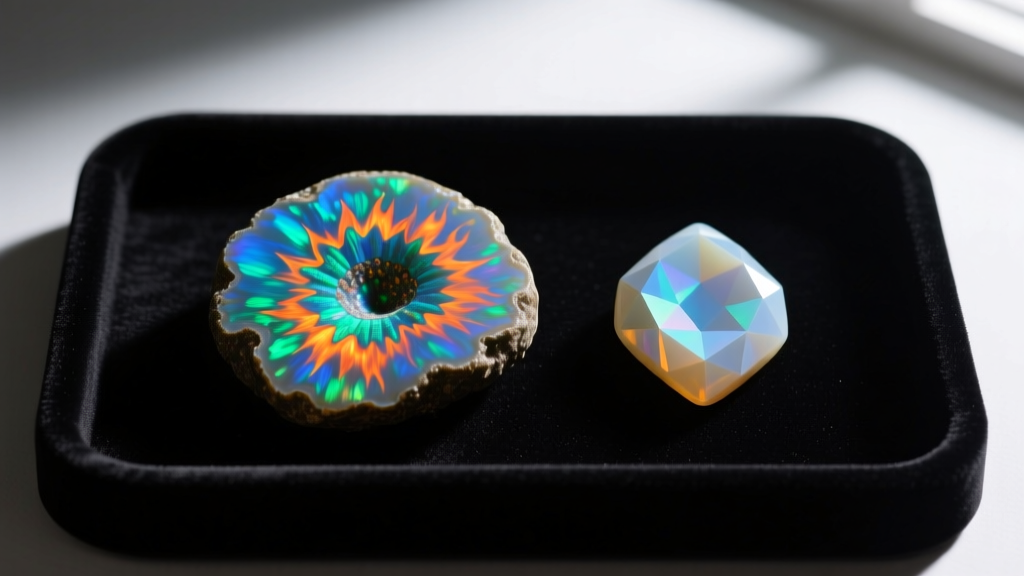
The most critical factor in pricing a modern floating opal necklace is the origin of the gemstone. The Gemological Institute of America (GIA) categorizes opals into distinct groups, and unscrupulous sellers often blur these lines in product descriptions.
- Natural Solid Opal: Mined from the earth (primarily Australia or Ethiopia) and cut/polished without any backing or treatments. A natural solid opal with strong 'play-of-color' set on an invisible wire will typically cost between $250 and $1,500+. Ethiopian Welo opals are more affordable but are hydrophane, meaning they absorb water and can temporarily lose their fire if exposed to heavy sweat or humidity.
- Lab-Created (Synthetic) Opal: Grown in a laboratory with the exact same chemical composition (hydrated silica) and physical structure as natural opal. Gilson opals are the industry standard here. They display stunning, highly organized fire patterns but lack the natural inclusions of mined stones. Expect to pay $80 to $200 for a high-quality lab-opal floating necklace.
- Simulated Opal: Made from glass, resin, or plastic, often backed with a foil or metallic coating to mimic the flash of color. These are essentially costume jewelry. While fun for occasional wear, they should cost no more than $15 to $40. If a seller prices a simulated opal necklace at $200, walk away.
Sizing, Chain Gauges, and the 'Float' Factor
For the modern invisible wire style, the hardware is just as important as the gemstone. If the chain or wire is too thick, the floating illusion is instantly ruined. If it is too thin, the necklace will snap under the weight of the gem.
Optimal Wire and Chain Specifications
To achieve a true 'floating' look, the suspension material must be under 0.8mm in thickness. Here are the industry-standard specifications used by fine jewelers:
- Clear Nylon-Coated Stainless Steel Wire (0.15mm - 0.25mm): This is the gold standard for the invisible look. The stainless steel core provides tensile strength, while the clear nylon coating prevents skin irritation and reflects light similarly to skin. Warning: Nylon degrades under prolonged UV exposure and acidic sweat. Replace the wire every 2 to 3 years.
- Micro-Cable Chain (0.5mm - 0.6mm): If you prefer metal over invisible wire, a 0.6mm micro-cable chain in 14k gold-filled or sterling silver is the thickest you should go. Anything larger (like a standard 1.0mm rope chain) will look heavy and destroy the floating aesthetic.
- Crimp Beads and Clasps: The failure point of 90% of invisible wire necklaces is the crimp bead (the tiny metal tube that secures the wire to the clasp). Ensure your jeweler uses a 1.0mm sterling silver or 14k gold crimp bead, flattened with a micro-crimping tool to avoid sharp edges that can slice the wire over time.
How to Spot a Fake or Low-Quality Floating Opal
Expert Troubleshooting: If you own a vintage liquid capsule floating opal necklace and notice the liquid level dropping or a cloudy film forming inside the glass, the seal has failed. Do not attempt to refill it yourself with tap water, as the minerals will permanently cloud the glass and ruin the opal chips. Take it to a professional lapidary for resealing with distilled glycerin.
When buying a modern wire-set floating opal, inspect the setting closely. Because the chain is so delicate, jewelers often use a 'tension' or 'micro-bezel' setting. A micro-bezel (a thin rim of metal wrapping around the edge of the opal) is vastly superior to glue-set tension mounts. Glue degrades over time, and a sharp tug on the delicate chain can easily pop a glued opal out of its mount, resulting in a lost gemstone.
Furthermore, examine the 'fire' or play-of-color. If the flashes of color are perfectly uniform, blocky, and look like a pixelated mosaic, you are likely looking at a Gilson lab-created opal or a high-end simulated resin. Natural opals have random, organic, and fluid patterns of color.
Care and Maintenance: Preventing Leaks and Scratches
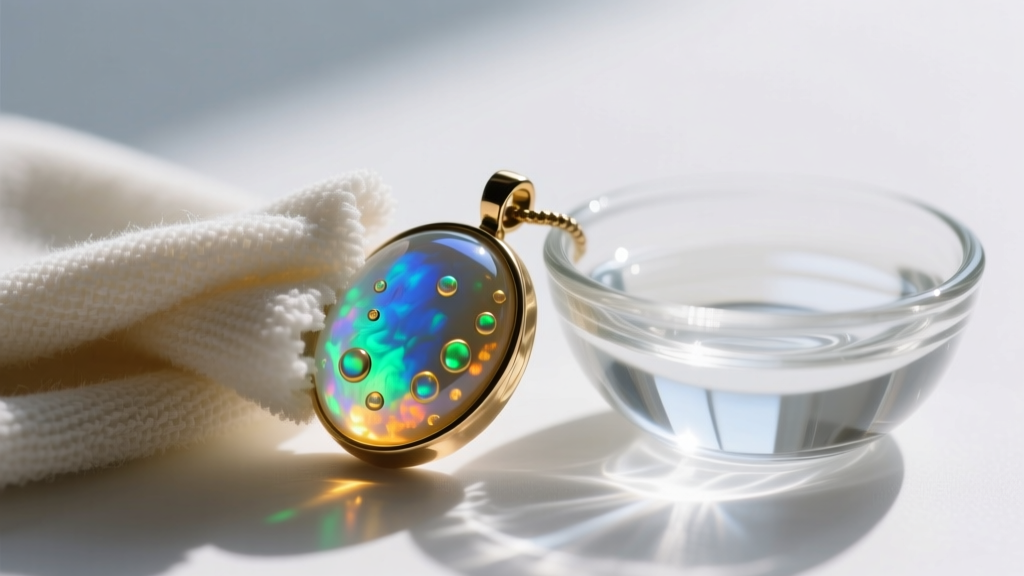
Opals are relatively soft gemstones, ranking between 5.5 and 6.5 on the Mohs hardness scale. This makes them highly susceptible to scratching from everyday dust (which contains quartz particles). Proper maintenance is non-negotiable.
The Golden Rules of Opal Care
- Never Use Ultrasonic Cleaners: The high-frequency vibrations will shatter a solid opal and instantly destroy the glass seal of a vintage liquid capsule. According to Jewelers Mutual, warm soapy water and a soft brush are the only safe cleaning methods for opals.
- Avoid Extreme Temperature Shifts: Opals contain up to 20% water. Moving from a freezing outdoor environment to a heavily heated indoor space can cause the water inside the stone to expand or contract rapidly, leading to 'crazing' (a network of internal cracks that ruins the stone's structural integrity).
- Store Separately: Never toss your floating opal necklace into a jewelry box with diamond or sapphire pieces. Harder gems will easily scratch the surface of the opal. Store it in a soft microfiber pouch or a dedicated anti-tarnish ziplock bag.
- Last On, First Off: Always put your necklace on after applying perfumes, hairsprays, and lotions. Chemical solvents can degrade the clear nylon coating on invisible wires and strip the polish from the opal's surface.
Whether you choose the nostalgic charm of a liquid-filled glass capsule or the sleek, modern elegance of a solid opal on an invisible wire, understanding the mechanics and materials behind the jewelry ensures your investment remains beautiful for years to come. By paying attention to wire gauges, opal origins, and proper storage, your floating opal necklace will continue to cast its ethereal spell without skipping a beat.


