How to Buy a Large Turquoise Necklace: Authenticity & Style Guide
Discover how to authenticate, evaluate, and style a large turquoise necklace. Learn about matrix patterns, treatments, and fair market pricing.

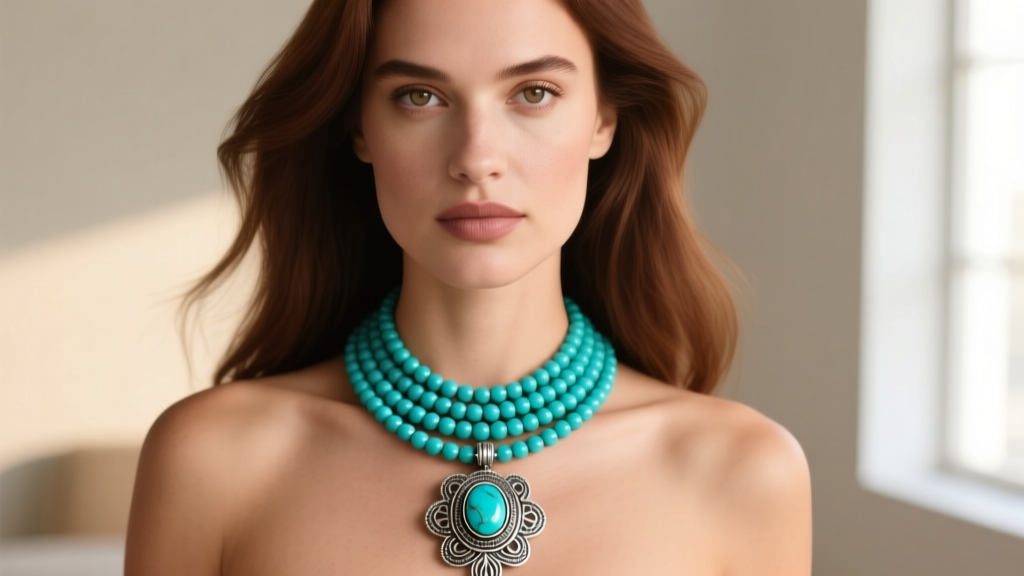
The Resurgence of the Statement Turquoise Piece
The 2026 resurgence of artisanal maximalism has placed the large turquoise necklace back at the forefront of statement styling. Whether you are drawn to the bohemian heritage of Southwestern squash blossoms or the sleek, modern geometry of oversized turquoise pendants on heavy chains, buying a substantial piece requires more than just an eye for color. Turquoise is a porous, complex phosphate mineral, and the market is heavily saturated with imitations, aggressive chemical treatments, and misattributed origins. This comprehensive buying guide provides a rigorous framework for evaluating large turquoise necklaces, ensuring you invest in genuine quality, structural integrity, and fair market value.
The Mineralogy of Color and Matrix
Before evaluating a large turquoise necklace, you must understand what dictates its appearance. According to mineralogical data from Mindat.org, turquoise is a hydrous phosphate of copper and aluminum. The base blue color is derived from copper. However, the introduction of other elements during the stone's formation drastically alters its hue and pattern.
- Iron Substitution: When iron replaces aluminum in the crystal lattice, the stone shifts toward green or yellow-green.
- Zinc Presence: High zinc content yields rare yellow-green or apple-green hues (often seen in Variscite, a closely related mineral sometimes sold as turquoise).
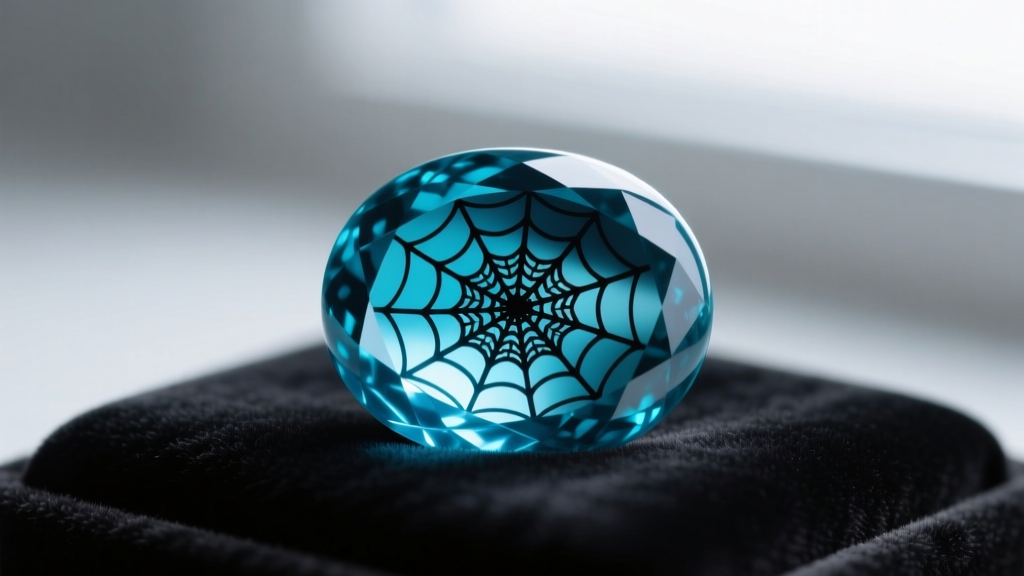
- The Matrix: The 'matrix' refers to the remnants of the host rock trapped within the turquoise. A black spiderweb matrix usually indicates the presence of iron pyrite or black iron oxide. A golden or brown web suggests sandstone or iron oxide inclusions. In large bead necklaces, a consistent, well-distributed matrix pattern across dozens of beads is exceptionally rare and commands a premium price.
Decoding Treatments: What You Are Actually Buying
The Gemological Institute of America (GIA) notes that the vast majority of turquoise on the commercial market undergoes some form of treatment. Because turquoise is naturally soft and porous (ranking 5 to 6 on the Mohs scale), large beads are highly susceptible to cracking, oil absorption, and color fading. Understanding these treatments is critical when evaluating a large turquoise necklace.
| Treatment Type | Process Description | Durability | Market Acceptance |
|---|---|---|---|
| Natural (Untreated) | Mined, cut, and polished with no chemical additives. Will change color with skin oils. | Low (Prone to cracking) | Highest (Collector grade) |
| Stabilized | Impregnated with clear epoxy or resin under pressure to harden the stone and lock in color. | High | High (Industry standard) |
| Zachery Treated | A proprietary, non-polymer treatment using potassium and other elements to reduce porosity. | Very High | High (Premium stabilization) |
| Dyed / Color-Enhanced | Stabilized turquoise that has been artificially dyed to mimic high-grade Persian blue. | High | Low (Must be disclosed) |
| Reconstituted / Block | Turquoise dust mixed with epoxy and dyes, then pressed into blocks and cut into beads. | Medium | Very Low (Considered imitation) |
Provenance Matters: Key Mines for Large Beads
When purchasing a large turquoise necklace, the origin of the stone heavily influences its value and aesthetic. Sellers should be able to identify the mine, especially for premium pieces.
Sleeping Beauty (Arizona, USA)
Famous for its pure, robin's-egg blue color with little to no matrix. The mine closed in 2012, meaning genuine, large-diameter natural Sleeping Beauty beads are now considered vintage or heirloom-grade and are priced accordingly. Beware of dyed howlite being passed off as modern Sleeping Beauty.
Kingman (Arizona, USA)
One of the oldest and most prolific mines, Kingman turquoise is prized for its deep blue color and striking black or golden spiderweb matrix. Large Kingman bead necklaces with matching matrix patterns are a hallmark of high-end Southwestern jewelry.
Bisbee (Arizona, USA)
Bisbee turquoise is renowned for its intense, dark blue color and heavy, chocolate-brown matrix. Because the mine has been closed for decades, large Bisbee necklaces are exceptionally rare and highly sought after by serious collectors.
Persian / Neyshabur (Iran)
Historically the benchmark for perfect, matrix-free sky-blue turquoise. While older Persian pieces are museum-quality, modern market 'Persian' turquoise is often heavily treated or sourced from other regions.
Structural Integrity: Hardware and Stringing
A large turquoise necklace featuring 14mm to 20mm beads can easily exceed 150 grams in total weight. This massive weight places extreme stress on the stringing material and findings. Many mass-produced necklaces fail because they use inadequate hardware.
- Stringing Material: Avoid standard nylon thread or thin beading wire. For heavy turquoise, look for 49-strand micro-fused stainless steel wire with a minimum diameter of 0.024 inches (24-gauge equivalent). Alternatively, traditional hand-knotted silk cord with 18k gold or sterling silver spacer cones provides excellent drape and shock absorption.
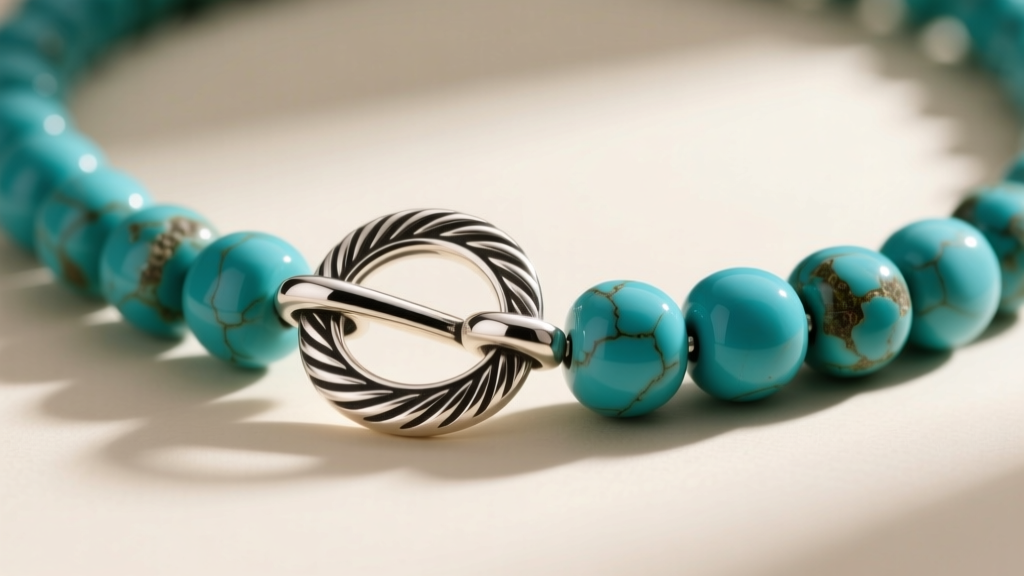
- Clasps: Never buy a heavy, large-bead necklace with a spring-ring clasp; the tension mechanism will eventually fail under the weight. Insist on heavy-duty toggle clasps, oversized lobster clasps with reinforced jump rings, or magnetic safety-clasps with secondary security chains.
- Wire Wrapping: If the necklace features large turquoise pendants or focal stones, the wire wrapping should be at least 16-gauge (1.29mm) sterling silver or 14k gold-filled wire to prevent the bail from bending or snapping.
Pricing Framework for 2026
Pricing a large turquoise necklace depends on bead diameter, treatment, and provenance. Below is a general market framework for a standard 18-inch to 24-inch strand of 12mm to 16mm round beads.
| Quality Tier | Material / Treatment | Estimated Price Range (USD) |
|---|---|---|
| Entry / Fashion | Reconstituted block turquoise or dyed howlite/magnesite. | $40 - $120 |
| Mid-Tier / Commercial | Stabilized turquoise with generic or unidentified mine origins. | $250 - $600 |
| Premium / Artisan | High-grade stabilized or natural Kingman/Sleeping Beauty with matched matrix. | $800 - $2,500 |
| Collector / Heirloom | Untreated, natural high-grade Bisbee or vintage Sleeping Beauty, museum quality. | $3,500 - $10,000+ |
At-Home Authenticity Verification
While a certified gemological appraisal is the only 100% foolproof method, you can perform a few non-destructive tests at home to weed out blatant fakes before finalizing a large turquoise necklace purchase.
- The Acetone Test: Dip a cotton swab in pure acetone (nail polish remover) and rub it vigorously on an inconspicuous area of a bead. If the swab turns blue or green, the stone has been surface-dyed. Genuine stabilized or natural turquoise will not leach color onto the swab.
- Magnification Inspection: Use a 10x jeweler's loupe to examine the surface. Reconstituted turquoise often shows a 'speckled' or 'cornflakes' texture where turquoise dust was compressed. Look for pooling of clear epoxy in the natural crevices; while this indicates stabilization (which is acceptable if disclosed), excessive pooling suggests a low-grade, highly porous base material.
- Thermal Conductivity: Genuine turquoise feels cool to the touch and takes a moment to warm up against the skin. Reconstituted turquoise or dyed plastic/resin imitations will feel closer to room temperature immediately and warm up almost instantly.
Final Thoughts on Sourcing
Investing in a large turquoise necklace is an investment in geological history and artisanal craftsmanship. By prioritizing structural hardware, demanding transparency regarding chemical treatments, and understanding the nuanced differences between major mines, you can confidently acquire a statement piece that will endure both stylistically and physically for generations.


