Technical Guide to Colored Necklaces: Enamel & Gemstones
Explore the technical specifications of colored necklaces, comparing vitreous enamel, cold enamel, and treated gemstone durability for everyday wear.

The Material Science of Color in Jewelry
When collectors and master jewelers discuss colored necklaces, the conversation often defaults to subjective aesthetic preferences or seasonal fashion trends. However, from a gemological and metallurgical perspective, the integration of color into neckwear involves highly complex material science. Whether the color is derived from transition metal impurities within a crystal lattice, light interference in oxidized metallic layers, or synthetic pigments suspended in a polymer matrix, the longevity of a colored necklace depends entirely on its structural and chemical integrity. In this technical deep dive, we examine the exact specifications, environmental failure modes, and strict maintenance protocols for the most common coloration methods utilized in modern and antique necklaces.
Vitreous vs. Cold Enamel: A Structural Breakdown
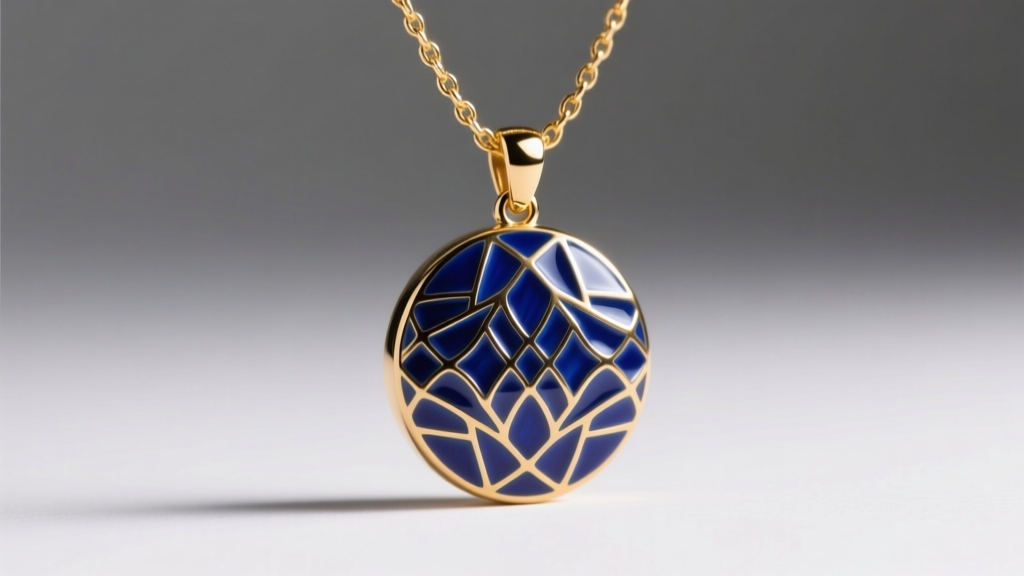
Enameling remains one of the oldest and most revered methods for introducing opaque or translucent color to a necklace pendant. Yet, the term 'enamel' is frequently misappropriated in the commercial jewelry market to describe vastly different materials. True vitreous enamel is essentially glass. It consists of silica, soda ash, and metal oxides (such as cobalt for deep blue or copper for vibrant green) fused to a metal substrate at extreme temperatures between 1380°F and 1560°F (750°C to 850°C). The critical technical challenge in vitreous enameling is matching the coefficient of thermal expansion (CTE) between the glass frit and the metal base—typically 18k gold, sterling silver, or copper. If the CTE is mismatched, the enamel will craze (develop micro-fractures) upon cooling, compromising the pendant. For a comprehensive historical and technical overview of this process, the Victoria and Albert Museum's enamel archives provide exceptional documentation on traditional firing techniques.
Conversely, 'cold enamel' is a marketing misnomer for two-part epoxy resins or UV-cured acrylics. While cold enamel allows for the mass production of vibrant colored necklaces at a fraction of the manufacturing cost, it is highly susceptible to photo-oxidation. Prolonged exposure to ultraviolet light causes the polymer chains to break down, resulting in a measurable Delta E color shift (visible yellowing) within 18 to 24 months of daily wear. Furthermore, cold enamel lacks the Mohs hardness of vitreous glass (which sits around 5.5 to 6.0), making it inherently prone to micro-scratching and chemical degradation when exposed to common solvents like acetone or alcohol-based perfumes.
Gemstone Treatments and Color Stability Matrices
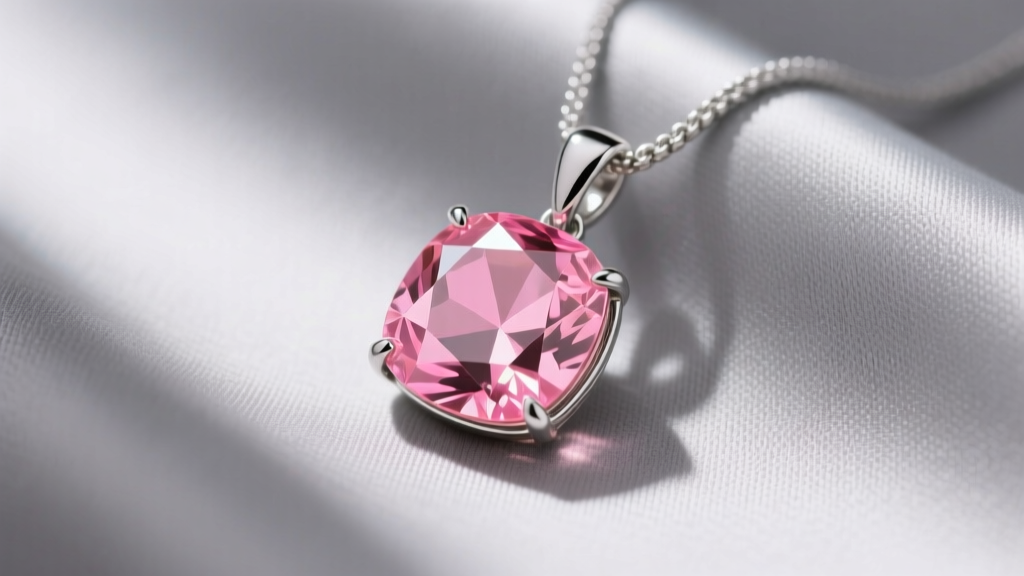
The vast majority of colored gemstone pendants on the market have undergone some form of enhancement to improve their hue, saturation, or clarity. Understanding these treatments is non-negotiable for evaluating the durability and true value of colored necklaces. According to the GIA Gem Encyclopedia, treatments range from universally accepted heating to highly unstable fracture filling. For instance, the emeralds frequently set in high-end pendants are almost universally fracture-filled. Historically, natural cedar oil was used to mask internal fissures by matching the stone's refractive index (1.57 to 1.58). Today, synthetic polymers like Opticon are preferred for their higher stability. However, these fillers can still degrade or 'sweat' out of the stone if exposed to the high temperatures of a jeweler's torch or the vacuum pressure of an ultrasonic cleaner.
Similarly, the vibrant peach-pink hues of padparadscha sapphires are often achieved through beryllium diffusion. This process involves heating the corundum to near its melting point (around 1800°C) in the presence of beryllium oxide, allowing the small beryllium atoms to penetrate the entire crystal lattice. Unlike surface diffusion, which only colors the outer millimeter of the stone and can be polished away, beryllium diffusion is permanent and structurally stable. Buyers must be exceptionally wary of lead-glass filled rubies, however. These stones are heavily fractured corundum infused with a high-lead-content glass to improve transparency. The glass filler has a Mohs hardness of roughly 5.0 and is highly reactive to mild acids; even a drop of lemon juice or a splash of household vinegar can etch the filler, leaving the ruby structurally compromised and severely pitted.
| Gemstone | Common Treatment | Stability Grade | Primary Failure Mode |
|---|---|---|---|
| Emerald | Cedar Oil / Polymer Filling | Moderate | Filler evaporation under heat or ultrasonic vibration |
| Sapphire | Beryllium Lattice Diffusion | Excellent | None (permanent color alteration) |
| Ruby | Lead-Glass Fracture Filling | Poor | Chemical etching from mild acids (citrus, vinegar) |
| Tanzanite | Low-Temperature Heating | Excellent | Thermal shock due to perfect cleavage planes |
Pleochroism and Lapidary Orientation
Advanced lapidaries must account for pleochroism—the optical phenomenon where a gemstone exhibits different colors when viewed from different crystallographic axes. Iolite, tanzanite, and tourmaline are highly pleochroic. When cutting a pendant stone, the lapidary must orient the table facet perpendicular to the optic axis to maximize the desired color saturation. If a tanzanite pendant is cut poorly to preserve carat weight, the stone may display a muddy brown or yellowish-green hue from certain angles, severely diminishing its optical performance. Evaluating a colored necklace under multiple light sources (daylight equivalent 6500K and incandescent 3000K) is a standard gemological protocol to detect poor orientation or undesirable color zoning before purchase.
Chain Metallurgy and Galvanic Corrosion Risks
The chain supporting a colored pendant is not merely a functional afterthought; it is an active participant in the electrochemical environment of the necklace. When pairing colored pendants—particularly those with copper or brass bases used in some artisanal enamels—with sterling silver or white gold chains, jewelers must account for galvanic corrosion. Human sweat acts as a potent electrolyte, rich in sodium chloride and lactic acid. If two dissimilar metals (like a copper-based pendant bail and a sterling silver chain) are in direct physical contact while damp, a galvanic cell is formed. The more anodic metal (copper) will rapidly corrode, leading to structural failure of the bail and the transfer of green copper salts onto the skin and the silver chain.
To mitigate this, high-end manufacturers isolate the metals using inert barriers, such as a thick rhodium plating on the silver chain or a specialized polyurethane coating on the pendant bail. For everyday wear, it is technically superior to match the karat and alloy of the chain to the pendant's bail, ensuring a uniform electrode potential and eliminating the risk of galvanic degradation entirely.
Maintenance Protocols and Catastrophic Failure Modes
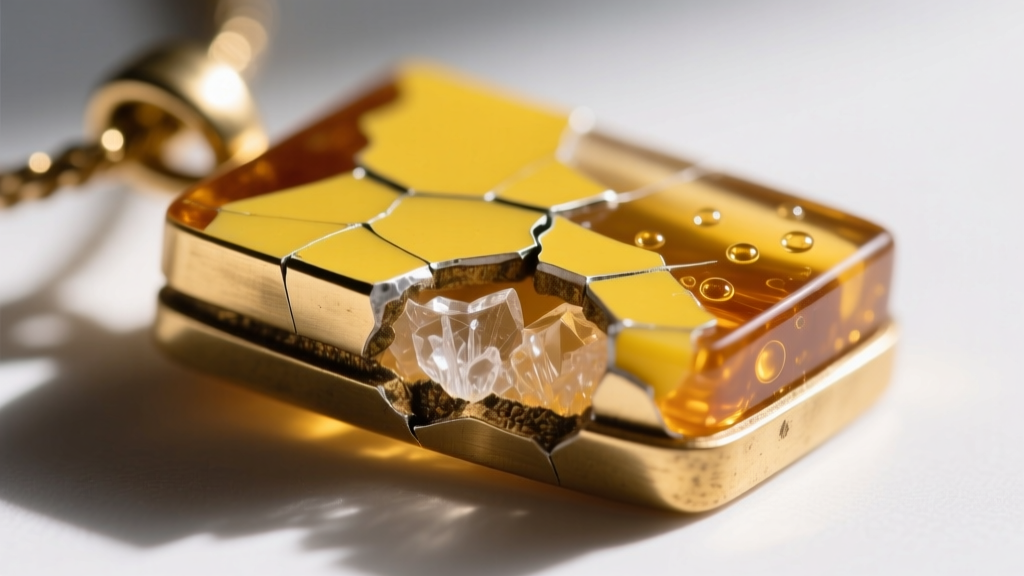
The most common cause of catastrophic failure in colored necklaces is improper cleaning by the end consumer. Owners frequently default to ultrasonic cleaners, which operate by generating high-frequency sound waves (typically 20 to 40 kHz) that create microscopic cavitation bubbles in a liquid solvent. When these bubbles collapse against a gemstone or enamel surface, they generate localized shockwaves. For vitreous enamel, this cavitation can easily propagate existing micro-fissures, causing entire sections of glass to spall off the metal substrate. For fracture-filled emeralds or rubies, the ultrasonic vibrations can literally shake the filler out of the stone's internal cracks, leaving it cloudy, fragile, and vastly devalued.
Steam cleaning presents an equally severe thermal shock risk. The sudden introduction of 100°C steam to a room-temperature vitreous enamel pendant can cause immediate shattering due to the aforementioned CTE mismatch. Furthermore, steam will instantly melt or cloud cold epoxy resins and evaporate the cedar oil from treated emeralds. The only universally safe cleaning protocol for complex colored necklaces involves a soft-bristled brush (such as a goat-hair makeup brush), lukewarm distilled water, and a pH-neutral, non-ionic surfactant. The necklace should be gently agitated, rinsed, and dried with a microfiber cloth, avoiding any aggressive mechanical or thermal stress to preserve the structural integrity of the coloration.


