Disk Gold Necklace Guide: Metallurgy, Gauges & Craftsmanship
Explore the technical anatomy of a disk gold necklace. Learn about karat alloys, stamping vs. casting, thickness gauges, and clasp engineering.

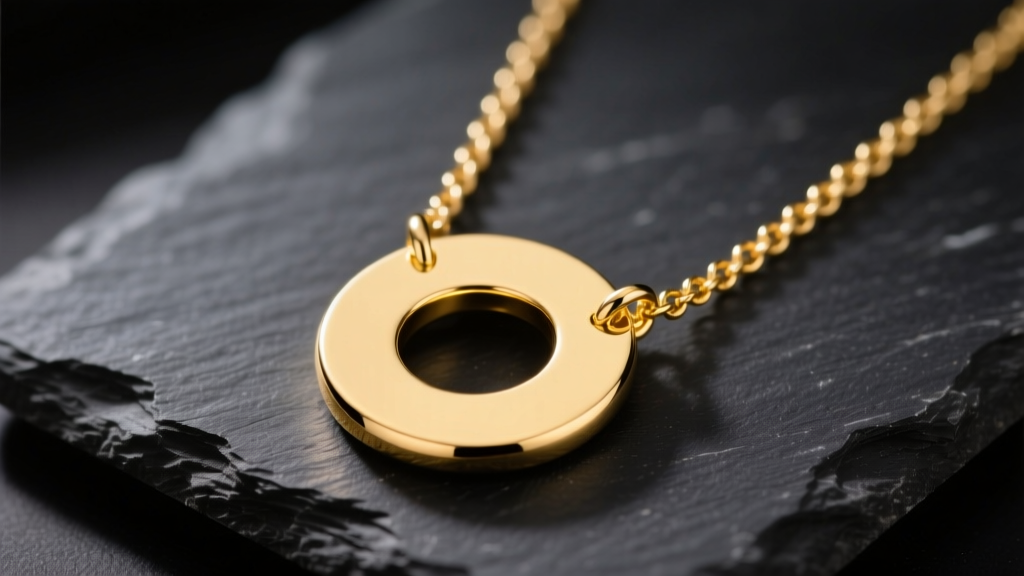
Beyond the Minimalist Aesthetic: The Engineering of a Disk
The modern jewelry market is saturated with minimalist designs, but few pieces require as much precise engineering as a high-quality disk gold necklace. While the aesthetic relies on clean lines and unadorned geometry, the structural integrity of a flat, circular pendant is highly vulnerable to bending, warping, and clasp failure if not manufactured to exacting metallurgical standards. As an expert in jewelry fabrication, I frequently evaluate the structural anatomy of these pieces. This guide bypasses the typical style advice and dives deep into the material science, manufacturing techniques, and mechanical tolerances that separate a generational heirloom from a disposable, mass-produced trinket.
Metallurgy: Decoding the Karat Alloys for Disk Pendants
Gold in its pure 24k state is far too malleable for a flat disk pendant. A 24k gold disk, even at a substantial 2mm thickness, will warp under the simple pressure of being slept on or pressed against a steering wheel. Therefore, alloying is not just about color; it is a critical structural necessity. According to the Gemological Institute of America (GIA), the specific ratio of copper, silver, and zinc added to pure gold dictates the Vickers Hardness (HV) of the final piece.
14k vs. 18k: Hardness and Scratch Resistance
For a disk gold necklace, 14k gold (58.5% pure gold) is generally the superior choice for structural resilience. A standard 14k yellow gold alloy exhibits a Vickers Hardness of approximately 140 HV, whereas 18k gold (75% pure gold) sits closer to 120 HV. This 20-point difference in hardness translates to a significantly higher yield strength. When a thin 18k disk is subjected to lateral torque, it will undergo plastic deformation (permanent bending) much faster than its 14k counterpart. If you are commissioning a custom disk under 15mm in diameter and 1.2mm in thickness, 14k gold or even a palladium-white gold alloy (which can reach 160 HV) is mandatory to prevent warping.
Alloying elements also dictate the oxidation potential. While pure gold does not tarnish, the copper and zinc in 14k and 18k alloys can react with environmental sulfur and chlorides. A disk with a high-polish mirror finish will show micro-scratches and oxidation much faster than a satin or brushed finish. For wearers in coastal or high-humidity environments, an 18k palladium-white gold disk offers superior tarnish resistance compared to traditional nickel-alloyed white gold, which can also cause contact dermatitis.
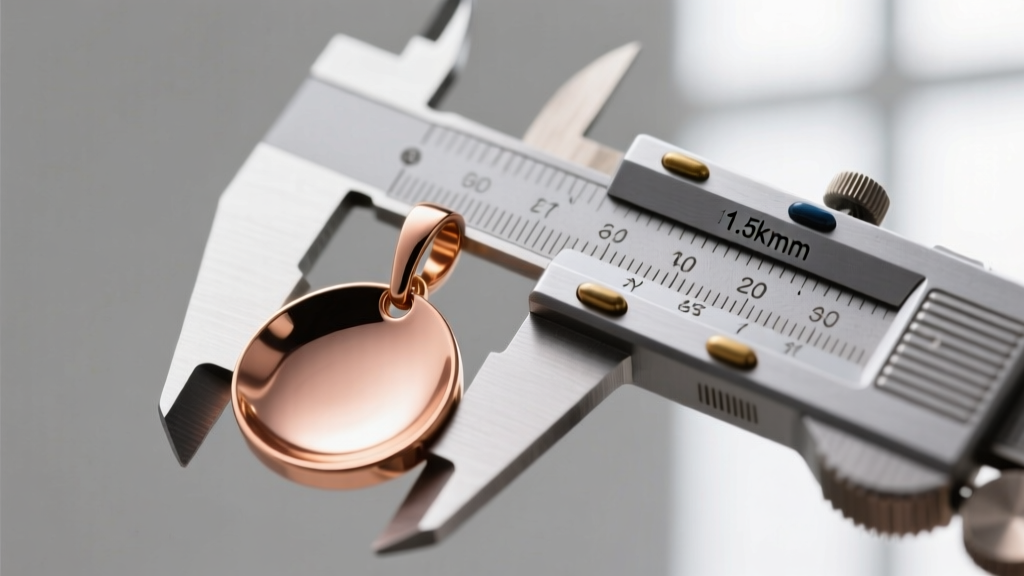
Manufacturing Methods: How the Disk is Born
The method used to form the gold disk fundamentally alters its internal grain structure, directly impacting its durability. There are three primary methods used in modern jewelry manufacturing, and they are not created equal.
- Die Stamping (Superior): A sheet of gold is placed between a hardened steel die and struck with immense hydraulic pressure. This process compresses the metal's crystalline grain structure, resulting in 'work-hardening.' A stamped disk gold necklace is significantly denser and more resistant to bending than a cast piece of the exact same dimensions.
- CNC Machining (Excellent for Detail): A computer-controlled lathe carves the disk from a solid block of gold. While this allows for micro-milled textures and perfect concentricity, it does not work-harden the metal. The disk remains in an annealed (soft) state unless subsequently tumbled or burnished.
- Casting (Avoid for Thin Disks): Molten gold is poured into a plaster investment mold. Casting introduces microscopic porosity and a random, loose grain structure. A cast disk thinner than 1.5mm is highly susceptible to snapping or bending and should be avoided for everyday wear.
Edge Profiling: Beveled vs. Knife-Edge
The edge profile of a disk gold necklace drastically affects both its durability and its interaction with the skin. A 'knife-edge' or perfectly flat 90-degree edge looks striking but is highly susceptible to denting and micro-chipping upon impact. Furthermore, sharp edges can catch on delicate fabrics. Expert fabricators often apply a microscopic 0.2mm chamfer (bevel) to the perimeter of the disk. This preserves the sharp visual geometry while removing the fragile outermost lip, increasing the structural lifespan of the pendant by preventing edge deformation.
The Critical Metrics: Diameter, Thickness, and Weight
When evaluating a disk gold necklace, consumers often fixate on the diameter while ignoring the Z-axis (thickness). A 20mm disk that is only 0.8mm thick is essentially gold foil and will inevitably warp. Below is the engineering matrix I use to evaluate the structural viability of solid gold disk pendants based on their diameter.
| Disk Diameter | Minimum Safe Thickness | Approx. Weight (14k) | Structural Vulnerability |
|---|---|---|---|
| 10mm - 12mm | 0.9mm - 1.0mm | 1.2g - 1.8g | Low (if stamped) |
| 15mm - 18mm | 1.2mm - 1.4mm | 3.5g - 5.2g | Moderate |
| 20mm - 25mm | 1.6mm - 2.0mm | 8.0g - 14.5g | High (requires heavy chain) |
| 30mm+ | 2.2mm+ | 18.0g+ | Extreme (acts as a pendulum) |
As noted by the World Gold Council, the density of gold means that even slight increases in thickness result in exponential weight gains, which subsequently dictates the required chain tensile strength.
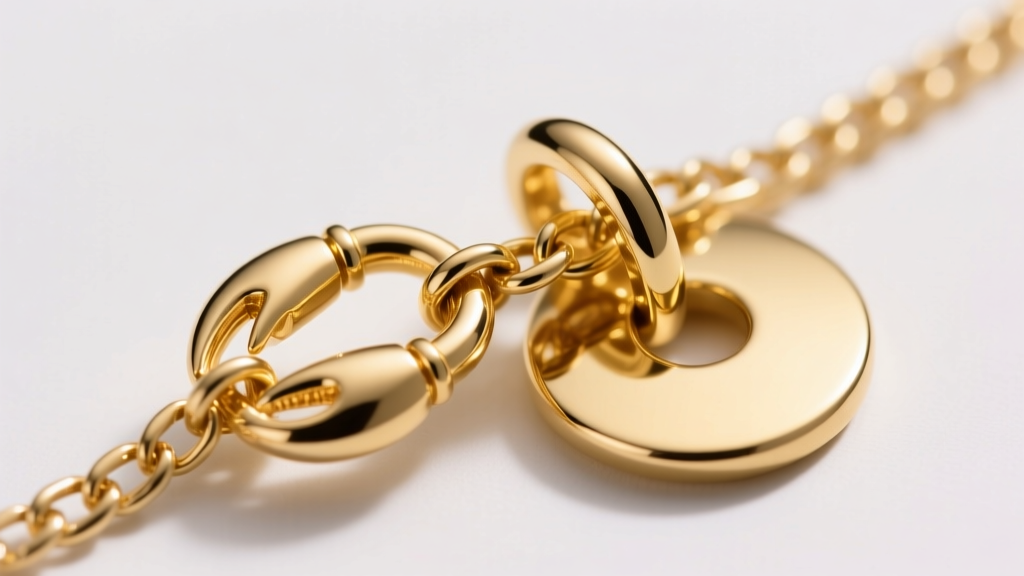
Chain Engineering and Clasp Mechanics
A heavy disk gold necklace acts as a pendulum. Every time the wearer moves, kinetic energy is transferred down the chain, concentrating immense stress on the clasp and the bail (the loop connecting the disk to the chain). Standard spring-ring clasps are entirely inadequate for disks weighing over 5 grams. The internal spring mechanism will eventually fatigue, and the thin wire of the clasp itself can deform under the pendulum effect.
Box Chains vs. Cable Chains for Heavy Disks
For a disk weighing between 5g and 15g, a solid box chain or a rounded wheat chain is required. Box chains feature interlocking square links that distribute tensile stress across multiple planes, offering a tensile yield strength up to 40% higher than a standard cable chain of the same millimeter width. Furthermore, the bail connecting the disk must be laser-welded or hard-soldered. If the bail is merely cast as part of the disk (an integrated bail), the thin point where the hole is drilled becomes a natural fault line prone to stress fractures.
The jump ring connecting the clasp to the chain must be soldered closed. An open jump ring, even a thick one, will slowly pull apart under the repetitive pendulum motion of a heavy gold disk. Always inspect the connection points under a 10x jeweler's loupe; a seamless, soldered joint will show no visible seam line, ensuring the tensile load is distributed evenly across the entire circumference of the wire.
Expert Troubleshooting: Warping, Tarnish, and Bail Failure
Even with proper metallurgy, a disk gold necklace requires specific maintenance. If a 14k or 18k disk becomes slightly warped, do not attempt to bend it back into shape with your fingers. Human hands apply uneven torque, which will crease the metal and cause a stress fracture. A professional jeweler will place the disk on a polished steel bench block and gently tap it with a rawhide or nylon mallet to re-flatten the crystalline structure without marring the mirror finish.
Expert Tip: To maintain a mirror finish on a solid gold disk, avoid ultrasonic cleaners if the piece features any micro-pave diamond accents on the perimeter. Instead, use a high-quality jeweler's rouge on a soft muslin buffing wheel, applying less than 2 PSI of pressure to avoid rounding the sharp, geometric edges of the disk.
Ultimately, investing in a high-quality disk gold necklace requires looking past the surface shine. By demanding die-stamped construction, verifying the Vickers hardness of the alloy, and ensuring the chain's tensile strength matches the pendant's pendulum weight, you secure a piece of jewelry that is as structurally sound as it is visually striking.


