How to Buy the Longest Pearl Necklace: Rope & Sautoir Guide
Discover how to buy the longest pearl necklace styles, including rope and sautoir lengths. Learn about knotting, silk grades, and pearl types.

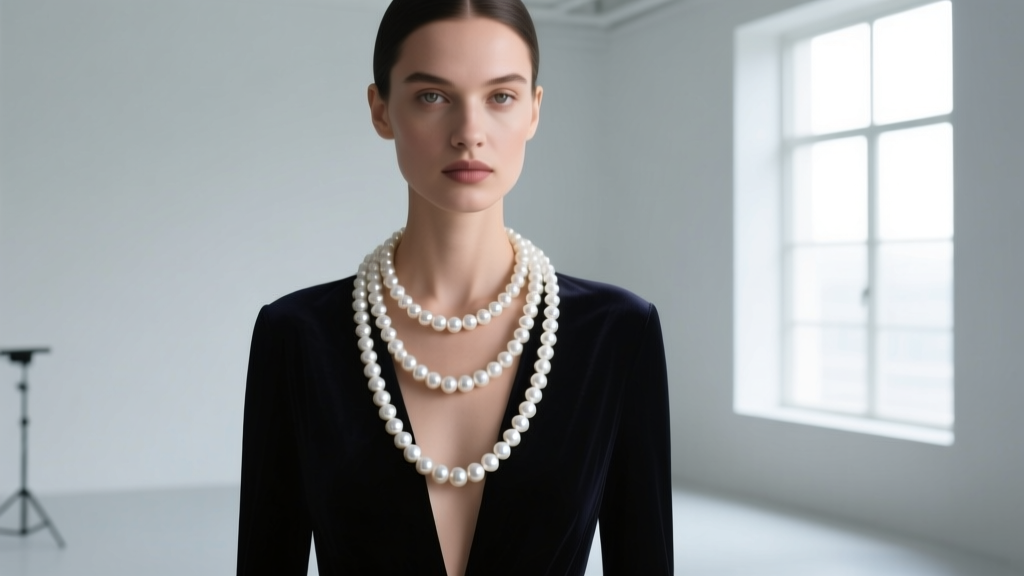
When collectors and stylists search for the longest pearl necklace, they are typically looking far beyond the standard princess or opera lengths. Extra-long pearl strands—specifically rope and sautoir lengths—are masterclasses in elegance, versatility, and structural jewelry engineering. In 2026, the trend of layering and converting long pearl strands into multi-wrap chokers or dramatic Y-silhouettes has made these pieces more coveted than ever. However, buying a 60-inch or 72-inch strand of pearls introduces unique physical challenges, from silk thread stretching to clasp fatigue. This comprehensive buying guide will walk you through the exact specifications, material grades, and structural red flags you need to know before investing in an extra-long pearl strand.
Decoding Pearl Lengths: Where the "Longest" Fits
To understand what qualifies as the longest pearl necklace, we must first look at standard industry measurements. While most jewelry stores stop at the opera length, high-end pearl specialists and auction houses deal in the extended categories.
| Length Category | Inches | Centimeters | Primary Styling Use |
|---|---|---|---|
| Princess | 18" | 45 cm | Standard daily wear, rests on collarbone |
| Matinee | 20" - 24" | 50 - 60 cm | Business and semi-formal wear |
| Opera | 28" - 36" | 70 - 90 cm | Formal wear, can be knotted once |
| Rope | 45" + | 114 cm + | Multi-wrap, convertible, lariat styles |
| Sautoir | 60" - 72"+ | 152 - 182 cm+ | Dramatic draping, flapper-style, multi-strand wraps |
When you are specifically hunting for the longest pearl necklace, you are operating in the Rope and Sautoir categories. These lengths require specialized stringing techniques because the sheer weight and kinetic energy of the pearls can easily snap standard jewelry threads.
The Physics and Engineering of Extra-Long Strands
Buying a 16-inch choker is a matter of aesthetics; buying a 60-inch sautoir is a matter of physics. The primary failure mode for long pearl necklaces is the "pendulum effect." As you walk, a long strand swings, generating inertia that places massive, repetitive stress on the knots nearest to the clasp. According to the Gemological Institute of America (GIA), proper stringing is critical to preserving both the pearls and the structural integrity of the piece.
Silk Thread Sizing and Knotting
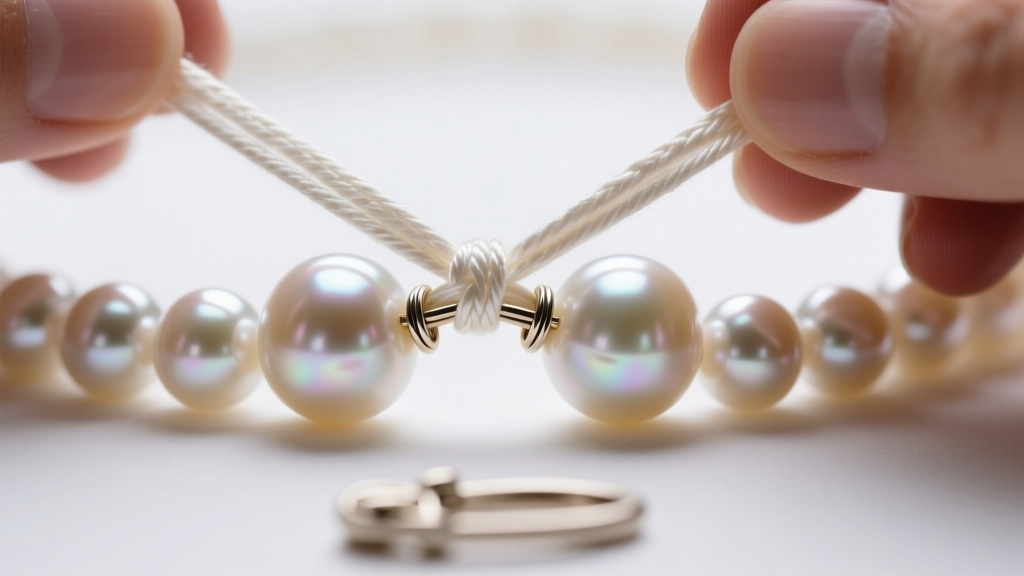
Never purchase a long strand of pearls that is unknotted. If an unknotted 60-inch strand breaks, you will lose dozens of pearls instantly. For rope lengths, every single pearl must be hand-knotted. Furthermore, the silk thread must be matched to the pearl's drill hole size and weight:
- Size E (0.45mm): Suitable for lightweight 5mm - 6mm Akoya or Freshwater pearls.
- Size F (0.50mm): The standard for 7mm - 8mm pearls, offering a balance of strength and flexibility.
- Size G (0.55mm) or H (0.60mm): Mandatory for heavy 9mm+ South Sea pearls to prevent the pendulum effect from snapping the thread.
French Wire (Gimp) Protection
Inspect the area where the silk meets the metal clasp. There must be a tiny, coiled metal tube called French wire or "gimp" covering the silk. Without this, the metal clasp will act like a saw blade against the silk thread every time the heavy necklace swings, leading to catastrophic failure within months.
Pearl Varietals for Rope and Sautoir Lengths
The type of pearl you choose drastically alters the price, weight, and drape of the longest pearl necklace styles. Here is what to expect in the current market:
1. Akoya Pearls (The Classic High-Luster Choice)
Akoya pearls are renowned for their mirror-like luster and perfect roundness. However, because they are typically smaller (rarely exceeding 9mm), a 60-inch Akoya rope requires hundreds of individually matched pearls. This makes high-quality Akoya sautoirs exceptionally rare and expensive, often ranging from $4,000 to $12,000 depending on the Hanadama grade.
2. Freshwater Pearls (The Versatile & Budget-Friendly Option)
Modern Edison and baroque freshwater pearls have dominated the 2026 market for long strands. Because they are nucleated differently, they can be produced in larger sizes at a fraction of the cost. A 60-inch strand of high-luster, near-round freshwater pearls can be acquired for $400 to $1,200. Baroque (irregularly shaped) freshwater sautoirs offer an organic, avant-garde drape and are highly resistant to showing minor blemishes.
3. South Sea Pearls (The Heavyweight Luxury)
White and Golden South Sea pearls range from 9mm to 15mm. A 60-inch strand of 12mm South Sea pearls is incredibly heavy, often weighing over 200 grams. While breathtaking and priced upwards of $20,000, they require heavy-duty stringing and robust clasps to support the immense weight.
Clasp Mechanics and Convertibility
The true value of the longest pearl necklace lies in its convertibility. A well-designed 60-inch rope can be worn long, doubled into a 30-inch opera, or tripled into a 20-inch choker. To achieve this, the clasp mechanics must be flawless.
"A convertible pearl necklace is only as strong as its weakest interlocking mechanism. Always test the clasp under the full weight of the strand before purchasing."
Look for these specific clasp types:
- Trombone Clasp: A push-pull mechanism with a secondary figure-eight safety latch. Excellent for hidden, seamless joins when doubling the strand.
- Dog-Ear / Bayonet Clasp: Features a hinged locking arm that snaps over a pin. Highly secure for heavy South Sea ropes.
- Multi-Ring Ends: Some sautoirs feature small gold rings at both ends, allowing you to use a separate, interchangeable clasp to secure the necklace at various doubled or tripled lengths.
Red Flags: What to Avoid When Buying
When evaluating extra-long pearl strands, walk away immediately if you spot any of these structural compromises:
- Glued Clasps: If the silk is glued directly into a metal cup without a mechanical knot or French wire, the adhesive will eventually become brittle and fail.
- Loose Knotting: Run your fingers along the strand. If there is visible space between the knot and the pearl, the silk was stretched improperly during stringing. This will cause the necklace to sag and the pearls to click together, damaging their nacre.
- Uniformity Illusions: If a 60-inch strand of supposedly "natural" saltwater pearls is perfectly uniform in color and overtone from end to end, it is likely dyed or heavily treated. Natural long strands require immense sorting effort, and slight, beautiful variations in overtone are expected.
Care and Maintenance for Heavy, Long Strands
Maintaining the longest pearl necklace requires a stricter regimen than shorter pieces. The GIA recommends regular inspection of pearl stringing, but for rope and sautoir lengths, the timeline is accelerated due to the pendulum stress mentioned earlier.
You should have a professional jeweler inspect the silk thread and clasp connections every 12 to 18 months. Never hang a long pearl necklace on a jewelry stand for extended periods; the constant downward pull of gravity will permanently stretch the silk, causing the knots to loosen. Instead, store the sautoir coiled loosely in a soft, anti-tarnish cloth pouch, separate from harder gemstones that could scratch the delicate nacre. By understanding the engineering, materials, and proper care of these magnificent strands, you can confidently invest in a piece that will drape beautifully for generations.


