Mastering the Ojime Bead Necklace: Anatomy, Materials & Knotting
Discover the intricate art of the ojime bead necklace. Explore material grades, traditional kumihimo cordage, knotting techniques, and authentication tips.

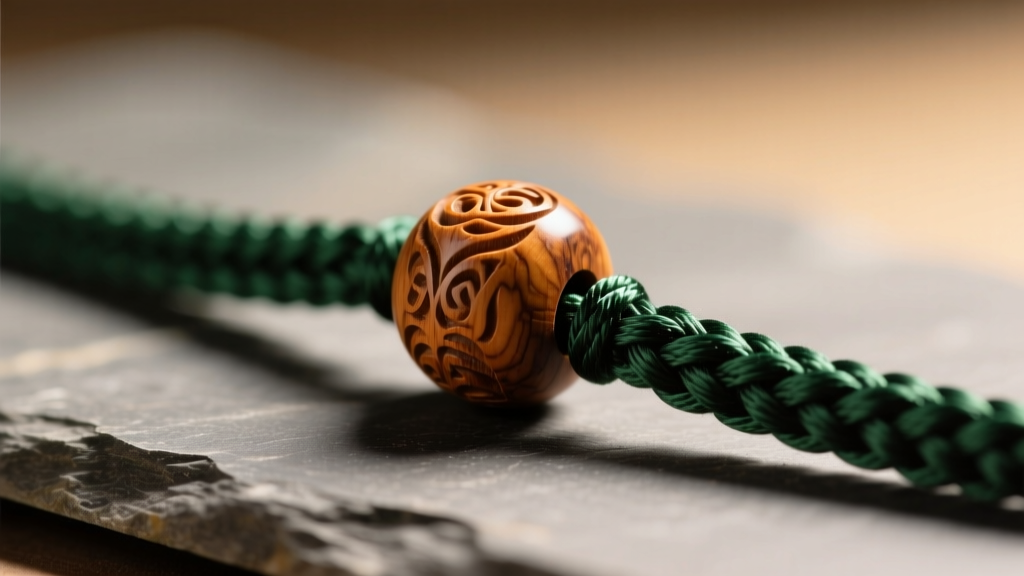
The transition of the ojime bead necklace from a functional component of traditional Japanese dress to a sophisticated staple in modern jewelry design is a masterclass in sartorial evolution. Originating in the Edo period (1603–1867), the ojime was initially a small, intricately carved toggle used to secure the inro (a tiered pillbox) to the obi (sash) via a netsuke counterweight. Today, jewelers and collectors repurpose these remarkable beads as striking focal points in contemporary necklaces. However, designing or restoring an ojime bead necklace requires more than just stringing a bead on a chain; it demands a rigorous understanding of material science, cordage engineering, and historical authentication.
According to the Metropolitan Museum of Art, the ojime served a vital mechanical purpose: preventing the inro from slipping open while allowing the wearer to adjust the cord's tension. This historical requirement for friction and durability directly informs how we must approach modern necklace construction using these artifacts.
The Material Science of Ojime Beads
When evaluating an ojime bead for a necklace, understanding its material composition is critical for determining its longevity, care requirements, and appropriate cord pairing. While antique ojime were frequently carved from ivory, coral, or tortoiseshell, modern CITES regulations and ethical sourcing have shifted the market toward sustainable alternatives and metallurgical casts.
Tagua Nut and Botanical Ivories
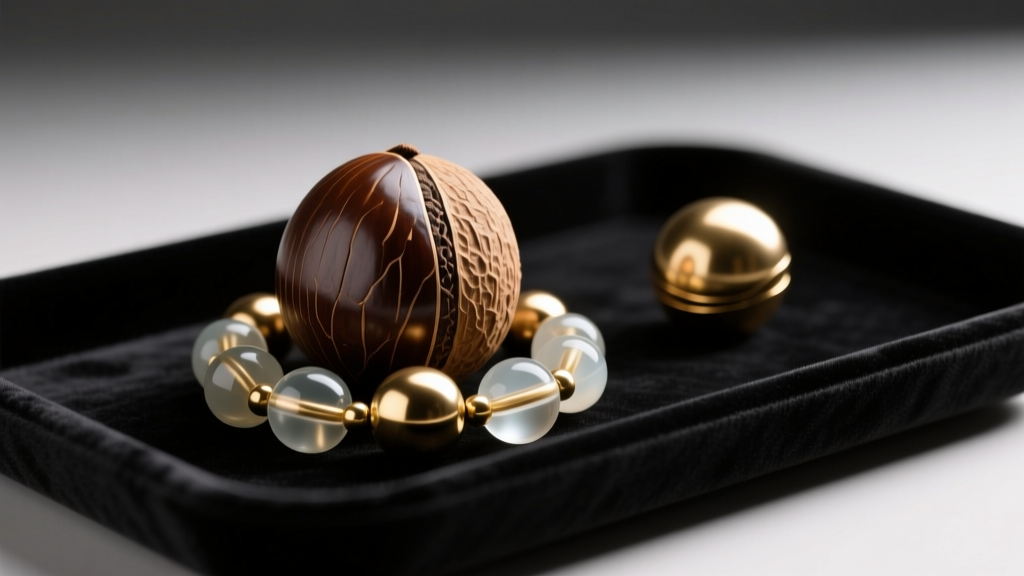
Tagua nut (often called "vegetable ivory") is the premier modern substitute for antique ivory. Sourced from the Phytelephas aequatorialis palm, tagua possesses a Mohs hardness of roughly 2.5 to 3.0. While it carves beautifully and accepts dyes readily, it is highly hygroscopic. If worn directly against the skin in high-humidity environments, unsealed tagua can absorb moisture, swell, and eventually crack. Expert jewelers always seal tagua ojime beads with a microcrystalline wax, such as Renaissance Wax, to stabilize the cellular structure before stringing.
Cast Brass and Bronze Alloys
For a more industrial or contemporary aesthetic, cast brass (typically a 70/30 copper-zinc alloy) ojime beads are highly prevalent. These are usually produced via lost-wax casting. When selecting brass ojime, inspect the interior of the drill channel. High-quality casts will have smooth, tumbled channels, whereas cheaper, mass-produced molds may leave microscopic burrs that will slowly abrade and sever silk cordage over time.
Material Durability and Cord Pairing Matrix
| Material | Mohs Hardness | Density (g/cm³) | Hygroscopic Risk | Recommended Cordage |
|---|---|---|---|---|
| Antique Ivory/Bone | 2.5 - 3.0 | 1.7 - 2.0 | Moderate | Waxed Linen, Kumihimo Silk |
| Tagua Nut (Sealed) | 2.5 - 3.0 | 1.2 - 1.4 | Low (if sealed) | Braided Nylon, Silk |
| Cast Brass | 3.0 - 4.0 | 8.4 - 8.7 | None | Micro-cord, Leather, Steel |
| Epoxy Resin | 2.0 - 2.5 | 1.1 - 1.2 | None | Synthetic Suede, Cotton |
Cordage Engineering: Kumihimo vs. Modern Synthetics
The structural integrity of an ojime bead necklace relies entirely on the cordage. The standard drill hole (himotoshi) on an ojime ranges from 2.5mm to 4.0mm in diameter. Selecting a cord that maximizes friction without causing abrasive wear is a precise science.
The Mechanics of Kumihimo Silk
Traditional kumihimo (Japanese braiding) remains the gold standard for authentic ojime presentations. A 16-bobbin braid yields a dense, rounded cord approximately 2.0mm to 2.5mm in diameter, which fits a standard 3.0mm ojime channel perfectly. However, 100% silk is a protein fiber highly susceptible to degradation from human sweat, which has an acidic pH (typically 4.5 to 5.5). Over time, this acidity hydrolyzes the silk fibroin, leading to catastrophic tensile failure. For everyday wear, experts recommend blending silk with a synthetic core or utilizing high-denier rayon alternatives that mimic the luster of silk without the biological vulnerabilities.
Synthetic Micro-Cords
For heavier brass or bronze ojime beads, a 1.5mm braided nylon micro-cord (often rated for 200+ lbs of tensile strength) is the superior choice. Nylon is impervious to sweat and UV degradation. The primary challenge with nylon is finishing the ends, as it cannot be glued with standard water-based adhesives.
Expert Insight: Never force a cord through an antique ojime. If the channel is calcified or narrowed by decades of patina, use a flexible diamond-coated bead reamer (1.5mm to 2.0mm) with water lubrication to gently clear the channel without micro-fracturing the surrounding material.
Technical Knotting and Adhesive Selection
The Victoria and Albert Museum notes that the historical function of the ojime relied on a simple slip knot that could be adjusted with one hand. In modern necklace design, we adapt these traditional knots for permanent security and adjustable wearability.
The Adjustable Slip Knot (Musubi Variations)
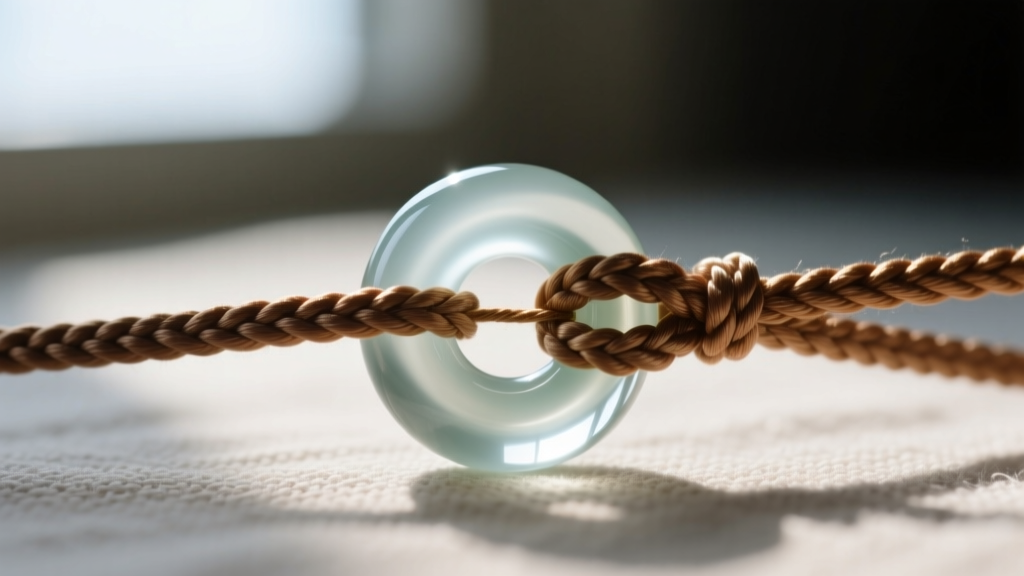
To create an adjustable ojime bead necklace without relying on metal clasps, jewelers utilize a modified macramé slip knot. The physics of this knot rely on the coefficient of friction between the cord's outer sheath and itself. Braided cords grip exceptionally well, whereas smooth, extruded cords (like leather) will slip under the weight of a heavy brass ojime.
Adhesive Protocols for Cord Finishing
When terminating the cord ends with metal cones or crimp covers, the choice of adhesive is paramount. Using the wrong glue will result in either a brittle fracture or chemical degradation of the cord.
- G-S Hypo Cement: The mandatory choice for 100% silk and natural fibers. It dries flexible, contains no harsh solvents, and will not burn or weaken the protein structure of the silk.
- Cyanoacrylate (CA Glue / Loctite 401): Ideal for nylon and synthetic micro-cords. CA glue wicks into the braided nylon via capillary action, creating a rigid, rock-hard termination point that can be trimmed flush and inserted into a metal end cap.
- Two-Part Epoxy (e.g., Devcon 5-Minute): Best used for securing heavy cast brass ojime beads to leather cords where the sheer weight of the bead would otherwise pull through a standard crimp.
Authentication: Identifying True Antiques vs. CNC Reproductions
As the market for vintage Japanese toggles has grown, so has the proliferation of modern reproductions masquerading as Edo-period antiques. Authenticating an ojime bead requires a forensic approach to tool marks and drill geometry.
Analyzing the Himotoshi (Cord Holes)
The most revealing feature of an antique ojime is the himotoshi. Before the advent of modern electric drills, artisans used hand-cranked bow drills or pump drills. To prevent the wood, ivory, or bone from "blowing out" or splintering as the drill bit exited the material, the carver would drill halfway through from the top, flip the bead, and drill from the bottom. This technique leaves a distinct, slightly misaligned hourglass profile inside the channel. Conversely, modern CNC-machined or mold-cast reproductions feature perfectly straight, uniform channels with sharp, 90-degree entry and exit edges.
Patina and Wear Patterns
Authentic antique ojime will exhibit asymmetric wear patterns. Because the bead was constantly rubbed against the silk cord and the wearer's kimono, the areas immediately surrounding the cord holes and the "back" of the bead (which faced the body) will show a soft, polished patina. Reproductions often feature an artificially applied, uniform chemical stain that accumulates in the crevices but lacks the directional, friction-based polishing of a genuinely worn artifact.
By respecting the historical engineering of the ojime and applying modern material science to the cordage and finishing techniques, jewelers can craft an ojime bead necklace that is not only a stunning piece of wearable art but a structurally sound, enduring heirloom.


