Omega Chain Necklace Gold: Technical Buying Guide
Discover the technical engineering, karat durability, and expert care tips for your omega chain necklace gold to prevent kinking and ensure longevity.

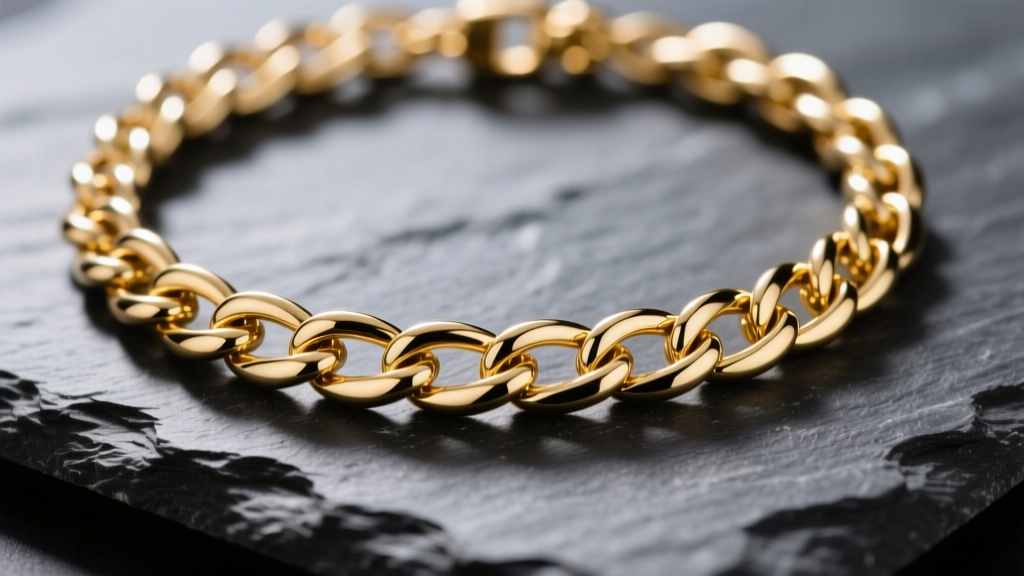
The Engineering Behind the Omega Chain Necklace Gold
When evaluating fine jewelry, the omega chain occupies a unique space between traditional link chains and rigid collars. Selecting the right omega chain necklace gold requires looking past the surface-level "liquid metal" aesthetic to understand the complex structural engineering beneath. Unlike cable or curb chains, which rely on interlocking individual loops, an omega chain is a composite structure. It consists of a flexible, spring-tempered inner core wire over which tightly interlocking, stamped gold bands are threaded. This architecture provides a seamless, highly reflective surface that mimics a solid tube of gold while retaining enough flexibility to drape around the neck. However, this composite design also introduces specific structural vulnerabilities that every collector and buyer must understand before making an investment.
Core vs. Mesh: The Composite Architecture
The defining characteristic of any high-quality omega chain necklace gold is the relationship between its inner core and outer mesh. In premium manufacturing, the core is crafted from a spring-tempered gold alloy wire, sometimes flattened to provide a wider base for the outer bands. This core dictates the chain's tensile strength and memory. The outer "links" are not true links; they are precision-stamped metallic bands that slide over the core and interlock with one another. According to manufacturing standards outlined by Rio Grande, the tolerance between the inner core and the outer mesh must be exact. If the mesh is too loose, the chain will feel flimsy and the bands will separate, exposing the core. If the mesh is too tight, the chain loses its flexibility, increasing the risk of structural failure when bent. Modern 2026 manufacturing utilizes laser-calibrated stamping to ensure these tolerances are measured in fractions of a millimeter, resulting in a fluid, fabric-like drape.
Metallurgy: How Karat Weight Dictates Durability
The purity of the gold used in an omega chain directly impacts its structural integrity. Because the omega design relies heavily on the "spring-back" memory of the inner core to maintain its shape, the Vickers hardness (HV) of the alloy is a critical metric. Pure 24k gold is far too malleable for this application; it lacks the yield strength required to support the outer mesh and will permanently deform under its own weight. Therefore, alloying metals like copper, silver, and zinc are introduced to increase hardness. The Gemological Institute of America (GIA) notes that the specific ratios of these alloys dictate not just the color, but the work-hardening potential of the metal.
| Gold Karat | Gold Purity | Vickers Hardness (HV) | Omega Suitability |
|---|---|---|---|
| 14k | 58.5% | 140 - 160 | Excellent (High durability, ideal for daily wear) |
| 18k | 75.0% | 120 - 135 | Good (Rich color, but requires careful handling) |
| 22k | 91.6% | 80 - 95 | Poor (Too soft, extreme kink and stretch risk) |
For an omega chain necklace gold intended for frequent wear, 14k is the metallurgical sweet spot. It provides sufficient hardness to resist plastic deformation while maintaining the desirable luster of fine gold. While 18k offers a deeper, richer yellow hue, it requires a thicker core wire to compensate for the softer alloy, which can increase the overall weight and stiffness of the piece.
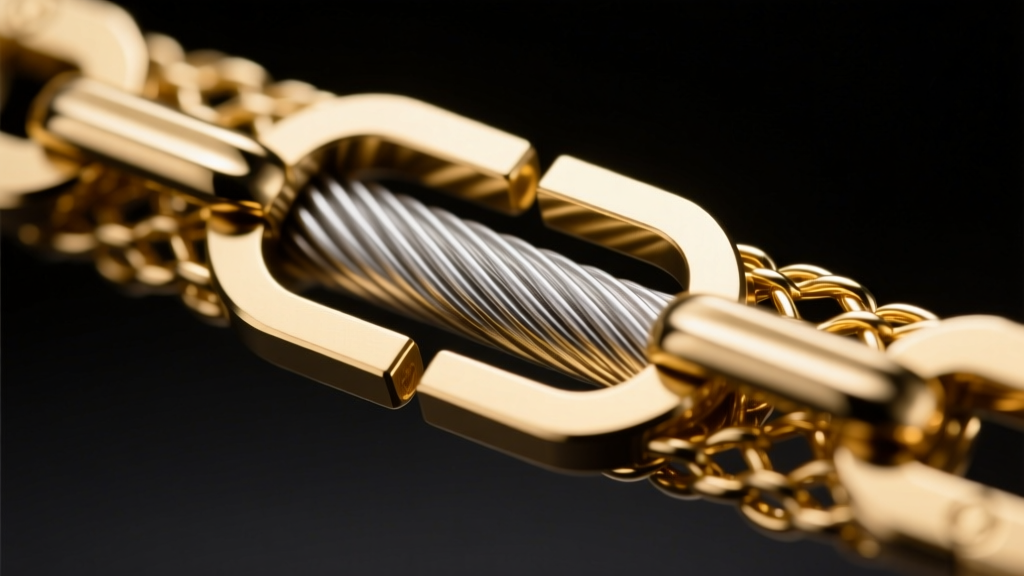
The Physics of Kinking: Failure Modes and Yield Strength
The most common failure mode of any omega chain is kinking. A kink is not merely a cosmetic flaw; it is a localized plastic deformation of the inner core wire. When an omega chain is bent backward against its natural curve or folded sharply, the stress exceeds the metal's yield point. The inner core bends permanently, and the outer mesh bands compress and lock together on the inside of the bend, while stretching and separating on the outside. Once the outer bands lock into this deformed state, the chain loses its flexibility at that specific node. The World Gold Council emphasizes that work-hardened gold alloys, while resistant to minor scratches, are highly susceptible to this type of acute stress fracturing. To prevent kinking, an omega chain must never be folded, twisted, or stored in a tangled pile. It must always be hung vertically or laid flat in a wide, rigid arc that respects the chain's natural curvature.
Clasp Engineering and Load Distribution
Because omega chains are inherently heavier and more rigid than traditional link chains, they generate significant kinetic momentum when worn. A standard spring-ring clasp is entirely inadequate for securing an omega chain necklace gold; the sheer weight of the chain can easily warp the thin wire of a spring ring, causing the clasp to fail and the necklace to drop. Expert jewelers mandate the use of a box clasp (also known as a tongue clasp) equipped with a figure-eight safety catch. The box clasp distributes the tensile load across a wider surface area, while the figure-eight wire acts as a secondary failsafe. In high-end 2026 designs, these clasps are integrated into the chain's terminal ends using precision laser welding, which prevents the heat distortion and structural weakening associated with traditional torch soldering.

Sizing, Torque, and Neckline Geometry
Unlike cable chains that drape in a deep "V" shape, omega chains form a rigid collar or torc geometry. This means they sit higher on the neck and do not conform to the contours of the collarbone in the same way. When sizing an omega chain necklace gold, a 16-inch length will sit snugly at the base of the throat, functioning as a choker. An 18-inch length is the industry standard, resting gracefully on the clavicle and pairing perfectly with V-neck or scoop-neck garments. Lengths beyond 20 inches are generally discouraged for omegas; the increased diameter creates excessive torque on the clasp and the lower segments of the chain, drastically increasing the likelihood of kinking due to the leverage applied during normal movement.
Professional Maintenance and Annealing Protocols
If an omega chain does suffer a minor kink, attempting to pull it straight with your hands or standard pliers will almost certainly cause the outer mesh to snap or the core to fracture. Professional repair requires a specific metallurgical protocol. A master jeweler will first use smooth-jawed nylon pliers to gently coax the chain back into a rounded shape over a steel mandrel. Next, they will use a localized laser or micro-torch to anneal the specific kinked node, heating the gold just enough to relieve the internal crystalline stress and allow the metal to relax. Finally, the chain must be lightly work-hardened again to restore its structural memory. This delicate balance of annealing and work-hardening is why omega chain repairs should only be entrusted to bench jewelers with advanced metallurgical training, ensuring your investment retains its flawless, liquid-gold drape for decades to come.


