Troubleshooting a Flipping or Tangled Script Initial Necklace
Is your script initial necklace constantly flipping or tangling? Learn expert metalworking and styling fixes to keep your cursive pendant flat and tangle-free.

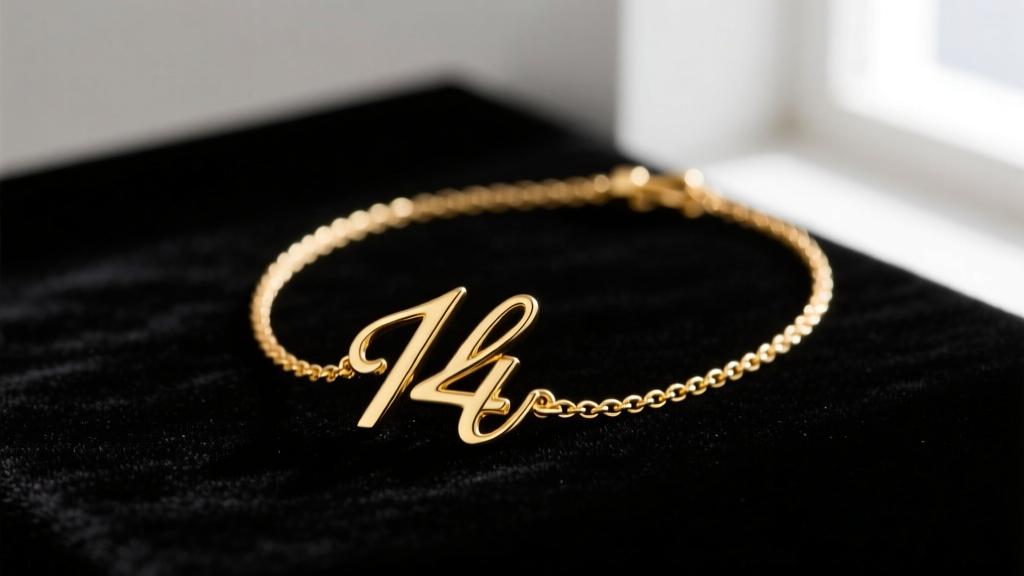
As personalized jewelry trends continue to dominate the accessory market in 2026, the script initial necklace remains a highly sought-after staple. Unlike minimalist block letters or geometric shapes, cursive fonts offer an elegant, flowing aesthetic that feels deeply personal. However, this intricate design comes with a unique set of structural challenges. If you have ever found your pendant constantly flipping upside down, tangling in your hair, or snagging on your favorite sweater, you are not alone. The very features that make script jewelry beautiful—sweeping loops, uneven weight distribution, and sharp terminals—are exactly what cause it to misbehave.
In this comprehensive troubleshooting guide, we will explore the physics behind these common jewelry failures and provide actionable, expert-level solutions. Whether you are dealing with a high-end solid 14k gold piece or a trendy stainless steel vermeil alternative, these metalworking and styling fixes will help you restore order to your daily wear.
The Anatomy of a Script Initial Necklace Failure
To effectively troubleshoot your jewelry, you must first understand why cursive pendants fail where block letters succeed. A standard block initial (like a capital 'H' or 'T') is generally symmetrical, with a center of gravity that aligns perfectly with the bail (the loop that connects the pendant to the chain). Script initials, however, are inherently asymmetrical. Letters like 'S', 'R', 'B', and 'M' feature heavy bottom loops, extended sweeping tails, and off-center weight distribution.
When you hang an asymmetrical script pendant from a flexible chain, gravity immediately pulls the heaviest part of the letter downward. Because the bail is usually soldered at the top-center of the letter's bounding box, the pendant rotates on the chain to find its true center of gravity, resulting in the dreaded 'flip.' Furthermore, the open loops of the cursive font act like tiny grappling hooks, catching on the chain links, clothing fibers, and stray hairs.
Troubleshooting the 'Flip' and Tangle Dilemma
Fixing a flipping pendant requires manipulating the center of gravity or changing how the pendant interacts with the chain. Here are the most effective methods utilized by professional jewelers and experienced stylists.
Weight Distribution and Bail Placement
If your script initial necklace refuses to lay flat, the issue is almost certainly bail placement. For bottom-heavy letters like 'Y' or 'G', the bail needs to be positioned slightly off-center toward the heavier side of the script. If you are having a custom piece made, instruct your jeweler to place the bail at the exact center of mass, rather than the geometric center of the design.
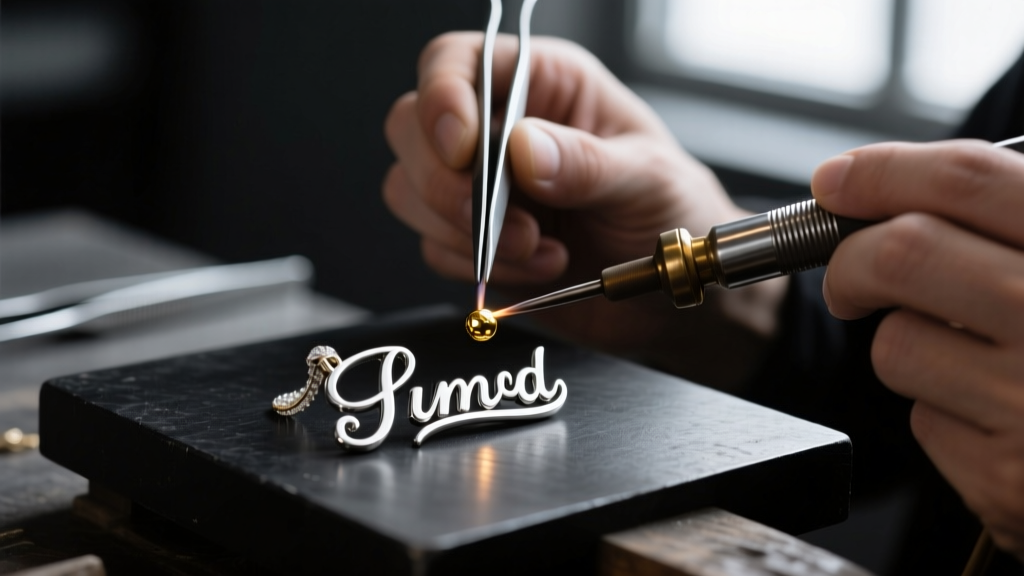
For existing necklaces, a master jeweler can employ a counterweight technique. By soldering a tiny 2mm 14k gold or sterling silver bead to the back bottom edge of the lightest side of the letter, the center of gravity is artificially shifted, forcing the pendant to lay flat against the collarbone. Alternatively, replacing a fixed bail with a sliding bail (a small tube that allows the pendant to glide horizontally along the chain) can help the necklace self-correct throughout the day.
The Chain Reaction: Choosing the Right Link
The chain you pair with a script pendant dictates its tangling propensity. Delicate cable chains are notorious for slipping through the open loops of cursive letters, creating complex knots. Upgrading your chain is the fastest way to solve the tangling issue.
| Chain Type | Link Structure | Tangling Risk | Recommended Width for Scripts |
|---|---|---|---|
| Cable Chain | Uniform oval links | High (Links slip into cursive loops easily) | Avoid for complex scripts |
| Box Chain | Square, interlocking links | Low (Rigid structure resists looping) | 0.9mm - 1.2mm |
| Rope Chain | Twisted, helical links | Very Low (Thick profile prevents loop entry) | 1.5mm - 2.0mm |
| Wheat Chain | Woven, directional links | Low (Smooth surface glides over skin) | 1.0mm - 1.3mm |
According to jewelry manufacturing standards documented by Rio Grande, pairing a heavy solid gold script pendant with a chain that is less than 0.8mm in thickness will not only increase tangling but also lead to premature chain stretch and breakage at the clasp.
Snagging and Sharp Edges: A Metalworker's Guide
Script fonts are characterized by their 'terminals'—the tapered, pointed ends of the cursive strokes. While these sharp points look crisp in a CAD rendering, in reality, they act as micro-hooks that catch on knitwear, silk blouses, and hair. If your script initial necklace is ruining your clothes, it requires a simple edge-softening procedure.
Professional jewelers use a specialized tool called a cup burr attached to a flex shaft to gently round off these sharp terminals without altering the overall silhouette of the letter. Afterward, they polish the area with a rouge wheel to restore the high-shine finish. If you are attempting a DIY fix at home, do not use a metal file, as this will strip the plating or leave deep, visible scratches.
Instead, use a high-grit sanding sponge (1200-grit or higher) or a standard glass nail file. Gently burnish the sharp tips in one direction until the microscopic point is rounded. Finish by rubbing the terminal vigorously with a microfiber jewelry polishing cloth to restore the luster. Always perform this 'snag-check' by running the back of the pendant across a piece of sheer pantyhose; if it catches, the terminals need more rounding.
Tarnish and Plating Wear on High-Friction Loops
The inner curves of a script initial necklace experience constant, low-grade friction as they rub against the chain and the wearer's skin. This friction is the primary enemy of plated jewelry. If you own a gold vermeil or electroplated brass script pendant, you have likely noticed the plating wearing off specifically on the inner loops and the bail, revealing the base metal beneath.
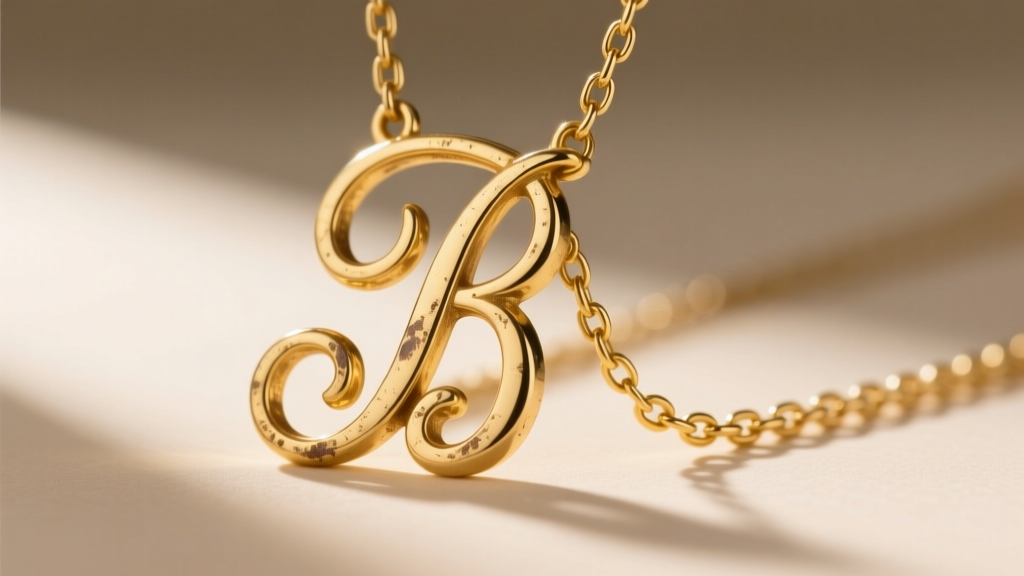
Standard electroplating (often used for vermeil) deposits a layer of gold that is typically between 0.5 and 2.5 microns thick. While beautiful, this thin layer cannot withstand the concentrated friction of a moving chain. To solve this, the industry has heavily shifted toward PVD (Physical Vapor Deposition) coating, especially on 316L stainless steel bases. PVD creates a molecular bond with the base metal, resulting in a finish that is up to 10 times more resistant to friction wear than traditional electroplating. When shopping for a script initial necklace that you intend to wear daily, prioritize solid 14k gold or PVD-coated stainless steel over traditional vermeil.
Preventative Maintenance and Storage Hacks
How you store your script jewelry is just as critical as how you wear it. Tossing a script pendant into a communal jewelry box guarantees that its cursive loops will interlock with other chains, creating a frustrating knot.
- The Straw Trick for Chains: Unclasp the chain, thread one end through a standard plastic or silicone drinking straw, and re-clasp it. This keeps the chain rigid and prevents it from threading through the script loops during storage or travel.
- Individual Pouches: Store script pendants in individual microfiber or anti-tarnish flannel pouches. The soft fabric prevents the sharp terminals from scratching softer gemstones or pearls in your collection.
- Clasp Maintenance: The lobster clasp on delicate chains is a common failure point. Once a month, use a toothpick to clear out lint and skin oils from the clasp mechanism, and apply a microscopic drop of sewing machine oil to the spring hinge to ensure it snaps shut securely.
By understanding the unique structural quirks of cursive typography in metalwork, you can transform your script initial necklace from a frustrating, tangled mess into a flawless, everyday statement piece. For more in-depth care instructions on precious metals, the Jewelers of America offers excellent guidelines on maintaining the structural integrity of fine chains and pendants over decades of wear.


