Mustard Seed Necklace Gold: Expert Guide to Vials & Karats
Explore the technical construction of a mustard seed necklace gold setting. Compare glass vials, resin encapsulation, chain gauges, and 14k vs 18k karats.

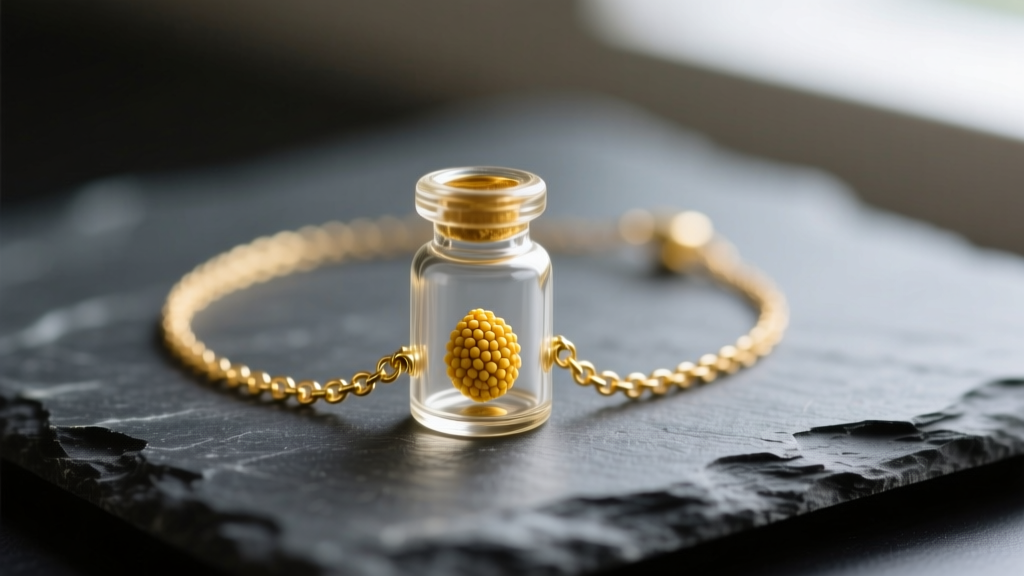
The Anatomy of a Mustard Seed Pendant
The concept of the mustard seed necklace is rooted in the biblical metaphor of faith, but translating this botanical specimen into a durable, everyday piece of fine jewelry requires precise micro-engineering. A standard mustard seed (Brassica nigra or Sinapis alba) measures between 1.0 and 3.0 millimeters in diameter. Housing a seed this small while maintaining optical clarity and structural integrity presents unique challenges for jewelers. When evaluating a mustard seed necklace gold setting, the primary point of failure is rarely the gold itself, but rather the interface between the organic material, the housing medium, and the metal cap.
In this technical deep dive, we deconstruct the metallurgy, encapsulation methods, and chain engineering required to produce a high-quality mustard seed pendant that will survive decades of daily wear without seed degradation or metal fatigue.
Encapsulation Protocols: Glass Micro-Vials vs. Resin
The seed must be protected from ambient humidity, skin oils, and UV radiation. Jewelers typically utilize one of two encapsulation methods: borosilicate glass micro-vials or optical-grade resin casting. Each method dictates the design of the gold setting.
Borosilicate Glass Micro-Vials
High-end pendants utilize borosilicate glass (similar to laboratory Pyrex) due to its low coefficient of thermal expansion. This is critical because the gold cap must often be soldered or laser-welded to a metal sleeve that is friction-fitted or adhesively bonded to the glass. Standard soda-lime glass will shatter under the thermal shock of soldering. The inner diameter of these vials typically ranges from 2.0mm to 3.5mm, with a wall thickness of 0.4mm.
Resin Encapsulation
Resin casting involves suspending the seed in a two-part epoxy or UV-curing polymer. As of 2026, advancements in Hindered Amine Light Stabilizers (HALS) have significantly reduced the yellowing historically associated with UV resins. However, resin has a refractive index of approximately 1.50, which can slightly magnify the seed but also trap microscopic air bubbles if not vacuum-degassed prior to curing.
| Feature | Borosilicate Glass Vial | Optical Epoxy Resin |
|---|---|---|
| Optical Clarity | Superior (No yellowing) | High (May yellow over 10+ years) |
| Impact Resistance | Low (Shatters if dropped) | High (Scratches, but won't shatter) |
| Gold Cap Attachment | Threaded sleeve or adhesive | Cast directly into metal bezel |
| Average Cost Premium | +30% to +50% | Baseline |
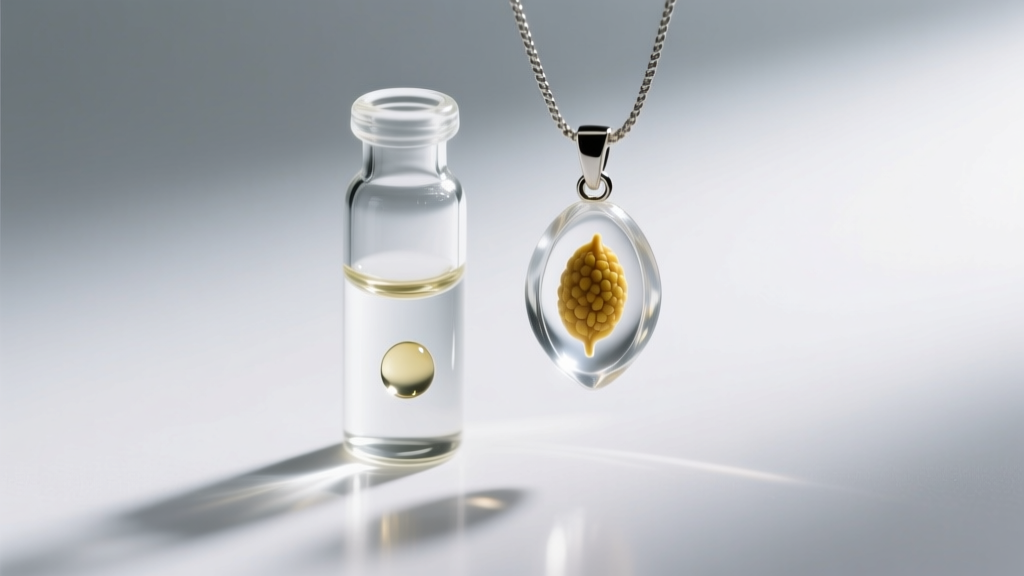
Metallurgy: Choosing the Right Gold for Micro-Settings
The gold components of a mustard seed necklace—specifically the bail, the cap, and the threading—endure disproportionate mechanical stress relative to their size. According to GIA's guide on gold quality factors, the alloy composition drastically affects tensile strength and wear resistance.
14k vs. 18k Solid Gold
While 18k gold (75% pure gold) offers a richer, warmer hue, it is inherently softer on the Vickers hardness scale. For a mustard seed pendant, the cap often features microscopic screw threads with a pitch of 0.5mm to 0.8mm. If machined in 18k gold, these threads are highly susceptible to cross-threading and stripping after repeated removal. 14k gold (58.5% pure gold), alloyed with copper, silver, and zinc, provides the necessary rigidity to maintain crisp thread definition and resist deformation from accidental impacts.
Gold-Filled vs. Solid Gold
Gold-filled (GF) components feature a brass core with a thick outer layer of karat gold (usually 5% to 10% of the total weight). While acceptable for the chain, gold-filled is highly discouraged for the pendant cap and bail. The micro-machining required for the cap threads will often cut through the gold layer, exposing the brass core to skin acids, leading to rapid oxidation and structural failure.
Chain Gauge and Clasp Engineering
A micro-pendant requires a chain that balances delicate aesthetics with sufficient tensile strength to prevent snapping. The pendant's bail (the loop the chain passes through) is typically no larger than 2.5mm in inner diameter, restricting the chain options.
Optimal Gauge Sizes
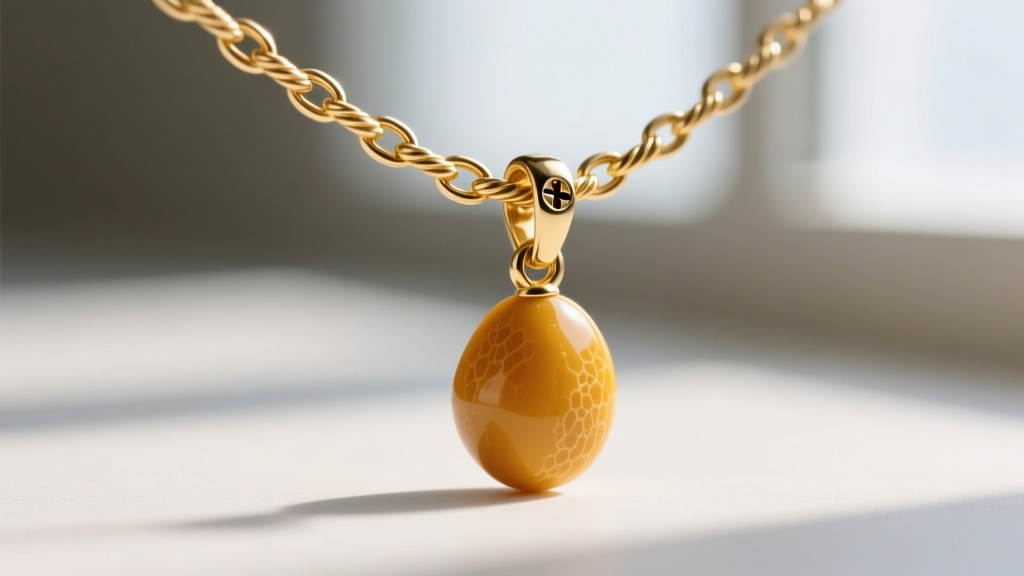
Based on Rio Grande's chain specifications, the ideal gauge for a mustard seed necklace falls between 0.8mm and 1.1mm. Chains thinner than 0.7mm are prone to kinking and will snap under a sudden 2-pound tensile load.
- 0.9mm Cable Chain: The industry standard. Offers excellent flexibility and passes easily through micro-bails. Ensure the jump rings are soldered closed.
- 1.0mm Box Chain: Provides a more modern, geometric look. However, the rigid links can sometimes bind in very small bails, causing localized wear on the bail's interior.
- 0.8mm Rope Chain: Highly durable due to the twisted link structure, but the textured surface can trap skin oils and require more frequent ultrasonic cleaning.
Clasp Mechanics
Avoid spring-ring clasps for fine micro-chains. The internal spring mechanism is prone to failure and difficult to operate. A 5mm or 7mm lobster clasp, paired with a 2.5mm soldered jump ring on the opposite end, provides the most secure and user-friendly closure system.
Seed Preparation and Desiccation Protocols
The most catastrophic failure mode for a glass-vial mustard seed necklace is internal condensation, which leads to fungal growth and seed rot. Before encapsulation, the seeds must undergo rigorous desiccation.
Expert Protocol: Seeds must be dried to a moisture content of less than 8%. This is achieved by burying the seeds in indicating silica gel for a minimum of 48 hours in a sealed, climate-controlled environment. Attempting to bake the seeds in an oven will rupture the cellular walls, releasing internal oils that will permanently cloud the glass vial or resin.
Once desiccated, the seed is placed into the vial or resin mold in a low-humidity cleanroom environment (ideally below 30% relative humidity) to ensure no ambient moisture is trapped during the sealing process.
Maintenance and Long-Term Preservation
Proper maintenance ensures the gold retains its luster and the seed remains perfectly preserved. Because the seed is hermetically sealed, cleaning efforts should focus entirely on the metal and the exterior glass/resin.
Actionable Maintenance Checklist
- Monthly Cleaning: Use a soft-bristled baby toothbrush and a mild, phosphate-free dish soap to gently scrub the gold chain and cap. Avoid harsh jewelry dips containing ammonia, which can degrade the adhesives used in glass-vial caps.
- Thread Lubrication: If your pendant features a screw-top gold cap, apply a microscopic amount of jeweler's wax or natural skin sebum to the threads once a year to prevent them from seizing or galling.
- UV Protection: While modern resins contain UV inhibitors, prolonged, direct exposure to intense sunlight (e.g., leaving the necklace on a car dashboard) will accelerate polymer degradation. Store the necklace in an opaque jewelry box when not in use.
- Bail Inspection: Every six months, inspect the interior of the bail where the chain rubs. If you notice a groove deeper than 0.2mm, take it to a jeweler for laser welding before the bail snaps.
By understanding the precise metallurgy, encapsulation science, and mechanical tolerances involved, you can confidently select a mustard seed necklace gold setting that is not just a symbolic keepsake, but a masterclass in micro-jewelry engineering.


