Expert Care & Cleaning Tips for a Boho Pendant Necklace
Learn expert care, cleaning, and storage tips for your boho pendant necklace. Protect turquoise, raw brass, and leather cords properly.

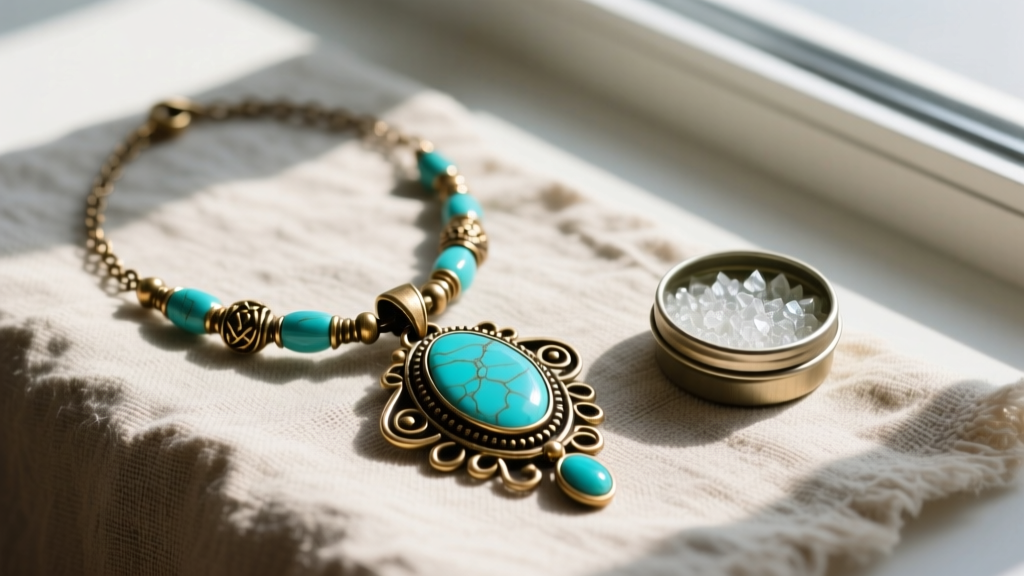
The Unique Anatomy of Boho Jewelry
A boho pendant necklace is rarely made from a single, uniform material. The hallmark of bohemian jewelry design lies in its eclectic juxtaposition of raw, organic, and historically significant elements. You will frequently find porous gemstones like turquoise or malachite set in unsealed raw brass, oxidized sterling silver, or copper, all strung on leather cords, silk threads, or woven macrame. While this mixed-media approach creates stunning, earthy aesthetics, it creates a nightmare for traditional jewelry cleaning methods. A standard ultrasonic cleaner or a harsh chemical dip that works wonders on a diamond solitaire will instantly destroy the matrix of a turquoise stone or strip the intentional oxidation from a silver bezel.
To maintain the structural integrity and visual warmth of your boho pendant necklace, you must abandon one-size-fits-all cleaning routines. Instead, you need a segmented, material-specific maintenance protocol. In this comprehensive 2026 guide, we break down the exact chemical and physical care requirements for the most common bohemian jewelry components, ensuring your pieces age gracefully rather than deteriorating prematurely.
Gemstone Care: Navigating Porosity and Hardness
The gemstones most commonly featured in boho pendants—turquoise, lapis lazuli, malachite, and moonstone—are notoriously delicate. On the Mohs scale of mineral hardness, turquoise ranks between 5 and 6, making it highly susceptible to scratching. More importantly, these stones are porous. They act like microscopic sponges, absorbing oils, lotions, and chemicals, which can permanently alter their color or cause internal fracturing.
The Ultrasonic Danger
Never place a boho pendant featuring porous stones into an ultrasonic cleaner. The high-frequency sound waves (typically 40kHz) create microscopic cavitation bubbles that implode against the stone's surface. According to the Gemological Institute of America (GIA), this process can easily shatter the delicate internal matrix of turquoise or cause treated stones to leak their color-enhancing dyes.
The Safe Cleaning Protocol for Porous Stones
- Dry Dusting: Use a clean, ultra-soft makeup brush (like a goat-hair blending brush) to gently sweep away dust and dead skin cells from the bezel and stone crevices.
- Damp Wiping: If the stone has accumulated body oils, lightly dampen a microfiber cloth with distilled water. Tap water contains chlorine and trace minerals that can leave a white, crusty residue on porous stones. Wipe the stone gently and immediately dry it with a separate, soft cloth.
- Chemical Avoidance: Keep turquoise and malachite far away from ammonia, bleach, and even mild dish soaps, which can strip natural waxes and oils from the stone's surface.
Metal Maintenance: Brass, Copper, and Oxidized Silver
Boho jewelry heavily favors base metals and antique finishes over high-polish precious metals. Understanding the oxidation process is key to maintaining these pieces without stripping their character.
Managing Raw Brass and Copper
Raw brass and copper are living metals. When exposed to the lactic acid and salts in human sweat (which typically has a pH between 4.5 and 7.0), they undergo a rapid oxidation process. This results in a dark patina or, in humid conditions, a green, powdery corrosion known as verdigris (copper carbonate). While a light, even patina adds to the bohemian charm, verdigris is destructive and can stain skin and clothing.
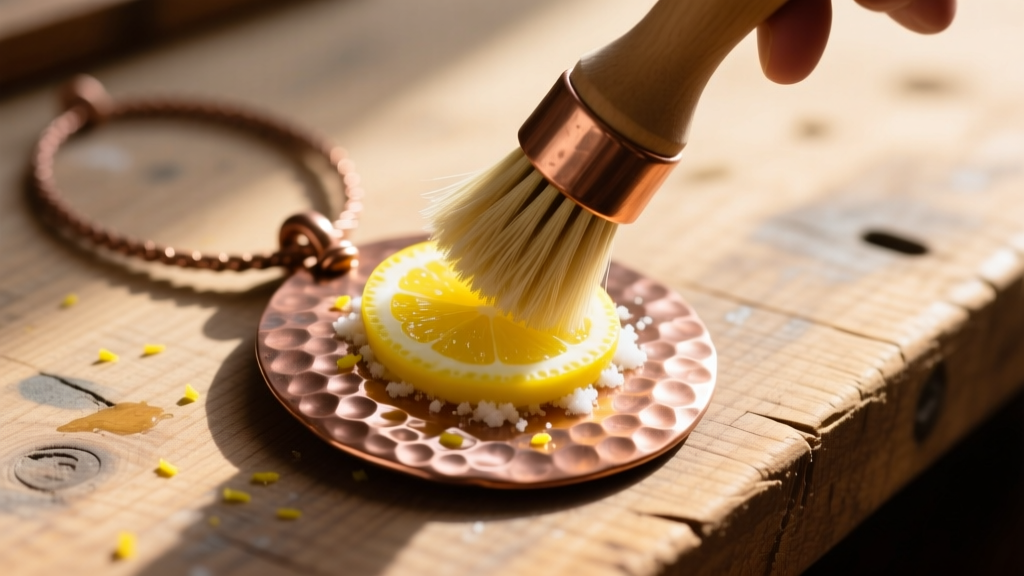
The Lemon-Salt Paste Method: To remove heavy tarnish or early-stage verdigris from brass and copper components, create a paste using equal parts fine sea salt and fresh lemon juice. Apply the paste only to the metal using a cotton swab, carefully avoiding any adjacent gemstones or leather. Let it sit for no more than two minutes, then gently agitate with a soft-bristled baby toothbrush. Crucially, you must neutralize the acid afterward by wiping the metal with a cloth dampened in a baking-soda-and-water solution, followed by a thorough rinse with distilled water and immediate drying.
Preserving Oxidized Sterling Silver
Many boho pendants feature sterling silver that has been intentionally oxidized (treated with liver of sulfur) to create black, antique-looking recesses that highlight intricate stamp-work or filigree. If you use a liquid silver dip or a harsh polishing cloth, you will strip this black sulfide layer, leaving the piece looking flat, overly bright, and cheap.
Targeted Polishing: Use a dry, untreated microfiber cloth to gently buff only the high spots of the silver. For deeper cleaning, wrap a silver polishing cloth tightly around a wooden toothpick or a Q-tip and carefully run it along the raised ridges, deliberately avoiding the dark, recessed areas. As noted by Jewelers of America, targeted polishing preserves the dimensional contrast that defines antique-style silver jewelry.
Cord and Macrame Preservation
The stringing material of a boho pendant necklace is often its weakest structural link. Sweat, humidity, and friction can degrade organic cords rapidly.
Leather Cords
Leather is skin, and it requires moisture to prevent drying, cracking, and snapping. However, submerging leather in water will cause it to stiffen and rot. Once a month, apply a tiny drop of pure mink oil or a dedicated leather conditioner to a soft cloth and rub it into the cord. Allow it to absorb overnight before wearing. Avoid alcohol-based cleaners, which will instantly strip the leather's natural tanning oils.
Cotton Macrame and Silk Threads
Woven macrame and silk are highly prone to absorbing cosmetics, perfumes, and sweat, leading to yellowing and bacterial growth. For spot cleaning, mix a few drops of pH-neutral castile soap (like Dr. Bronner's) into a bowl of cool distilled water. Dip a soft toothbrush into the suds—not the water—and gently brush the soiled areas of the knot-work. Blot dry with a clean towel and allow it to air dry flat, away from direct sunlight, which can bleach natural cotton dyes.
The Boho Jewelry Storage Framework
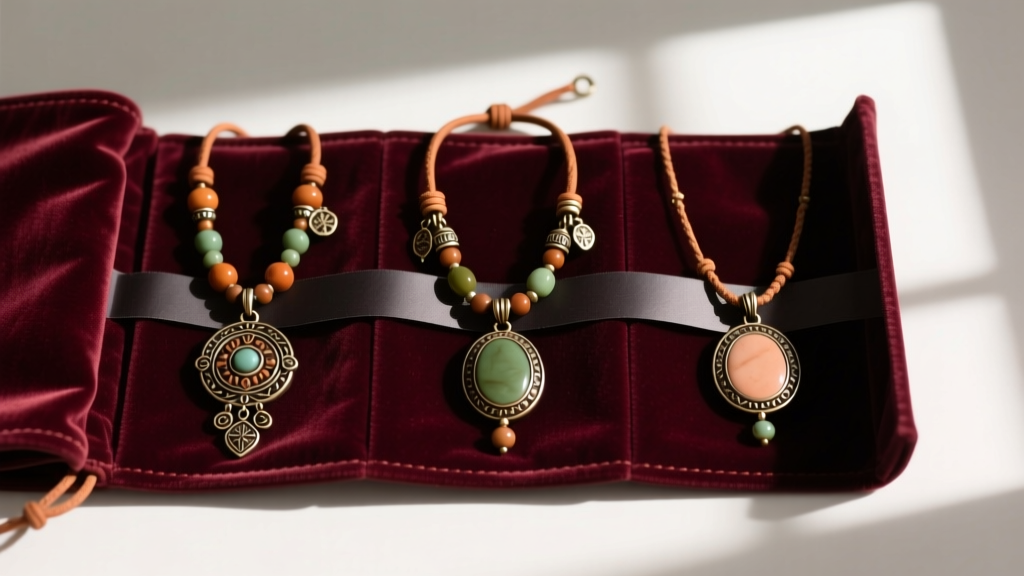
Proper storage is 80% of jewelry maintenance. Tossing a mixed-media boho pendant into a communal jewelry box guarantees scratched stones and tangled, stressed cords. Use the following framework to dictate your storage environment:
| Material Component | Ideal Storage Environment | Required Accessories | Primary Threat to Avoid |
|---|---|---|---|
| Porous Stones (Turquoise) | Climate-controlled, dark drawer | Soft cotton pouch | Extreme dryness (causes cracking) |
| Raw Brass / Copper | Low humidity, sealed container | Anti-tarnish strips (e.g., 3M) | Ambient moisture (causes verdigris) |
| Oxidized Silver | Dark, airtight ziplock bag | Pacific Silvercloth | Sulfur in the air / rubber bands |
| Leather Cords | Flat, temperature-stable area | Acid-free tissue paper | Hanging (causes permanent stretching) |
Troubleshooting Common Boho Failures
Even with meticulous care, mixed-media jewelry presents unique wear-and-tear challenges. Here is how to troubleshoot the most frequent issues encountered by boho jewelry collectors.
The "Green Neck" Phenomenon
If your copper or brass pendant is leaving a green or black smudge on your chest, it is not a sign of poor quality or toxicity; it is a simple chemical reaction between the metal alloys and the acidity of your skin. To prevent this without altering the look of the metal, apply a thin coat of micro-crystalline wax (such as Renaissance Wax) to the back of the pendant and the inside of the bail. This museum-grade conservation wax creates an invisible, inert barrier that blocks skin acids from reaching the metal, lasting for months before needing reapplication.
Loose Bezel Settings
Boho pendants often feature bezel settings where a thin rim of metal is pushed over the edge of a cabochon stone. Because these stones are frequently hand-cut and slightly irregular, the metal can pull away over time due to temperature fluctuations and minor impacts. If you notice the metal lifting away from the stone, do not attempt to push it back with your fingernail or a household tool, as you risk chipping the stone's edge. Instead, take the piece to a professional jeweler who can use a bezel pusher and a chasing hammer to safely reseat the metal without applying downward pressure to the fragile gemstone.
"The beauty of a boho pendant necklace lies in its ability to tell a story through its wear. A slight darkening of the brass or a softening of the leather cord adds to the piece's soul, but structural degradation from neglect is not a patina—it is damage. Learn to tell the difference."
Final Thoughts on Longevity
Caring for a boho pendant necklace requires a shift in mindset from "cleaning" to "conservation." By respecting the specific chemical boundaries of porous stones, managing the oxidation of base metals, and conditioning organic cords, you ensure that your jewelry remains a vibrant, wearable piece of art. Implement these targeted protocols, and your favorite mixed-media pendants will easily outlast fleeting fashion trends, remaining a staple of your personal style for decades to come.


