How to Fix a Broken Necklace Chain: Repair Costs & Value
Learn how to fix a broken necklace chain with our cost guide. Compare jeweler soldering, laser welding, and DIY repair pricing and value.

The True Cost to Fix a Broken Necklace Chain
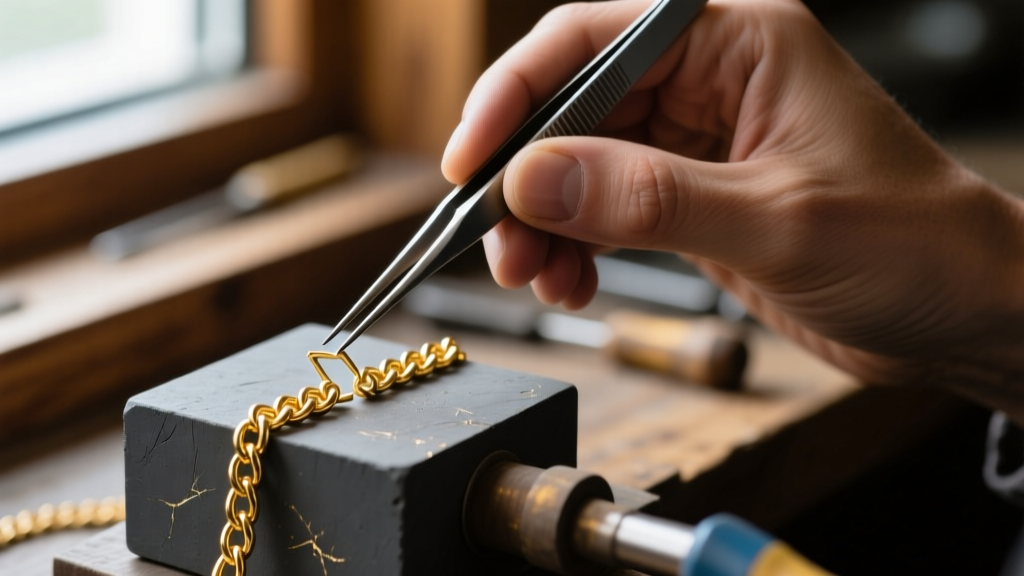
When a favorite piece of jewelry snaps, the immediate question is rarely about the metallurgy of the break; it is about the bottom line. Deciding how to fix a broken necklace chain requires a careful assessment of both intrinsic metal value and sentimental worth. In 2026, with precious metal prices continuing their upward trajectory, repairing an existing chain is often significantly more cost-effective than replacing it. However, not all repairs are created equal, and the wrong technique can permanently devalue your piece.
The cost to repair a necklace chain typically ranges from $35 to $150, but this variance is driven by three critical factors: the chain's link geometry, the metal's karat or alloy composition, and the repair technology employed. A simple solder on a 14k gold cable chain is a routine bench job, while a laser weld on a platinum rope chain requires specialized equipment and advanced expertise. Understanding these variables is the first step in making a financially sound repair decision.
Repair Methods: Traditional Soldering vs. Laser Welding
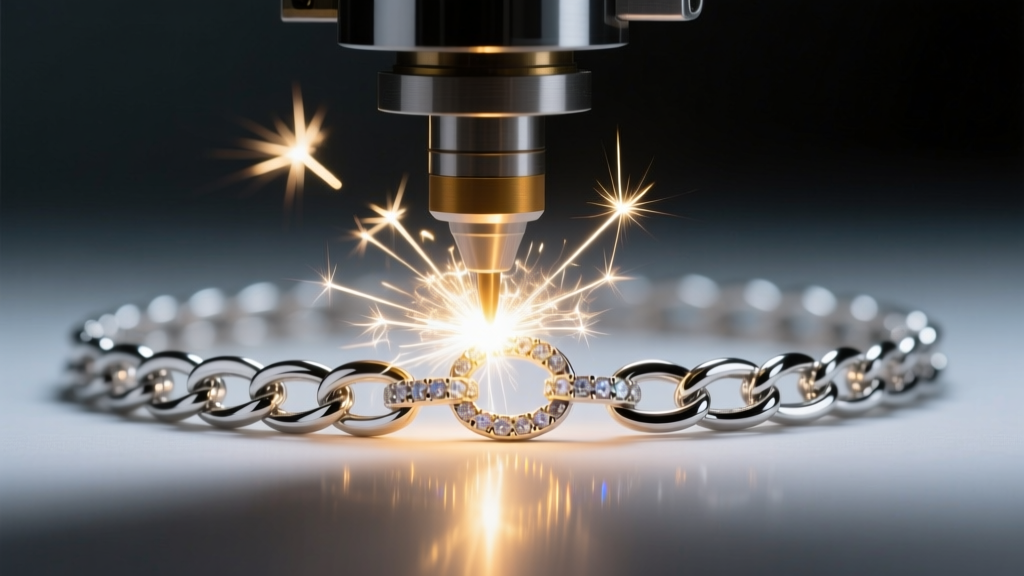
The method your jeweler uses to fuse the broken links will dictate the price, the strength of the repair, and the visual seam left behind. Traditional torch soldering relies on a filler metal (solder) that melts at a slightly lower temperature than the chain itself. Laser welding, a more modern approach, uses concentrated light to melt the parent metal directly, fusing the links without any filler material.
| Repair Method | Average Cost | Best Used For | Visual Result | Structural Strength |
|---|---|---|---|---|
| Torch Soldering | $35 - $65 | Standard gold/silver chains (cable, curb) | Visible seam, requires polishing | High (if hard solder is used) |
| Laser Welding | $75 - $150 | Platinum, chains near gemstones, complex links | Nearly invisible, minimal cleanup | Very High (parent metal fused) |
| Jump Ring Splice | $20 - $40 | Thick, heavy chains where aesthetics are secondary | Visible oval ring interrupting the pattern | Moderate (depends on ring closure) |
According to the Gemological Institute of America (GIA), laser welding is particularly vital for chains featuring heat-sensitive gemstones or porous materials like opals and emeralds. A traditional torch can transfer heat down the metal links and fracture a nearby stone, whereas a laser's localized heat impact zone is measured in millimeters, keeping your gems safe.
Chain Link Geometry and Repair Difficulty
The physical architecture of your chain dictates how easily a jeweler can manipulate it on the soldering block. Complex weaves require more time, magnification, and precision, directly increasing the labor cost.
- Cable and Curb Chains: The most straightforward to repair. The links are uniform and lay flat, allowing for easy alignment and torch soldering. Expect to pay between $35 and $50.
- Box Chains: Moderate difficulty. The square, interlocking links must be perfectly squared off during the weld. If crushed during the break, the jeweler may need to rebuild a small section, pushing costs to $60 - $85.
- Rope Chains: High difficulty. The twisted geometry means a standard torch can easily melt the delicate outer wires. Laser welding is highly recommended here to preserve the twist, costing $80 to $120.
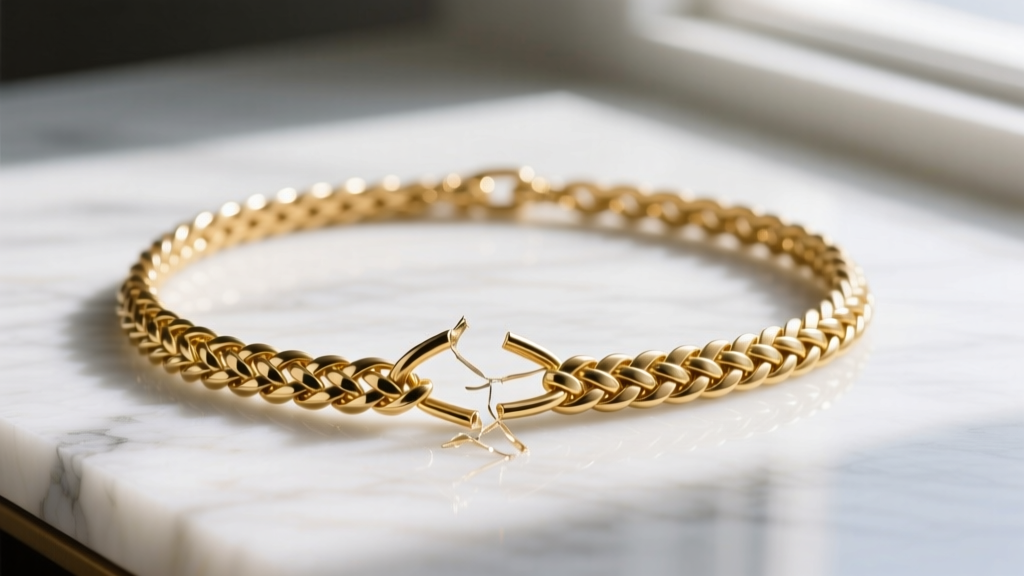
- Herringbone and Snake Chains: These fluid, woven chains are notoriously difficult to fix. When they snap or kink, the structural integrity of the surrounding links is often compromised. A repair will almost always leave a stiff, visible hinge point.
The Herringbone Dilemma: When to Walk Away
From a strict value assessment perspective, fixing a broken herringbone or snake chain is rarely recommended. The repair cost often exceeds $100, yet the chain will remain structurally weak at the hinge point and prone to kinking again. Unless the piece holds immense sentimental value, reallocating those repair funds toward a more durable chain style, such as a wheat or mariner chain, is a smarter financial move.
Material Metallurgy: How Karats and Alloys Affect Pricing
The purity of your metal changes the physics of the repair. Gold purity is measured in karats, and the alloy metals mixed with pure gold dictate the melting point and the type of solder required.
10k and 14k Gold: These are the most forgiving metals on the jeweler's bench. They have lower melting points and accept standard hard and medium solders easily. Repairs are fast and relatively inexpensive.
18k and 22k Gold: As gold purity increases, the metal becomes softer and its melting point drops closer to the melting point of the solder. A jeweler must use specialized high-karat solders and exercise extreme temperature control to avoid melting the chain links entirely. Expect a 20% to 30% premium on labor for high-karat repairs.
Platinum: Platinum requires immense heat to solder traditionally (over 1,700°C), which risks damaging the chain's surrounding links. Consequently, platinum chain repairs almost exclusively require laser welding, placing them at the top of the pricing tier ($100+).
Sterling Silver: While silver is inexpensive, it is highly conductive and prone to 'fire scale' (a dark oxidation that forms when heated). Repairing silver requires careful flux application and subsequent chemical pickling to remove the scale, making the labor cost surprisingly close to that of 10k gold.
The Hidden Costs: Rhodium, Polishing, and Clasps
When budgeting to fix a broken necklace chain, the base soldering fee is rarely the final invoice total. You must account for the finishing processes required to make the repair invisible.
If you are repairing a white gold chain, the soldered seam will appear as a distinct yellowish or grayish line. White gold is not naturally white; it is rhodium-plated. To hide the repair, the jeweler must polish the chain and re-plate it in rhodium. This adds $35 to $65 to your final bill. If the chain is heavily worn, the jeweler may recommend a full dip rather than a spot plate to ensure color consistency.
Additionally, if the chain broke at the clasp or the jump ring connecting the clasp, you may need a clasp replacement. Upgrading from a standard spring-ring clasp to a more secure lobster claw or a magnetic safety clasp will add $25 to $75, depending on the metal weight.
When to Repair vs. Replace: A Value Assessment Framework
To determine if a repair is financially viable, master jewelers often use the 30% Rule. If the cost to repair the chain exceeds 30% of the cost to replace it with a brand-new chain of identical weight and quality, replacement is usually the better financial decision.
'We see customers spend $80 to solder a hollow, machine-made 10k gold rope chain that would cost $120 to replace new. The repaired chain is still hollow and fragile. We always advise clients to assess the intrinsic scrap value versus the replacement cost before authorizing a complex laser weld.' — Master Bench Jeweler, Jewelers of America network.
The Exception: Sentimental value and discontinued designs. If the chain is a vintage piece, an heirloom, or features a specific artisan weave that is no longer manufactured, the 30% Rule is void. In these cases, the preservation of the original piece justifies the premium cost of laser welding and meticulous bench work.
Finding a Reputable Professional
Do not trust a broken chain to a mall kiosk or a dry-cleaner drop-off service. Chain repair requires a trained bench jeweler who understands metallurgy, heat transfer, and link geometry. Look for jewelers who hold credentials from recognized industry organizations, such as the Jewelers of America (JA) or the American Gem Society (AGS). These professionals maintain strict ethical standards and possess the specialized equipment—like argon-gas laser welders and microscopic magnification—necessary to restore your necklace to its original strength and beauty.


