The Merkaba Necklace Trend: Sacred Geometry in 2026 Fashion
Discover how the merkaba necklace is reshaping 2026 jewelry trends. Explore styling tips, material grades, and sacred geometry layering techniques.

The Shift from Talisman to Architectural Staple
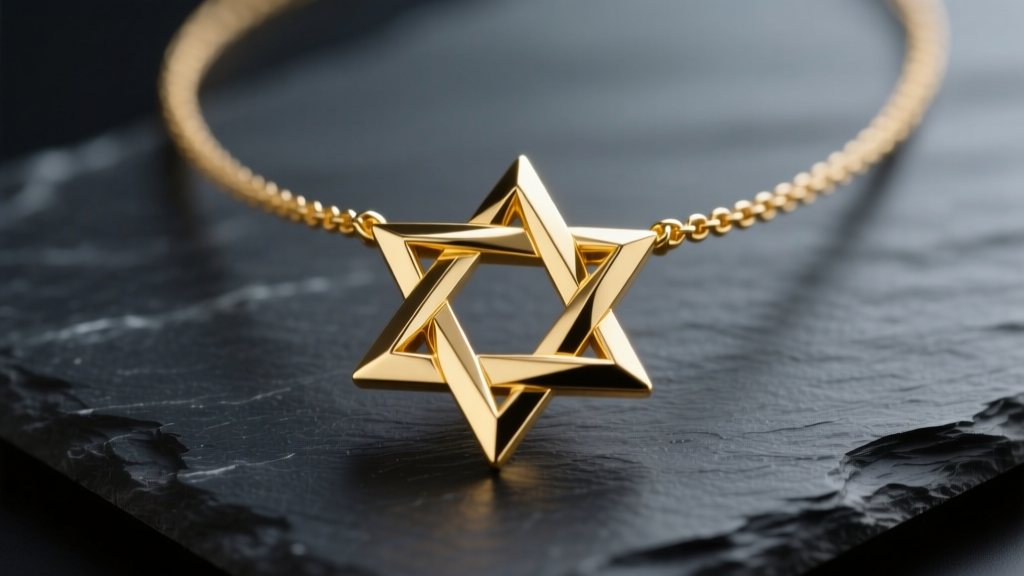
For decades, the merkaba necklace was largely confined to niche spiritual markets, revered primarily as a metaphysical talisman for energy work and meditation. However, as we navigate the jewelry landscape of 2026, a profound stylistic shift has occurred. The merkaba—derived from ancient Egyptian mysticism and rooted in complex sacred geometry—has transcended its esoteric origins to become a dominant force in architectural and minimalist fashion jewelry. Today’s style-conscious consumers are drawn to the merkaba not necessarily for its spiritual connotations, but for its striking, mathematically perfect silhouette. It offers a three-dimensional complexity that catches the light and creates dynamic shadows, making it a favorite among contemporary jewelry designers who favor structural, avant-garde aesthetics.
This evolution mirrors a broader industry pivot toward 'meaningful minimalism,' where wearers seek pieces that possess both intellectual depth and visual sharpness. According to trend analyses by the World Jewellery Confederation (CIBJO), geometric pendants have seen a 34% year-over-year increase in market share, with the star tetrahedron shape leading the charge in the fine jewelry sector. The modern merkaba necklace is no longer a bulky, rough-hewn crystal wrapped in wire; it is a precision-engineered marvel of modern metallurgy.
The Mathematics of the Star Tetrahedron
To truly appreciate the 2026 merkaba trend, one must understand the rigorous geometry that defines it. A true merkaba is a star tetrahedron, a three-dimensional star formed by two perfectly interlocked, opposing tetrahedrons. This creates a shape with eight distinct faces, twelve edges, and six vertices. The angles at the vertices of the triangular faces are exactly 60 degrees, while the dihedral angles between the faces are approximately 70.53 degrees.
Translating this mathematical perfection into wearable metal is a significant manufacturing challenge. In traditional lost-wax casting, the sharp points of the tetrahedrons are highly susceptible to 'rounding' due to the surface tension of molten metal and the limitations of silicone molds. Consequently, the most sought-after merkaba necklaces in 2026 are produced using advanced Direct Metal Laser Sintering (DMLS) or precision CNC milling, followed by meticulous hand-polishing. This ensures the vertices remain needle-sharp, preserving the optical illusion of interlocking light that gives the pendant its signature 'spinning' effect when in motion.
Material Grades and Durability Matrix
The choice of metal dramatically alters both the visual weight and the longevity of a geometric pendant. Because the merkaba relies on sharp edges to maintain its visual integrity, softer metals can quickly lose their definition through everyday wear and tear. Below is a comprehensive breakdown of the primary materials used in contemporary merkaba necklaces, complete with 2026 market pricing and durability metrics.
| Material | Specific Grade | Edge Retention | Price Range (2026) | Best Use Case |
|---|---|---|---|---|
| Solid Gold | 14k or 18k Alloy | High (18k is softer) | $450 - $1,400 | Heirloom pieces, daily luxury wear |
| Vermeil | 2.5µm 18k Gold over 925 Silver | Moderate (edges wear first) | $95 - $220 | Trend-focused styling, occasional wear |
| Surgical Steel | 316L Stainless | Excellent | $40 - $85 | Waterproof minimalism, active lifestyles |
| Titanium | Grade 5 (Ti-6Al-4V) | Extreme | $150 - $350 | Hypoallergenic needs, ultra-lightweight |
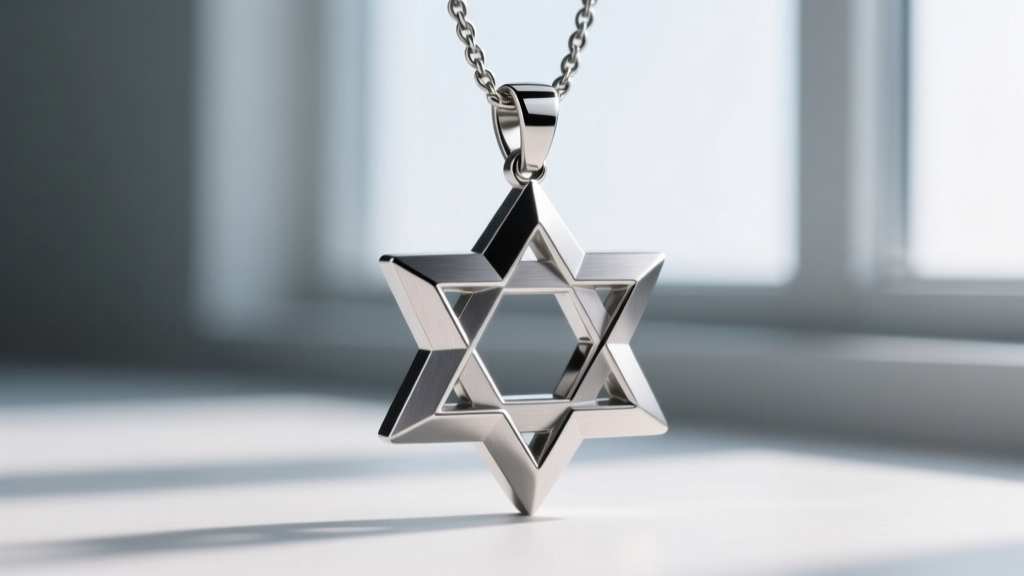
For those prioritizing absolute geometric permanence, Grade 5 Titanium and 14k White Gold (often alloyed with nickel or palladium for hardness) are the superior choices. The Gemological Institute of America (GIA) frequently notes that alloy composition in gold jewelry directly impacts scratch resistance; thus, a 14k gold merkaba will retain its razor-sharp vertices significantly longer than a 22k or 24k alternative, which is simply too soft for complex polyhedral shapes.
The Architectural Layering Framework
Layering a merkaba necklace requires a strategic approach to avoid visual clutter. Because the star tetrahedron is inherently complex and casts multidirectional shadows, it should serve as the undisputed focal point of your stack. The 2026 styling consensus relies on the 'Architectural Stack' methodology, which pairs the geometric pendant with complementary, low-profile chains and contrasting organic shapes.
- The 16-Inch Anchor: Position a 15mm to 18mm merkaba pendant on a 16-inch, 1.2mm box chain. The box chain’s square links echo the geometric theme of the pendant without competing for attention. The 15mm size is crucial for higher necklines, ensuring the pendant rests precisely on the sternal notch.
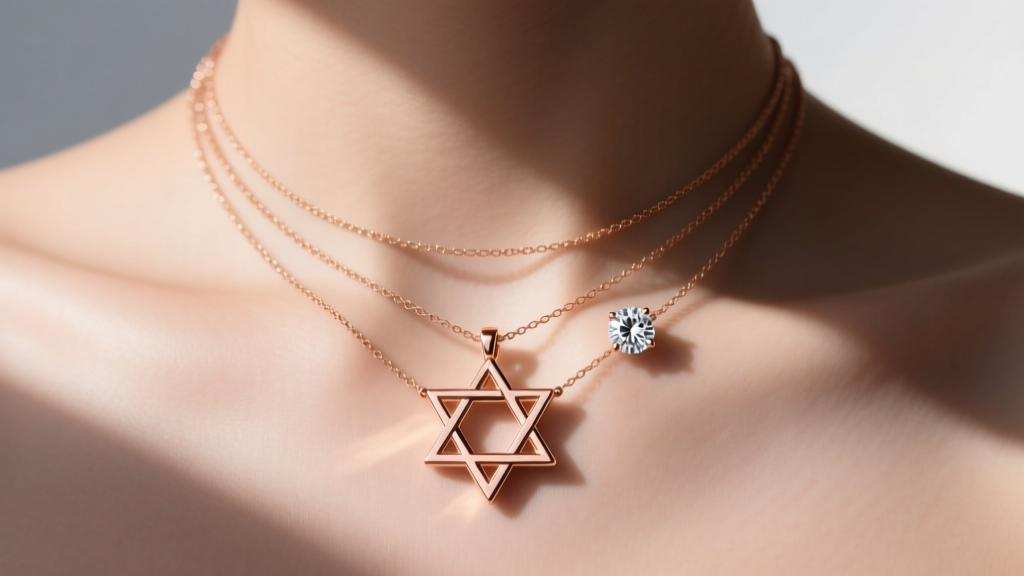
- The 18-Inch Organic Contrast: Introduce an 18-inch cable chain featuring a single, bezel-set round or oval gemstone (such as a 4mm moss agate or a simple diamond solitaire). The organic, curved nature of the cabochon or round cut provides a necessary visual palate cleanser against the rigid, mathematical lines of the merkaba.
- The 20-Inch Texture Element: Complete the stack with a 20-inch rope or paperclip chain. Avoid adding a third pendant. The empty chain provides negative space, allowing the layered ensemble to breathe and preventing the neckline from looking overly heavy or chaotic.
Proportional Scaling and Weight Distribution
A common mistake when purchasing geometric jewelry is ignoring the relationship between pendant volume and chain gauge. A solid 14k gold merkaba measuring 25mm across is deceptively heavy, often weighing between 7 and 9 grams due to the dense, three-dimensional nature of the intersecting tetrahedrons. Hanging a 9-gram pendant on a delicate 0.8mm thread chain will not only cause premature wear to the bail but will also distort the drape of the chain, pulling it taut against the neck and ruining the intended silhouette. For any merkaba pendant exceeding 20mm in diameter, always utilize a chain with a minimum wire thickness of 1.5mm, preferably in a structural weave like a Cuban link or a reinforced box chain.
Neckline Synergies: Framing the Geometry
The visual impact of a merkaba necklace is heavily dictated by the garment it rests upon. The interplay between the fabric's cut and the pendant's angles can either amplify or diminish the piece's architectural brilliance.
"The star tetrahedron demands a backdrop that either perfectly mirrors its angles or starkly contrasts them. Wearing a complex geometric pendant over a busy, patterned blouse is a disservice to the craftsmanship; it requires the negative space of a solid, structured garment to truly perform."
— Elena Rostova, Lead Jewelry Forecaster at the Milan Design Institute
The V-Neck Synergy: A deep V-neckline naturally mimics the downward-pointing tetrahedron of the merkaba. When paired with a 20-inch chain, the pendant visually extends the V-shape, creating an elongating effect on the torso and neck. This is the most universally flattering pairing for the geometric pendant.
The Turtleneck Contrast: In colder months, wearing a high-polish 18k yellow gold merkaba over a tight, black ribbed turtleneck is a masterclass in modern styling. The stark, dark fabric absorbs light, allowing the sharp, reflective edges of the gold to pop dramatically. The rigid geometry of the metal contrasts beautifully with the soft, vertical ribs of the knitwear.
The Asymmetric/One-Shoulder Cut: Asymmetric necklines create diagonal sightlines. Positioning a merkaba on a 16-inch choker-length chain allows it to sit squarely in the center of the chest, anchoring the asymmetry of the garment and providing a stabilizing, symmetrical focal point to an otherwise unbalanced outfit.
Identifying Quality: The Vertex and Bail Test
As the popularity of the merkaba necklace surges, the market has been flooded with mass-produced, low-quality iterations. Knowing how to identify a precision-crafted piece is essential for the discerning collector. First, perform the 'Vertex Test.' Run your finger lightly over the six points of the star. In high-quality CNC-milled or expertly finished cast pieces, these points should be distinct and sharp, though not sharp enough to puncture the skin. If the points feel bulbous, rounded, or smoothed over like a bead, the piece was likely cast in a low-grade silicone mold where surface tension ruined the geometric integrity.
Second, examine the bail (the loop that connects the pendant to the chain). Because the merkaba is a 3D object that naturally wants to spin and rotate on its axis, a standard soldered loop bail will cause the pendant to constantly flip upside down, tangling the chain. Premium 2026 designs utilize a 'floating bail' or a specialized hidden hinge mechanism that allows the pendant to swivel 360 degrees independently of the chain. This engineering detail ensures the merkaba always settles in its correct, upright orientation, preserving the intended visual harmony of the interlocking shapes.
Final Verdict on the Merkaba Movement
The merkaba necklace has successfully graduated from a niche spiritual artifact to a cornerstone of contemporary, architecturally inspired jewelry. Its enduring appeal in 2026 lies in its unique ability to bridge the gap between ancient mathematical philosophy and ultra-modern manufacturing techniques. Whether you opt for the indestructible sharpness of Grade 5 Titanium or the warm, luxurious glow of 18k solid gold, the key to mastering this trend lies in respecting the geometry. By prioritizing sharp vertices, matching chain gauges to pendant weights, and employing deliberate layering strategies, the merkaba transforms from a mere accessory into a wearable sculpture that commands attention and sparks intellectual curiosity.


