How to Measure and Choose Necklace Sizes Men Actually Wear
Learn how to measure and select the perfect necklace sizes men need for any body type. Step-by-step guide covering lengths, widths, and pendant pairings.


Buying a chain online without knowing your exact measurements is a gamble that usually ends in disappointment. You either end up with a piece that sits awkwardly tight against your throat like a choker, or one that dangles too low, resembling a sweater chain from the early 2000s. When it comes to necklace sizes men actually wear and prefer, precision is everything. A difference of just two inches completely changes the drape, comfort, and visual proportion of the jewelry against your chest.
This step-by-step guide will walk you through the exact science of measuring your neck, understanding standard chain lengths, and factoring in your unique body frame. Whether you are investing in a heavy 14k gold Cuban link or a minimalist sterling silver box chain, getting the size right is the foundation of effortless men's style.
The Definitive Chart of Necklace Sizes Men Should Know
Before you grab a measuring tape, you need to understand the industry standards. Men's chains generally fall into four primary length categories. According to style experts at The Art of Manliness, the 20-inch chain is the undisputed workhorse of men's jewelry, but your specific use case might demand a different length.
| Chain Length | Metric Equivalent | Fit & Placement | Best Use Case |
|---|---|---|---|
| 18 Inches | 46 cm | Sits at the base of the neck | Thinner chains, dog tags, athletic builds |
| 20 Inches | 50 cm | Rests on the collarbone | Standard everyday wear, t-shirts, casual button-downs |
| 22 Inches | 56 cm | Falls a few inches below collarbone | Medium pendants, streetwear, layered looks |
| 24 Inches | 61 cm | Mid-chest placement | Heavy pendants, large crosses, over-garment styling |
| 30+ Inches | 76+ cm | Lower chest / solar plexus | Statement pieces, hip-hop styling, rosaries |
The 20-inch length is widely considered the "goldilocks" zone for the average male. It allows the chain to rest comfortably on the collarbone without feeling restrictive when you move your neck or swallow. However, if you plan to add a heavy pendant, you will almost always need to size up to a 22 or 24-inch chain to account for the "drop" caused by the pendant's weight pulling the chain downward.
Step-by-Step: How to Measure Your Neck Accurately
Do not guess your neck size based on your shirt collar. Dress shirt collars are designed with built-in ease (usually an extra half-inch to an inch) for breathing room, which will result in a chain that is too loose. Follow these three methods to find your true baseline.
Method 1: The Tailor's Tape (Most Accurate)
- Take a flexible cloth tailor's measuring tape.
- Wrap it around your neck exactly where you want the chain to sit. For a standard fit, wrap it loosely around the base of your neck, just above the collarbone.
- Look in a mirror to read the measurement. Do not pull the tape tight; it should rest flush against your skin without indenting it.
- Note this number. This is your base neck circumference.
Method 2: The String and Ruler
If you don't have a flexible tape, use a non-stretchable piece of string or a shoelace. Wrap it around your neck, mark the intersection point with a pen, and then lay the string flat against a rigid metal ruler or a steel tape measure to get your base circumference.
Method 3: The Existing Chain Benchmark
If you already own a necklace that fits perfectly, lay it completely flat on a table. Measure from the very end of the clasp to the very end of the jump ring. Do not include the pendant in this measurement. This gives you the exact manufactured length of your ideal chain.

Adjusting for Neck Thickness and Body Frame
Knowing your base neck circumference is only step one. To determine the actual necklace sizes men should purchase, you must apply the "Ease Rule." A chain that matches your exact neck circumference will act as a choker and could pose a safety hazard if it snags.
The Golden Rule of Sizing: Always add a minimum of 2 inches to your base neck measurement for a close fit, and 4 to 6 inches for a relaxed, mid-chest fit.
Consider these body type adjustments:
- The Average Build (15 to 16-inch neck): A 20-inch chain provides 4 inches of ease, resting perfectly on the collarbone. An 18-inch chain will sit snugly at the base of the neck.
- The Athletic or Thicker Build (17 to 19-inch neck): A 20-inch chain will look like a choker and feel restrictive. You should start your baseline at 22 inches for a collarbone fit, and 24 inches for a mid-chest drape.
- The Slender Build (13 to 14-inch neck): An 18-inch chain will provide the standard collarbone drape. A 20-inch chain will drop noticeably lower, creating a more relaxed, streetwear-inspired silhouette.
Furthermore, consider the visual weight of your frame. Broader shoulders and a wider chest can visually "shrink" a chain. If you have a heavily muscular chest, a 22-inch chain might visually read as a 20-inch chain due to the curvature of your pectorals pushing the metal outward. Sizing up by one increment is a common practice among bodybuilders and athletes, a tip frequently echoed in menswear guides by GQ.
Chain Width, Weight, and Pendant Compatibility
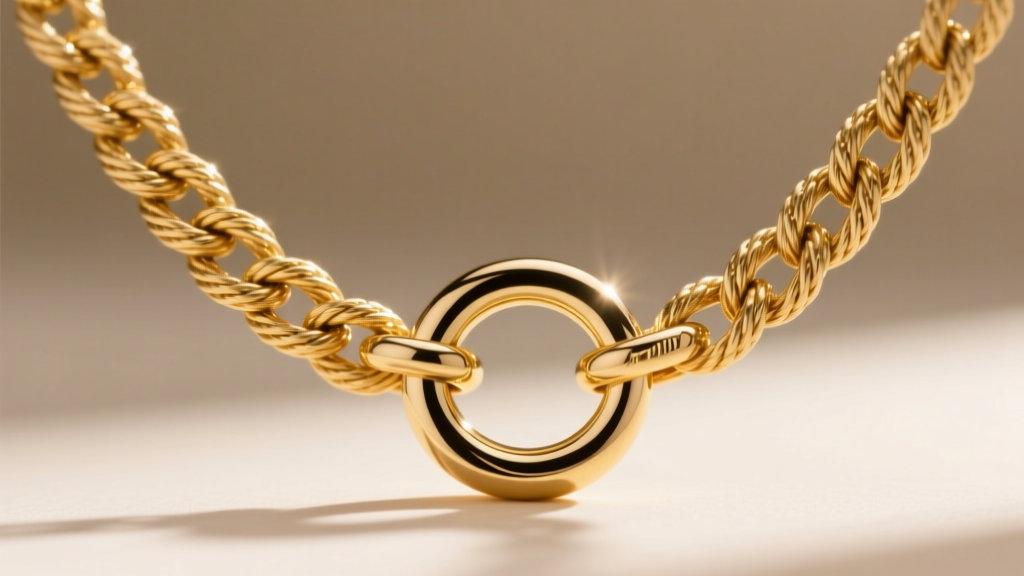
Length is only half the equation. The width (measured in millimeters) and the physical weight of the chain dictate how it hangs and what hardware it requires. A 24-inch chain that is 2mm wide will drape entirely differently than a 24-inch chain that is 10mm wide.
Matching Width to Length
Longer chains generally require wider links to maintain structural integrity and visual balance. A 30-inch chain that is only 1.5mm thick is highly prone to tangling, knotting, and snapping under its own leverage.
- 1mm - 3mm (Delicate): Best for 18" to 20" lengths. Ideal for small, lightweight pendants (under 5 grams).
- 4mm - 6mm (Medium): The versatile sweet spot. Works beautifully at 20" to 24". Can support medium pendants (5g to 15g).
- 7mm - 12mm (Heavy): Statement widths. Best kept at 20" to 22" to avoid looking like a bicycle chain. Usually worn without pendants.
The Pendant Drop Factor
When adding a pendant, you must calculate the "drop." A heavy pendant will pull the chain downward into a V-shape. If you want the pendant to rest at your mid-chest (say, 24 inches from the back of your neck), a 24-inch chain will actually pull down to 26 or 27 inches once the pendant is attached. Always subtract 1 to 2 inches from your desired final resting length when purchasing a chain specifically for a heavy pendant.
Additionally, check the pendant's bail (the loop that slides onto the chain). If you are buying a 6mm wide Cuban link, the pendant bail must have an inner diameter of at least 8mm to 9mm. If the bail is too tight, the chain will bunch up, cause friction, and eventually wear down the metal of the bail.
3 Critical Sizing Mistakes to Avoid
Even with the right measurements, men often fall victim to structural oversights that ruin the wearing experience. Avoid these three common errors:
1. Ignoring Chain Stretch
Certain link styles, particularly Rope and Figaro chains, are prone to stretching over time. The helical twist of a rope chain can elongate by up to 5% with daily wear and the weight of a pendant. A 20-inch rope chain might become a 21-inch chain after a year. If you are buying a rope chain for a precise fit, consider sizing down by half an inch if the jeweler offers custom lengths, or accept a slightly looser fit over time.
2. Mismatching the Clasp to the Weight
The clasp is the weakest point of any necklace. If you are buying a heavy 22-inch, 8mm chain that weighs over 40 grams, a standard spring-ring clasp will eventually fail. The internal spring mechanism is not designed for high dynamic loads. Always upgrade to a solid Lobster clasp for chains over 20 grams, or a Box Clasp with a safety latch for chains exceeding 50 grams.
3. Forgetting the Shirt Collar
If you plan to wear your chain tucked inside an unbuttoned dress shirt or over a crewneck t-shirt, remember that fabric creates friction. A 20-inch chain might sit perfectly on bare skin, but when worn over a ribbed cotton t-shirt, the friction can cause the chain to ride up and bunch at the back of your neck. For over-garment wear, a 22-inch or 24-inch chain provides the necessary weight and length to lay flat against the fabric.
Final Thoughts on Finding Your Perfect Fit
Mastering necklace sizes men actually wear comes down to combining objective measurements with an understanding of your personal style and wardrobe. Take the five minutes required to measure your neck properly with a tailor's tape, apply the ease rule based on your body frame, and factor in the weight of any pendants you plan to add. By treating chain sizing as a precise sartorial decision rather than an afterthought, you ensure that your jewelry enhances your presence rather than distracting from it.


