Choosing the Best Necklace Hooks for Wall Organization
Discover the best necklace hooks for wall organization. Learn about weight capacities, tarnish-safe materials, and mounting types to protect your jewelry.

The Evolution of Jewelry Display in Modern Interiors
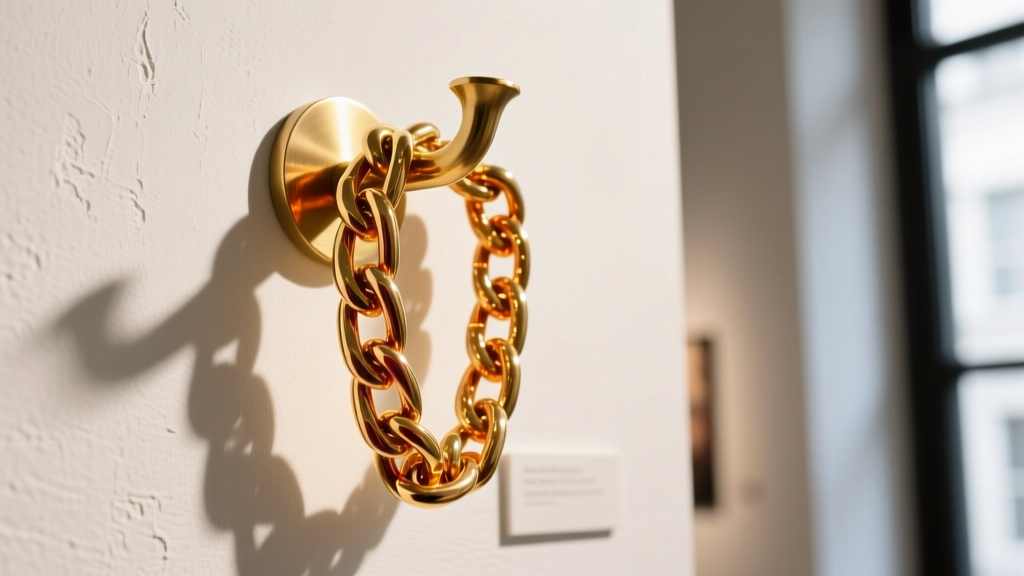
In the realm of high-end jewelry care, how you store your pieces is just as critical as how you clean them. As we move through 2026, the interior design trend of treating jewelry as functional wall art has skyrocketed, making necklace hooks for wall installations a staple in modern dressing rooms and bedrooms. However, selecting the right hardware is not merely an aesthetic choice; it is a structural and metallurgical necessity. Hanging a heavy 18k gold Cuban link chain or a delicate, vintage pearl strand on the wrong hook can lead to catastrophic results, including stretched links, micro-abrasions, and irreversible tarnish transfer. This comprehensive buying guide will dissect the material science, structural engineering, and geometric design required to choose the perfect wall-mounted storage solution for your collection.
The Hidden Dangers of Traditional Drawer Storage
Before diving into wall-mounted solutions, it is vital to understand why transitioning away from traditional jewelry boxes is necessary for heavy or frequently worn pieces. When necklaces are tossed into a drawer, they are subjected to kinetic friction. The clasps of one chain easily slip through the links of another, creating the dreaded 'bird's nest' tangle. Forcing these tangles apart often bends delicate jump rings and weakens the solder points on pendant bails. Furthermore, laying heavy pendants flat allows them to crush softer gemstones or scratch the polished surfaces of adjacent chains. Wall mounting utilizes gravity to keep chains fully extended, eliminating kinetic friction and preserving the structural integrity of the links over decades of wear.
Material Science: Preventing Tarnish Transfer
The most overlooked factor when purchasing necklace hooks for wall mounting is the metallurgical compatibility between the hook and the jewelry. Many cheap, mass-produced hooks are made from low-grade iron alloys or zinc die-casts with thin, porous electroplating. In environments with fluctuating humidity (like a bedroom near an en-suite bathroom), these base metals oxidize rapidly.
Galvanic Corrosion and Tarnish Transfer
When sterling silver or karat gold rests against an oxidizing iron hook, a process known as galvanic corrosion can occur, accelerated by ambient moisture. This results in stubborn black iron oxide spots transferring directly onto your precious metals, requiring aggressive polishing that strips away microscopic layers of silver or gold. According to the Gemological Institute of America (GIA), proper storage must involve non-reactive materials to prevent environmental degradation of precious metals.
What to Look For: Tarnish-Safe Finishes
- 316L Surgical Stainless Steel: The gold standard for bare metal hooks. It contains molybdenum, which prevents pitting and rusting, ensuring no oxide transfer to your silver or gold chains.
- PVD-Coated Brass: Physical Vapor Deposition (PVD) creates a microscopic, ultra-hard ceramic-like layer over solid brass. This provides the warmth of gold or brass without the risk of the metal reacting with your jewelry.
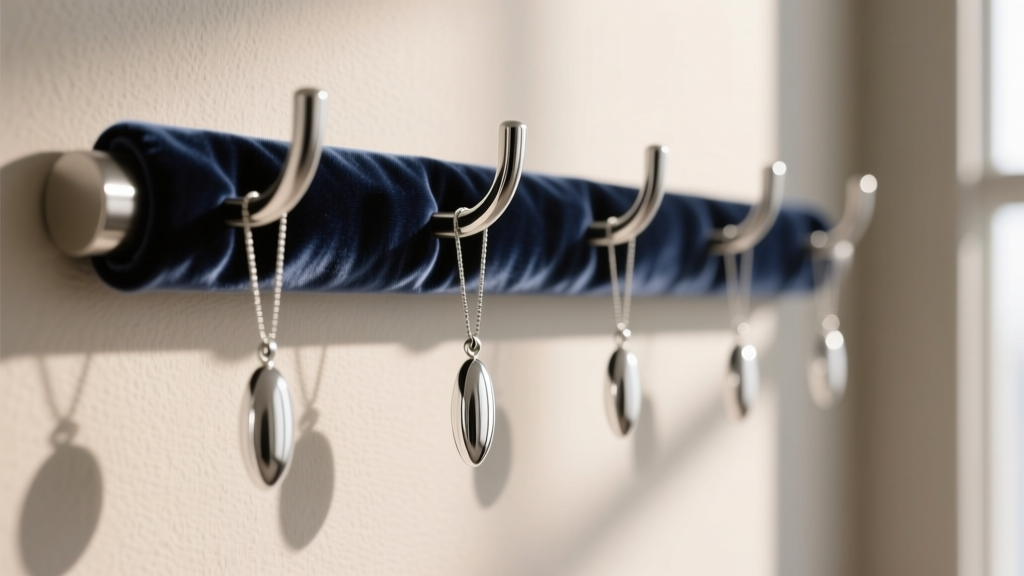
- Velvet-Dipped or Flocked Hooks: For highly polished mirror-finish chains or soft gemstones like turquoise and opals, a stainless steel hook wrapped in anti-tarnish flannel or dipped in soft velvet is mandatory to prevent micro-scratching.
Structural Integrity: Wire Gauge and Weight Limits
A common mistake is underestimating the dynamic weight of a necklace. While a solid 10mm 18k gold Cuban link chain might only weigh 150 to 250 grams (roughly 0.3 to 0.5 pounds) statically, the dynamic pull exerted when you lift the chain off the hook can multiply that force significantly. If the hook wire is too thin, it will permanently bend, ruining the aesthetic and compromising the structural lip that keeps the chain secure.
When evaluating necklace hooks for wall use, always check the wire gauge of the hook itself. You want a minimum of 14-gauge (1.63mm) wire for standard chains, and ideally 12-gauge (2.05mm) or thicker for heavy statement pieces and multi-strand pearl necklaces. Avoid flimsy 18-gauge wire hooks, which are designed for lightweight scarves, not dense precious metals.
Wall Anchors: Matching the Hardware to the Drywall
The strongest steel hook is useless if the wall anchor fails. Standard plastic conical drywall anchors are notorious for degrading over time, especially when subjected to the micro-vibrations of a heavy chain swinging. As detailed by the experts at This Old House, choosing the correct anchor for your wall type is critical for long-term load-bearing safety.
| Anchor Type | Max Static Load (1/2" Drywall) | Best Use Case | Installation Note |
|---|---|---|---|
| Standard Plastic Conical | 15 lbs | Single delicate 14k gold cable chains | Prone to stripping; avoid for heavy pendants |
| Threaded Drywall Anchors | 25 lbs | Medium-weight silver chains with small pendants | Easy to install; good for moderate static loads |
| Toggle Bolts (Snaptoggles) | 50+ lbs | Heavy multi-strand necklaces, large display rails | Requires a wider drill hole; ultimate security |
| Wood Stud (Direct Screw) | 100+ lbs | Full jewelry armoires and heavy oak wall racks | Requires a stud finder; maximum permanence |
Hook Geometry and the Pendulum Effect
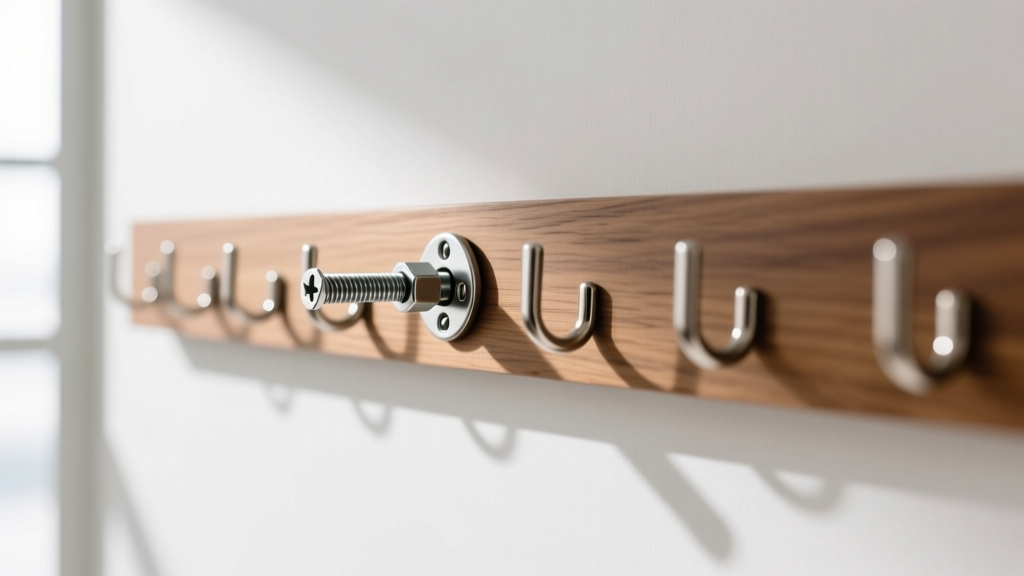
The physical shape of the hook dictates how well it retains your jewelry. The most critical measurement is the lip depth—the distance from the tip of the hook to the inner curve. A shallow lip (less than 1/2 inch) is highly susceptible to the 'pendulum effect.' When you bump the wall or open a nearby door, the chain swings. If the lip is too shallow, the centrifugal force will cause the chain to slide up and off the hook, potentially damaging the clasp or gemstone pendant upon hitting the floor.
Look for hooks with a minimum lip depth of 3/4 inch to 1 inch. Additionally, the tip of the hook should feature a smooth, rounded bead or a silicone-dipped cap. Sharp, unfiled wire ends will catch on the intricate links of filigree chains or scratch the nacre off freshwater pearls as you slide them on and off the mount.
Configuration Styles for Specific Collections
Your collection's specific makeup should dictate the configuration of the necklace hooks for wall mounting you ultimately purchase.
Minimalist Single Studs
Ideal for the modern minimalist who rotates a few high-value, heavy statement pieces. A single, 12-gauge PVD-coated brass stud mounted into a wood stud provides an architectural, gallery-like presentation for a single heavy Cuban or Curb link chain.
Multi-Hook Rails and Ladders
For collectors of delicate layering chains (such as 1mm to 2mm cable, box, or rolo chains), a horizontal rail featuring multiple hooks spaced at least 3 inches apart is essential. If hooks are placed too closely together, the pendulum effect will cause adjacent chains to intertwine, defeating the purpose of wall storage. Ladder configurations are excellent for separating chokers (14-16 inches) from opera-length strands (28-36 inches).
Expert Insight: If you are mounting a multi-hook rail, always ensure the rail itself is made of solid wood or thick-gauge steel. Hollow aluminum rails will bow in the center over time under the distributed weight of multiple gold and silver chains, eventually pulling the center anchors out of the drywall.
Final Verdict: Investing in Preservation
Choosing the right necklace hooks for wall organization is an investment in the longevity of your jewelry. By prioritizing 316L stainless steel or PVD-coated materials, demanding a minimum 14-gauge wire thickness, and utilizing toggle bolts for drywall installations, you transform a simple storage task into a secure, museum-quality display. Treat your chains with the structural respect they deserve, and they will remain untangled, untarnished, and perfectly preserved for generations to come.


