The Ultimate Guide to Buying a Vintage Silver Squash Blossom Necklace
Discover how to authenticate, evaluate, and buy a vintage silver squash blossom necklace. Learn about hallmark stamps, turquoise grades, and pricing.

The Anatomy of a Silver Squash Blossom Necklace
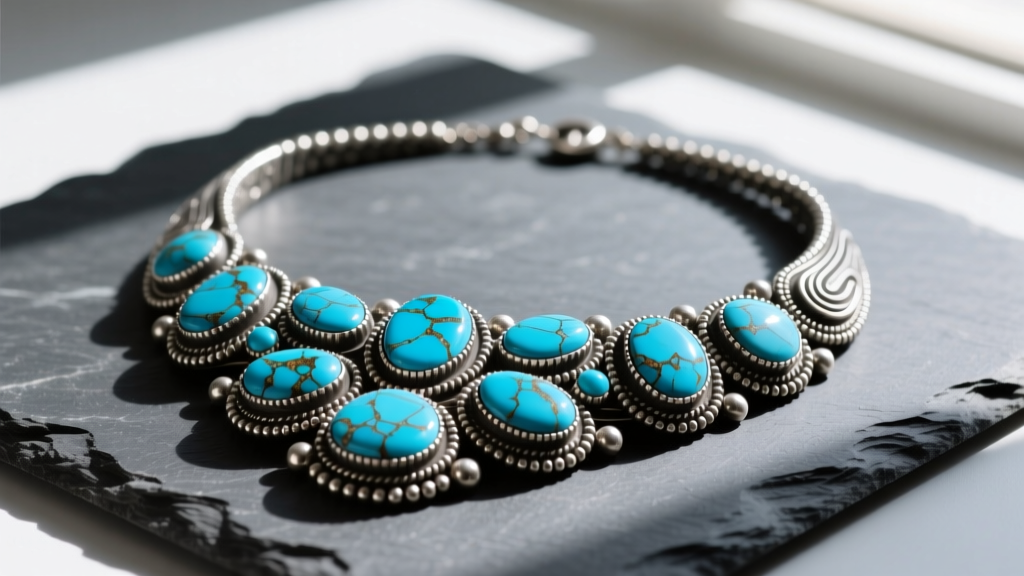
When investing in Southwestern jewelry, understanding the architecture of a silver squash blossom necklace is your first line of defense against misrepresentation. Despite the name, the iconic "blossom" beads are actually modeled after the pomegranate flower, a motif introduced to Native American artisans by Spanish colonizers. A traditional set consists of three main components: the round silver beads, the pomegranate blossom beads, and the central Naja pendant.
The Naja (or Najahe) is the crescent-shaped centerpiece. According to the Smithsonian National Museum of the American Indian, the crescent shape originated in Moorish Spain and was adopted by the Navajo (Diné) in the late 19th century. When evaluating a piece, check the symmetry of the Naja and the uniformity of the handmade beads. Vintage pieces from the 1970s and earlier will feature slight, organic asymmetries that prove hand-forging, whereas perfectly uniform beads often indicate modern, machine-made casting.
Authenticating Sterling Silver and Hallmarks
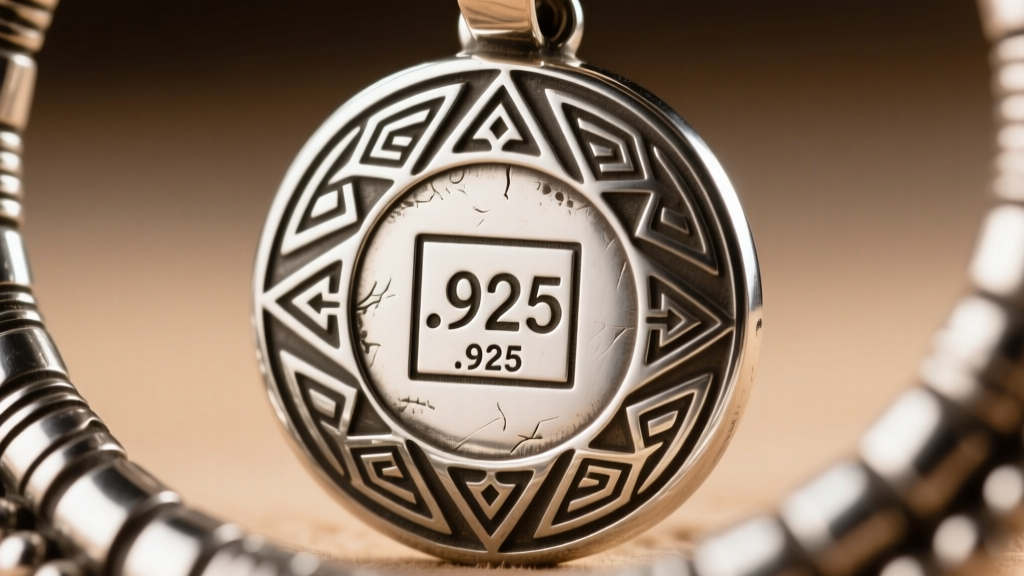
The silver content is a primary driver of value. Early antique pieces (pre-1930s) were often crafted from "coin silver," which has a purity of .900, resulting in a slightly darker, more malleable metal. By the mid-20th century, .925 sterling silver became the standard. A genuine vintage silver squash blossom necklace is exceptionally heavy. While modern, lightweight tourist-trade versions might weigh 60 to 80 grams, a legitimate vintage Navajo or Zuni piece typically ranges from 150 to 280 grams.
Decoding Hallmarks
Turn the Naja and the clasp over. Authentic pieces from the 1970s onward frequently feature a silversmith's stamped hallmark—often an initial, a clan symbol, or a stamped sunray motif—alongside the word "Sterling." However, the absence of a hallmark does not automatically mean a piece is fake; many master silversmiths in the 1950s and 60s did not stamp their work. Instead, look for the wear patterns. Genuine vintage silver develops a deep, dark patina in the recessed areas that cannot be easily faked. If the crevices are bright white, the piece has likely been aggressively tumbled or is a modern reproduction.
Evaluating the Turquoise: Natural vs. Stabilized
As we navigate the 2026 vintage jewelry market, the scarcity of high-grade natural turquoise has driven prices to record highs. According to the Gemological Institute of America (GIA), natural turquoise is porous and relatively soft (Mohs 5-6). To make it suitable for jewelry, lower-grade stones are often "stabilized" using epoxy resins. While stabilization is an accepted industry practice for modern jewelry, it drastically reduces the value of a vintage piece if sold as "natural."
To test for stabilization, examine the matrix (the host rock webbing). Natural matrix often features sharp, jagged edges and varying depths. Stabilized stones tend to have a uniform, plastic-like luster, and the matrix may appear blurred or dyed black. Under a UV flashlight, epoxy-stabilized turquoise will often fluoresce a dull green or milky white, whereas natural, untreated turquoise will remain inert. Furthermore, examine the stringing material. Vintage pieces from the 1970s were often strung on braided nylon or heavy cotton thread, which may show fraying or discoloration near the clasp. Modern fakes often use cheap, stiff beading wire that lacks the fluid drape of authentic vintage stringing.
Prominent Turquoise Mines in Vintage Pieces
- Sleeping Beauty: Prized for its pure, robin's-egg blue color with little to no matrix. Highly prevalent in 1970s Zuni and Navajo pieces.
- Kingman: Famous for its deep blue stones with striking black or brown spiderweb matrix. A staple in heavy, vintage Navajo squash blossoms.
- Bisbee: Known for its rich, dark blue color and smoky, reddish-brown matrix. Highly sought after by serious collectors today.
- Number 8: Recognizable by its golden to brown spiderweb matrix over a bright blue-green background.
Pricing Guide: What to Expect in the Current Market
Pricing a silver squash blossom necklace requires analyzing the era, the silversmith (if known), the silver weight, and the turquoise grade. The market has bifurcated sharply between commercial vintage pieces and museum-quality antiques.
| Era & Classification | Silver Type & Weight | Turquoise Quality | Estimated Market Value (2026) |
|---|---|---|---|
| Modern Contemporary (Native Made) | Sterling .925 (80-120g) | Stabilized or Commercial Natural | $450 - $1,200 |
| Vintage 1970s-1990s (Boom Era) | Sterling .925 (150-250g) | Natural, High-Grade (Kingman/Sleeping Beauty) | $1,800 - $4,500 |
| Mid-Century 1940s-1960s | Sterling or Coin Silver (180g+) | Natural, Rough Cut, Deep Patina | $5,000 - $12,000 |
| Antique Ingot (Pre-1930s) | Coin Silver Ingot (200g+) | Persian or Early American Natural | $15,000 - $35,000+ |
Red Flags: Avoiding Counterfeits and Import Fakes
The global demand for Southwestern aesthetics has spawned a massive industry of overseas counterfeits. Under the Indian Arts and Crafts Act, it is illegal to market jewelry as "Native American" unless it is made by a member of a state or federally recognized tribe. However, bad actors use loopholes like "Native American style" or "Southwestern vintage" to peddle mass-produced imports.
Expert Troubleshooting Tip: Inspect the bezels (the silver rims holding the stones). In authentic handmade pieces, the silver is pushed over the stone using a bezel roller, leaving microscopic, directional tool marks. In cast counterfeits, the bezel is perfectly smooth and uniform, having been formed by a mold rather than a silversmith's hands.
Additionally, examine the clasp. A true vintage piece from the 1970s will typically feature a heavy, hand-forged hook-and-eye clasp or an early, thick lobster clasp. If the necklace features a lightweight, laser-stamped modern spring-ring clasp, it has either been altered or is a modern reproduction.
How to Style and Care for Heavy Silver Jewelry
Due to their substantial weight (often exceeding 200 grams), these necklaces require specific care to prevent structural failure. Always store a silver squash blossom necklace flat or draped over a wide, padded jewelry bust. Hanging it on a narrow hook for prolonged periods can stress the stringing wire or cause the silver links to stretch and warp over time.
When styling, let the Naja be the focal point. These necklaces sit best over solid-colored, heavyweight fabrics like denim, wool, or thick cotton, which can support the physical weight of the silver without pulling the neckline. Avoid wearing your squash blossom in swimming pools or hot tubs; chlorine will rapidly oxidize and pit sterling silver, while harsh chemicals can permanently discolor porous, untreated turquoise. To clean the silver without damaging the stones, use a dry, microfiber polishing cloth and gently rub only the exposed silver surfaces. Never use liquid silver dips or ultrasonic cleaners, as these will strip the natural oils from the turquoise, causing it to crack or lose its vibrant color matrix.


