Kim Kardashian Diamond Necklace Missing Wedding: Security & Care
Investigating the Kim Kardashian diamond necklace missing wedding rumors while revealing elite security, cleaning, and maintenance protocols for fine jewelry.

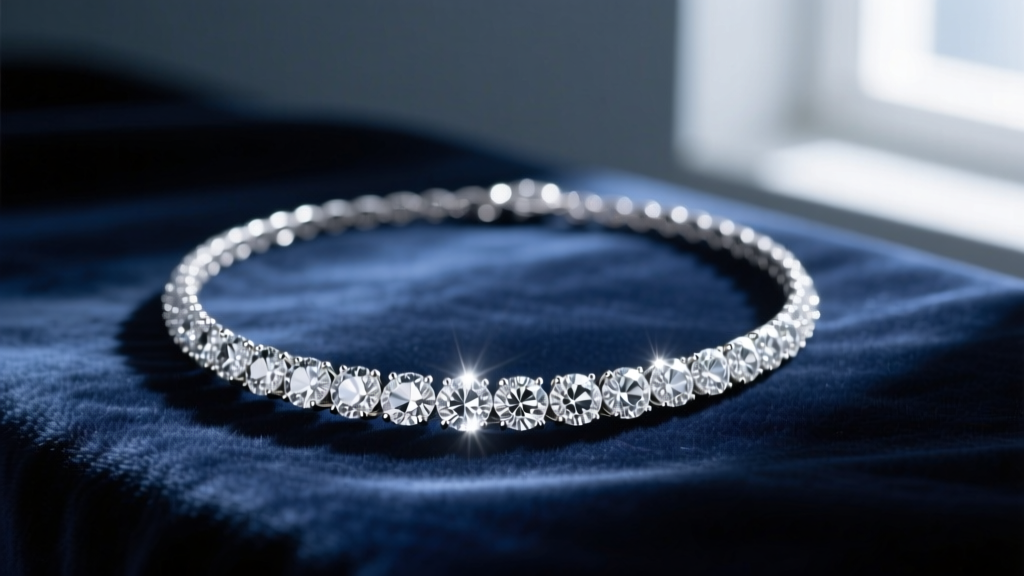
The Lore: Kim Kardashian, Diamond Necklaces, and Wedding Security
When search trends spike around the phrase kim kardashian diamond necklace missing wedding, it usually stems from a chaotic mix of internet telephone, high-profile security paranoia, and the public's intense fascination with celebrity bridal jewelry. To set the record straight: there is no verified police report of a specific 'wedding necklace' going missing from Kim Kardashian's nuptials. However, the rumor likely conflates her iconic, multi-million-dollar Lorraine Schwartz diamond creations with the deeply traumatic 2016 Paris robbery, where she was held at gunpoint and stripped of millions in high jewelry.
For the ultra-wealthy, a 'missing' necklace isn't just a financial loss; it is a catastrophic security failure. Whether you are wearing a 50-carat rivière necklace down the aisle or a 2-carat solitaire pendant for an anniversary, the principles of elite jewelry maintenance, security, and care remain identical. As of 2026, the protocols for protecting and maintaining high-net-worth diamonds have evolved far beyond simple polishing cloths and home safes. Here is a masterclass in how the world's most valuable necklaces are secured, cleaned, and preserved.
Why High-Carat Diamonds Go 'Missing' (The Metallurgy of Prongs)
When a massive diamond falls out of a necklace and is lost, the public often assumes theft. In reality, the culprit is usually metallurgical fatigue. Diamonds are a 10 on the Mohs hardness scale, but the precious metals holding them are not. The structural integrity of your necklace's setting dictates its survival.
950 Platinum vs. 18k Palladium White Gold
Elite jewelers almost exclusively use 950 Platinum (95% platinum, 5% ruthenium or iridium) for high-carat diamond necklaces. Unlike 18k white gold, which is alloyed with softer metals and requires periodic rhodium plating to maintain its white color, platinum is naturally white and incredibly dense. More importantly, when a platinum prong is struck or snagged, the metal displaces rather than flakes or breaks. It bends, holding the diamond securely in place. White gold, conversely, can become brittle over time, leading to microscopic fractures that eventually snap, sending a six-figure diamond tumbling to the floor.
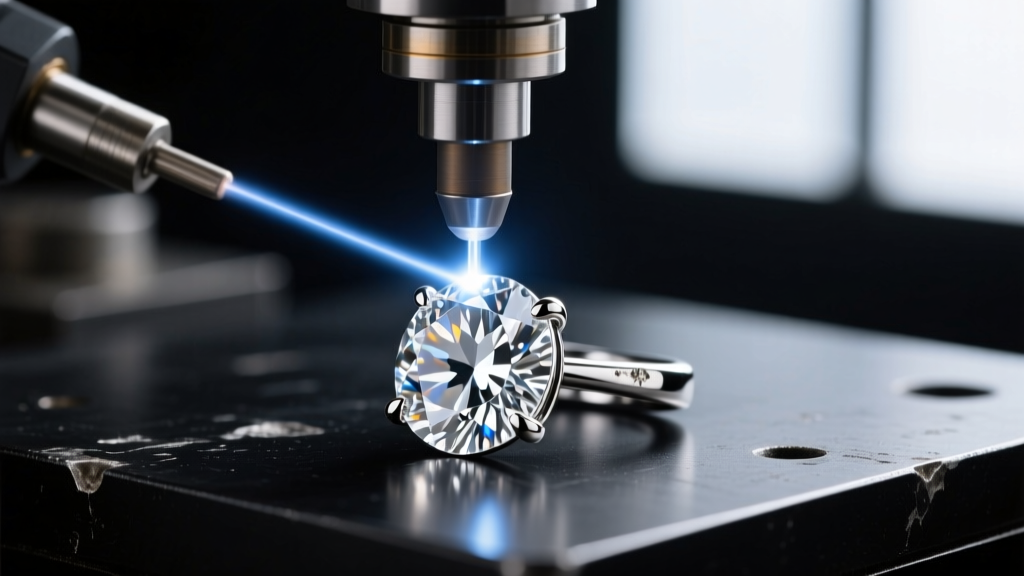
According to the Gemological Institute of America (GIA), prong degradation is the leading cause of stone loss in fine jewelry. A high-end necklace should undergo a microscopic prong inspection every six months, utilizing laser welding to reinforce worn tips without exposing the diamond to excessive thermal shock.
The Chemistry of Cleaning Mega-Diamonds
Diamonds are notoriously lipophilic, meaning they have a profound chemical affinity for grease and oils. Within hours of putting on a diamond necklace, the natural sebum from your skin, combined with lotions, makeup, and environmental pollutants, will coat the pavilion (the bottom half) of the stone. This oily film acts as a barrier, drastically reducing the diamond's light return and making a flawless D-color stone look dull and gray.
'A dirty diamond is a vulnerable diamond. When oils mask the true edges of a stone, it becomes difficult to spot microscopic chips or loosening prongs during routine visual inspections.' — Master Gemologist Appraiser
The Ultrasonic Danger
While ultrasonic cleaners are popular for at-home use, they are highly dangerous for certain diamond treatments and settings. The GIA Ultrasonic Safety Guide explicitly warns that high-frequency cavitation bubbles can shatter fracture-filled diamonds or vibrate stones loose if the prongs are already compromised. Furthermore, if your diamond necklace features delicate side-stones like emeralds, opals, or pearls, an ultrasonic bath will destroy them.
| Cleaning Method | Best For | Risk Level | Expert Notes |
|---|---|---|---|
| Distilled Water + Mild Surfactant | All diamonds, platinum, gold | Very Low | Use an extra-soft baby toothbrush. Avoid the drain. |
| Professional Steam Cleaning | Platinum/White Gold with robust prongs | Low | Never steam fracture-filled or clarity-enhanced diamonds. |
| Ultrasonic Cavitation | Heavy platinum settings, un-treated stones | High | Can shake loose stones if prongs are worn. Avoid for emeralds. |
| Ammonia-Based Solutions | Diamonds only (no porous side-stones) | Medium | Will strip rhodium plating from white gold over time. |
Advanced 2026 Security & Tracking Protocols
To ensure your diamond necklace never becomes a 'missing' headline, the jewelry industry has adopted aerospace-level tracking and identification technologies. If you are investing in a piece worth over $50,000, standard appraisals are no longer sufficient. You must implement the following protocols, often mandated by elite insurers like Jewelers Mutual:
- Gemprint Optical Fingerprinting: Every diamond has a unique internal refraction pattern. Gemprint uses a low-level laser to capture this 'fingerprint' and store it in a global database. If a stolen necklace is recovered by pawn shops or police, the stone can be positively identified even if it has been removed from its setting.
- Micro-Laser Inscription: The girdle of the diamond is inscribed with a microscopic SKU or GIA report number, visible only under 20x magnification.
- RFID Clasp Integration: As of 2026, luxury houses are embedding passive RFID microchips directly into the platinum clasps of high-jewelry necklaces, allowing them to be tracked via secure, encrypted vault networks.
- Biometric Vault Access: Storing the piece in a biometric, fire-rated TL-30 safe that is bolted to the structural foundation of the home.

Storage: Preventing Diamond-on-Diamond Destruction
One of the most common maintenance failures among amateur collectors is improper storage. Because diamonds are the hardest natural material on earth, they can only be scratched by other diamonds. Tossing a diamond tennis necklace into a communal jewelry box with a diamond solitaire pendant guarantees that the stones will abrade each other, causing microscopic chipping along the girdles and dulling the polish of the settings.
Elite storage requires a climate-controlled environment. High humidity can cause the alloy metals in 14k or 18k gold to oxidize over decades. Necklaces must be laid completely flat in individual, silk-lined drawers. Hanging a heavy, multi-carat diamond necklace on a standard velvet bust for years will cause gravitational stress on the silk threading or wire armature, eventually leading to structural snapping.
Final Thoughts on Elite Jewelry Maintenance
While the internet may continue to churn out clickbait regarding a 'kim kardashian diamond necklace missing wedding', the reality of high jewelry ownership is grounded in rigorous science and disciplined maintenance. By understanding the lipophilic nature of diamonds, respecting the metallurgical limits of your settings, and utilizing modern optical tracking, you ensure that your most precious necklaces remain secure, brilliant, and safely in your possession for generations to come.


