Knights of Malta Necklace Value Guide: Pricing & Materials
Discover the true value of a Knights of Malta necklace. We break down pricing tiers, material grades, and antique vs. modern reproductions.

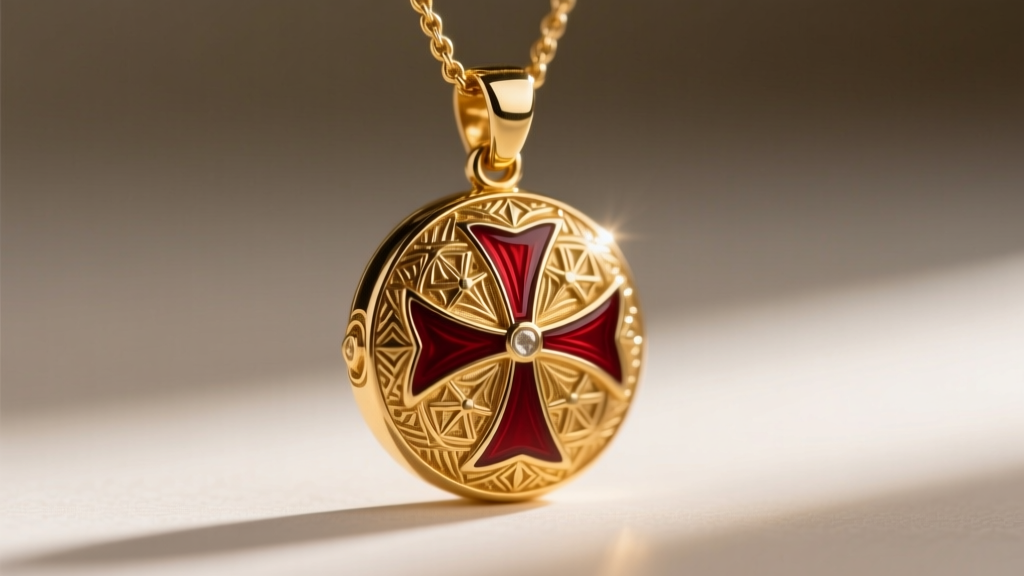
The Historical Premium: Why the Maltese Cross Commands Value
When evaluating a Knights of Malta necklace, you are not merely assessing precious metals and gemstones; you are appraising a profound historical artifact. The Maltese cross, with its distinctive eight points, originated with the Knights Hospitaller (the Order of St. John) during the Crusades. According to the Metropolitan Museum of Art, the eight points symbolize the eight obligations or Beatitudes of the Knights: truth, faith, repentance, humility, justice, mercy, sincerity, and endurance. This deep historical and spiritual resonance creates a built-in demand premium, meaning a Knights of Malta necklace often retains its value better than generic geometric pendants of similar weight.
In the current 2026 estate and fine jewelry market, the Maltese cross has transcended its religious and historical roots, becoming a staple in both high-fashion editorial styling and heritage menswear. However, this popularity has flooded the market with everything from $20 base-metal replicas to $20,000 high-jewelry masterpieces. Understanding the value assessment of this specific pendant requires a granular look at materials, enameling techniques, and provenance.
Material Breakdown: What You Are Actually Paying For
The baseline value of any Knights of Malta necklace is dictated by its metallurgical composition. Because the Maltese cross features a wide, expansive surface area, it requires significantly more raw material than a standard teardrop or circular pendant. A solid 14k gold Maltese cross measuring 30mm across will typically weigh between 8 and 14 grams, making the melt value a substantial portion of its retail price.
Precious Metals & Hallmarks
When assessing gold pieces, look for the 14k (585) or 18k (750) stamps. 18k gold offers a richer, deeper yellow hue that complements the traditional aesthetic of the cross, but it is softer. For a daily-wear necklace, 14k gold provides superior scratch resistance. Sterling silver (925) pieces are highly popular, but their value hinges on the finishing. A rhodium-plated silver cross will resist tarnish but requires re-plating every few years, whereas an oxidized silver cross leans into the antique, rugged aesthetic and requires almost zero maintenance. According to the Lang Antique Jewelry University, always verify the maker's mark alongside the purity stamp to ensure the piece was crafted by a recognized jeweler rather than a mass-production stamping house.
The Enamel Factor: Vitreous vs. Cold
Enamel work is where the true value divergence occurs in a Knights of Malta necklace. Traditional crosses feature deep red, black, or royal blue enamel. The Gemological Institute of America (GIA) distinguishes between true vitreous enamel and modern synthetic alternatives. Vitreous enamel is essentially glass fused to metal at temperatures exceeding 1,400°F. It is incredibly durable, scratch-resistant, and will never yellow. Conversely, 'cold enamel' is merely an epoxy resin. While visually similar from a distance, cold enamel will scratch, chip, and discolor within a few years of daily wear. A necklace featuring masterful guilloché (engine-turned metal beneath transparent vitreous enamel) or champlevé (carved channels filled with opaque enamel) commands a massive premium over resin-filled counterparts.
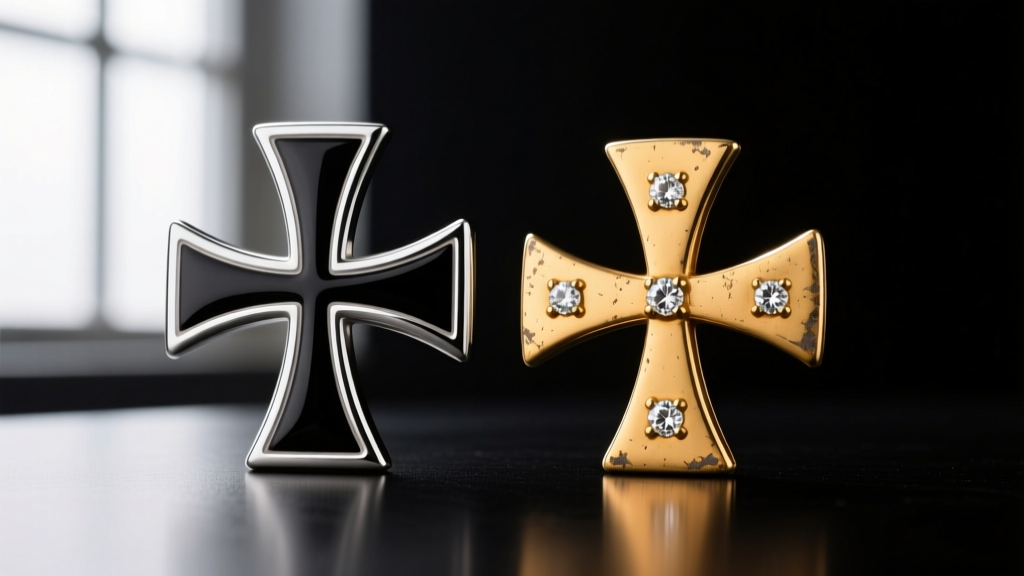
The Pricing Matrix: Budget to Heirloom
To accurately assess a Knights of Malta necklace, you must identify which tier it falls into. The following matrix outlines the expected pricing, material grades, and value retention for the current market.
| Tier | Expected Price Range | Materials & Construction | Value Retention |
|---|---|---|---|
| Fashion / Base | $30 - $120 | Brass or zinc alloy, gold vermeil, cold enamel (epoxy), glass rhinestones. | Poor (Zero resale value) |
| Entry Fine | $150 - $450 | 925 Sterling silver, cubic zirconia accents, cold enamel or simple vitreous enamel. | Fair (Retains ~30% of retail) |
| Mid-Tier / Antique | $600 - $1,800 | Solid 14k gold, high-quality vitreous champlevé enamel, natural diamond chips. | Good (Retains 60-80% based on gold weight) |
| High Jewelry / Estate | $2,500 - $10,000+ | 18k gold, master guilloché enamel, VS-clarity diamonds, historical provenance. | Excellent (Appreciates if antique/rare) |
Antique vs. Modern: Where the Smart Money Goes
For collectors and investors, antique Knights of Malta necklaces offer a unique value proposition that modern mass-produced jewelry cannot match. During the Victorian era, the Maltese cross became heavily associated with mourning jewelry. These pieces were often crafted in 15k gold or pinchbeck and featured stark black vitreous enamel. Identifying a true Victorian or Edwardian piece requires a jeweler's loupe and an understanding of historical construction techniques.
- The Bail Construction: Antique pendants often feature a soldered, closed jump ring or a hinged bail that shows microscopic wear consistent with a century of use. Modern cast pieces usually have a seamless, machine-perfected bail.
- Enamel Condition: In a genuine antique, vitreous enamel may show tiny, hairline crazing (cracking) under magnification due to a century of thermal expansion and contraction. Cold enamel on a fake 'antique' will instead show yellowing or deep, soft scratches.
- The Reverse Side: High-value antique crosses will feature finished, polished reverse sides, sometimes with hand-engraved dedications or inventory numbers from European estate houses. Modern budget pieces leave the back hollowed or rough-cast to save on gold weight.
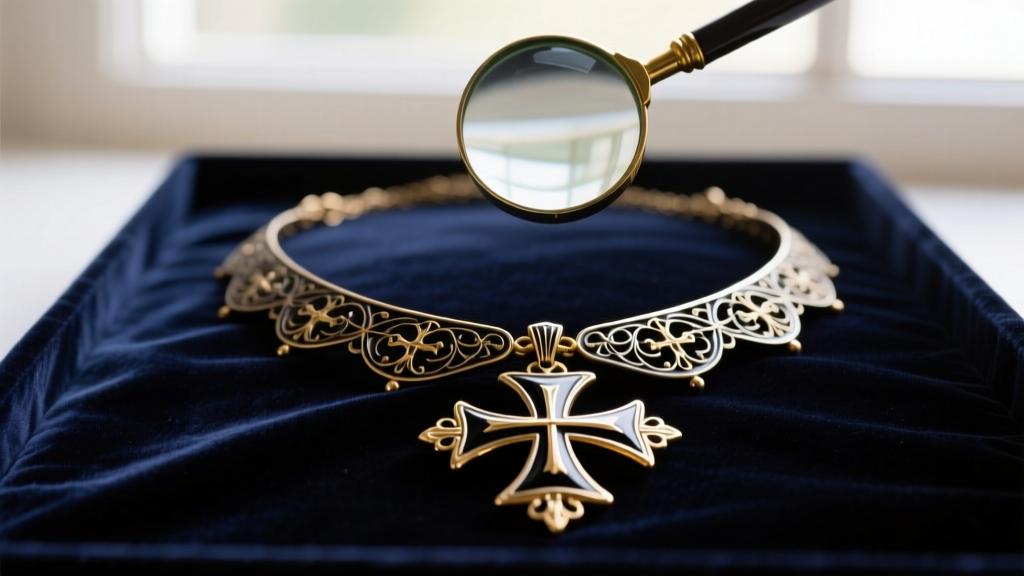
Chain Pairing and Structural Integrity
A common failure point in assessing the value and longevity of a Knights of Malta necklace is ignoring the chain. The Maltese cross is inherently top-heavy due to its wide, four-armed geometry. If a 12-gram solid gold cross is hung on a delicate 1mm box chain, the bail will rapidly wear through the chain links, leading to loss of the pendant.
For solid gold crosses weighing over 8 grams, a minimum 3mm rope chain or a 2.5mm Cuban link chain is structurally required. These chains distribute the weight evenly and resist the friction caused by the pendant's bail. Furthermore, the bail itself should be inspected. A high-value necklace will feature a 'V-bail' or a wide, tapered tube bail that accommodates the wide top arms of the Maltese cross, ensuring the pendant lays perfectly flat against the sternum rather than flipping upside down.
Red Flags: Overpaying for a Knights of Malta Necklace
When shopping in the secondary market or estate sales, beware of the following traps that artificially inflate the price of a Knights of Malta necklace:
- The 'Templar' Misnomer: Sellers often mistakenly (or deceptively) label Maltese crosses as 'Templar crosses' to capitalize on pop-culture mystique. The Templar cross is a simpler, straight-armed cross pattée. Paying a premium for 'Templar history' on a Maltese cross is a fundamental historical error.
- Hollow-Cast Gold: Some modern manufacturers create 40mm+ Maltese crosses using hollow electroforming techniques. While they look massive and are stamped 14k, they weigh less than 3 grams and are prone to denting. Always ask for the exact gram weight before purchasing.
- Simulated Diamonds: In the $500–$900 range, many crosses feature pave-set stones. Ensure you are paying for natural diamonds. If the stones are cubic zirconia or white sapphire, the piece should be priced strictly on its gold melt value plus a small craftsmanship premium.
Final Verdict: Maximizing Your Investment
A Knights of Malta necklace is a phenomenal investment in both personal style and tangible asset retention, provided you buy correctly. For everyday wear, a solid 14k gold piece with black or red vitreous enamel in the $800 to $1,200 range offers the perfect intersection of durability, historical accuracy, and intrinsic metal value. Avoid gold-plated brass if you seek longevity, and always verify the enameling technique. By focusing on gram weight, enamel quality, and structural chain pairing, you ensure that your Maltese cross remains a timeless heirloom rather than a depreciating fashion accessory.


