Material Guide: Choosing the Ideal Pearl Necklace with Cage
Discover the best metal and pearl combinations for a pearl necklace with cage settings. Compare materials, prevent tarnish, and ensure lasting wear.

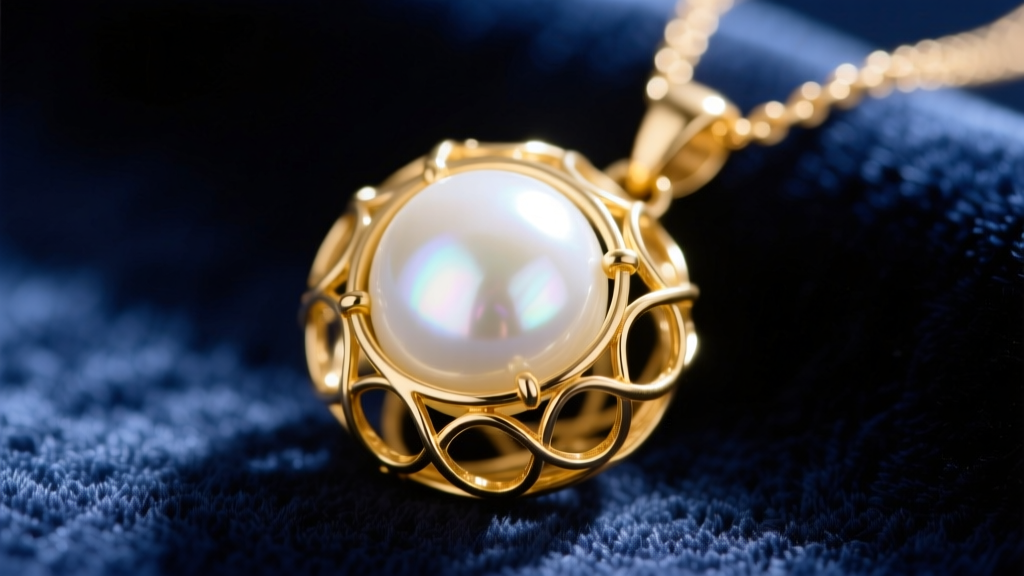
A pearl necklace with cage settings represents a fascinating intersection of gemology and metallurgy. Unlike traditional drill-and-string methods, a cage pendant relies entirely on tension, friction, and compressive force to secure the pearl. This means the physical properties of both the metal wire and the pearl's nacre are critical to the piece's longevity. In 2026, as consumers increasingly favor modular, interchangeable jewelry, understanding the material science behind these tension-set pendants is essential for both collectors and designers.
The Anatomy of a Pearl Cage Pendant
A cage setting typically consists of an outer orbital frame and an inner tension mechanism. The structural integrity of the cage depends on the metal's yield strength and its ability to maintain spring-back after being bent. If the metal is too malleable, the cage will stretch over time, releasing the pearl. If the metal is too rigid, the compressive force required to secure the pearl can exceed the gemstone's structural limits, leading to micro-fractures or catastrophic cracking.
Pearls rank between 2.5 and 4.5 on the Mohs scale of hardness, making them exceptionally vulnerable to point-load pressure. According to the Gemological Institute of America (GIA), the organic-inorganic composite structure of nacre requires careful handling. A well-engineered cage distributes pressure across multiple contact points rather than relying on a single aggressive prong.
Metal Cage Materials Compared
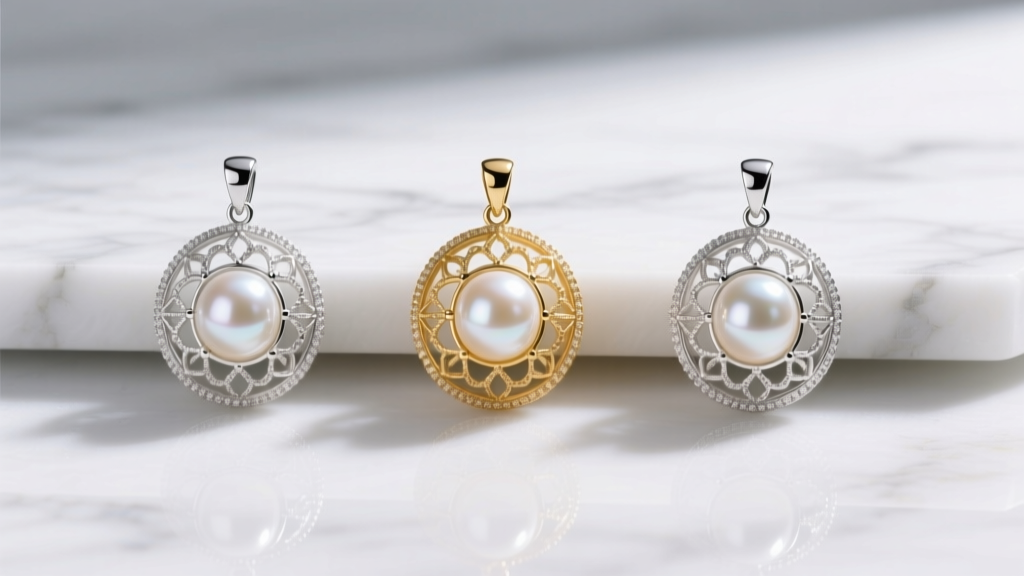
The choice of metal dictates the lifespan, maintenance requirements, and safety of the pearl. Below is a comprehensive comparison of the most common metals used in cage necklace fabrication.
| Metal Alloy | Vickers Hardness (HV) | Tarnish Resistance | Spring-Back / Tension Retention | Best Pearl Pairing |
|---|---|---|---|---|
| Sterling Silver (925) | 60-70 HV | Low (Prone to sulfur tarnish) | Moderate (Work-hardens but can fatigue) | Thick-nacre South Sea or Tahitian |
| 14k Gold-Filled (1/20) | 110-130 HV | Moderate (Until core exposure) | High (Brass core provides rigidity) | Irregular Baroque Freshwater |
| Solid 14k Yellow Gold | 140-160 HV | Excellent | Excellent (Ideal alloy balance) | Round Akoya or Freshwater |
| Solid 18k Yellow Gold | 120-130 HV | Excellent | Poor (Too soft for long-term tension) | Large, lightweight Mabe pearls |
| Platinum (950/Ru) | 130-140 HV | Superior | Superior (Dead-soft but highly durable) | Heirloom South Sea pearls |
The Danger of Base Metals and Plating
Avoid gold-plated or rhodium-plated brass cages for pearls. The plating on tension-set jewelry wears away rapidly at the friction points where the metal grips the pearl. Once the brass or copper core is exposed, galvanic corrosion occurs when it interacts with the slightly acidic pH of human sweat and the calcium carbonate of the pearl. This chemical reaction can permanently etch the pearl's nacre and leave green or black stains on the skin.
Pearl Varieties and Compressive Tolerance
Not all pearls can withstand the mechanical stress of a cage setting. The pearl's origin, nacre thickness, and internal structure dictate its compressive tolerance.
- Akoya Pearls: Typically feature a thin layer of nacre (0.2mm to 0.5mm) over a hard mother-of-pearl bead nucleus. High-tension cages can cause the nacre to flake or crack at the equator. Use wider, padded wire gauges if caging an Akoya.
- Freshwater Pearls: Composed of solid nacre throughout. Their exceptional structural integrity makes them the most forgiving option for tight, intricate wire-wrapped cages. However, their baroque shapes require custom-fitted, asymmetrical cages.
- South Sea & Tahitian Pearls: Feature very thick nacre (2mm to 4mm+) over a bead nucleus. They handle compression well but are highly valuable; therefore, they should only be set in premium metals like 14k gold or platinum to ensure the setting matches the gem's heirloom status.
Wire Gauge Specifications for Cage Making
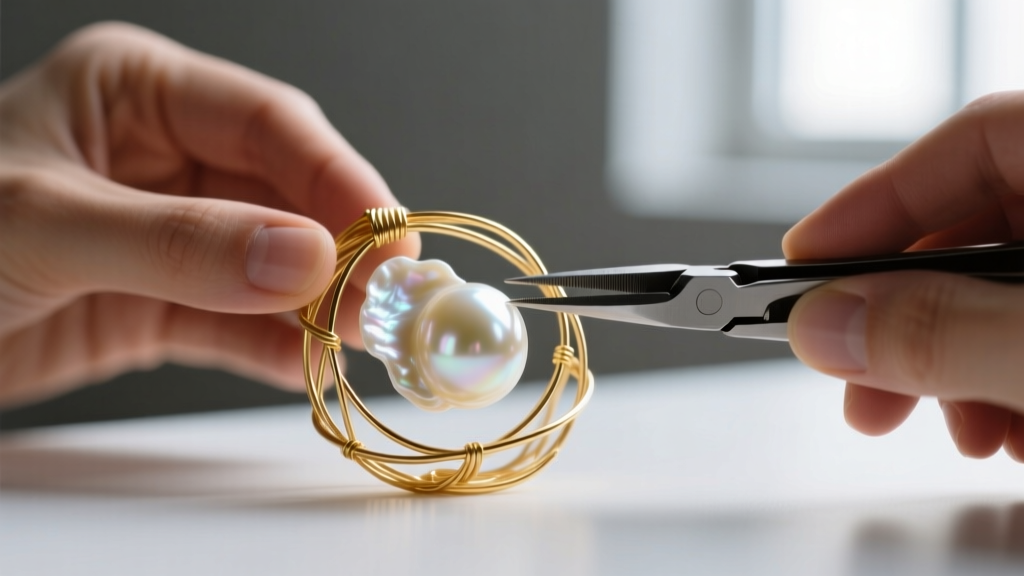
For artisans and jewelers designing a pearl necklace with cage elements, selecting the correct American Wire Gauge (AWG) is non-negotiable. Using a single gauge for the entire structure is a common amateur mistake that leads to structural failure.
Expert Framework: A durable cage requires a dual-gauge approach. Use a thicker, rigid wire for the orbital frames to prevent the cage from collapsing, and a thinner, highly ductile wire for the tension prongs that grip the pearl.
- 20-Gauge (0.81mm): Ideal for the main structural hoops and the bail. It provides enough rigidity to maintain the spherical or geometric shape of the cage without warping during daily wear.
- 24-Gauge (0.51mm) or 26-Gauge (0.40mm): Perfect for the inner tension wraps. These thinner gauges allow for micro-adjustments and provide a gentle, distributed grip on the pearl without concentrating point-load stress.
Galvanic Corrosion and Chemical Interactions
One of the most overlooked aspects of material selection in pearl jewelry is the electrochemical interaction between the metal, the pearl, and the wearer's environment. Pearls are highly sensitive to acids, cosmetics, and chlorinated water. When a sterling silver cage tarnishes due to sulfur exposure, the resulting silver sulfide can transfer to the porous surface of the pearl, causing a dull, grayish film that is nearly impossible to remove without professional repolishing.
To mitigate this, the GIA Pearl Care Guidelines recommend applying all perfumes, hairsprays, and lotions before putting on the necklace. Furthermore, if you live in a high-humidity or coastal environment, opt for solid 14k gold or platinum cages, as they do not produce corrosive byproducts that can degrade the pearl's orient and luster.
Maintenance and Long-Term Care
Cleaning a caged pearl requires a departure from standard jewelry maintenance. Never use ultrasonic cleaners or steamers. The high-frequency vibrations of an ultrasonic bath will not only damage the pearl's nacre but can also subtly alter the tension of the wire cage, causing the pearl to become loose and eventually fall out.
Instead, use a soft, untreated microfiber cloth to gently wipe the pearl and the metal cage after each wear. If the metal requires deep cleaning, use a specialized, ammonia-free silver or gold polishing cloth, being meticulously careful not to rub the polishing compounds onto the pearl. For long-term storage, keep the necklace in a soft silk pouch rather than an airtight plastic bag; pearls require a slight amount of ambient moisture to prevent their organic conchiolin matrix from drying out and cracking under the cage's pressure.
By carefully matching the metallurgical properties of the cage to the gemological realities of the pearl, you ensure that your pearl necklace with cage settings remains a secure, luminous, and enduring piece of wearable art.


