How to Choose and Style a Heart Bead Necklace: A Beginner's Guide
Discover how to choose, style, and care for a heart bead necklace. Learn about materials, bead sizes, and layering techniques in this beginner guide.

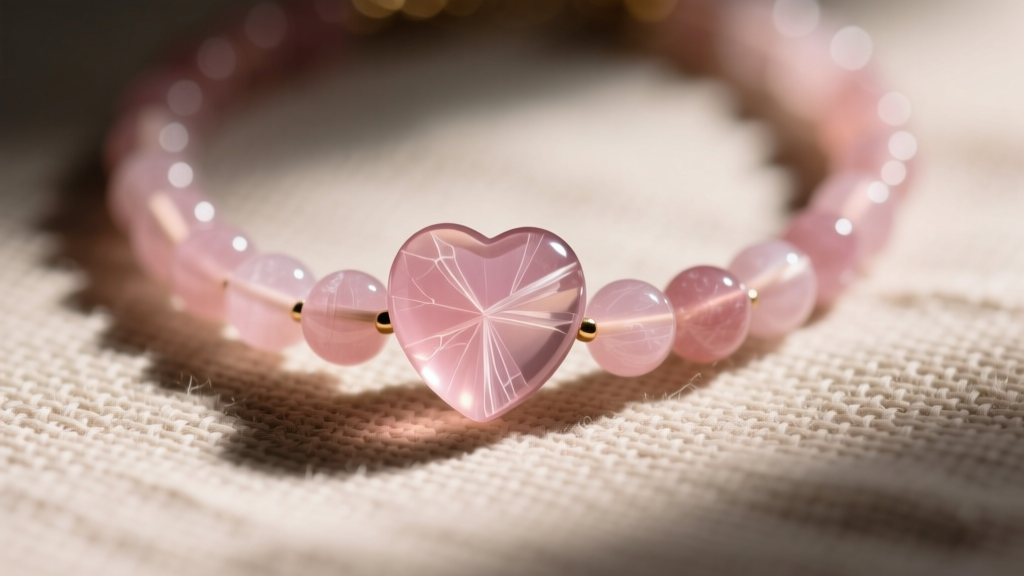
The heart bead necklace is a timeless staple in jewelry design, bridging the gap between playful charm and elegant sophistication. Unlike flat metal pendants, a heart-shaped bead offers three-dimensional volume, tactile weight, and a unique way to interact with light. Whether you are drawn to the romantic translucence of rose quartz, the vibrant pop of Murano glass, or the sleek polish of gold-filled metal, selecting the right piece requires understanding a few fundamental jewelry concepts.
In this comprehensive beginner's guide, we will break down the anatomy of heart beads, decode material grades, and provide a structural framework for layering and care. By the end, you will have the exact specifications needed to choose a heart bead necklace that fits your personal style and lasts a lifetime.
The Anatomy of a Heart Bead Necklace
Before purchasing, it is crucial to understand how the bead is drilled, as this dictates how it will hang on your neck and what type of chain or cord it requires. According to jewelry supply experts at Fire Mountain Gems, bead orientation completely changes the drape of the necklace.
Top-Drilled vs. Center-Drilled
- Top-Drilled (Vertical or Horizontal): The hole is located at the top lobes of the heart. This requires a jump ring or a specialized bail to attach to a chain. The heart will hang flat against your chest, acting like a traditional pendant.
- Center-Drilled: The hole is drilled horizontally through the widest part of the bead. This allows the bead to slide directly onto a chain or cord. The heart will sit inline with the necklace, offering a more modern, continuous look.
Material Breakdown: Decoding Your Options
The material of your heart bead dictates its durability, price point, and care requirements. When evaluating gemstones, always refer to the Mohs Hardness Scale. The Gemological Institute of America (GIA) notes that stones with a Mohs rating below 5 are highly susceptible to scratching from everyday dust (which contains quartz particles).
| Material | Mohs Hardness | Avg. Price Range | Best For |
|---|---|---|---|
| Murano Glass | 5.5 - 6.5 | $25 - $80 | Vibrant colors, everyday wear |
| Rose Quartz | 7.0 | $40 - $150 | Romantic aesthetic, subtle translucence |
| Jade (Nephrite) | 6.0 - 6.5 | $50 - $200 | High impact resistance, carving detail |
| 14k Gold-Filled | N/A (Metal) | $60 - $180 | Hypoallergenic needs, metal lovers |
| Acrylic/Resin | 2.0 - 3.0 | $10 - $35 | Lightweight, budget-friendly, bold hues |
Sizing, Gauges, and Chain Pairings
A common beginner mistake is buying a beautiful heart bead only to find it does not fit the intended chain. You must match the bead's hole diameter to the chain's gauge or thickness.
Matching Hole Sizes to Chains
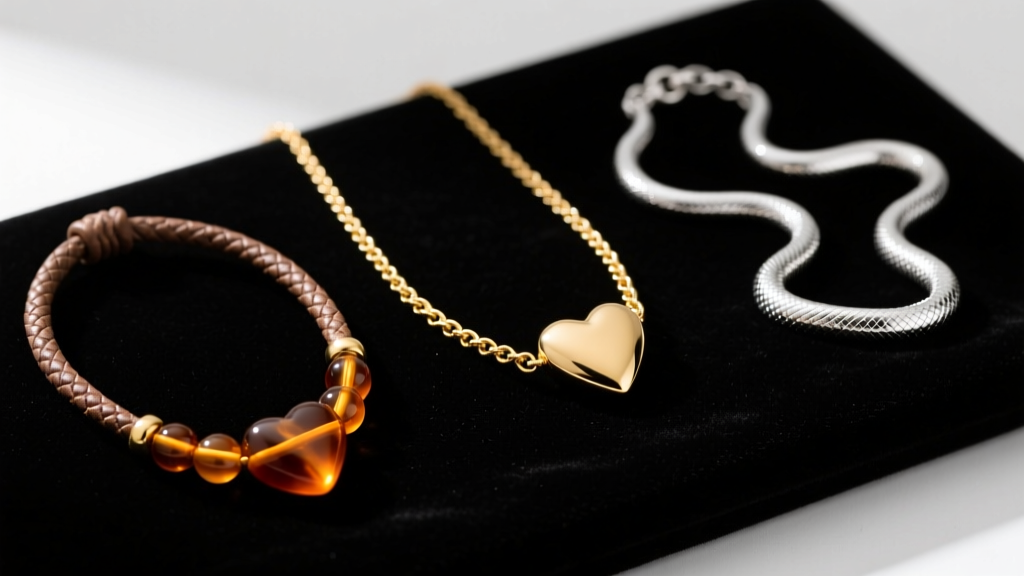
Most center-drilled gemstone heart beads (ranging from 10mm to 15mm in width) have a standard drill hole of 1.0mm to 1.5mm. Therefore, heavy Cuban links or thick rope chains will not pass through. Instead, opt for the following pairings:
- Snake Chains (1.0mm - 1.5mm): The smooth, interlocking plates of a snake chain slide effortlessly through center-drilled beads without catching. This is the most secure and sleek option for heavy glass or quartz hearts.
- Box Chains (1.2mm): Excellent for top-drilled hearts when paired with a 20-gauge (0.8mm) jump ring. Box chains are highly resistant to kinking, making them ideal for daily wear.
- Silk or Leather Cords (1.5mm - 2.0mm): Perfect for a bohemian or minimalist aesthetic. According to Rio Grande, natural fiber cords should be finished with glued metallic end caps and a lobster clasp to prevent fraying and ensure a secure fit.
The 3-Point Layering Framework
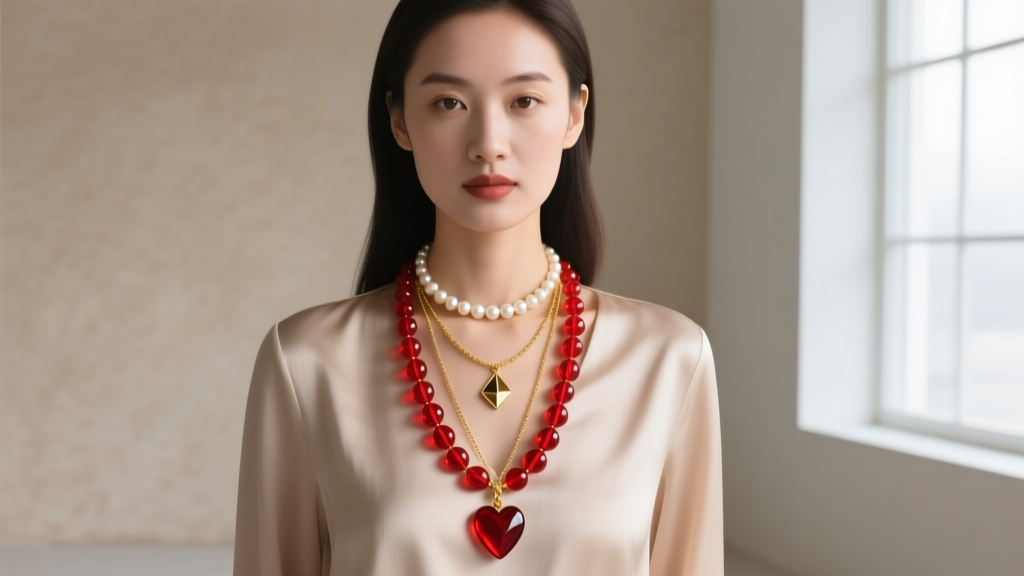
A heart bead necklace shines when integrated into a curated stack. To avoid a cluttered neckline, use the 3-Point Layering Framework, which relies on varying lengths, textures, and focal points.
"The secret to effortless layering is mathematical spacing. Keep a minimum of 1.5 to 2 inches between the lengths of your chains to prevent tangling and ensure each piece is visually distinct."
- The Base (14" - 16"): Start with a delicate, non-pendant chain like a 1.2mm gold cable choker or a simple pearl strand. This frames the collarbone.
- The Focal Point (18"): This is where your heart bead necklace lives. An 18-inch length places the bead perfectly at the hollow of the chest. Ensure the bead is between 12mm and 16mm so it commands attention without overwhelming the stack.
- The Anchor (22" - 24"): Finish with a longer, heavier chain featuring a minimalist vertical bar or a small, understated geometric pendant. This draws the eye downward and elongates the torso.
Care and Maintenance Protocols
Proper maintenance ensures your heart bead retains its polish and structural integrity. Cleaning methods must be strictly tailored to the bead's material.
Gemstones and Glass
For rose quartz, jade, and glass heart beads, avoid ultrasonic cleaners. The high-frequency vibrations can cause internal fractures, especially in stones with natural inclusions. Instead, use a drop of mild, phosphate-free dish soap mixed with lukewarm water. Gently scrub the bead with a soft-bristled baby toothbrush, paying special attention to the drill hole where skin oils and lotions accumulate. Rinse thoroughly and pat dry with a microfiber cloth.
Metal Beads (Sterling Silver and Gold-Filled)
Sterling silver heart beads (usually 925 purity) will naturally oxidize and tarnish when exposed to sulfur in the air. To restore shine, use a specialized silver polishing cloth infused with anti-tarnish agents. Never use liquid silver dips on textured or oxidized metal beads, as the harsh chemicals will strip the intentional darkened detailing from the crevices of the heart shape. For 14k gold-filled beads, a simple wipe-down with a damp, lint-free cloth is sufficient to remove daily grime and maintain the brilliant luster.
Final Thoughts on Your Selection
Choosing the perfect heart bead necklace is an exercise in balancing proportion, material science, and personal style. By paying close attention to the drill orientation, matching the chain gauge to the hole diameter, and implementing structured layering techniques, you can elevate a simple bead into a sophisticated, signature look. Whether you opt for the earthy romance of natural jade or the sleek modernity of a gold-filled metal bead, your piece will be built to endure both the elements and the shifting tides of fashion.