Moonstone Beaded Necklace Value: 2026 Pricing & Quality Guide
Discover the true value of a moonstone beaded necklace. Our 2026 guide breaks down pricing, quality grades, and how to avoid overpaying for fakes.

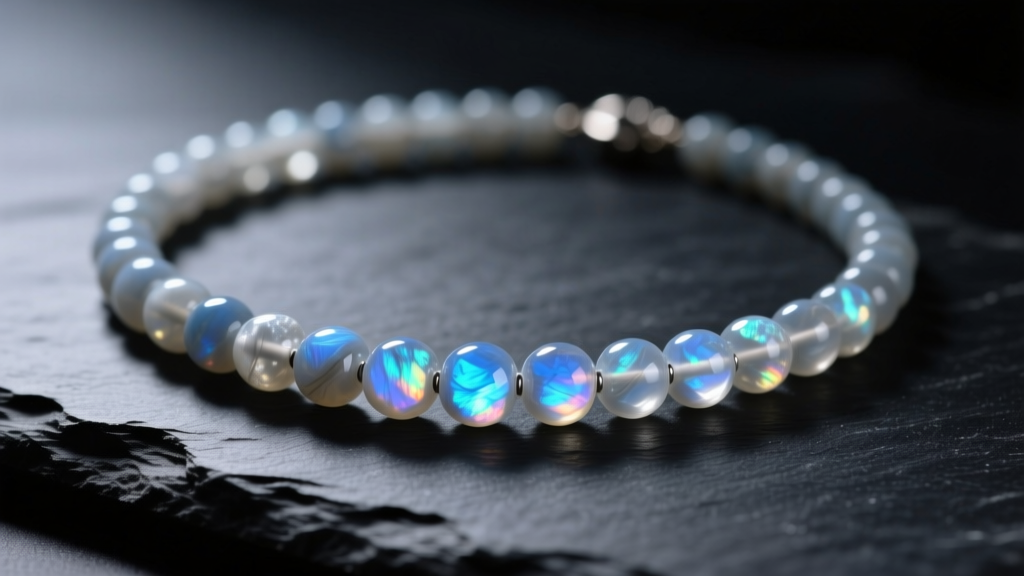
The market for a moonstone beaded necklace is vast, confusing, and riddled with synthetic imitations. As we move through 2026, the price gap between commercial-grade opaque beads and gem-quality, highly adularescent stones has widened significantly. Whether you are evaluating a vintage estate piece or shopping for a new strand, understanding the mineralogy, grading standards, and hardware costs is essential to making a sound investment. This guide strips away the marketing fluff and provides a rigorous, data-driven assessment of moonstone necklace valuation.
Decoding Moonstone Mineralogy and Grading Standards
To assess value, you must first understand what you are buying. According to the Gemological Institute of America (GIA), true moonstone is a variety of the feldspar-group mineral orthoclase. It is composed of alternating layers of orthoclase and albite. When light hits these microscopic layers, it scatters, producing the phenomenon known as adularescence—the billowy, floating light effect that gives the stone its name.
However, a massive portion of the market sold as "rainbow moonstone" is actually labradorite, a plagioclase feldspar. While gemologically distinct, the trade accepts the term "rainbow moonstone." When evaluating a moonstone beaded necklace, grading is dictated by three factors: body color transparency, the strength and color of the schiller (flash), and surface cleanliness.
- Grade A (Commercial): Opaque white body color with weak, patchy adularescence. Beads often feature visible surface pitting, chalky spots, and heavy internal fracturing. These are mass-produced and hold minimal resale value.
- Grade AA (Medium): Semi-translucent body with a strong, distinct blue or multicolor flash. Minor surface inclusions and internal "centipede" tension cracks are visible under 10x magnification but do not ruin the bead's structural integrity.
- Grade AAA (Gem Quality): Highly transparent to nearly colorless body. The adularescence is a sharp, unidirectional, electric blue (often called "royal blue sheen") or a vivid, full-spectrum rainbow. Surface is clean to the naked eye, and beads are precisely calibrated in size.
The 2026 Pricing Matrix: What Should You Pay?
Pricing a moonstone beaded necklace is not just about the stones; it is a composite of bead diameter, grade, and stringing methodology. The table below outlines the fair retail price ranges for 16-inch to 18-inch strands in the current 2026 market, assuming standard sterling silver or 14k gold-filled clasps.
| Bead Size (mm) | Grade & Type | Stringing Method | 2026 Fair Retail Price |
|---|---|---|---|
| 4mm - 6mm | Grade A (Opaque White) | Beading Wire, No Knots | $35 - $65 |
| 6mm - 8mm | Grade AA (Rainbow / Labradorite) | Hand-Knotted Silk | $120 - $240 |
| 8mm - 10mm | Grade AA+ (Strong Blue Flash) | Hand-Knotted Silk | $280 - $450 |
| 10mm - 14mm | Grade AAA (Gem Royal Blue) | Knotted Silk / Wire Guard | $600 - $1,400+ |
Note: Prices scale exponentially, not linearly, with bead size. A 12mm AAA blue sheen bead is exponentially rarer than a 6mm bead of the same quality, commanding a massive premium per carat.
Spotting Fakes: Glass, Opalite, and Synthetics
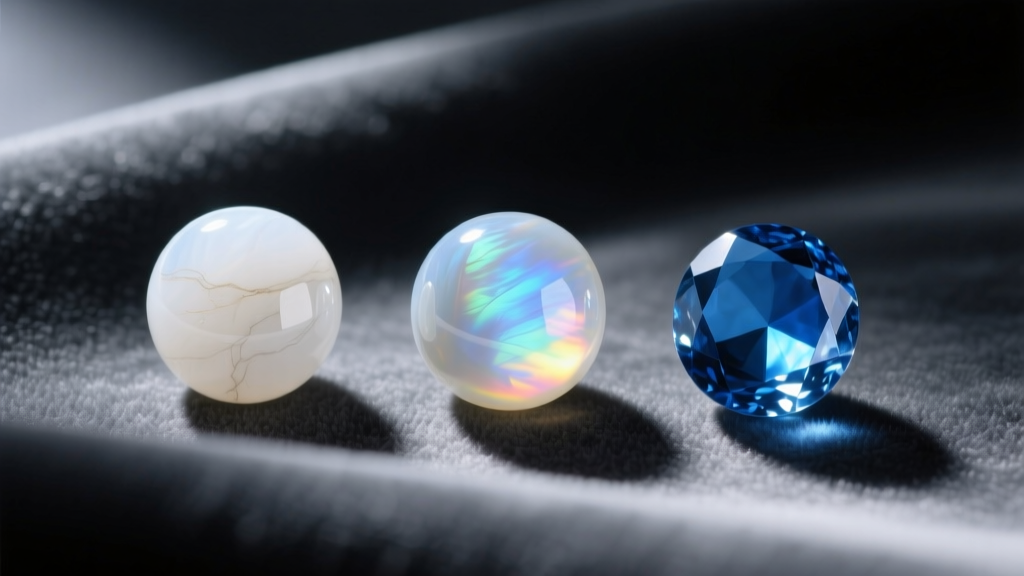
Because high-quality moonstone commands premium prices, the market is flooded with imitations. The most common culprit is Opalite, a man-made glass engineered to mimic the moonstone glow. Synthetic spinel and plastic composites are also prevalent in ultra-cheap inventory. Here is how to perform actionable, non-destructive field tests to verify authenticity.
The Angle and Flash Test
Natural moonstone adularescence is directional. As you rotate a genuine bead under a single light source, the flash will appear, glide across the surface, and disappear. Opalite glass, conversely, has a uniform, omnidirectional glow that remains static regardless of the viewing angle. If every bead in a strand flashes identically from every angle, you are looking at glass.
Magnification and Thermal Conductivity
Using a standard 10x jeweler's loupe, inspect the bead's interior. According to mineralogical data from Mindat, natural feldspar will often show characteristic tension fractures (resembling centipede legs) and subtle layering. Glass imitations will frequently reveal tiny, perfectly spherical gas bubbles or swirl marks from the molding process. Furthermore, glass warms up much faster against the skin than natural feldspar; a genuine moonstone beaded necklace will feel distinctly cool to the touch for a longer period when first worn.
Hardware and Stringing: The Hidden Costs of Durability
Moonstone ranks between 6.0 and 6.5 on the Mohs hardness scale. This makes it relatively soft and highly susceptible to abrasion. The stringing material and clasp hardware drastically affect both the necklace's longevity and its baseline value.
Silk Knotting vs. Beading Wire
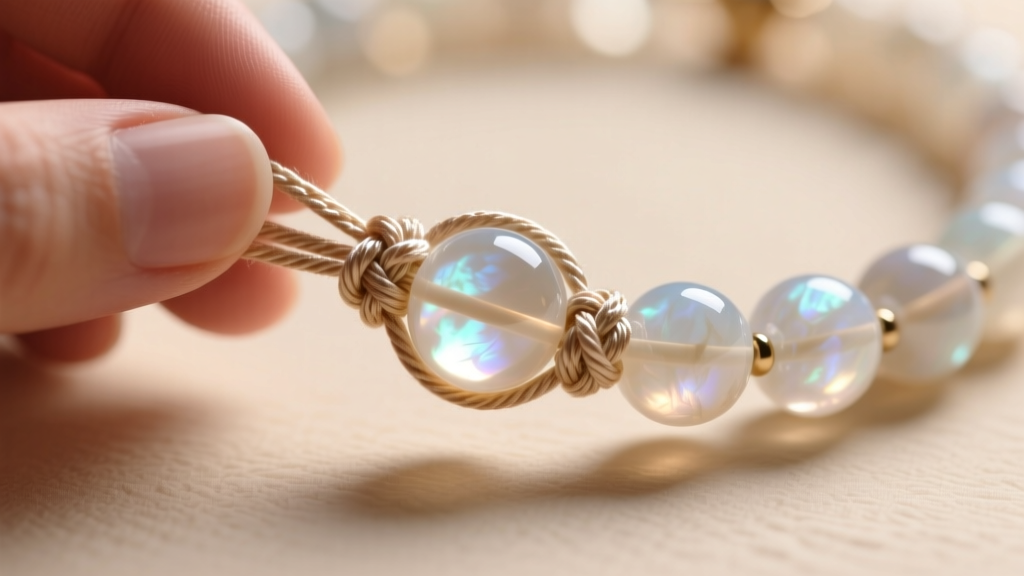
A high-value moonstone beaded necklace should be strung on silk thread with individual hand-tied knots between every single bead. This serves two critical purposes: it prevents the beads from grinding against one another (which will dull the polish and scratch the feldspar over time), and it ensures that if the strand snaps, you only lose one bead rather than the entire strand. Mass-market, low-value necklaces use unknotted nylon-coated steel beading wire. Over time, the steel wire can actually saw through the softer moonstone around the drill holes, causing severe damage.
Clasp Metallurgy
The clasp should always be matched to the stone's value. For Grade AA and AAA necklaces, expect a solid 14k gold or high-quality 14k gold-filled lobster or toggle clasp. Sterling silver is acceptable but requires frequent polishing to prevent tarnish transfer to the porous surface of lower-grade moonstones. Avoid gold-plated brass clasps on any necklace priced over $100, as the plating will inevitably wear off, exposing base metals that can cause skin irritation.
Final Verdict: Where to Allocate Your Budget
When purchasing a moonstone beaded necklace, prioritize optical performance over flawless clarity. A slightly included Grade AA bead with a piercing, electric blue flash is vastly superior in both beauty and long-term value to a perfectly clean, but completely opaque, white bead. Allocate your budget toward smaller, higher-grade beads (e.g., 6mm AAA) rather than larger, commercial-grade beads (e.g., 12mm Grade A). Finally, always inspect the drill holes for chipping and verify the presence of hand-knotting—hallmarks of a jeweler who respects the material and has priced the piece to reflect true craftsmanship.


