Star David Necklace Buying Guide: Metals, Chains & Sizing Tips
Discover how to choose the perfect Star David necklace. Our expert buying guide covers metal grades, chain pairings, sizing, and durability.

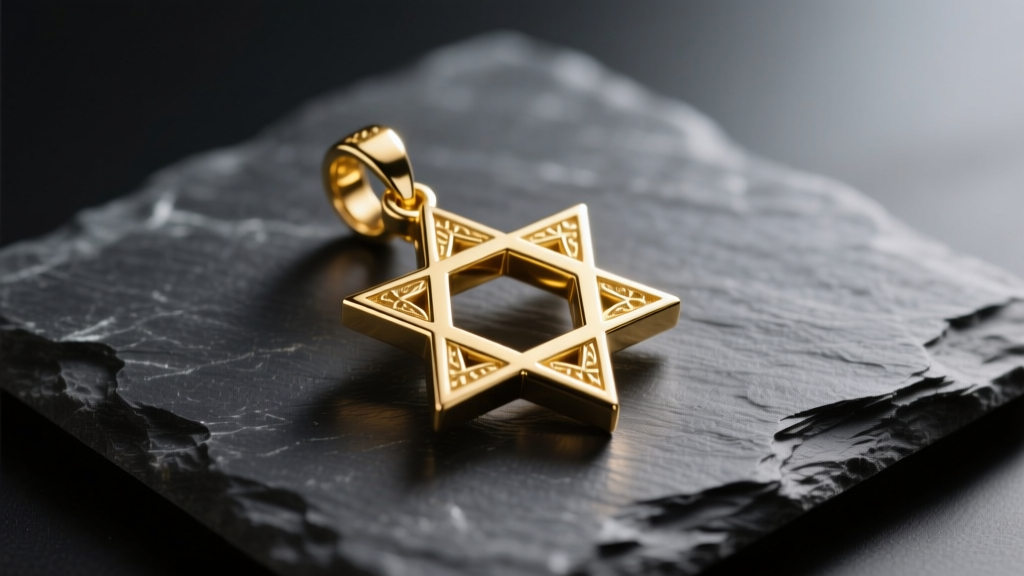
The Star of David, known in Hebrew as the Magen David (Shield of David), is one of the most recognizable and deeply meaningful symbols in Jewish culture. When shopping for a Star David necklace, you are not merely purchasing an accessory; you are investing in a piece of heritage, identity, and faith. However, the jewelry market is saturated with poorly constructed pendants, mismatched chains, and misleading metal stamps. As a domain expert in fine jewelry, I have designed this comprehensive buying guide to help you navigate material grades, chain mechanics, and proportion sizing to ensure your necklace lasts a lifetime.
The Geometry of the Magen David: Symbolism and Design
Before evaluating metals, it is crucial to understand the geometry of the pendant. The hexagram consists of two interlocking equilateral triangles. According to Chabad.org, the six points of the star are often said to represent God's rule over the universe in all six directions: north, south, east, west, up, and down. From a jewelry manufacturing perspective, this sharp, angular geometry presents unique challenges. Unlike smooth, circular pendants, the six points of a Star of David are prone to snagging on clothing and can suffer from impact damage if the metal alloy is too soft. Therefore, selecting the right metal hardness and edge profile (beveled vs. sharp) is your first critical decision.
Metal Alloys: Durability, Color, and 2026 Market Pricing
The longevity of your Star David necklace depends entirely on the metallurgical composition of the pendant. Pure 24k gold is far too soft for daily wear, meaning jewelers must alloy it with other metals to increase its tensile strength. Here is a breakdown of the most common materials used for Magen David pendants, including their specific grades and current market realities.
14k vs. 18k Gold: The Daily Wear Debate
14k gold (58.5% pure gold) is the undisputed champion for everyday religious jewelry. Alloyed with copper, silver, and zinc, 14k gold offers superior Vickers hardness compared to 18k, making it highly resistant to the micro-scratches that accumulate from daily friction. 18k gold (75% pure gold) offers a noticeably richer, warmer yellow hue, but its softer nature means the delicate points of the Star of David will round off and wear down much faster over a decade of continuous use. According to the Gemological Institute of America (GIA), 14k gold provides the optimal balance of rich color and structural integrity for pendants with sharp geometric points.
Sterling Silver (925) and Rhodium Plating
Sterling silver is an excellent entry-level option, but it is highly susceptible to oxidation (tarnishing) when exposed to the sulfur and acidity in human sweat. If you opt for a silver Star of David, ensure it has been plated with a thick layer of rhodium. Rhodium not only provides a bright, white-metal finish that mimics platinum, but it also acts as a barrier against tarnish. Expect to pay between $60 and $150 for a high-quality, rhodium-plated 925 silver pendant.
Platinum (950): The Premium Heirloom Choice
Platinum is 95% pure, naturally white, and completely hypoallergenic. Unlike white gold, which requires re-plating every few years, platinum's color is intrinsic. It is significantly denser than gold, giving the pendant a satisfying, premium weight. However, platinum develops a natural "patina" (a satin-like finish) over time due to microscopic scratches. Solid platinum Star of David pendants typically start around $1,200 and can exceed $3,000 depending on weight and diamond accents.
Chain Selection: Matching the Bail and Aesthetic
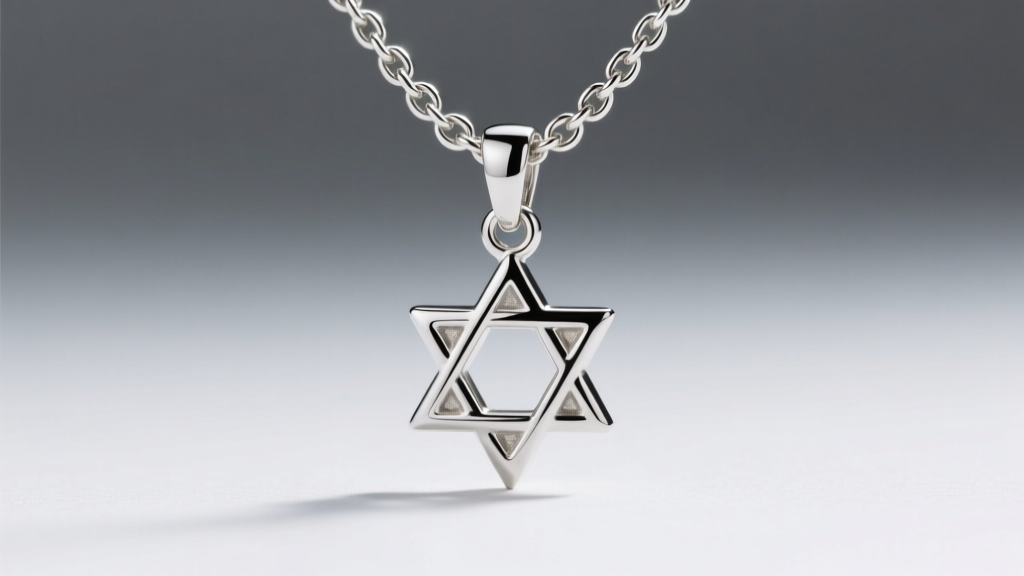
A common and costly mistake buyers make is selecting a chain that is either too thick for the pendant's bail (the loop at the top) or aesthetically mismatched. The Star of David is a highly structured, geometric symbol, and the chain should complement this aesthetic.
Top Chain Styles for Hexagram Pendants
- Box Chain: Constructed from square, interlocking links, the box chain is the absolute best pairing for a Star of David. The square links echo the geometric precision of the hexagram, creating a cohesive, modern look. Box chains are also incredibly strong and resist kinking.
- Rope Chain: Made of twisted, spiraling links, rope chains offer brilliant light reflection. They pair beautifully with diamond-set or hammered-finish Star of David pendants. However, ensure the rope chain's diameter is at least 0.5mm thinner than the inner diameter of the pendant's bail to prevent friction wear.
- Cable Chain: The traditional, oval-link chain. While classic, thin cable chains (under 1.5mm) are prone to kinking and stretching if the pendant is heavy. Only use cable chains for lightweight, minimalist pendants.
- Figaro Chain: Featuring a pattern of three short links followed by one long link, the Figaro adds a vintage, streetwear-inspired edge, popular in heavier 14k gold men's jewelry.
Sizing Matrix: Pendant Dimensions and Chain Widths
Proportion is everything. A massive pendant on a delicate chain will snap the links, while a tiny pendant on a thick chain will look lost and slide around constantly. Use the matrix below to ensure your Star David necklace is perfectly balanced.
| Pendant Size (Width) | Visual Impact | Ideal Chain Width | Recommended Clasp Type | Best Chain Length |
|---|---|---|---|---|
| 10mm - 14mm | Minimalist, Subtle | 1.0mm - 1.5mm | Spring Ring | 16" - 18" (Collarbone) |
| 15mm - 22mm | Standard, Everyday | 1.5mm - 2.5mm | Lobster Claw | 18" - 20" (Upper Chest) |
| 25mm - 35mm | Bold, Statement | 3.0mm - 5.0mm | Heavy Lobster / Box | 22" - 24" (Mid Chest) |
| 40mm+ | Oversized, Hip-Hop | 5.0mm - 8.0mm | Box Clasp with Safety | 24" - 28" (Lower Chest) |
Structural Failure Points: What to Inspect Before Buying
When evaluating a Star David necklace, either in-person or via high-resolution images online, you must inspect the piece for inherent structural weaknesses. Religious jewelry is often worn 24/7, including during sleep and exercise, which accelerates wear and tear.
1. Bail Friction and Thinning
The bail is the highest-stress point on any pendant. As the chain moves, it acts like a microscopic saw against the inside of the bail. If you are buying a pre-owned or vintage piece, inspect the top of the bail for thinning. High-quality modern pendants feature a "soldered jump ring" or a reinforced, thick-cast bail to withstand years of friction.
2. Clasp Mechanics
Never pair a heavy, solid gold Star of David pendant (over 5 grams) with a standard spring-ring clasp. The tiny internal spring inside a ring clasp is a notorious failure point that will eventually snap open, resulting in the loss of your pendant. Always insist on a lobster claw clasp for medium pendants, and a secure box clasp with a figure-eight safety latch for heavy, oversized chains.
3. Prong Tension on Gem-Set Stars
If your Star of David features diamond accents (often placed at the six points or outlining the interlocking triangles), inspect the prongs. Because the points of the star are exposed, the prongs at the vertices are highly vulnerable to being caught on sweaters or towels and pulled back. Ensure the jeweler uses "bezel settings" or low-profile, heavy-duty prongs for the outermost points.
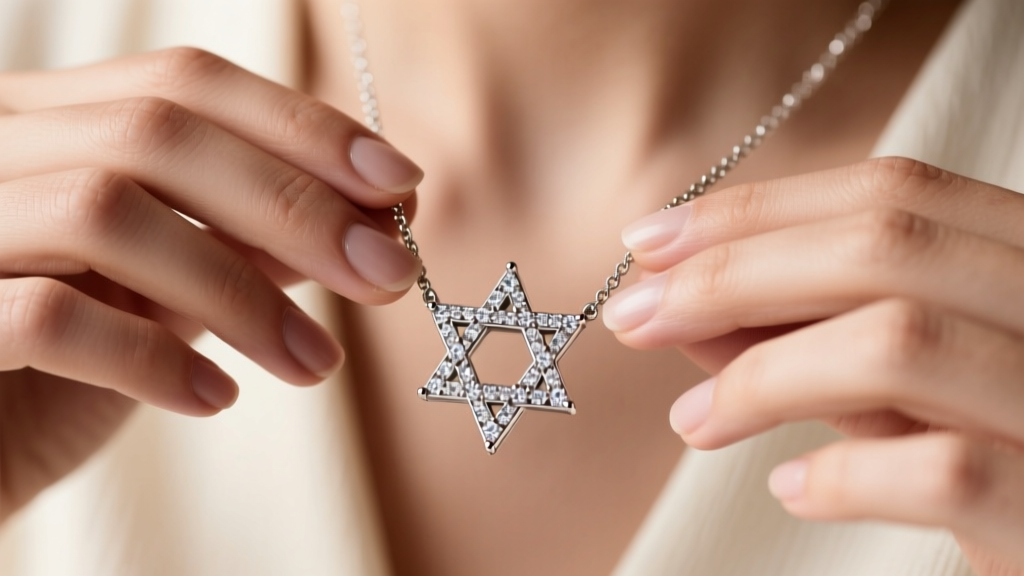
Expert Maintenance Tip: To clean a diamond-set Star of David necklace at home, avoid harsh ultrasonic cleaners if the pendant features fracture-filled diamonds or opaque gemstones like turquoise or onyx. Instead, use a soft-bristled baby toothbrush, warm water, and a single drop of mild dish soap. Gently brush the underside of the hexagram where skin oils and lotion accumulate, blocking the light return of the diamonds.
Final Verdict: Making the Right Investment
Choosing the right Star David necklace requires balancing cultural significance with metallurgical reality. For a lifelong, everyday piece that can be passed down as an heirloom, a solid 14k yellow gold pendant (18mm-22mm) paired with a 2.0mm box chain and a lobster clasp remains the gold standard for durability and timeless style. If you are shopping on a budget, a rhodium-plated 925 sterling silver piece offers excellent visual appeal, provided you commit to removing it before showering or swimming to preserve the finish. By prioritizing structural integrity, proper chain pairing, and precise sizing, your Magen David will remain a pristine and powerful symbol for decades to come.


