Care Bear Necklace Materials: Enamel, Silver & Acrylic Compared
Compare Care Bear necklace materials from vintage acrylic to modern vitreous enamel and sterling silver. Find the best metal grade for your skin.

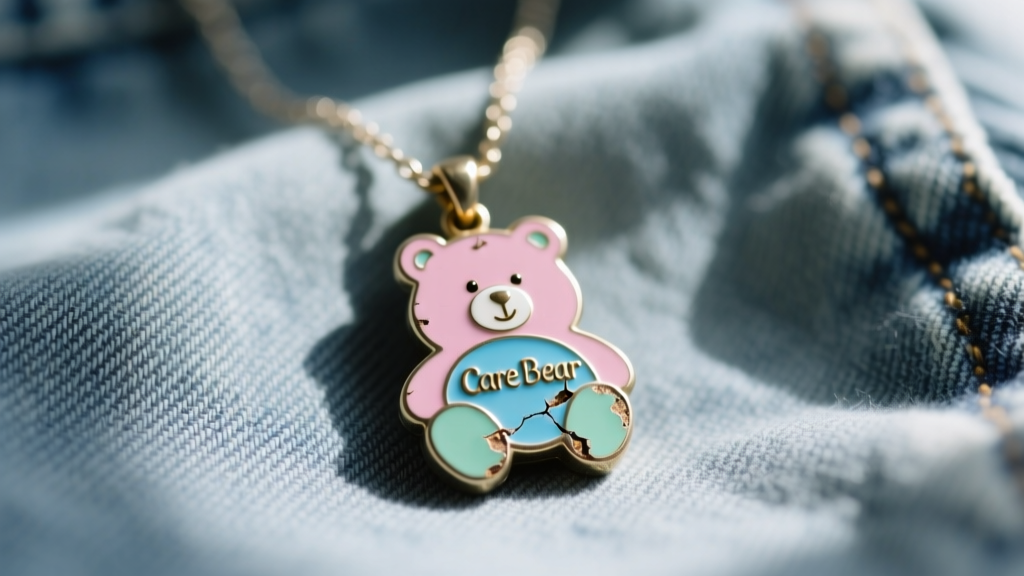
The Evolution of Care Bear Jewelry Materials
When collectors and fashion enthusiasts search for the perfect Care Bear necklace, they are often met with a wildly inconsistent market. What began in the 1980s as mass-produced, low-cost children’s merchandise has evolved into a highly sought-after nostalgic accessory, with modern iterations ranging from $30 costume pieces to $2,500 fine jewelry reinterpretations. Understanding the metallurgical and material properties of these necklaces is critical, not just for aesthetic longevity, but for skin safety and structural integrity.
In this comprehensive material guide, we deconstruct the three primary tiers of Care Bear necklace manufacturing: vintage pot metal and acrylic, modern gold vermeil with cold enamel, and fine jewelry solid gold with vitreous enamel. By examining alloy compositions, plating micron thicknesses, and enamel Mohs hardness ratings, you can make an informed decision that aligns with your budget and dermatological needs.
Tier 1: Vintage Pot Metal, Flash Plating, and Cold Enamel (1980s–1990s)
Authentic vintage Care Bear necklaces from the 1980s and early 1990s were primarily manufactured using Zamak (a zinc alloy containing aluminum, magnesium, and copper) or generic "pot metal." These bases were typically finished with a "flash plating" of gold or silver—a process that deposits a microscopically thin layer of precious metal (often less than 0.5 microns) over a copper or nickel underlayer.
Material Properties and Failure Modes
- Base Alloy: Zamak is prone to "zinc pest," a destructive intercrystalline corrosion that causes the metal to swell, crack, and crumble over decades.
- Enamel Type: Vintage pieces utilize cold enamel (epoxy resin). While vibrant initially, epoxy resin has a Mohs hardness of only 2.5 to 3.0, making it highly susceptible to micro-scratches and UV degradation, which leads to the yellowing often seen in antique white or pink Care Bear pendants.
- Allergy Risks: As the flash plating wears away from friction against the skin, the underlying copper and nickel layers are exposed. According to dermatological studies, nickel exposure is the leading cause of allergic contact dermatitis in jewelry wearers.
Collector’s Note: When purchasing vintage, always inspect the jump rings and chain links. Original 1980s chains were frequently hollow-cable at a fragile 0.8mm gauge, which easily snaps under the weight of heavy pot metal pendants.
Tier 2: Modern Gold Vermeil and Epoxy Resin Enamel
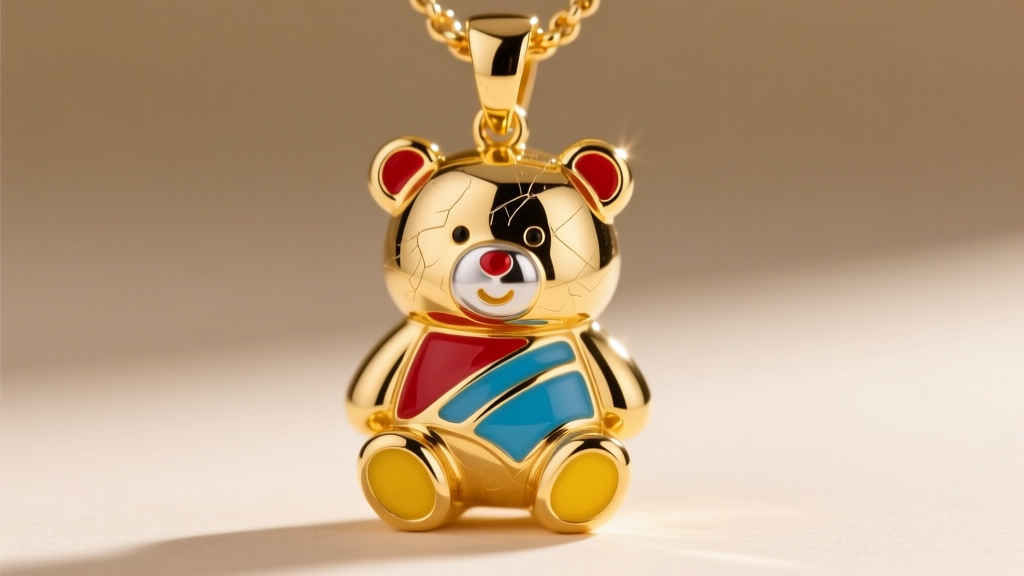
As nostalgia-driven fashion peaked in the 2020s, contemporary jewelry brands began releasing licensed and high-quality homage Care Bear necklaces. The industry standard for these mid-tier pieces ($85 to $180) is gold vermeil over a sterling silver base, paired with advanced UV-cured epoxy enamels.
The FTC Vermeil Standard
Unlike standard gold-plated brass, true vermeil must meet strict regulatory criteria. According to the Federal Trade Commission (FTC) Jewelry Guides, a piece can only be marketed as vermeil if it features a 925 sterling silver base coated with at least 10k gold that is a minimum of 2.5 microns thick. This thickness provides a substantially longer lifespan than flash plating, typically lasting 1 to 3 years of daily wear before requiring re-plating.
Modern Cold Enamel Advancements
While still technically a resin, modern UV-cured epoxies used in today's Care Bear pendants offer superior colorfastness compared to 1980s air-dried resins. However, they still lack the thermal and scratch resistance of glass-based enamels. If you wear a vermeil and epoxy necklace daily, expect the resin on the raised edges of the Care Bear’s tummy symbol to show wear within 24 months.
Tier 3: Fine Jewelry Reinterpretations (Solid Gold & Vitreous Enamel)
At the apex of the market are independent jewelers and high-end pop-culture collaborations that craft Care Bear pendants using 14k or 18k solid gold and traditional vitreous enamel. These pieces, often ranging from $800 to over $3,000, are heirloom-quality investments.
The Science of Vitreous Enamel
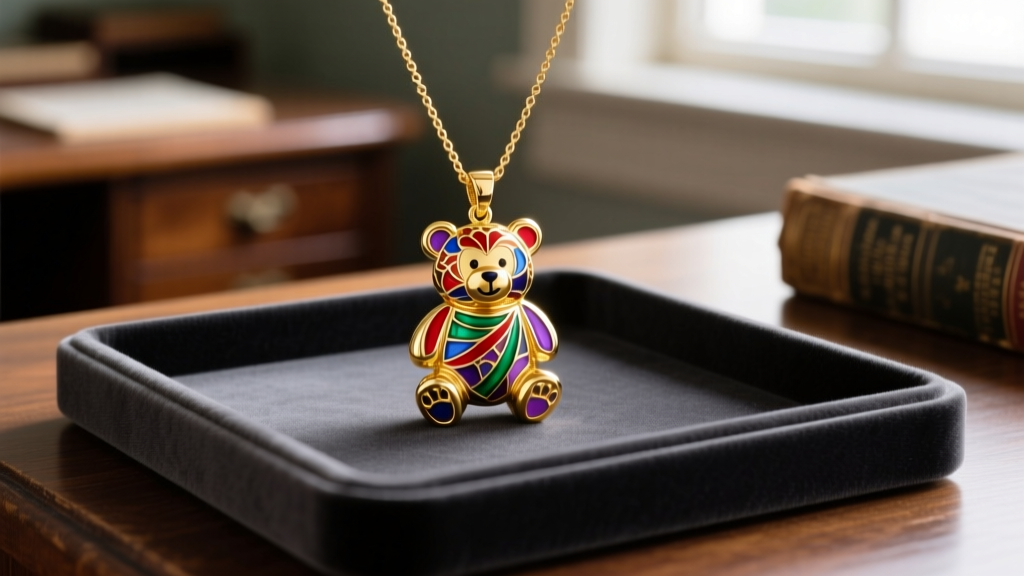
Vitreous enamel is not a resin; it is finely ground glass (silica, soda, and lime) fused to a metal substrate at temperatures exceeding 1,400°F (760°C). As noted by the Gemological Institute of America (GIA), vitreous enamel boasts a Mohs hardness of 5.0 to 6.0, making it vastly more scratch-resistant than epoxy. Furthermore, because it is essentially glass, it will never yellow, fade, or degrade from UV exposure.
Fine jewelers typically employ the champlevé technique for Care Bear pendants, carving microscopic troughs into the solid gold base to hold the enamel powder. This ensures the colorful tummy symbols are perfectly flush with the gold bezel, protecting the glass from chipping upon impact.
Material Comparison Chart
To help you evaluate the market, refer to this structured comparison of Care Bear necklace material properties across the three primary manufacturing tiers.
| Property | Vintage (1980s) | Modern Vermeil | Fine Jewelry (Solid Gold) |
|---|---|---|---|
| Base Metal | Zamak / Pot Metal | 925 Sterling Silver | 14k or 18k Solid Gold |
| Plating Thickness | < 0.5 microns (Flash) | ≥ 2.5 microns | N/A (Solid throughout) |
| Enamel Type | Epoxy Resin (Air-dried) | UV-Cured Epoxy Resin | Vitreous Glass (Fired) |
| Mohs Hardness | 2.5 - 3.0 | 3.0 - 3.5 | 5.0 - 6.0 |
| Nickel Allergy Risk | High (as plating wears) | Very Low (if silver base) | None (Hypoallergenic) |
| Est. Price Range | $25 – $75 | $85 – $180 | $800 – $3,000+ |
Chain Mechanics: Upgrading for Structural Integrity
A pendant is only as secure as the chain that holds it. Regardless of whether you choose a vintage acrylic bear or a solid gold masterpiece, the chain's gauge and clasp mechanics dictate the necklace's survival.
- Avoid Spring Ring Clasps: Most mass-produced necklaces utilize 5mm or 7mm spring ring clasps. The internal steel spring is prone to rusting when exposed to sweat, and the thin wire loop easily bends open under stress.
- Opt for Lobster Clasps: Always upgrade to a solid lobster clasp (minimum 12mm). The internal mechanism is robust, and the teardrop shape prevents accidental unhooking.
- Chain Gauge Recommendations: For lightweight acrylic or hollow vintage pendants, a 1.2mm solid cable chain is sufficient. For heavy pot metal or solid gold pendants weighing over 15 grams, you must use a minimum 1.5mm rope chain or a 2.0mm box chain to prevent tensile snapping at the soldered jump rings.
Care and Maintenance by Material Type
Proper maintenance extends the lifespan of your jewelry and preserves the integrity of the enamel work. Follow these material-specific protocols:
Cleaning Vintage and Vermeil Resin Enamel
Never use ultrasonic cleaners, steam cleaners, or chemical silver dips on cold enamel. The high-frequency vibrations and harsh acids will cause the resin to lift from the metal base. Instead, use a drop of mild, phosphate-free dish soap on a microfiber cloth. Gently wipe the metal and resin, then dry immediately to prevent water spots on the silver.
Cleaning Fine Vitreous Enamel
Vitreous enamel is highly resilient but can crack if subjected to thermal shock or blunt force. You can safely clean the solid gold and glass enamel with a soft-bristled baby toothbrush and warm soapy water. Avoid wearing these pieces in hot tubs or saunas, as the rapid expansion of the gold base metal can cause the rigid glass enamel to fracture.
Final Verdict: Which Material Should You Choose?
If you are a purist seeking 1980s nostalgia and understand the risks of plating wear, a vintage pot metal necklace is a fun, low-cost collector's item. For everyday fashion wearers who want a hypoallergenic base and vibrant colors without the fine jewelry price tag, a sterling silver vermeil piece offers the best balance of quality and affordability. However, if you demand heirloom durability, scratch-resistant colors, and absolute skin safety, investing in a solid gold and vitreous enamel Care Bear pendant is the ultimate choice for a lifelong accessory.


