How to Clean and Maintain a 24 Inch Necklace Chain
Learn expert techniques to clean, untangle, and maintain your 24 inch necklace chain. Discover material-specific care tips to prevent tarnish and breakage.

The Unique Vulnerabilities of Long Chains
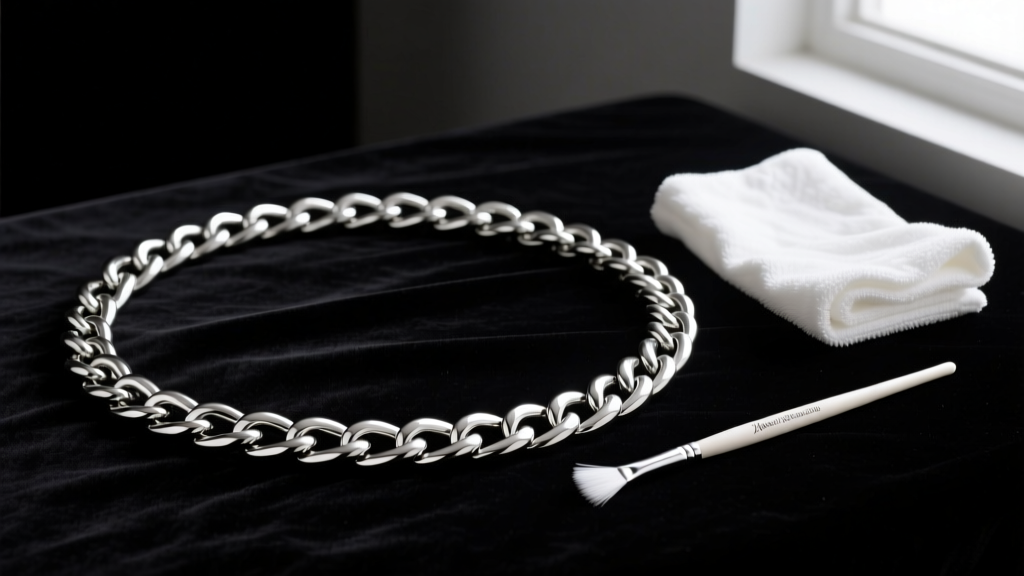
A 24 inch necklace chain sits at the matinee length, resting elegantly on the chest. While this length is highly versatile for layering and pendant suspension, its extended physical footprint introduces specific mechanical and chemical vulnerabilities that shorter chokers or princess-length chains do not face. Because a 24-inch chain has a larger swing radius, the kinetic stress placed on the links near the clasp and the jump ring is significantly higher. Every time you move, the momentum of the lower arc transfers tension upward, making the top three inches of the chain highly susceptible to micro-stretching and link deformation over time.
Furthermore, a chain of this length rests directly over the sternum, an area prone to higher concentrations of sebum, perfume runoff, and body heat. This combination accelerates the oxidation process in susceptible metals like sterling silver and copper alloys. Proper maintenance of a 24-inch chain requires a targeted approach that addresses both the mechanical stress of its length and the chemical environment of its resting position.
Material-Specific Cleaning Protocols
Before applying any cleaning agent, you must identify the exact metallurgical composition of your chain. The gauge thickness of a 24-inch chain typically ranges from 1.2mm (delicate cable chains) to 3.5mm (heavy Cuban or Figaro links). Thinner gauges require gentler agitation to prevent warping. Below is a decision matrix for the most common materials used in long-form chains.
| Material Grade | Tarnish Risk | Safe Cleaning Agents | Agents to Strictly Avoid |
|---|---|---|---|
| Sterling Silver (925) | High | Phosphate-free dish soap, specialized silver dip (sparingly) | Bleach, ammonia, hard-bristled brushes |
| Gold Vermeil (2.5μm+) | Medium | Mild soap, distilled water, microfiber cloth | Ultrasonic cleaners, silver polishing cloths |
| Surgical Steel (316L) | None | Dish soap, ultrasonic cleaners, isopropyl alcohol | Chlorine, abrasive scouring pads |
| Solid 14k / 18k Gold | Low | Ammonia-based cleaners (diluted 1:6), mild soap | Undiluted bleach, chlorine pool water |
According to the Gemological Institute of America (GIA), understanding the specific alloy composition is critical, as harsh chemicals can strip the rhodium plating often found on white gold or the thin gold layers on vermeil pieces.
The Distilled Water & Phosphate-Free Soap Bath
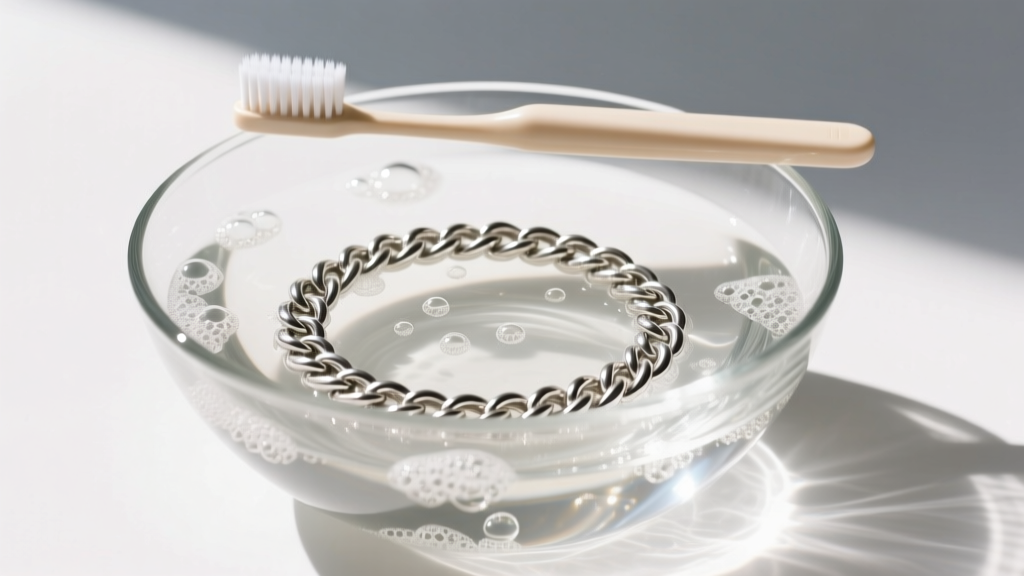
For sterling silver and solid gold 24-inch chains, the safest and most effective deep-cleaning method is a controlled soap bath. Tap water contains calcium and magnesium ions that can leave microscopic hard water spots on polished metal surfaces, dulling the reflectivity of the links. Always use distilled water.
- Prepare the Solution: Mix 8 ounces of lukewarm distilled water (approximately 95°F) with exactly 3 drops of a phosphate-free, lotion-free dish detergent.
- Submerge and Agitate: Lay the 24-inch chain flat in a glass or ceramic bowl. Avoid plastic bowls, which can harbor microscopic scratches that trap dirt. Let it soak for 10 to 15 minutes.
- Targeted Brushing: Using a soft-bristled baby toothbrush, gently sweep along the interior curves of the links. For a 24-inch rope or snake chain, brush in the direction of the weave to avoid lifting the metal scales.
- The Final Rinse: Rinse thoroughly under a gentle stream of distilled water to remove all soap residue.
- Drying: Pat dry with a lint-free microfiber cloth. Do not air dry, as evaporation will leave water marks.
Ultrasonic Cleaning: Frequencies and Risks
Ultrasonic cleaners use high-frequency sound waves (typically 40 to 45 kHz) to create microscopic cavitation bubbles that implode, blasting dirt from crevices. This is highly effective for 24-inch stainless steel or solid platinum chains, which often accumulate dead skin cells deep within complex link structures like box or wheat chains. However, as noted by Jewelers of America, ultrasonic waves can be disastrous for certain materials. Never place gold vermeil, oxidized (blackened) silver, or chains with fracture-filled gemstone pendants into an ultrasonic bath, as the vibrations will strip the plating, remove intentional patinas, and shatter fragile stones.
Tangle Prevention and Long-Term Storage
The most frustrating aspect of owning a 24 inch necklace chain is the inevitable tangling that occurs during storage. A chain of this length has over 72 inches of linear movement when unclasped, allowing it to easily loop through its own links and form complex knot clusters. To prevent this, you must restrict the chain's degrees of freedom when it is not being worn.
The Straw Threading Method
For delicate cable or curb chains (1.5mm or thinner), the straw method is an industry-standard trick for preventing tangles and kinks. Unclasp the chain and thread the loose end (the side without the lobster clasp) through a standard plastic drinking straw. Once the chain is threaded, clasp it shut. The rigid plastic tube forces the chain to remain in a straight, linear alignment, making it physically impossible for the links to cross over one another and knot.
Environmental Controls and Anti-Tarnish Strips
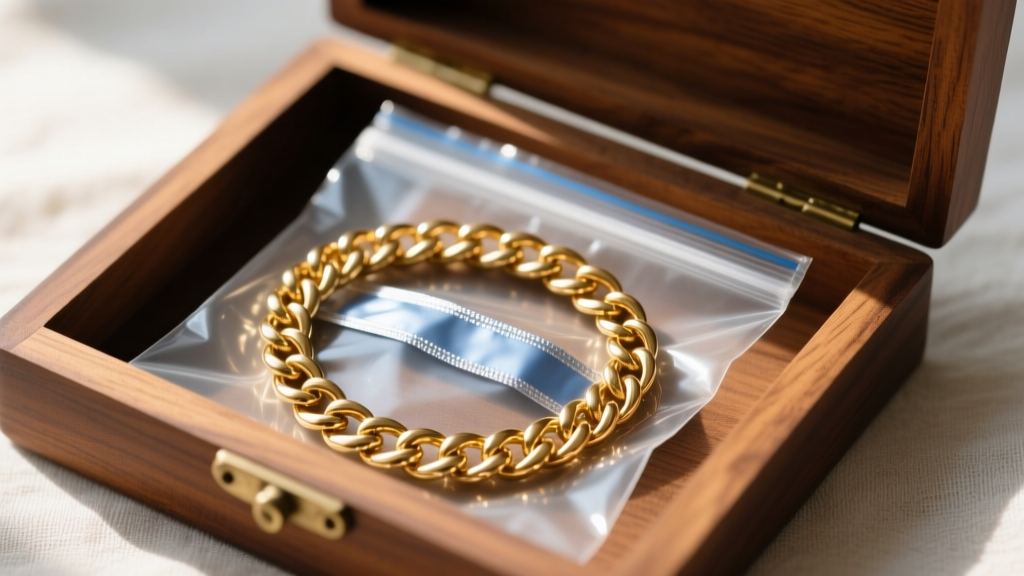
Sterling silver tarnishes when the copper alloyed within the 925 silver reacts with hydrogen sulfide in the ambient air. To halt this chemical reaction during storage, place your coiled 24-inch chain inside an airtight polyethylene ziplock bag along with a 3M Silver Shield anti-tarnish strip. These strips contain activated carbon and silver nanoparticles that absorb hydrogen sulfide gas before it can reach your jewelry. Store the bag in a cool, dark drawer, keeping the relative humidity below 45%. Avoid storing your chains in bathrooms, where the high humidity and aerosolized personal care products will rapidly accelerate oxidation.
Clasp Maintenance and Professional Servicing
The lobster clasp is the most common closure for a 24 inch necklace chain due to its security. However, the internal spring mechanism is a magnet for lint, sebum, and dust. When debris accumulates in the hinge of the lever, the clasp may fail to snap shut completely, creating a severe drop risk for your heavy, long chain.
To clean the clasp mechanism, use a wooden toothpick or a blast of compressed air to dislodge debris from the lever hinge. Never use a metal pin or needle, as this will scratch the interior alloy and compromise the tension of the microscopic spring. If the lever begins to feel sluggish or fails to return to the closed position with an audible 'click', the internal spring has likely fatigued or corroded. Because lobster clasp springs are not user-serviceable, take the chain to a professional bench jeweler. A jeweler can laser-weld a new lobster clasp onto your existing jump ring for a nominal fee (typically $25 to $45), restoring the security of your 24-inch piece without requiring a full chain replacement.
By adhering to these material-specific cleaning protocols and implementing rigorous storage habits, your 24-inch chain will maintain its structural integrity, brilliant luster, and mechanical reliability for decades of daily wear.


