How to Clean and Care for Your Custom ChatGPT Necklace
Learn expert care, cleaning, and maintenance tips for your custom ChatGPT necklace. Protect intricate AI-generated lattice and 3D-printed jewelry.

The Architecture of AI-Generated Jewelry
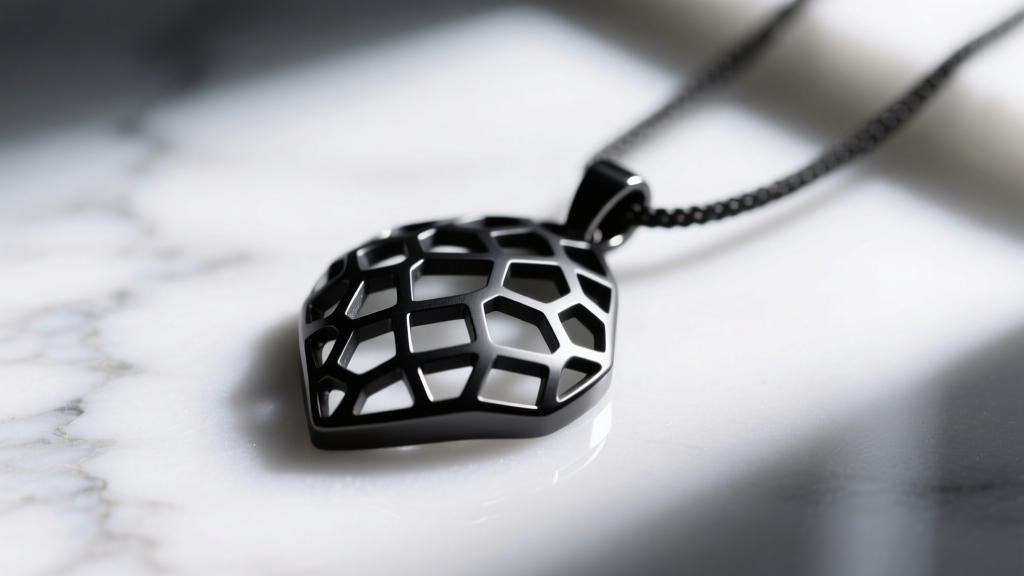
The intersection of artificial intelligence and bespoke jewelry manufacturing has given rise to a fascinating new category: the custom chatgpt necklace. By leveraging large language models to generate complex OpenSCAD scripts, Python-based geometric algorithms, or highly specific Midjourney prompts for 3D casting, designers and hobbyists are creating pendants with computational topologies. These pieces often feature Voronoi patterns, gyroid infills, and fractal lattices that are impossible to carve by hand.
However, this computational complexity introduces severe maintenance challenges. Standard jewelry care routines are designed for solid metals and simple prong settings. AI-generated lattice structures possess microscopic crevices, variable strut thicknesses (often dipping below 1.2mm), and internal voids that trap moisture, skin oils, and environmental pollutants. If you own a computationally designed necklace, treating it like a standard sterling silver chain will inevitably lead to structural failure or irreversible tarnish.
Material Science: What Are You Actually Cleaning?
Before applying any cleaning agent, you must identify the manufacturing method and material grade of your AI-designed piece. The prompt you fed the AI ultimately dictates the physical properties of the final object.
- Direct Metal Laser Sintering (DMLS): Often printed in bronze or stainless steel. These pieces are highly porous at a microscopic level and prone to rapid oxidation (verdigris) if moisture becomes trapped in the lattice.
- Lost-Wax Cast from 3D Printed Resin: The AI design is printed in castable wax/resin, then burned out in a kiln and cast in 925 Sterling Silver or 14k Gold. These are solid but retain the complex, sharp internal angles of the digital model, creating 'dirt traps' that standard polishing cloths cannot reach.
- Electroplated UV Resin: A lightweight, 3D-printed resin core coated in a micron-thin layer of copper or silver. These are extremely fragile; the plating can easily delaminate if exposed to harsh chemicals or abrasive friction.
The 4-Step Dry-and-Displace Cleaning Protocol
To safely clean a complex chatgpt necklace without damaging micro-struts or trapping water, follow this professional conservation protocol:
- Dry Debris Removal: Never start with liquid. Use a can of compressed air (held at least 4 inches away to maintain a safe 30 PSI output) to blow out dead skin cells, dust, and lint from the internal gyroid or Voronoi voids.
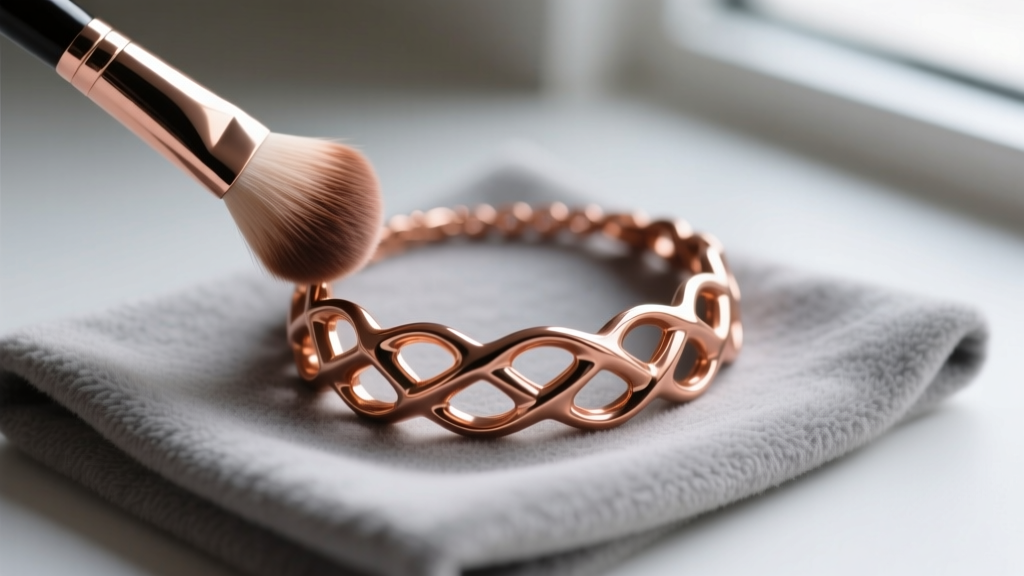
- Micro-Agitation: Use a clean, soft-bristled makeup brush (goat hair or synthetic taklon). Avoid standard toothbrushes, as the nylon bristles are often too stiff and can scratch high-polish silver or strip electroplated resin.
- Distilled Water Flush: If liquid cleaning is necessary, use only distilled water mixed with a drop of pH-neutral dish soap. Tap water contains dissolved minerals (calcium and magnesium) that will leave permanent chalky deposits inside the microscopic crevices of your pendant when it dries.
- The IPA Displacement Bath: This is the most critical step for lattice jewelry. Submerge the piece in a bath of 99% Isopropyl Alcohol (IPA) for 30 seconds. The IPA bonds with the trapped water molecules and rapidly evaporates, ensuring zero moisture remains in the deep, unsupported voids of the AI-generated geometry.
The Ultrasonic Trap: Cavitation vs. Micro-Struts
One of the most common mistakes owners of AI-generated jewelry make is dropping their intricate pendants into an ultrasonic cleaner. While ultrasonic cleaners are excellent for removing grime from solid diamond solitaires, they are highly destructive to computational lattice designs.
Ultrasonic cleaners work through a process called cavitation. High-frequency sound waves create millions of microscopic vacuum bubbles in the liquid. When these bubbles collapse against the surface of the jewelry, they release localized shockwaves. According to industry experts at JCK Online, the implosion of these cavitation bubbles generates localized temperatures exceeding 5,000 Kelvin and pressures of up to 1,000 atmospheres.
While a solid 14k gold band can easily withstand this, the 0.8mm to 1.5mm struts characteristic of AI-generated Voronoi patterns cannot. The shockwaves will induce metal fatigue, leading to micro-fractures that eventually cause the delicate geometric nodes to snap off entirely.
Maintenance Matrix: Material-Specific Care
Use the following matrix to determine the safest chemical agents for your specific necklace material. Always consult the GIA Gem Care Guide if your AI-designed piece incorporates integrated gemstones.
| Material Grade | Safe Cleaning Agent | Tool | Primary Risk Factor |
|---|---|---|---|
| Sintered Bronze/Steel | Mild Dish Soap + Distilled Water | Compressed Air & Goat Hair Brush | Trapped moisture causing green verdigris oxidation |
| Cast 925 Sterling Silver | Thiourea-based Silver Dip (briefly) | Microfiber Swabs | Chemical pooling in deep voids causing black spots |
| Electroplated UV Resin | Dry Dusting Only | Anti-Static Lens Brush | Plating delamination and resin warping from heat |
| Solid 14k/18k Gold Cast | Warm Water + Ammonia-free Cleaner | Soft Cotton Swabs | Low risk; primarily cosmetic dirt buildup |
Storage: Controlling the Micro-Climate
Because AI-generated necklaces have a vastly higher surface-area-to-volume ratio than traditional jewelry, they are exponentially more susceptible to atmospheric tarnish. The sulfur compounds in the air react with the increased surface area of a lattice pendant much faster than they would with a solid, flat disc.
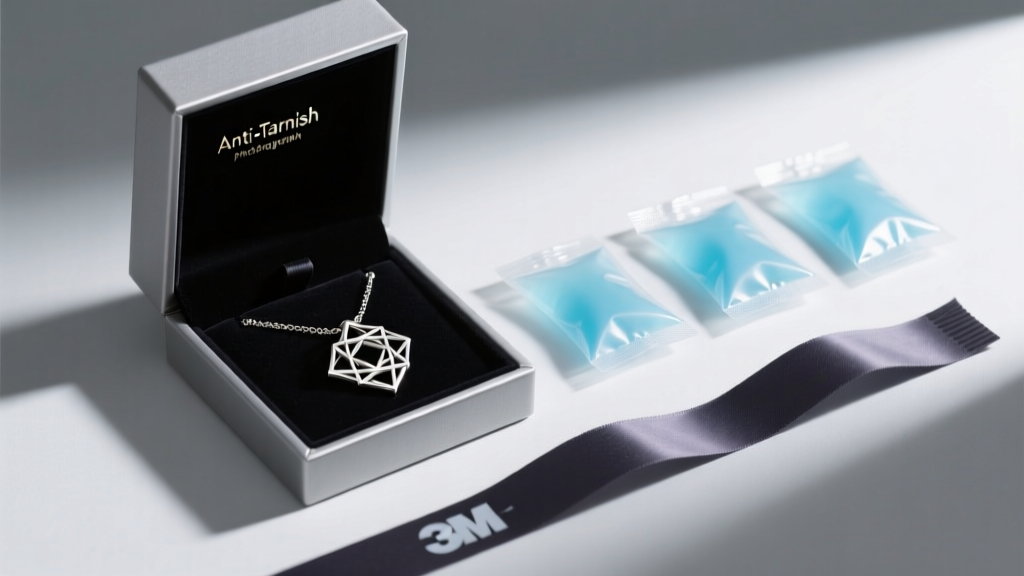
To preserve your piece, you must control the micro-climate of its storage environment. Store the necklace in an airtight polyethylene bag or a specialized anti-tarnish box. You must include two elements inside the storage vessel:
- 3M Anti-Tarnish Strips: These strips contain copper particles that act as a sacrificial anode, absorbing airborne sulfur and hydrogen sulfide before they can reach your silver or bronze pendant.
- Silica Gel Desiccant Packets: Maintaining a relative humidity (RH) below 40% is crucial. Moisture acts as an electrolyte, accelerating the galvanic corrosion of sintered metals and plated resins. Replace your silica packets every 3 to 4 months to ensure they haven't reached their moisture saturation point.
Troubleshooting Common AI-Design Issues
Issue: The pendant is leaving a green mark on my skin.
Diagnosis: This is highly common with DMLS sintered bronze pieces. The porosity of the 3D printing process traps skin acids, which react with the copper content in the bronze.
Solution: Coat the back of the pendant and the chain connections with a thin layer of clear, jewelry-safe nano-ceramic coating or a specialized skin-safe lacquer to create a barrier between the reactive metal and your skin's pH.
Issue: The chain keeps snapping at the clasp.
Diagnosis: AI algorithms often optimize for visual complexity rather than structural weight distribution. The pendant may be heavier than the delicate, computationally generated chain links can support.
Solution: Decouple the design. Remove the AI-generated chain and thread the pendant onto a high-tensile, solid stainless steel box chain (minimum 1.5mm width) to provide adequate structural support without compromising the aesthetic of the central node.
Conclusion
Owning a custom chatgpt necklace is a statement of technological and artistic innovation. However, the very algorithms that create their breathtaking, impossible geometries also create unique vulnerabilities. By abandoning harsh ultrasonic cleaners, adopting the IPA displacement drying method, and strictly controlling your storage humidity, you ensure that your AI-generated masterpiece remains structurally sound and visually brilliant for decades to come.


